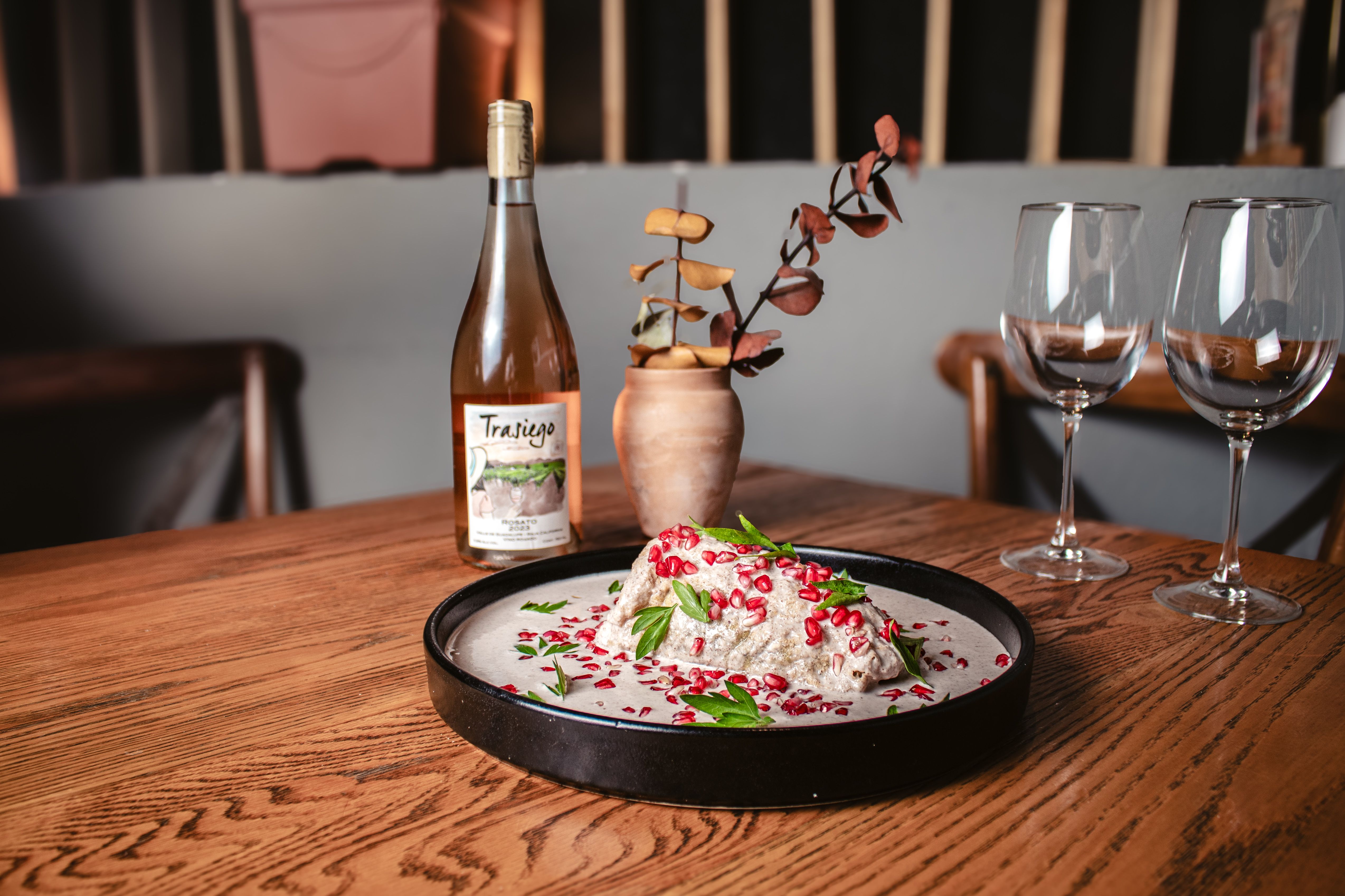
The diets react (see scores below)
Common Ingredients
- chicken
- walnuts
- garlic
- onions
- coriander
- fenugreek
- marigold
- vinegar
Specific recipes may vary.
Incompatible with 3 of 11 diets
Diet Ratings
Satsivi is a Georgian walnut-based sauce served over chicken. The protein base (chicken) is fully keto-compatible, and walnuts provide healthy fats with moderate net carbs (~4g per oz). The primary concern is the quantity of walnuts used — traditional Satsivi uses a substantial amount, which drives up both fat and carbs simultaneously. Onions add a small carb load (~3-5g per serving), and spices like fenugreek contribute trace carbs. Vinegar is negligible. A standard serving likely lands in the 8-15g net carb range depending on sauce-to-chicken ratio and portion size, which is workable within keto limits but requires mindful portioning. The dish is otherwise whole-food, unprocessed, and high in healthy fats from walnuts, making it a reasonable keto choice with portion awareness.
Some strict keto practitioners caution against walnuts in large quantities due to their omega-6 fatty acid profile and the cumulative carb load when walnuts form the bulk of a sauce. Carnivore-adjacent keto adherents may also flag the heavy spice and nut base as unnecessary carb risk when simpler preparations exist.
Satsivi is a traditional Georgian dish where chicken is the primary protein and a central, non-optional ingredient. While the walnut sauce base (walnuts, garlic, onions, coriander, fenugreek, marigold, vinegar) is entirely plant-based, the dish as defined is not vegan due to the inclusion of chicken, a direct animal product. There is no ambiguity here — chicken is explicitly listed as an ingredient and is the defining protein of the dish.
Satsivi is a Georgian walnut-based sauce served over chicken. All core ingredients are paleo-compatible: chicken (unprocessed protein), walnuts (nuts), garlic and onions (vegetables), coriander and fenugreek (spices/seeds), and marigold/calendula (edible flower used as spice). Vinegar — typically wine vinegar in Georgian cooking — is a mild gray area; small amounts of naturally fermented vinegar are generally accepted in the paleo community as a condiment, though strict interpretations flag it as a processed/fermented product. The dish is naturally grain-free, legume-free, and dairy-free, making it broadly paleo-compliant. The walnut sauce base is a strong paleo positive — walnuts are nutrient-dense and clearly approved.
Strict Cordain-school paleo may flag wine vinegar as a processed fermented product and question fenugreek seeds, which some classify closer to legumes botanically. However, mainstream paleo authorities (Mark Sisson, Robb Wolf) generally accept small amounts of vinegar and treat fenugreek as a spice rather than a legume.
Satsivi is a Georgian walnut-based sauce served over chicken. The ingredient profile is largely Mediterranean-compatible: walnuts are a prized nut in Mediterranean eating patterns, garlic and onions are foundational aromatics, and vinegar is a traditional condiment. The spice blend (coriander, fenugreek, marigold/calendula) is Georgian rather than Mediterranean but poses no nutritional conflict. The main limiting factor is the chicken as primary protein — poultry falls into the 'moderate' category (a few times per week, not daily staple). Notably, the dish lacks olive oil as the primary fat, relying instead on walnut oil rendered from the sauce, which is a healthy unsaturated fat but not the canonical Mediterranean fat. Overall this is a nutritious, whole-food dish with excellent ingredients, but the chicken-centric serving and absence of olive oil keep it from a full 'approve.'
Some Mediterranean diet interpreters, particularly those emphasizing the broader Middle Eastern and Eastern Mediterranean traditions, would score this higher, noting that walnut-based sauces are analogous to nut-heavy dishes found in Turkish and Levantine cuisines. The near-absence of processed ingredients and the high walnut content could push a more permissive interpretation toward a score of 7.
Satsivi is a Georgian walnut sauce dish served over chicken. While chicken itself is carnivore-compatible, this dish is dominated by plant-based ingredients that are entirely excluded from the carnivore diet. Walnuts are a seed/nut and a major plant food. Garlic and onions are vegetables. Coriander, fenugreek, and marigold (calendula) are plant-derived spices and herbs. Vinegar, while sometimes tolerated by some practitioners, is plant-derived. The dish is fundamentally a plant-based sauce with chicken as a secondary component — the nutritional and flavor profile is driven entirely by non-carnivore ingredients. There is no version of this dish that could be made carnivore-compatible without completely reinventing it.
Satsivi is a Georgian walnut-based sauce served over chicken. All listed ingredients are fully Whole30 compliant: chicken (animal protein), walnuts (natural fat/nut), garlic and onions (vegetables/aromatics), coriander and fenugreek (spices), marigold/calendula (used as a spice substitute for saffron in Georgian cuisine, compliant herb/spice), and vinegar (explicitly allowed on Whole30, excluding malt vinegar). There are no excluded ingredients — no grains, legumes, dairy, added sugar, or alcohol. This is a whole-food dish built on compliant proteins, fats, vegetables, and spices.
Satsivi is a traditional Georgian walnut-based sauce served over chicken. While chicken itself is low-FODMAP, the dish contains two major high-FODMAP ingredients that are structural to the recipe: garlic (high fructans — avoid at any meaningful quantity during elimination) and onions (high fructans — also avoid during elimination). Both are used in significant quantities in satsivi and cannot be simply omitted without fundamentally changing the dish. Walnuts are low-FODMAP at a standard serving (~10 walnut halves/30g), but larger quantities can become a caution. Vinegar is low-FODMAP. The spices — coriander, fenugreek, and marigold (calendula/imeretian saffron) — are used in small amounts and are generally considered low-FODMAP at culinary doses, though fenugreek in larger amounts has some GOS content. The dish is fundamentally incompatible with the FODMAP elimination phase due to the essential use of garlic and onions.
Satsivi is a Georgian walnut-based sauce served over chicken, featuring several DASH-friendly ingredients. Chicken (lean protein) is explicitly encouraged on DASH. Walnuts provide heart-healthy unsaturated fats, magnesium, and are listed as approved DASH nuts — however, they are calorie-dense and traditionally used in generous quantities in satsivi, requiring portion awareness. Garlic, onions, and spices (coriander, fenugreek, marigold/calendula) are all DASH-compatible aromatics with no sodium concerns. Vinegar adds negligible sodium. The main caution is the high proportion of walnuts, which, while healthy, significantly increases caloric density and total fat content. Traditional recipes may also use the skin-on chicken and can be prepared with added salt. The dish contains no red meat, no tropical oils, no added sugars, and no processed ingredients — overall a reasonable DASH option when prepared with skinless chicken, moderate walnut portions, and limited added salt.
NIH DASH guidelines approve nuts in limited portions (4-5 servings/week), so walnut-heavy preparations like satsivi may exceed intended daily nut intake. However, updated clinical interpretations emphasize that walnut consumption is specifically associated with cardiovascular benefit, and some DASH-oriented nutritionists would view a walnut-forward dish with lean chicken and no sodium-heavy ingredients as more approvable than a strict serving-count reading of the guidelines would suggest.
Satsivi is a Georgian walnut-based sauce served over poached chicken. The protein base (chicken) is ideal for Zone — lean, portionable, and approximately 7g protein per block. The fat profile is dominated by walnuts, which provide primarily polyunsaturated fat (omega-6 heavy) rather than the monounsaturated fats Zone prefers (olive oil, avocado, almonds). This is the key tension: walnuts are nutrient-dense and anti-inflammatory relative to processed fats, and Sears does acknowledge their value, but they are not the preferred Zone fat source due to their omega-6 to omega-3 ratio. The dish is essentially carbohydrate-light — garlic, onion, vinegar, and spices contribute minimal carbs — meaning Satsivi as typically served lacks sufficient carbohydrate blocks to reach the 40% carb target. It would need to be paired with low-glycemic vegetables or a small amount of favorable carbs to balance the meal. The spice profile (coriander, fenugreek, marigold/calendula) is polyphenol-rich and anti-inflammatory, aligning well with Sears' later emphasis on polyphenols. Overall, Satsivi is a reasonable Zone-compatible dish with good protein and anti-inflammatory spices, but the walnut-heavy fat profile (high omega-6) and low carb content require pairing and portioning attention.
Some Zone practitioners and Sears' later writings (The OmegaRx Zone, The Anti-Inflammation Zone) acknowledge walnuts more favorably as a source of ALA omega-3s and polyphenols, which partially offsets the omega-6 concern. From this perspective, Satsivi could score higher (7) if the walnut quantity is moderate and the meal is paired with abundant non-starchy vegetables to supply carbohydrate blocks.
Satsivi is a Georgian cold chicken dish built around a rich walnut sauce with garlic, onions, and a distinctive spice blend. From an anti-inflammatory perspective, this dish has a genuinely strong profile. Walnuts are one of the top plant-based sources of omega-3 ALA and are explicitly emphasized in anti-inflammatory frameworks including Dr. Weil's pyramid; they also provide polyphenols and ellagic acid with antioxidant activity. Garlic contains allicin and organosulfur compounds that have well-documented anti-inflammatory effects (reduced CRP and IL-6 in studies). Onions are rich in quercetin, a flavonoid with anti-inflammatory properties. The spice blend is particularly notable: coriander/cilantro has antioxidant phytonutrients; fenugreek contains saponins and polyphenols linked to reduced inflammatory markers; dried marigold petals (Calendula officinalis or Tagetes, commonly used in Georgian cuisine as 'imeruli zafrana') are rich in flavonoids including quercetin and lutein with demonstrated anti-inflammatory activity. Vinegar (typically wine vinegar in Georgian cooking) is nutritionally neutral to mildly beneficial. Chicken as the primary protein is a 'moderate' food under anti-inflammatory guidelines — lean poultry is acceptable and preferable to red meat. The dish is unprocessed, contains no refined carbohydrates, added sugars, or trans fats. The main complexity is the walnut-to-chicken ratio: walnuts do contain omega-6 linoleic acid alongside ALA, so very large quantities could shift the omega-3/6 balance, but in typical culinary proportions the anti-inflammatory benefits of walnuts outweigh this concern.
The omega-6 content of walnuts is noted by some anti-inflammatory practitioners as a consideration when consumed in very large amounts, since the omega-3 ALA in walnuts has lower conversion efficiency than marine omega-3s (EPA/DHA). However, mainstream anti-inflammatory nutrition including Dr. Weil's framework explicitly endorses walnuts as a top nut choice precisely because of their ALA content and polyphenol profile, and the research consensus supports walnut consumption as anti-inflammatory in normal dietary quantities.
Satsivi is a Georgian cold chicken dish where the primary protein (chicken) is excellent for GLP-1 patients, but it is smothered in a thick walnut-based sauce that significantly raises the fat content per serving. Walnuts are a source of beneficial omega-3 and unsaturated fats, which are preferable to saturated fats, but they are calorie-dense and high in total fat — a standard satsivi sauce can contain 20-35g of fat per serving depending on the walnut-to-chicken ratio. The spice blend (coriander, fenugreek, marigold/calendula, garlic, vinegar) is generally GI-friendly and anti-inflammatory, with no major GLP-1 side effect triggers. Garlic and onion may cause mild bloating in sensitive individuals with slowed gastric emptying. The dish is served cold and is relatively easy to digest compared to hot fried or greasy preparations. Protein content is meaningful from the chicken base, but the walnut sauce dilutes the protein-to-calorie ratio considerably. Fiber contribution is modest. It is not fried and contains no refined carbohydrates or added sugar. For GLP-1 patients, a small portion focused on leaning toward more chicken and less sauce is the key adjustment — the dish is not a poor choice but requires portion discipline.
Some GLP-1-focused dietitians would rate this more favorably, noting that walnut fats are predominantly polyunsaturated and omega-3-adjacent (ALA), and that fat from whole-food sources like walnuts is categorically different from processed or saturated fats in terms of GI side effect risk. Others would rate it more cautiously, arguing that any high-fat sauce significantly slows gastric emptying beyond what GLP-1 already induces, increasing nausea risk — and that calorie density from fat is a real concern when total intake is already suppressed.
*See how scores were generated at our methodology page.
Nutritional profile
Six traits that cut across every diet.
Fiber & Plants
How much whole-plant food and fiber it delivers.
Healthy Fats
The quality of its fats (unsaturated, omega-3).
Whole / Unprocessed
How close it is to its natural, unprocessed form.
Gut Gentle
How easy it is on digestion (low FODMAP, few irritants).
Low Glycemic
How little it spikes your blood sugar.
Protein Density
How much protein it packs per calorie.
Controversy Index
Higher controversy = more disagreement between diets.
Diet-Specific Tips
 Keto — 6/10
View tips
- Chicken is a clean, keto-compatible protein source
- Walnuts provide healthy fats but contribute moderate net carbs at typical sauce quantities
- Onions add 3-5g net carbs per serving and should be measured
- Fenugreek contains some carbs but is used in small spice quantities — minimal impact
- No grains, added sugars, or starchy ingredients present
- Whole, unprocessed ingredients align with keto whole-food principles
- Portion control of the walnut sauce is key to staying within daily carb limits
 Paleo — 8/10
View tips
- Chicken is a fully approved paleo protein
- Walnuts are a paleo-approved nut and the sauce base
- Garlic and onions are approved vegetables
- Coriander, fenugreek, and marigold are approved herbs/spices
- Vinegar in small amounts is generally accepted but debated in strict paleo
- No grains, legumes, dairy, or refined sugars present
- Minimal processing — traditional preparation is straightforward
 Mediterranean — 6/10
View tips
- Chicken as primary protein is acceptable but moderate — not a daily staple
- Walnuts are a Mediterranean-approved nut and dominate the sauce, providing healthy fats
- Garlic and onions are core Mediterranean aromatics
- No olive oil used — walnut fat replaces the canonical Mediterranean fat
- No refined grains, added sugars, or processed ingredients
- Georgian spice profile is non-traditional but nutritionally neutral
 Whole30 — 7/10
View tips
- Chicken is a compliant animal protein
- Walnuts are a natural, compliant fat source
- Garlic and onions are compliant vegetables/aromatics
- Coriander and fenugreek are compliant spices
- Marigold (Imeretian saffron) is a compliant herb/spice used in Georgian cooking
- Vinegar is explicitly allowed on Whole30 (non-malt varieties)
- No excluded ingredients present
 DASH — 6/10
View tips
- Chicken is a DASH-approved lean protein source
- Walnuts are DASH-approved nuts but are calorie-dense and used in large quantities in traditional satsivi
- No high-sodium processed ingredients present
- Garlic, onions, and spices are all DASH-compatible with potential cardiovascular benefit
- No added sugars, red meat, tropical oils, or full-fat dairy
- Sodium content depends heavily on preparation — added salt should be minimized
- Skinless chicken preparation recommended to reduce saturated fat
- Portion control of walnut sauce is key to keeping within DASH fat and calorie targets
 Zone — 6/10
View tips
- Chicken is an ideal lean Zone protein — favorable building block
- Walnuts provide predominantly polyunsaturated (omega-6) fat rather than preferred monounsaturated fat, raising anti-inflammatory concerns
- Dish is very low in carbohydrates — must be paired with low-glycemic vegetables to achieve 40/30/30 balance
- Spice blend (coriander, fenugreek, marigold) is polyphenol-rich and supports Zone anti-inflammatory goals
- Vinegar has negligible glycemic impact and may modestly improve insulin sensitivity
- Portion control of walnut sauce is critical to avoid excess fat blocks and omega-6 load
 Anti-Inflammatory — 8/10
View tips
- Walnuts: rich in omega-3 ALA, polyphenols, and ellagic acid — strongly anti-inflammatory
- Garlic: allicin and organosulfur compounds reduce CRP and IL-6
- Onions: high quercetin content, a potent anti-inflammatory flavonoid
- Marigold (Tagetes/Calendula): rich in flavonoids including lutein and quercetin
- Fenugreek: saponins and polyphenols with documented anti-inflammatory effects
- Coriander: antioxidant phytonutrients
- Chicken: lean poultry — acceptable under anti-inflammatory guidelines
- No refined carbohydrates, sugars, trans fats, or processed ingredients
- Walnuts contain omega-6 alongside ALA, but ratio is acceptable in culinary amounts
 GLP-1 Friendly — 5/10
View tips
- Good lean protein source from chicken
- Walnut sauce is high in total fat, raising calorie density and potential GI burden
- Unsaturated/omega-3 fats from walnuts are preferable to saturated fats but still calorie-dense
- Spice blend is GLP-1-friendly with no major nausea or reflux triggers
- Garlic and onion may cause mild bloating due to slowed gastric emptying
- No refined carbohydrates, added sugar, or frying
- Portion control is critical — smaller sauce-to-chicken ratio improves the profile
- Modest fiber contribution
- Easy digestibility as a cold, non-fried dish