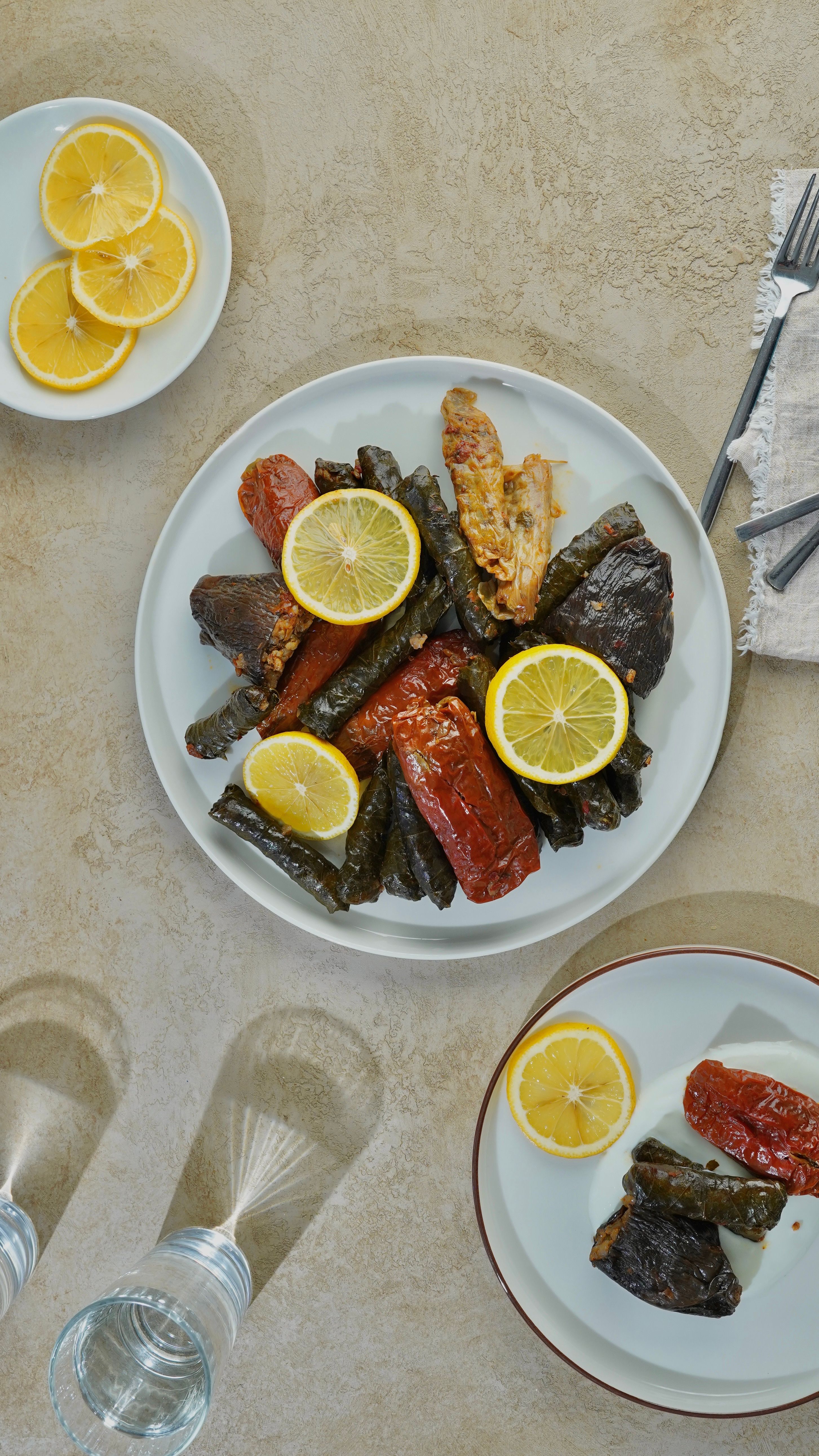
Photo: Gülsüm Çoban / Pexels
The diets react (see scores below)
Common Ingredients
- grape leaves
- beef
- pork
- rice
- onion
- herbs
- garlic
- spices
Specific recipes may vary.
Incompatible with 7 of 11 diets
Diet Ratings
Georgian Tolma contains rice as a primary filling ingredient, which is a high-carb grain that is strictly incompatible with ketogenic diets. A standard serving of Tolma would deliver a significant carbohydrate load from rice alone (roughly 25-40g net carbs per serving), easily exceeding or consuming the entire daily keto carb budget. While grape leaves themselves are very low in carbs and the beef/pork protein base is keto-friendly, the rice cannot be omitted without fundamentally changing the dish. The combination of rice-stuffed rolls makes this dish inherently incompatible with ketosis.
Georgian Tolma contains both beef and pork as primary protein sources, making it entirely incompatible with a vegan diet. Meat is a clear animal product excluded under all definitions of veganism. The dish's plant-based components — grape leaves, rice, onion, herbs, garlic, and spices — are all vegan-friendly, but they are incidental to the core animal protein content. There is no meaningful vegan adaptation of this dish that retains its traditional character without replacing the meat entirely.
Georgian Tolma contains rice, which is a grain and explicitly excluded from the paleo diet. Rice is a core non-paleo ingredient with clear consensus across all major paleo authorities (Cordain, Sisson, Wolf). While the other ingredients — grape leaves, beef, pork, onion, herbs, garlic, and spices — are largely paleo-compatible, the presence of rice as a primary structural ingredient makes this dish non-compliant. The dish cannot simply be modified by omission, as rice is integral to the filling.
Georgian Tolma combines two red meats (beef and pork) as its primary protein base, which significantly conflicts with Mediterranean diet principles. Red meat should be limited to a few times per month, yet this dish uses a mixed beef-pork filling as its core. The grape leaves are a genuinely Mediterranean-friendly wrapper (used extensively in Levantine and Greek cuisines), and the herbs, garlic, onion, and spices are excellent. However, white rice rather than a whole grain is used as the filler, adding another minor concern. The dominant issue is the dual red meat filling — neither beef nor pork qualifies as a moderate or encouraged protein under Mediterranean guidelines. This dish as constructed would be a rare-occasion food at best.
Some Mediterranean diet interpreters acknowledge that stuffed grape leaf dishes (dolma/sarma/tolma) are a traditional part of Eastern Mediterranean and Caucasian food culture, and argue that a small portion served infrequently could fit within the 'few times per month' red meat allowance, especially if the herb-to-meat ratio is high and no added saturated fats are used.
Georgian Tolma is fundamentally incompatible with the carnivore diet. While it contains animal-derived ingredients (beef and pork), the dish is wrapped in grape leaves and filled with rice, onion, herbs, garlic, and spices — all of which are plant-based and strictly excluded on a carnivore diet. The grain (rice) and grape leaves alone are disqualifying. There is no meaningful way to adapt this dish to carnivore standards without it ceasing to be Tolma entirely. The plant ingredients are not incidental trace additives but structural, load-bearing components of the recipe.
Georgian Tolma (stuffed grape leaves) contains rice, which is a grain explicitly excluded on the Whole30 program. Rice is listed among the prohibited grains alongside wheat, oats, corn, and quinoa. This single ingredient is enough to disqualify the dish regardless of the otherwise compliant components (beef, pork, grape leaves, onion, herbs, garlic, spices). The dish cannot be made Whole30-compatible without a fundamental reformulation replacing rice with a compliant alternative such as cauliflower rice.
Georgian Tolma (stuffed grape leaves) contains two high-FODMAP ingredients that are essentially non-negotiable in the recipe: onion and garlic. Both are high in fructans and must be avoided during the elimination phase at any standard serving size. Onion is one of the highest-FODMAP foods tested by Monash University, and garlic is similarly problematic with no safe serving size established. These aromatics are core to the dish's flavor base and cannot simply be removed without fundamentally altering the recipe. Grape leaves themselves are not well-tested by Monash but are generally considered low-risk. Rice is low-FODMAP and safe. The mixed beef and pork protein is low-FODMAP. However, the presence of both onion and garlic — typically cooked into the meat filling — makes this dish a clear avoid during the elimination phase.
Georgian Tolma combines grape leaves (a DASH-positive ingredient rich in antioxidants) with a beef-pork blend, rice, and aromatics. The dual red meat protein base (beef + pork) is the primary concern: DASH guidelines explicitly limit red meat and recommend lean poultry or fish instead. Pork adds saturated fat, and the beef-pork mixture is typically higher in total and saturated fat than DASH-preferred proteins. Grape leaves, while nutritious, are often preserved in brine and can carry significant sodium unless rinsed thoroughly or used fresh. The rice and vegetable aromatics (onion, garlic, herbs) are DASH-compatible. The dish is not inherently high in added sugar or heavily processed, but the red meat combination and potential sodium from brined grape leaves push it into caution territory. It could be improved for DASH by substituting lean ground turkey or chicken for the beef-pork blend and using fresh or well-rinsed grape leaves.
NIH DASH guidelines categorically limit red meat due to saturated fat content; however, some updated clinical interpretations note that lean cuts of beef used in modest portions within an otherwise DASH-compliant dietary pattern may be acceptable, and the overall nutrient profile of stuffed grape leaf dishes — with vegetables, herbs, and portion-controlled starch — is closer to Mediterranean eating patterns that many DASH clinicians now view favorably.
Georgian Tolma presents a mixed Zone Diet profile. Grape leaves are a favorable, low-glycemic wrapper and contribute polyphenols. Onion, garlic, and herbs are Zone-friendly additions. However, the dish has several Zone challenges: (1) The beef-pork mixed filling is fattier than Zone's preferred lean proteins (skinless chicken, fish), contributing excess saturated fat. (2) Rice is an 'unfavorable' high-glycemic carbohydrate in Zone terminology, and its inclusion in the filling disrupts the 40/30/30 ratio — rice adds carb blocks that compete with the grape leaves' carb contribution and push the glycemic load higher. (3) The protein-to-fat ratio skews unfavorably due to the pork content. With careful portioning — reducing rice quantity, using a leaner beef-to-pork ratio or substituting some pork with leaner ground turkey — Tolma could be nudged into Zone compliance. As traditionally prepared, it is difficult to balance without modification.
Some Zone practitioners would note that if the rice portion is kept very small (just enough to bind) and the serving size is controlled, Tolma's overall macro profile might be workable within a Zone meal — the grape leaves, vegetables, and herb components are all favorable, and Dr. Sears' later writings (The Mediterranean Zone) acknowledge that traditional Mediterranean and Caucasian cuisine patterns, including stuffed grape leaf dishes, align reasonably well with Zone anti-inflammatory principles when prepared with moderate rice and lean meat ratios.
Georgian Tolma presents a mixed anti-inflammatory profile. On the positive side, grape leaves are a notable anti-inflammatory ingredient — they contain polyphenols, quercetin, and resveratrol, and are widely used in Mediterranean and Caucasian cuisine. Garlic, herbs, and spices contribute meaningful anti-inflammatory compounds (allicin, flavonoids, etc.). Onion adds quercetin. However, the dish's primary protein is a combination of beef and pork — both red meats that the anti-inflammatory framework recommends limiting due to saturated fat content and arachidonic acid, which can promote inflammatory pathways. White rice, if used, is a refined carbohydrate with a neutral-to-mildly-inflammatory profile. The dish is not inherently processed and avoids trans fats or added sugars, which keeps it from the 'avoid' category. Overall, Tolma sits in moderate territory: the grape leaves, garlic, and herbs provide genuine anti-inflammatory value, but the beef-pork combination and likely white rice drag the profile down. Portion size and cooking method (steamed vs. fried) matter significantly here.
Some anti-inflammatory practitioners following Dr. Weil's broader Mediterranean-adjacent framework might give more credit to the dish's grape leaf wrapper and herb-heavy seasoning, arguing the overall culinary pattern — whole ingredients, no additives, aromatic spices — is more important than the red meat concern. Conversely, stricter anti-inflammatory and AIP-aligned practitioners would flag both the beef-pork combination and white rice more severely, potentially rating this closer to 'avoid' for individuals with elevated inflammatory markers or autoimmune conditions.
Georgian tolma consists of a beef-pork mixture with rice wrapped in grape leaves — a dish with mixed GLP-1 compatibility. The beef-pork combination introduces meaningful saturated fat, which can worsen nausea, bloating, and reflux in GLP-1 patients whose gastric emptying is already slowed. Rice adds digestible carbohydrate but low fiber, and dilutes the protein density per serving. On the positive side, grape leaves contribute a small amount of fiber and micronutrients, the dish is portion-friendly by structure (individual rolls), and the herbs, garlic, and spices are generally well-tolerated. Protein content is moderate but not high-density given the fat and rice co-load. The pork component is the primary concern — fatty ground pork significantly raises saturated fat per serving compared to lean beef alone. Overall, tolma is not ideal for GLP-1 patients in its traditional form but is not categorically off-limits if portion-controlled and made with leaner meat ratios.
Some GLP-1-focused dietitians would allow traditional tolma in small portions (2-3 rolls), arguing the protein contribution and whole-food ingredients outweigh the fat concern — particularly for patients who are not experiencing active GI side effects. Others would flag the beef-pork fat combination as a consistent nausea trigger and recommend a modified version using lean ground turkey or chicken before reintroducing traditional recipes.
*See how scores were generated at our methodology page.
Nutritional profile
Six traits that cut across every diet.
Fiber & Plants
How much whole-plant food and fiber it delivers.
Healthy Fats
The quality of its fats (unsaturated, omega-3).
Whole / Unprocessed
How close it is to its natural, unprocessed form.
Gut Gentle
How easy it is on digestion (low FODMAP, few irritants).
Low Glycemic
How little it spikes your blood sugar.
Protein Density
How much protein it packs per calorie.
Controversy Index
Higher controversy = more disagreement between diets.
Diet-Specific Tips
 DASH — 4/10
View tips
- Beef and pork combination increases saturated fat beyond DASH limits for red meat
- Brined/preserved grape leaves may carry high sodium — fresh or well-rinsed leaves preferred
- DASH guidelines explicitly discourage red meat; lean poultry or fish would be preferred substitutes
- Grape leaves provide fiber and micronutrients aligned with DASH
- Rice, onion, garlic, and herbs are DASH-compatible ingredients
- Portion size is critical — a small serving is more compatible than a large one
 Zone — 4/10
View tips
- Rice is an 'unfavorable' high-glycemic carbohydrate in Zone framework, raising glycemic load
- Beef-pork blend introduces excess saturated fat beyond Zone's preferred lean protein guidelines
- Grape leaves are a favorable, low-glycemic, polyphenol-rich wrapper
- Onion, garlic, and herbs are Zone-friendly and anti-inflammatory
- Dish is protein-centric but fat content from pork compromises the 30/30 protein-fat balance
- Could be modified toward Zone compliance by reducing rice and using leaner protein mix
 Anti-Inflammatory — 4/10
View tips
- Grape leaves: rich in polyphenols, quercetin, and resveratrol — a genuine anti-inflammatory ingredient
- Beef + pork combination: red meat duo increases saturated fat and arachidonic acid load, flagged as pro-inflammatory
- Garlic and herbs: meaningful anti-inflammatory contributors (allicin, flavonoids)
- White rice (likely): refined carbohydrate with neutral-to-mildly-inflammatory profile
- No processed ingredients, trans fats, or added sugars — a positive baseline
- Cooking method (typically steamed or braised) is relatively benign — no high-heat frying
 GLP-1 Friendly — 4/10
View tips
- Beef-pork combination raises saturated fat content, a known GLP-1 GI irritant
- Rice reduces protein density per calorie and contributes refined carbohydrate
- Grape leaves provide modest fiber and are easy to digest
- Portion-friendly format (individual rolls) suits GLP-1 small-meal eating pattern
- Herbs, garlic, and mild spices are generally well-tolerated
- Could be improved significantly by substituting lean ground turkey or chicken for pork