Photo: Janek Breithaupt / Pexels
The diets react (see scores below)
Common Ingredients
- pork sausage
- ketchup
- curry powder
- paprika
- onion
- sugar
Specific recipes may vary.
Incompatible with 10 of 11 diets
Diet Ratings
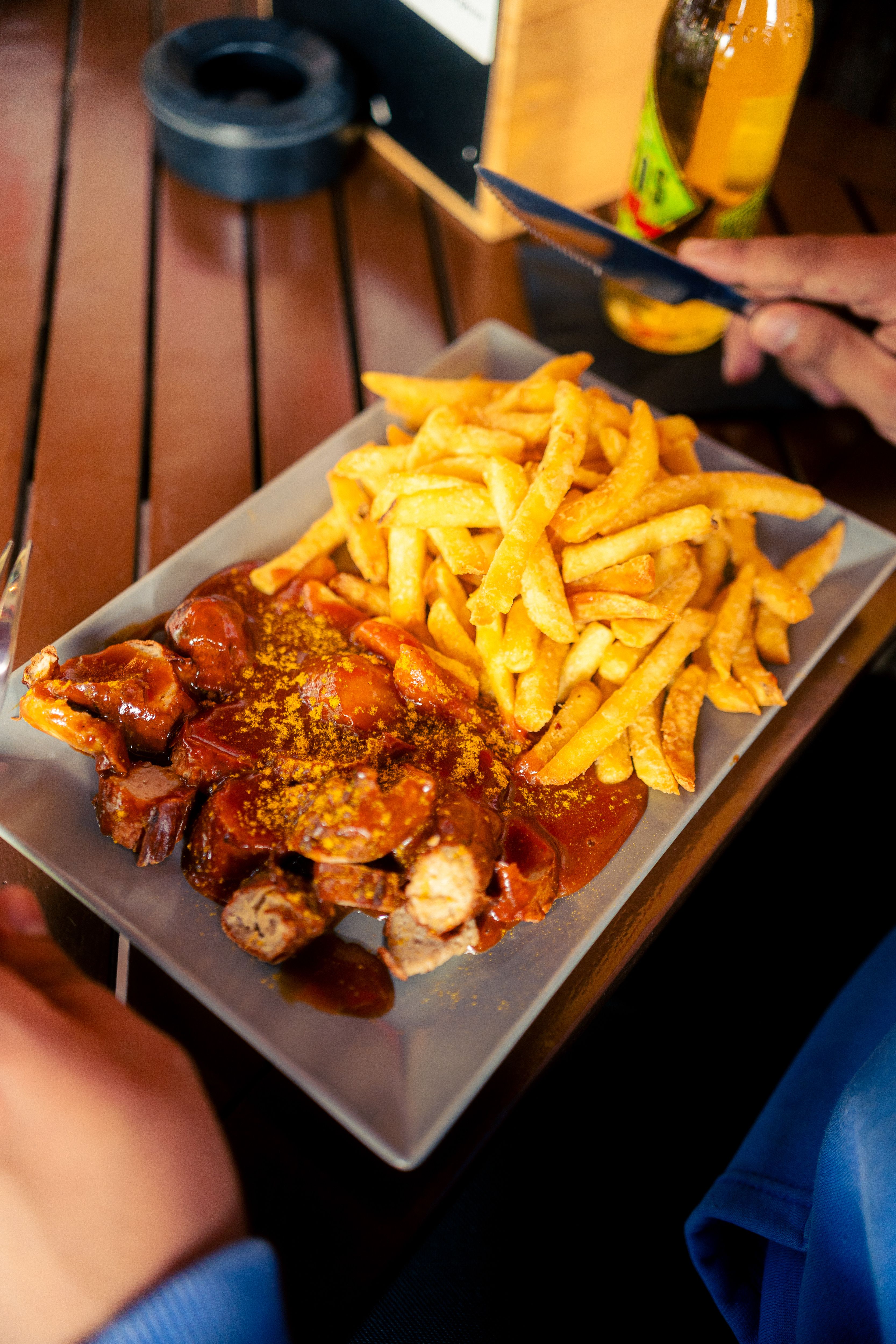
Currywurst is fundamentally incompatible with ketogenic eating in its traditional form. The ketchup-based curry sauce contains significant added sugar and high-fructose corn syrup, and additional sugar is explicitly listed as an ingredient. A standard serving of currywurst sauce typically contributes 15-25g of net carbs from the ketchup and sugar alone, easily pushing a single snack over the daily keto carb threshold. While the pork sausage base is keto-friendly in principle, the sauce transforms this dish into a high-sugar, high-carb item. Some versions are also served with fries (Pommes), adding further carbs, though the dish itself is evaluated here without that accompaniment.
Currywurst is fundamentally built around pork sausage, a direct animal product. There is no ambiguity here — pork is meat, and meat is categorically excluded from a vegan diet. The accompanying sauce (ketchup, curry powder, paprika, onion, sugar) is plant-based, but the primary and defining ingredient disqualifies the dish entirely.
Currywurst is fundamentally incompatible with the Paleo diet. The pork sausage is a processed meat product typically containing added salt, preservatives, fillers, and sometimes grains or starch binders. Ketchup contains refined sugar and often high-fructose corn syrup along with added salt and preservatives. The dish also explicitly lists sugar as an ingredient. While curry powder, paprika, and onion are Paleo-approved, the core components — processed sausage, sugar-laden ketchup, and added refined sugar — disqualify this dish clearly. Even if one were to source a clean, additive-free pork sausage, the ketchup and sugar additions would still render it non-compliant.
Currywurst is fundamentally incompatible with Mediterranean diet principles. It is built around a heavily processed pork sausage — a red/processed meat that the Mediterranean diet explicitly limits to a few times per month at most. Processed meats are among the foods most strongly discouraged, as they typically contain high levels of saturated fat, sodium, and preservatives. The dish is further undermined by ketchup (high added sugar, refined), additional sugar, and no redeeming plant-forward or whole-food components. The small amounts of onion, paprika, and curry powder are negligible nutritional contributors in this context. This is a German street-food snack with no meaningful alignment with Mediterranean dietary patterns.
Currywurst is fundamentally incompatible with the carnivore diet. While the base pork sausage could theoretically be carnivore-friendly, the dish is defined by its non-animal components: ketchup (tomato-based, high sugar), curry powder and paprika (plant-derived spice blends), onion (vegetable), and added sugar. These plant-based and processed ingredients are core to the dish's identity, not optional additions. Even the sausage itself often contains fillers, binders, or spices. The cumulative plant load — sauce, spices, vegetables, sugar — makes this a clear avoid with high confidence across all carnivore camps.
Currywurst contains added sugar as a listed ingredient, which is explicitly excluded on the Whole30 program. Additionally, most commercial pork sausages contain added sugar, preservatives, and other non-compliant additives. The ketchup used in traditional currywurst also typically contains added sugar. Even if a compliant sausage were sourced, the sugar listed in the recipe makes this dish non-compliant as described.
Currywurst contains multiple high-FODMAP ingredients that make it unsuitable during the elimination phase. Onion is one of the highest-FODMAP foods tested by Monash University, rich in fructans, and is a standard ingredient in both the sausage itself and the curry sauce. Commercial pork sausages frequently contain garlic and onion powder as fillers or flavourings, adding further fructan load. Ketchup in standard serving quantities (typically 2-4 tablespoons over a currywurst) exceeds the low-FODMAP threshold of 13g (~1 tablespoon) due to excess fructose from high-fructose corn syrup or concentrated tomato paste. The combination of these ingredients across a standard serving makes this dish decisively high-FODMAP. Curry powder and paprika are individually low-FODMAP in culinary amounts, and plain pork is low-FODMAP, but the onion and ketchup volume alone disqualify the dish.
Currywurst is fundamentally incompatible with the DASH diet. The primary component is pork sausage, which is a processed red meat high in sodium (typically 600-900mg per serving), saturated fat, and often contains nitrates/nitrites — all of which DASH explicitly limits. The ketchup adds additional sodium and added sugar. Pork sausage falls squarely into the category of processed red meat that DASH guidelines recommend avoiding. While curry powder, paprika, and onion are DASH-friendly spices and aromatics, they cannot offset the core nutritional liabilities of the dish. A single serving of Currywurst could easily account for 40-60% of the standard DASH daily sodium limit (2,300mg) and a significant portion of the saturated fat allowance.
Currywurst presents multiple Zone Diet challenges. The primary protein source — pork sausage — is a fatty, processed meat high in saturated fat and sodium, which Zone classifies as an 'unfavorable' protein. Dr. Sears specifically recommends lean proteins and discourages fatty processed meats. The ketchup-based curry sauce contains significant added sugar (listed as an explicit ingredient), pushing the carbohydrate load toward high-glycemic territory. Ketchup itself is essentially a high-sugar condiment. While curry powder, paprika, and onion are Zone-friendly (onion is a favorable low-GI vegetable and polyphenol-rich spices align with Zone's anti-inflammatory focus), these are minor components by mass. The overall macro profile skews toward saturated fat and high-glycemic carbs simultaneously — arguably the worst combination from a Zone perspective, as it fails to deliver lean protein OR low-GI carbs in meaningful proportions. Achieving a 40/30/30 balance with this dish as written is very difficult without fundamentally reformulating it. It scores a 3 rather than 1-2 because the spices and onion have Zone value, and small portions could theoretically be worked into a larger Zone meal, but as a standalone snack it is poorly suited.
Currywurst is a processed pork sausage dish that checks multiple pro-inflammatory boxes. The sausage itself is a processed red meat — high in saturated fat, sodium, and typically containing nitrates/nitrites and other additives, all of which are associated with increased inflammatory markers (CRP, IL-6). Commercial ketchup contributes added sugar and often high-fructose corn syrup. The sugar listed as a standalone ingredient compounds the glycemic load. While curry powder (turmeric, cumin, coriander) and paprika do contain anti-inflammatory polyphenols and curcumin, and onion provides quercetin, these beneficial spice contributions are minor and insufficient to offset the strongly pro-inflammatory base of processed pork sausage and sugary condiment. Anti-inflammatory frameworks broadly flag processed meats as a category to avoid — Dr. Weil's pyramid and the IF Rating system both penalize processed meats heavily. This dish is essentially the opposite of an anti-inflammatory meal: a processed, high-saturated-fat, high-sodium, high-sugar street food.
Currywurst is a poor choice for GLP-1 patients on multiple fronts. The primary ingredient is pork sausage, which is a high-fat, highly processed meat loaded with saturated fat and sodium — exactly the type of food that worsens GLP-1 side effects including nausea, bloating, and reflux due to slowed gastric emptying. The ketchup-based curry sauce adds significant added sugar with negligible nutritional value. Protein content, while present, comes packaged with a high saturated fat load, making it a poor protein source by GLP-1 dietary standards. The dish is low in fiber, calorie-dense relative to its nutrient value, and falls squarely into the ultra-processed, high-fat, high-sugar category that GLP-1 patients are advised to avoid. Curry powder and paprika are generally fine, and the onion adds a small fiber benefit, but these minor positives do not offset the core problems with this dish.
*See how scores were generated at our methodology page.
Nutritional profile
Six traits that cut across every diet.
Fiber & Plants
How much whole-plant food and fiber it delivers.
Healthy Fats
The quality of its fats (unsaturated, omega-3).
Whole / Unprocessed
How close it is to its natural, unprocessed form.
Gut Gentle
How easy it is on digestion (low FODMAP, few irritants).
Low Glycemic
How little it spikes your blood sugar.
Protein Density
How much protein it packs per calorie.
Controversy Index
Higher controversy = more disagreement between diets.
Diet-Specific Tips
 Zone — 5/10
View tips
- Pork sausage is a fatty, processed protein — Zone unfavorable; lean protein is the Zone ideal
- Ketchup and added sugar create high-glycemic carbohydrate load incompatible with Zone's low-GI carb principles
- High saturated fat content from sausage conflicts with Zone's preference for monounsaturated fats
- Processed meat with high sodium — contradicts Zone's anti-inflammatory focus
- Curry powder, paprika, and onion are Zone-positive polyphenol and anti-inflammatory ingredients but minor contributors
- Achieving 40/30/30 macro ratio from this dish as served is practically very difficult