Photo: Luis Becerra Fotógrafo / Pexels
The diets react (see scores below)
Common Ingredients
- flour
- eggs
- ground pork
- spinach
- onion
- breadcrumbs
- nutmeg
- broth
Specific recipes may vary.
Incompatible with 7 of 11 diets
Diet Ratings
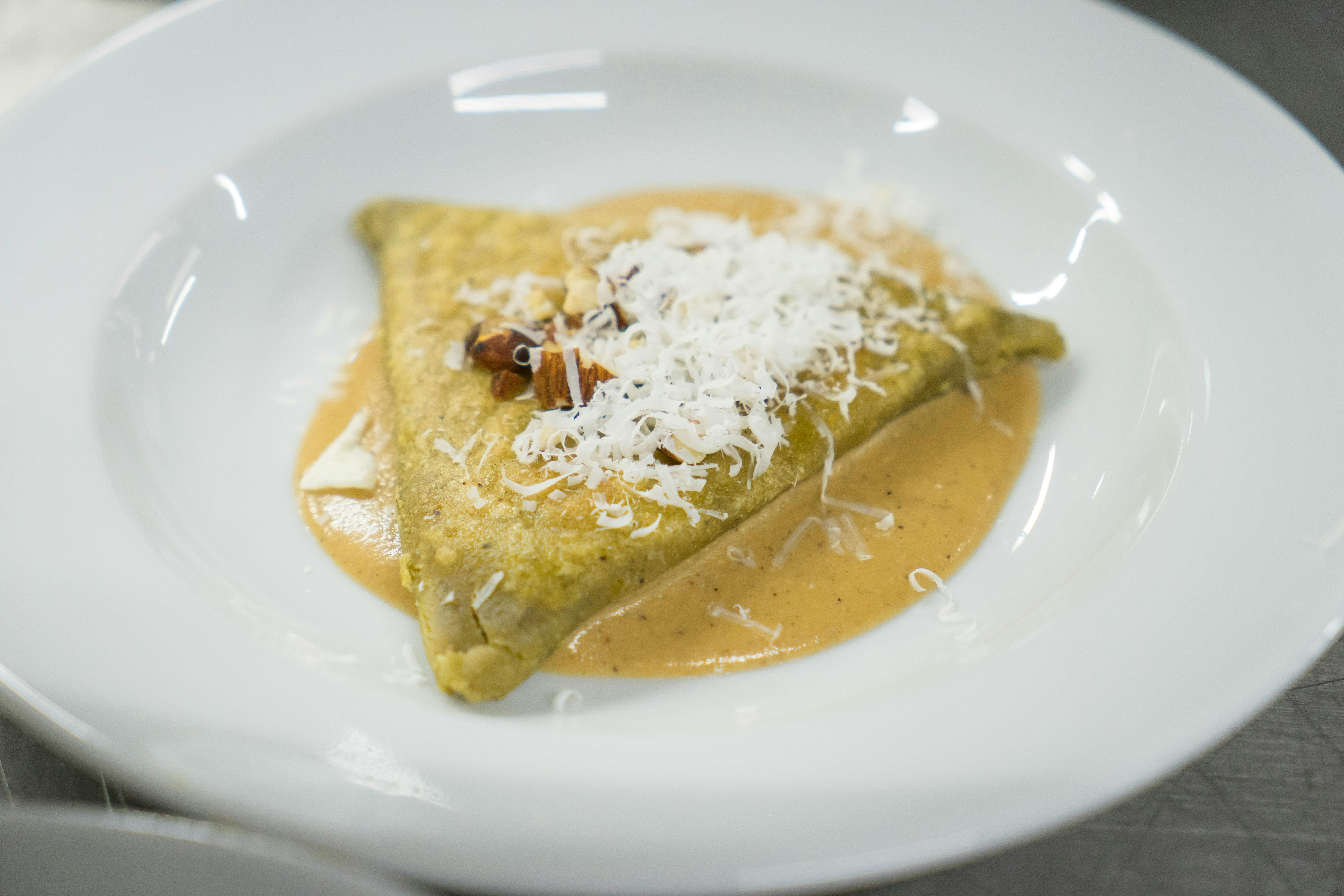
Maultaschen are German filled pasta dumplings, essentially the equivalent of ravioli. The dough wrapper is made from wheat flour, making this dish fundamentally grain-based and extremely high in net carbs. A standard serving of several Maultaschen would deliver 40-60g of net carbs from the pasta dough alone, immediately exceeding or maxing out a full day's keto carb budget. The breadcrumbs in the filling add further carbs. While the pork and spinach filling components are keto-friendly, the dish cannot be consumed in any meaningful portion without breaking ketosis. There is no way to modify Maultaschen into a keto-compatible dish without completely replacing the defining pasta wrapper, at which point it is no longer Maultaschen.
Maultaschen are German stuffed pasta dumplings containing multiple animal-derived ingredients. The pasta dough is made with eggs, the filling contains ground pork (meat), and the dish is typically cooked and served in broth (usually meat-based). This dish fails vegan criteria on multiple counts: eggs in the dough, pork in the filling, and animal-based broth. There is no ambiguity here — this is a fundamentally animal-product-based dish.
Maultaschen are German stuffed pasta dumplings, and the dish contains multiple clear paleo violations. The pasta dough is made from wheat flour, which is a grain and explicitly excluded from the paleo diet. Breadcrumbs, used in the filling, are also a grain-based product. These two ingredients alone disqualify the dish entirely under any mainstream paleo framework. The remaining ingredients — eggs, ground pork, spinach, onion, nutmeg, and broth — are paleo-compatible, but they cannot redeem a dish whose foundational structure depends on wheat-based components. There is no meaningful paleo adaptation possible without fundamentally deconstructing the dish into something unrecognizable as Maultaschen.
Maultaschen is a German stuffed pasta dish that conflicts with Mediterranean diet principles on multiple fronts. The primary protein is ground pork (red meat), which is limited to only a few times per month in the Mediterranean diet. The pasta dough is made from refined white flour, a refined grain discouraged in favor of whole grains. Breadcrumbs (also refined grain) are used as filler. The dish is not cooked in olive oil and has no Mediterranean dietary tradition. While spinach and onion are positive ingredients, they play a minor supporting role in what is fundamentally a pork-and-refined-grain dish. The overall nutritional profile — high in saturated fat from pork, built around refined carbohydrates — directly contradicts the plant-forward, whole-grain, limited-red-meat framework of the Mediterranean diet.
Maultaschen are German stuffed pasta dumplings — fundamentally incompatible with the carnivore diet. The dish is built on a wheat flour pasta dough (pasta wrapper) and breadcrumbs, both of which are grain-based plant foods explicitly excluded from any tier of carnivore eating. The filling also contains spinach (a leafy vegetable) and onion (another plant food), along with nutmeg (a plant-derived spice). While ground pork and eggs are carnivore-approved ingredients, they are minor components of a dish dominated by multiple plant-based foods. Even the most permissive carnivore practitioners who include dairy, coffee, or honey would unanimously reject this dish. There is no version of the carnivore diet — including Saladino's 'animal-based' approach — that permits wheat flour, breadcrumbs, spinach, and onions together in a single dish.
Maultaschen are German stuffed pasta dumplings. The dish contains multiple excluded ingredients: flour (a grain product used to make the pasta dough) and breadcrumbs (also grain-based). These make the dish non-compliant with Whole30, which excludes all grains. Furthermore, even if grain-free substitutes were used for the wrapper, Maultaschen are essentially a stuffed pasta/dumpling — a form explicitly prohibited under Whole30's 'no recreating pasta or noodles' rule (Rule 4). The filling ingredients (ground pork, spinach, onion, eggs, nutmeg, broth) are individually compliant, but the dish as a whole cannot be made Whole30-compatible in its traditional form.
Maultaschen are German stuffed pasta dumplings that contain multiple high-FODMAP ingredients making them unsuitable during the elimination phase. The pasta dough is made from wheat flour, which is high in fructans — a primary FODMAP concern. The breadcrumbs are also typically wheat-based, compounding the fructan load. Onion is one of the highest-FODMAP foods tested by Monash University, rich in fructans, and is a core ingredient in the filling. The broth used for cooking or serving is often made with onion and/or garlic, adding further FODMAP exposure. Ground pork, eggs, spinach, and nutmeg are individually low-FODMAP, but the combination of wheat pasta, wheat breadcrumbs, and onion makes this dish clearly high-FODMAP at any standard serving size.
Maultaschen are German filled pasta pockets (similar to ravioli) traditionally made with a ground pork and spinach filling. From a DASH perspective, the dish contains several beneficial elements — spinach provides potassium and magnesium, eggs and lean portions of pork contribute protein, and onion adds fiber and micronutrients. However, there are meaningful DASH concerns: ground pork is a red meat that may carry significant saturated fat depending on the cut used; the broth is typically high in sodium (a standard concern for German cooking); breadcrumbs add refined carbohydrates; and refined white flour pasta dough is not a whole grain. Commercially prepared or restaurant Maultaschen are frequently high in sodium from broth and seasoning. The dish is not inherently off-limits — a home-prepared version using lean ground pork, low-sodium broth, and portion control could be made more DASH-compatible — but as commonly consumed it sits in the caution zone due to sodium load and red meat/saturated fat content.
NIH DASH guidelines limit red meat and emphasize low-sodium foods, placing pork-based dishes like Maultaschen in a cautious category. However, some DASH-oriented clinicians note that lean pork (loin cuts) is increasingly recognized as a lean protein and that the spinach-rich filling and home-preparation with low-sodium broth can bring this dish closer to DASH principles — the key variable is preparation method and portion size.
Maultaschen are German stuffed pasta pockets — essentially large ravioli filled with ground pork, spinach, onions, and breadcrumbs, typically served in broth. From a Zone perspective, this dish presents a mixed profile. The pasta dough (flour + eggs) is a high-glycemic, refined carbohydrate, which Zone classifies as 'unfavorable.' The breadcrumb filler adds additional refined carbs. Ground pork provides protein but is fattier than Zone's preferred lean proteins (skinless chicken, fish). On the positive side, spinach and onion are excellent low-glycemic Zone-favorable vegetables, and the broth preparation is lighter than cream- or butter-based alternatives. The macro ratio skews toward carbohydrate-heavy and fat-heavy relative to protein, making it difficult to hit the 40/30/30 target without significant portion manipulation. A small portion (2-3 Maultaschen) paired with a large side salad and additional lean protein could theoretically be zoned, but the dish as-served is unlikely to be balanced. The combination of refined pasta + breadcrumbs pushes both the carb load and glycemic index well above Zone-favorable levels.
Some Zone practitioners using a flexible block approach might incorporate a small serving (1-2 pieces) as the carbohydrate block in a meal, counting the pasta and breadcrumbs as carb blocks and the pork/egg filling as partial protein blocks. Dr. Sears' later writings in 'Toxic Fat' and 'The Mediterranean Zone' show some flexibility toward whole-food pasta dishes, particularly if olive oil or omega-3-rich accompaniments are added to support the anti-inflammatory framework. The spinach filling also contributes polyphenols, which aligns with Sears' later emphasis.
Maultaschen are German stuffed pasta dumplings with a mixed anti-inflammatory profile. On the positive side, spinach provides antioxidants (lutein, zeaxanthin, folate, vitamin K), onion contributes quercetin (a notable anti-inflammatory flavonoid), eggs offer choline and selenium, and nutmeg has modest anti-inflammatory properties. The broth base is neutral to mildly beneficial. However, the dish has several limiting factors: ground pork is a red meat, which anti-inflammatory guidelines recommend limiting due to saturated fat and arachidonic acid content; refined wheat flour forms the pasta dough, adding refined carbohydrates with minimal fiber; and breadcrumbs (typically refined) add further refined carb load. The overall dish is moderate in saturated fat and lacks the omega-3s, colorful antioxidant diversity, or polyphenol-rich ingredients that would push it toward an 'approve' rating. It is a traditional comfort food that sits in the neutral-to-cautionary zone — not aggressively pro-inflammatory, but not actively anti-inflammatory either. Consumed occasionally as part of a broader anti-inflammatory dietary pattern, it is acceptable.
Some anti-inflammatory frameworks (e.g., Dr. Weil's more flexible Mediterranean-influenced approach) would view a single pork-containing dish as perfectly acceptable in moderation, especially given the vegetable component (spinach, onion). Stricter anti-inflammatory or AIP-leaning practitioners would flag both the refined flour pasta and pork more strongly, potentially pushing this toward a low score given the red meat + refined grain combination.
Maultaschen are German filled pasta dumplings — a wheat-flour pasta dough wrapped around a filling of ground pork, spinach, onion, breadcrumbs, and egg, typically served in or alongside broth. The dish has genuine nutritional merit for GLP-1 patients but also meaningful drawbacks. On the positive side, it provides moderate protein from the pork and egg components, spinach adds micronutrients and some fiber, and serving in broth supports hydration and digestibility while keeping the dish lighter than fried or cream-based preparations. The broth-based preparation is notably easier on the stomach than pan-fried versions. However, the primary protein source is ground pork, which is moderate-to-high in saturated fat depending on the fat percentage used — lean ground pork improves the profile considerably. The pasta dough adds refined carbohydrates with low fiber contribution, and breadcrumbs in the filling further dilute protein density per calorie. The overall protein-to-calorie ratio is moderate but not optimal for GLP-1 patients prioritizing protein density. Portion sensitivity is significant: a small serving (2-3 pieces in broth) is reasonable, but a larger serving increases refined carb and fat load quickly. Nutmeg is a mild spice unlikely to cause GI issues. The dish is not fried and not heavily processed, which works in its favor.
Some GLP-1-focused dietitians would rate this more favorably when prepared with lean ground pork and served in broth, arguing that the combined protein from pork and egg, paired with the digestibility of broth-based preparation, makes it a culturally appropriate moderate choice. Others would caution more strongly against the refined pasta dough and breadcrumbs, viewing the low fiber and moderate saturated fat as meaningful negatives for patients already eating very small volumes who cannot afford low-nutrient-density fillers.
*See how scores were generated at our methodology page.
Nutritional profile
Six traits that cut across every diet.
Fiber & Plants
How much whole-plant food and fiber it delivers.
Healthy Fats
The quality of its fats (unsaturated, omega-3).
Whole / Unprocessed
How close it is to its natural, unprocessed form.
Gut Gentle
How easy it is on digestion (low FODMAP, few irritants).
Low Glycemic
How little it spikes your blood sugar.
Protein Density
How much protein it packs per calorie.
Controversy Index
Higher controversy = more disagreement between diets.
Diet-Specific Tips
 DASH — 4/10
View tips
- Ground pork is a red meat; saturated fat content depends heavily on pork cut used
- Broth-based preparation and seasoning typically contribute significant sodium
- Refined white flour pasta dough — not a whole grain as DASH prefers
- Spinach filling is a DASH-positive ingredient rich in potassium and magnesium
- Sodium concern is reduced significantly when low-sodium broth is used at home
- Portion control is critical — one or two pieces vs. a large serving changes the DASH calculus
- Commercially prepared versions are likely higher in sodium and saturated fat than homemade
 Zone — 4/10
View tips
- Refined wheat flour pasta dough is a high-glycemic 'unfavorable' carbohydrate in Zone terminology
- Breadcrumbs add additional refined carb load, compounding glycemic concerns
- Ground pork is higher in saturated fat than Zone-preferred lean proteins like skinless chicken or fish
- Spinach and onion are Zone-favorable low-glycemic vegetables, a positive element
- Broth preparation is lighter than cream or fried alternatives, reducing unnecessary fat
- Dish macro ratio skews carb-heavy and fat-heavy relative to protein, making 40/30/30 difficult
- Small portions paired with lean protein and vegetables could theoretically be zoned
 Anti-Inflammatory — 5/10
View tips
- Ground pork is a red meat — limited in anti-inflammatory guidelines due to saturated fat and arachidonic acid
- Refined wheat flour pasta dough adds refined carbohydrates with low fiber
- Spinach provides anti-inflammatory antioxidants (lutein, zeaxanthin, folate, vitamin K)
- Onion contributes quercetin, a well-researched anti-inflammatory flavonoid
- Breadcrumbs add additional refined carbohydrate load
- Nutmeg has modest anti-inflammatory properties at culinary doses
- No omega-3-rich ingredients, no olive oil, no legumes or whole grains
- Acceptable occasionally within a broader anti-inflammatory dietary pattern
 GLP-1 Friendly — 5/10
View tips
- Moderate protein from ground pork and egg, but protein density per calorie is diluted by pasta dough and breadcrumbs
- Ground pork carries moderate saturated fat — fat content highly dependent on pork fat percentage used
- Refined wheat pasta dough contributes low-fiber refined carbohydrates
- Broth-based serving improves digestibility, hydration, and reduces overall fat load vs. pan-fried preparation
- Spinach adds micronutrients but fiber contribution is modest in typical filling quantities
- Portion-sensitive: 2-3 pieces in broth is reasonable; larger servings increase carb and fat load significantly
- Not fried, not heavily processed, no high-sugar components — favorable preparation profile
- Nutmeg is GI-neutral at culinary amounts