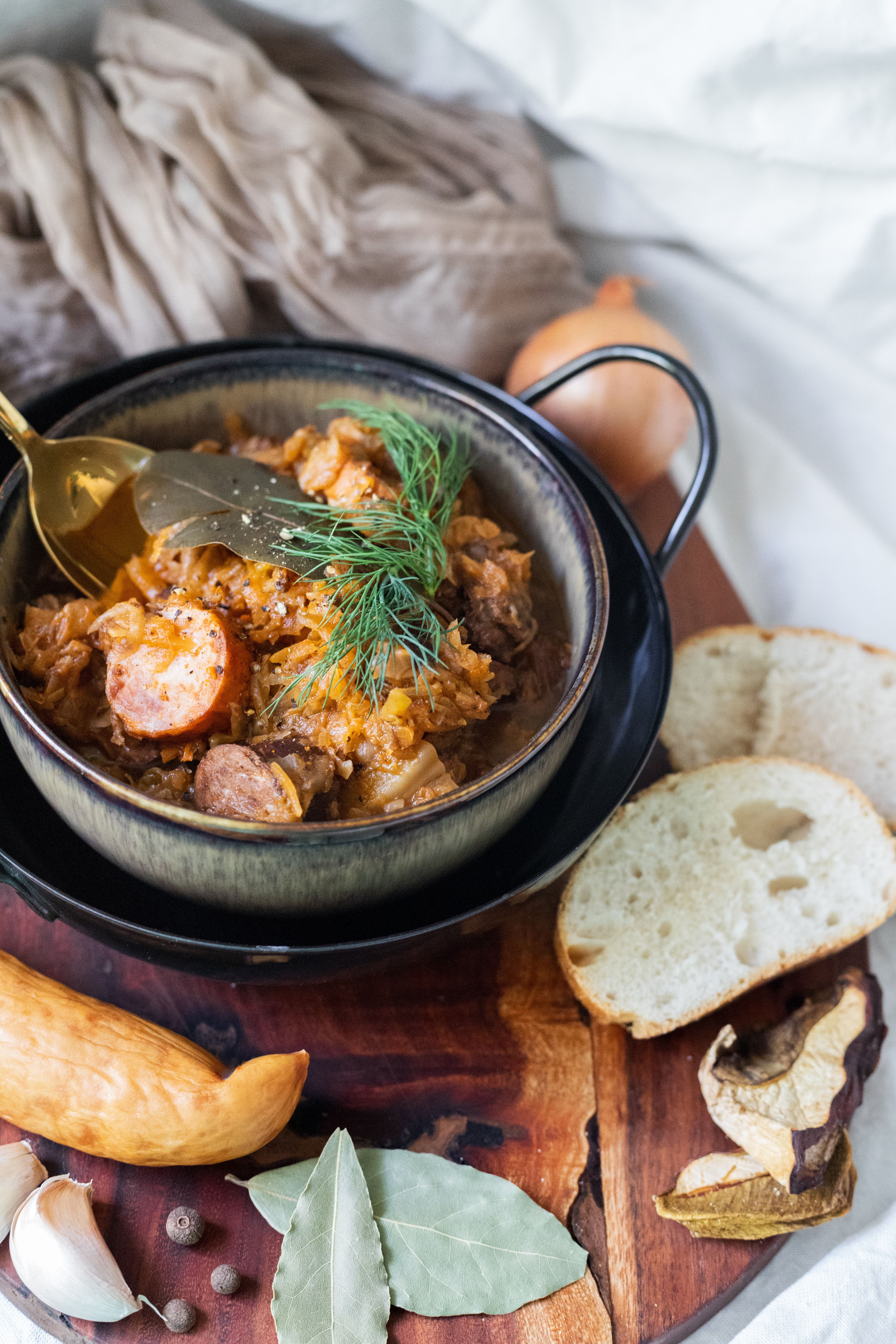
Photo: Veronika Benz / Pexels
The diets react (see scores below)
Common Ingredients
- cabbage
- salt
- caraway seeds
- juniper berries
- bay leaves
Specific recipes may vary.
Incompatible with 1 of 11 diets
Diet Ratings
Sauerkraut is fermented cabbage with minimal net carbs — approximately 1-2g net carbs per 100g serving after accounting for fiber. The fermentation process actually consumes some of the cabbage's natural sugars, making it lower in carbs than raw cabbage. The ingredients are all keto-friendly: salt, caraway seeds, juniper berries, and bay leaves add negligible carbs. Additionally, sauerkraut provides probiotic benefits which many keto practitioners value for gut health. A standard 50-100g portion fits comfortably within daily carb limits.
Some strict keto protocols flag sauerkraut with caution due to cumulative carb intake — practitioners tracking very tightly (under 20g/day) may find that sauerkraut, combined with other vegetables, can push them toward their limit. A small minority also notes that the natural sugars remaining post-fermentation, though minimal, may be a concern for those with extreme carb sensitivity.
Sauerkraut is fermented cabbage seasoned with salt and optional spices — entirely plant-based with no animal products or derivatives. All listed ingredients (cabbage, salt, caraway seeds, juniper berries, bay leaves) are vegan-compliant. As a whole-food, minimally processed fermented product, it scores highly not just for vegan compliance but also for nutritional value, providing probiotics, vitamins, and fiber. Traditional German sauerkraut contains no dairy, eggs, or other animal-derived ingredients.
Sauerkraut is fermented cabbage — a vegetable that is clearly paleo-approved. The fermentation process itself is ancient and natural, and the probiotic benefits are widely valued in paleo circles. However, the inclusion of added salt is a direct conflict with strict paleo guidelines, which exclude added salt as a non-Paleolithic addition. Caraway seeds, juniper berries, and bay leaves are all paleo-compliant herbs and spices. The dish is essentially a single whole food transformed by fermentation, which aligns with paleo philosophy, but the salt requirement for proper fermentation and safety makes it a gray area under strict interpretation.
Some strict paleo authorities, including Loren Cordain's original framework, exclude added salt entirely, which would push sauerkraut toward 'avoid.' Conversely, many modern paleo practitioners like Mark Sisson and Chris Kresser actively encourage fermented vegetables including sauerkraut for gut health benefits, treating the minimal salt used in fermentation as acceptable or even arguing that unrefined salt has ancestral precedent.
Sauerkraut is fermented cabbage — a whole, plant-based food with no added sugars, refined grains, or unhealthy fats. The fermentation process aligns well with Mediterranean dietary principles emphasizing whole, minimally processed plant foods and also introduces beneficial probiotics. Cabbage is a cruciferous vegetable, and caraway seeds, juniper berries, and bay leaves are wholesome spices. The primary concern is sodium content from the salt used in fermentation, which is higher than in fresh vegetables. However, sauerkraut is typically consumed in small portions as a condiment or side, limiting overall sodium intake. While not a traditional Mediterranean staple (it is Central/Northern European), its nutritional profile fits Mediterranean principles well.
Some Mediterranean diet purists note that fermented vegetables in the Mediterranean tradition lean toward options like olives or pickled vegetables in brine with olive oil, and that sauerkraut's high sodium content runs counter to the heart-healthy emphasis of Mediterranean guidelines. Modern clinical interpretations may caution those with hypertension to limit it.
Sauerkraut is entirely plant-derived with zero animal products. The base ingredient is cabbage, a vegetable explicitly excluded from the carnivore diet. The fermentation process does not change the plant origin of the food. Additional ingredients — caraway seeds, juniper berries, and bay leaves — are all plant-based spices and botanicals, further compounding the incompatibility. Salt is the only carnivore-acceptable component. There is no animal protein, animal fat, or any animal-derived ingredient in this dish.
Sauerkraut made from cabbage, salt, caraway seeds, juniper berries, and bay leaves is fully Whole30 compliant. All ingredients are whole, natural foods explicitly permitted on the program. Cabbage is a vegetable, salt is explicitly allowed, and caraway seeds, juniper berries, and bay leaves are herbs/spices with no restrictions. The fermentation process uses only salt and naturally occurring bacteria — no added sugars, vinegar, or other excluded ingredients are present. Sauerkraut is also a beneficial fermented food that aligns well with the Whole30 philosophy of gut health and whole-food eating.
Sauerkraut is fermented cabbage, and fermentation significantly changes its FODMAP profile. Raw cabbage is moderate-to-high in FODMAPs (fructans and polyols), but the lacto-fermentation process breaks down many of these fermentable carbohydrates. Monash University has tested sauerkraut and rates it as low-FODMAP at a small serving of approximately 75g (about 1/2 cup). The remaining ingredients — salt, caraway seeds, juniper berries, and bay leaves — are used in small culinary quantities and do not contribute meaningful FODMAPs. However, the safe serving size is relatively small, and portions beyond ~75g can push fructan and polyol levels into problematic territory. In practice, people often consume sauerkraut in larger quantities as a condiment or side dish, which creates real-world risk. Additionally, the degree of fermentation can vary significantly between commercial and homemade preparations, affecting FODMAP degradation and making consistent dosing difficult.
Monash University rates sauerkraut as low-FODMAP at 75g, but many clinical FODMAP practitioners advise caution during strict elimination because fermentation time and method vary widely — less fermented batches may retain higher fructan levels from the cabbage. Some practitioners also note that sauerkraut's probiotic activity can cause GI symptoms in sensitive IBS patients independent of FODMAP content, complicating its use during elimination.
Sauerkraut is made from cabbage — an excellent DASH-friendly vegetable — but the fermentation process requires substantial salt, resulting in very high sodium content. A typical 1/2-cup serving of sauerkraut contains approximately 460–900mg of sodium, which can consume 20–60% of the daily sodium budget on the standard DASH plan (2,300mg) or an even larger proportion on the low-sodium DASH plan (1,500mg). While the underlying cabbage provides fiber, potassium, and beneficial nutrients, and fermentation adds probiotics that may support gut health, the sodium load makes sauerkraut problematic for DASH adherence if consumed in typical portions or frequently. The NIH/NHLBI DASH guidelines explicitly emphasize limiting sodium and favor fresh or frozen vegetables without added salt over high-sodium processed or fermented varieties. Low-sodium sauerkraut products exist and would score considerably higher (6–7), but the standard commercially prepared or traditionally made product is a caution food requiring strict portion control.
Sauerkraut is fermented cabbage — a Zone-favorable food on multiple levels. Cabbage is a non-starchy, low-glycemic vegetable that fits squarely into the Zone's emphasis on colorful, fibrous carbohydrates. Net carbs are very low (roughly 1-2g net carbs per half-cup serving after subtracting fiber), making it easy to incorporate as part of a carbohydrate block without overshooting the 40% carb target. The fermentation process adds probiotic bacteria, which aligns with Sears' later anti-inflammatory focus and gut health emphasis. Salt is a processing agent, not a macro concern. Caraway seeds, juniper berries, and bay leaves add negligible macros but contribute polyphenols, further supporting Zone's anti-inflammatory principles. Sauerkraut contains no protein or fat to speak of, so it functions purely as a favorable low-glycemic carbohydrate side. It pairs well with lean proteins (e.g., grilled pork tenderloin or chicken) and a monounsaturated fat source to complete a Zone-balanced plate. The only minor caution is sodium content from the salt used in fermentation, which is a health consideration but not a Zone macronutrient concern.
Sauerkraut is fermented cabbage, which combines two strongly anti-inflammatory elements: cruciferous vegetables and probiotic fermentation. Cabbage is rich in vitamin C, vitamin K, and polyphenols including anthocyanins and glucosinolates, which have demonstrated anti-inflammatory activity in research. The lacto-fermentation process produces beneficial Lactobacillus bacteria that support gut microbiome diversity — a key driver of systemic inflammation reduction. A healthy gut lining is strongly associated with lower inflammatory markers like CRP and IL-6. Caraway seeds contribute flavonoids and have traditional anti-inflammatory and digestive properties. Juniper berries contain terpenes and antioxidants. Bay leaves provide additional phytonutrients. The only meaningful concern is sodium content from salt, which at high intake can promote inflammation and raise blood pressure in salt-sensitive individuals. However, sauerkraut is typically consumed in small portions as a condiment or side, making sodium less of a practical issue. Dr. Andrew Weil explicitly endorses fermented foods like sauerkraut for gut health and their downstream anti-inflammatory effects.
While mainstream anti-inflammatory nutrition strongly supports fermented foods, some practitioners following stricter anti-inflammatory or autoimmune protocols (e.g., Dr. Tom O'Bryan's gut-focused approaches) caution that high-histamine foods like sauerkraut — histamine being a byproduct of fermentation — can trigger inflammatory responses in individuals with histamine intolerance or mast cell activation syndrome. For the general population this is not a concern, but it is a meaningful consideration for those with autoimmune conditions or known histamine sensitivity.
Sauerkraut is fermented cabbage — low in calories, low in fat, and a reasonable source of fiber (~2g per half-cup serving). The fermentation process produces probiotics (Lactobacillus strains) that may support gut health and help offset the constipation and digestive disruption common with GLP-1 medications. It is easy to digest in small portions and nutrient-dense per calorie. However, it contains no meaningful protein, which is the #1 dietary priority on GLP-1s, so it cannot anchor a meal. The primary concern is its very high sodium content — typically 400–700mg per half-cup — which can contribute to water retention and may be problematic for patients with hypertension, a common comorbidity in the GLP-1 patient population. The strong acidic, fermented flavor may also aggravate reflux or nausea in patients already experiencing GLP-1-related GI side effects. Rated as a caution: a useful condiment-sized addition to a protein-anchored meal, not a standalone side.
Some GLP-1-focused RDs actively recommend fermented foods like sauerkraut for their probiotic benefit, arguing that gut microbiome support is an underappreciated factor in GLP-1 tolerability and that the fiber-to-calorie ratio is excellent. Others caution against it specifically for patients experiencing nausea or acid reflux, as the acidity and fermented odor can be sensory triggers, and flag the high sodium load as a reason to limit frequency rather than recommend it broadly.
*See how scores were generated at our methodology page.
Nutritional profile
Six traits that cut across every diet.
Fiber & Plants
How much whole-plant food and fiber it delivers.
Healthy Fats
The quality of its fats (unsaturated, omega-3).
Whole / Unprocessed
How close it is to its natural, unprocessed form.
Gut Gentle
How easy it is on digestion (low FODMAP, few irritants).
Low Glycemic
How little it spikes your blood sugar.
Protein Density
How much protein it packs per calorie.
Controversy Index
Higher controversy = more disagreement between diets.
Diet-Specific Tips
 Keto — 8/10
View tips
- Low net carbs (~1-2g per 100g after fiber deduction)
- Fermentation reduces natural sugars further
- All ingredients are keto-compatible with negligible carb contribution
- Rich in probiotics, valued by many keto practitioners
- Portion control still advisable for those near their 20g daily carb ceiling
- No added sugars, grains, or high-carb ingredients
 Vegan — 9/10
View tips
- Cabbage is a whole plant food
- Salt is a mineral with no animal origin
- Caraway seeds, juniper berries, and bay leaves are all plant-derived spices
- Fermentation is a natural microbial process with no animal involvement
- No animal-derived additives or preservatives in traditional preparation
- High nutritional value as a fermented whole food
 Paleo — 5/10
View tips
- Cabbage is a fully paleo-approved vegetable
- Fermentation is an ancient, natural preservation process valued in paleo for probiotic content
- Added salt is technically excluded under strict paleo rules
- Caraway seeds, juniper berries, and bay leaves are all paleo-compliant
- Many modern paleo authorities actively recommend fermented vegetables
- Strict Cordain-school paleo would flag the added salt as non-compliant
 Mediterranean — 8/10
View tips
- Whole plant-based ingredient (cabbage)
- Fermented food with probiotic benefits
- No added sugars, refined grains, or unhealthy fats
- High sodium content from salt fermentation
- Used in small portions, mitigating sodium concern
- Not a traditional Mediterranean food but nutritionally compatible
 Whole30 — 9/10
View tips
- Cabbage is a Whole30-approved vegetable
- Salt is explicitly allowed on Whole30
- Caraway seeds, juniper berries, and bay leaves are compliant herbs and spices
- Fermentation uses only salt and natural bacteria — no excluded additives
- No sugar, dairy, grains, legumes, or other excluded ingredients present
- Fermented foods are consistent with Whole30's whole-food philosophy
 Low-FODMAP — 5/10
View tips
- Fermentation reduces but does not eliminate FODMAPs from cabbage
- Monash rates sauerkraut as low-FODMAP at 75g (approximately 1/2 cup)
- Portions beyond 75g become high-FODMAP due to residual fructans and polyols
- Salt, caraway seeds, juniper berries, and bay leaves contribute negligible FODMAPs at culinary doses
- Fermentation consistency varies across commercial and homemade preparations
- Standard side-dish servings may easily exceed the Monash safe threshold
 DASH — 4/10
View tips
- Very high sodium content (460–900mg per 1/2-cup serving) conflicts directly with DASH sodium limits
- Base ingredient (cabbage) is an excellent DASH vegetable rich in fiber and potassium
- Fermentation process necessitates large amounts of salt, a core DASH limitation
- NIH DASH guidelines explicitly favor fresh/frozen vegetables over high-sodium processed forms
- Low-sodium sauerkraut alternatives would score significantly higher and be more DASH-compatible
- Probiotic content is a nutritional positive but does not offset the sodium concern within DASH framework
- Caraway seeds, juniper berries, and bay leaves add negligible sodium and are DASH-neutral
 Zone — 8/10
View tips
- Very low net carbohydrates after fiber — easy to fit into Zone carb blocks
- Non-starchy fermented vegetable — clearly 'favorable' carbohydrate in Zone terminology
- Probiotic content supports Sears' anti-inflammatory and gut health emphasis
- Polyphenols from caraway seeds and juniper berries align with Zone's anti-inflammatory focus
- No protein or fat — functions as a pure low-glycemic carb component requiring pairing with lean protein and monounsaturated fat
- Elevated sodium from fermentation is a general health note but irrelevant to Zone macro ratios
 Anti-Inflammatory — 8/10
View tips
- Fermented food — rich in Lactobacillus probiotics supporting gut microbiome and reducing systemic inflammation
- Cabbage provides glucosinolates, polyphenols, and vitamin C with documented anti-inflammatory properties
- Caraway seeds and juniper berries contribute additional flavonoids and antioxidants
- Sodium content is a moderate concern but minimized by typical small serving sizes
- High-histamine food — potential concern for individuals with histamine intolerance or autoimmune conditions
- Whole, minimally processed ingredients with no refined sugars, seed oils, or additives
 GLP-1 Friendly — 6/10
View tips
- No protein — cannot anchor a meal, must be paired with a high-protein main
- Probiotic content from fermentation may support GI health and help with GLP-1-related constipation
- High fiber relative to calorie count — positive for satiety and digestion
- Very high sodium (~400–700mg per half-cup) — caution for hypertensive patients
- Acidic and strongly flavored — may worsen reflux or nausea in GLP-1 patients with active GI side effects
- Low fat, low calorie — does not worsen nausea from a fat-load perspective
- Best used as a small condiment-portion topping rather than a primary side dish