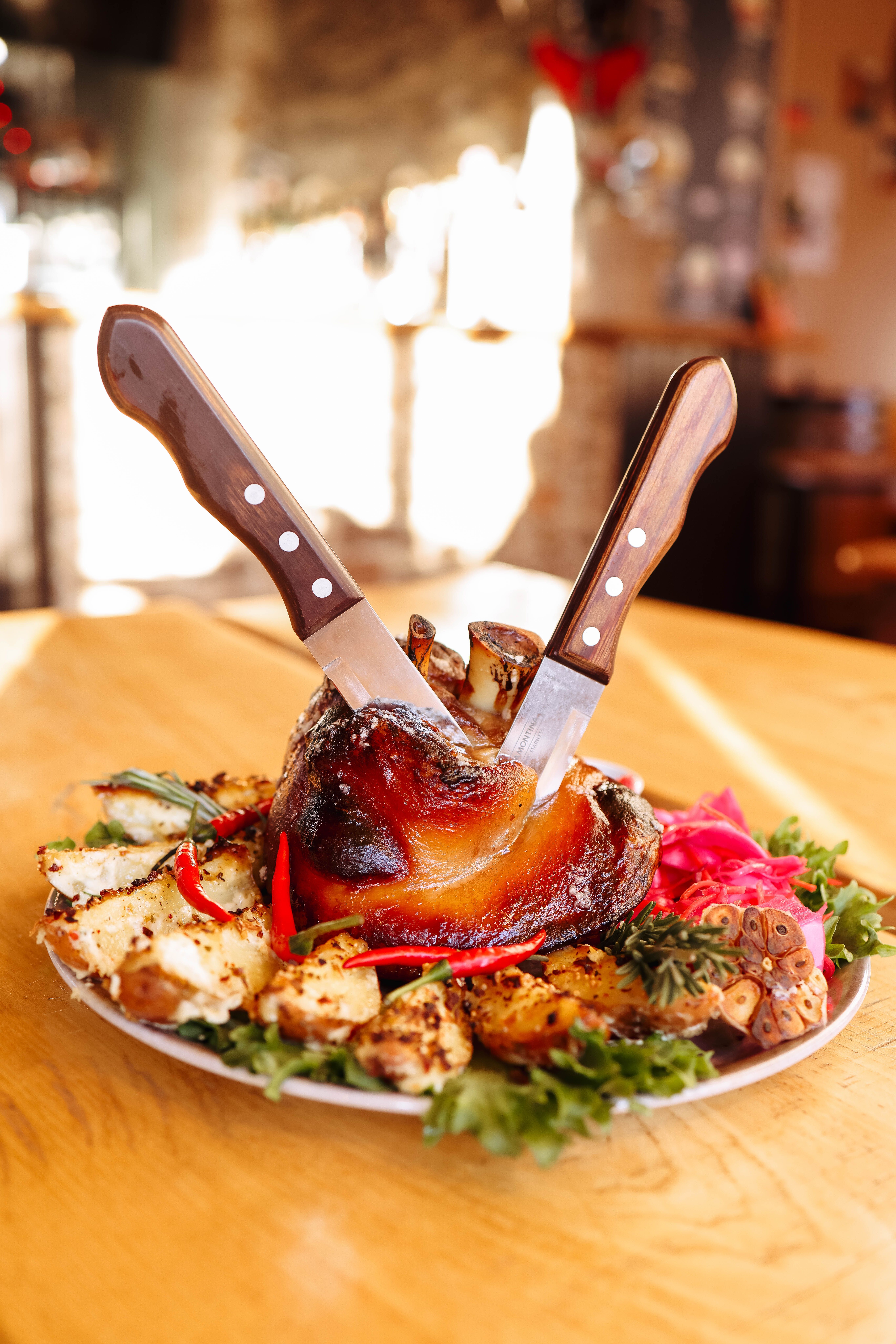
Photo: Valeria Boltneva / Pexels
The diets react (see scores below)
Common Ingredients
- pork knuckle
- caraway
- garlic
- onion
- beer
- salt
- pepper
Specific recipes may vary.
Incompatible with 8 of 11 diets
Diet Ratings
Schweinshaxe is fundamentally a high-fat, moderate-protein pork dish that aligns well with keto macros. The pork knuckle itself is excellent — rich in fat and collagen with zero carbs. Caraway, garlic, salt, and pepper add negligible carbs. The two problematic elements are beer and onion. Traditional Schweinshaxe is braised in beer, which contains maltose and residual sugars; while much of this cooks off during long braising, a meaningful carb contribution remains (estimated 3-8g net carbs depending on portion of braising liquid absorbed). Onion adds a small but real carb load. If prepared without beer (substituting broth) and with minimal onion, this dish would be a solid keto approve. As traditionally made, it sits in caution territory — manageable for most keto practitioners with awareness, but not ideal.
Strict keto purists argue that any beer-based preparation should be avoided outright, as even residual alcohol and fermentable sugars from beer can disrupt ketosis and trigger carb cravings, recommending a full substitution with bone broth or water.
Schweinshaxe is a traditional German roasted pork knuckle dish. The primary ingredient is pork, a direct animal product, making it categorically incompatible with a vegan diet. There is no ambiguity here — pork is animal flesh and is excluded under all definitions of veganism.
Schweinshaxe is a traditional German roasted pork knuckle that is largely paleo-compatible in concept — pork is an excellent paleo protein, and garlic, onion, caraway, and pepper are all approved herbs and spices. However, two ingredients disqualify this dish: beer (a grain-based alcohol derived from barley or wheat, firmly excluded from paleo) and added salt (excluded under strict paleo rules). Beer is not merely a gray-area alcohol like wine or spirits; it is directly grain-derived and carries grain-based anti-nutrients and gluten. Salt, while a minor infraction in isolation, is also on the avoid list. The dish as traditionally prepared cannot be considered paleo-compliant without substituting or removing these ingredients.
Schweinshaxe is a traditional German roasted pork knuckle dish that directly contradicts Mediterranean diet principles. Pork knuckle is a fatty cut of red/processed-adjacent meat, high in saturated fat, and should be consumed only a few times per month at most under Mediterranean guidelines. The dish is centered entirely around a large portion of pork as the main feature, with no plant-forward emphasis. While the aromatics (garlic, onion, caraway) and spices are fine, they play a minor supporting role. Beer as a braising liquid adds refined carbohydrates and is not a Mediterranean cooking tradition. The overall dietary pattern this dish represents — heavy, meat-centric, high saturated fat — is the antithesis of the Mediterranean approach.
Schweinshaxe is a pork knuckle dish that would otherwise be an excellent carnivore meal — pork is an animal product, the knuckle is a fatty, collagen-rich cut — but the traditional preparation includes multiple plant-based ingredients that disqualify it under carnivore rules. Caraway seeds, garlic, onion, beer, and black pepper are all plant-derived and excluded from the carnivore diet. Beer in particular is a grain-based alcoholic beverage that is doubly problematic. The dish as traditionally prepared cannot be considered carnivore-compatible. A strict carnivore version would require the pork knuckle to be prepared with salt only.
Schweinshaxe as listed contains beer, which is explicitly excluded on Whole30 for two reasons: it is alcohol, and it is grain-based (brewed from barley/wheat). While the pork knuckle itself is fully compliant, and the aromatics (caraway, garlic, onion, salt, pepper) are all Whole30-approved, the beer used in braising or as a cooking liquid is a hard exclusion. Alcohol is not permitted in any form on Whole30, including as a cooking ingredient, as the program's position is that even alcohol used in cooking should be avoided during the 30 days.
Schweinshaxe contains multiple high-FODMAP ingredients that make it unsuitable during the elimination phase. Garlic and onion are among the highest-FODMAP foods tested by Monash University, both rich in fructans, and they are used as core flavoring ingredients in this dish — not incidentally. Beer is high-FODMAP due to its fructan and gluten content (regular wheat/barley beer), and is used as a braising liquid, infusing FODMAPs throughout the dish. While the pork knuckle itself is protein and fat (low-FODMAP), caraway is low-FODMAP in small amounts, and salt/pepper are fine, the presence of garlic, onion, and beer makes this dish a clear avoid during elimination. Unlike garlic-infused oil (where FODMAPs don't transfer to fat), the braising liquid here is water-based, meaning fructans from garlic and onion leach directly into the cooking medium and coat the meat.
Schweinshaxe (German pork knuckle) is fundamentally incompatible with the DASH diet. Pork knuckle is a high-fat cut rich in saturated fat and cholesterol, directly contradicting DASH's core directive to limit saturated fat and choose lean meats. The skin, which is typically kept on and crisped during roasting or braising, dramatically increases both total fat and saturated fat content. A single serving can contain 30-50g of fat with significant saturated fat content. The dish is also high in sodium from added salt and the beer braising liquid. DASH explicitly recommends lean poultry, fish, and limiting red meat — pork knuckle represents the opposite end of the protein spectrum. The beneficial aromatics (garlic, onion, caraway) and the moderate use of beer do not offset the core nutritional concerns of this dish.
Schweinshaxe (German pork knuckle) presents a mixed Zone Diet profile. The primary concern is the protein source: pork knuckle is a fatty, skin-on cut with significant saturated fat from both the meat and crispy skin. Dr. Sears' Zone protocol strongly prefers lean proteins (skinless chicken, fish, egg whites), and pork knuckle is far from lean. A typical serving delivers substantial saturated fat well beyond Zone-friendly levels, making it difficult to hit the 30/30/30 fat/protein/carb calorie split without dramatically overshooting fat — and the wrong kind. On the positive side, the dish is low-carbohydrate (the beer is mostly cooked off, and aromatics like onion, garlic, and caraway contribute minimal carbs), which means it avoids the high-glycemic pitfalls of many German dishes. The protein content is real and substantial. However, the fat profile skews heavily saturated rather than monounsaturated, which conflicts with Zone's anti-inflammatory fat philosophy. To use Schweinshaxe in a Zone meal, one would need to remove most of the skin, eat a modest portion (~3 oz lean meat), and pair with Zone-favorable vegetables and a monounsaturated fat source — but at that point, you're working around the dish rather than with it. The beer braising liquid also adds some residual fermentable carbohydrates.
Some Zone practitioners following Sears' later anti-inflammatory writings (notably 'The Anti-Inflammation Zone' and 'Toxic Fat') note that Sears somewhat moderated his strict anti-saturated-fat stance, acknowledging that whole-food saturated fat sources are preferable to refined carbohydrates. Under this view, a modest portion of pork knuckle (skin removed) could be treated as a usable protein block — fatty but whole-food — especially given the dish's very low glycemic load from the remaining ingredients.
Schweinshaxe is a traditional German braised and roasted pork knuckle dish with a mixed anti-inflammatory profile. On the negative side, pork knuckle is a fatty cut with substantial saturated fat content and relatively high omega-6 to omega-3 ratio, both of which can promote inflammatory pathways when consumed regularly. Beer adds refined carbohydrates and alcohol (not red wine), which the anti-inflammatory framework recommends limiting. On the positive side, the dish contains genuinely anti-inflammatory ingredients: garlic has well-documented anti-inflammatory properties (allicin, organosulfur compounds), caraway seeds contain antioxidants and anti-inflammatory monoterpenes, and onion provides quercetin, a potent flavonoid. The braising method (rather than frying in inflammatory seed oils) is neutral. Pork itself is not in the 'avoid' category — it's a moderate protein, closer to lean poultry in the framework than to heavily marbled red meat, though a knuckle cut skews fattier. Overall, this is a dish that sits in the caution zone: the aromatic base is genuinely beneficial, but the fatty cut and beer pull it toward the inflammatory side. Acceptable occasionally, not ideal as a dietary staple.
Some anti-inflammatory practitioners would rate this lower, arguing that pork's arachidonic acid content and the saturated fat load of the knuckle cut are meaningfully pro-inflammatory and that beer (unlike moderate red wine) has no place in an anti-inflammatory diet. Others following a more permissive whole-foods interpretation would note that an unprocessed, bone-in pork cut braised with anti-inflammatory aromatics is far preferable to processed meats and acceptable in moderation.
Schweinshaxe (German pork knuckle) is a poor fit for GLP-1 patients. The cut is inherently very high in fat — the knuckle includes a thick layer of subcutaneous fat and skin that is crisped or rendered during roasting, delivering a large dose of saturated fat per serving. A typical serving (300-400g as served in German cuisine) can contain 40-60g of fat, much of it saturated, which directly worsens the core GLP-1 side effects: nausea, bloating, reflux, and prolonged gastric discomfort due to slowed emptying. The beer used in braising adds residual alcohol and fermentable carbohydrates. While pork knuckle does contain meaningful protein (~35-45g per full serving), the fat-to-protein ratio is unfavorable compared to lean alternatives, and the large portion format conflicts with the small-meal requirement. The crispy skin, while culinarily prized, is essentially pure fat and collagen with no fiber or micronutrient value. Caraway and garlic are fine, but do not offset the macronutrient profile. This dish scores low on fat tolerance, digestibility, portion-friendliness, and nutrient density per calorie.
*See how scores were generated at our methodology page.
Nutritional profile
Six traits that cut across every diet.
Fiber & Plants
How much whole-plant food and fiber it delivers.
Healthy Fats
The quality of its fats (unsaturated, omega-3).
Whole / Unprocessed
How close it is to its natural, unprocessed form.
Gut Gentle
How easy it is on digestion (low FODMAP, few irritants).
Low Glycemic
How little it spikes your blood sugar.
Protein Density
How much protein it packs per calorie.
Controversy Index
Higher controversy = more disagreement between diets.
Diet-Specific Tips
 Keto — 6/10
View tips
- Pork knuckle is inherently high-fat and zero-carb — excellent keto protein source
- Beer braising introduces fermentable sugars and maltose; carb content depends on how much braising liquid is absorbed
- Onion contributes modest but real net carbs (~3-4g per half onion used)
- Traditional preparation as a whole dish is moderate-carb, not high-carb
- Easy to modify: substitute beer with broth to make fully keto-approved
- Long roasting renders fat well, making macros favorable if beer is removed
 Zone — 4/10
View tips
- Pork knuckle is a high-fat, skin-on cut — not a lean Zone protein source
- Saturated fat content is high, conflicting with Zone's monounsaturated fat preference
- Low glycemic load: minimal carbohydrates, no high-GI ingredients
- Beer mostly reduces during cooking, limiting glycemic impact
- Favorable aromatics: garlic, onion, caraway are Zone-compatible low-GI carbs
- Skin removal and careful portioning are required to approach Zone compatibility
- Anti-inflammatory fat profile is poor — no meaningful omega-3 or monounsaturated fat contribution
 Anti-Inflammatory — 4/10
View tips
- Pork knuckle is a high-fat cut with significant saturated fat — pro-inflammatory at regular intake
- Beer contributes alcohol and refined carbohydrates; not red wine, which is the only alcohol given qualified approval
- Garlic provides allicin and organosulfur compounds with well-documented anti-inflammatory effects
- Caraway seeds contain carvone and limonene, antioxidant and mildly anti-inflammatory monoterpenes
- Onion is rich in quercetin, a flavonoid associated with reduced inflammatory markers
- Traditional braising method avoids inflammatory seed oils
- Pork is a moderate (not avoid) protein; the knuckle cut is fattier than typical lean pork
- Occasional consumption in context of an otherwise anti-inflammatory diet is acceptable