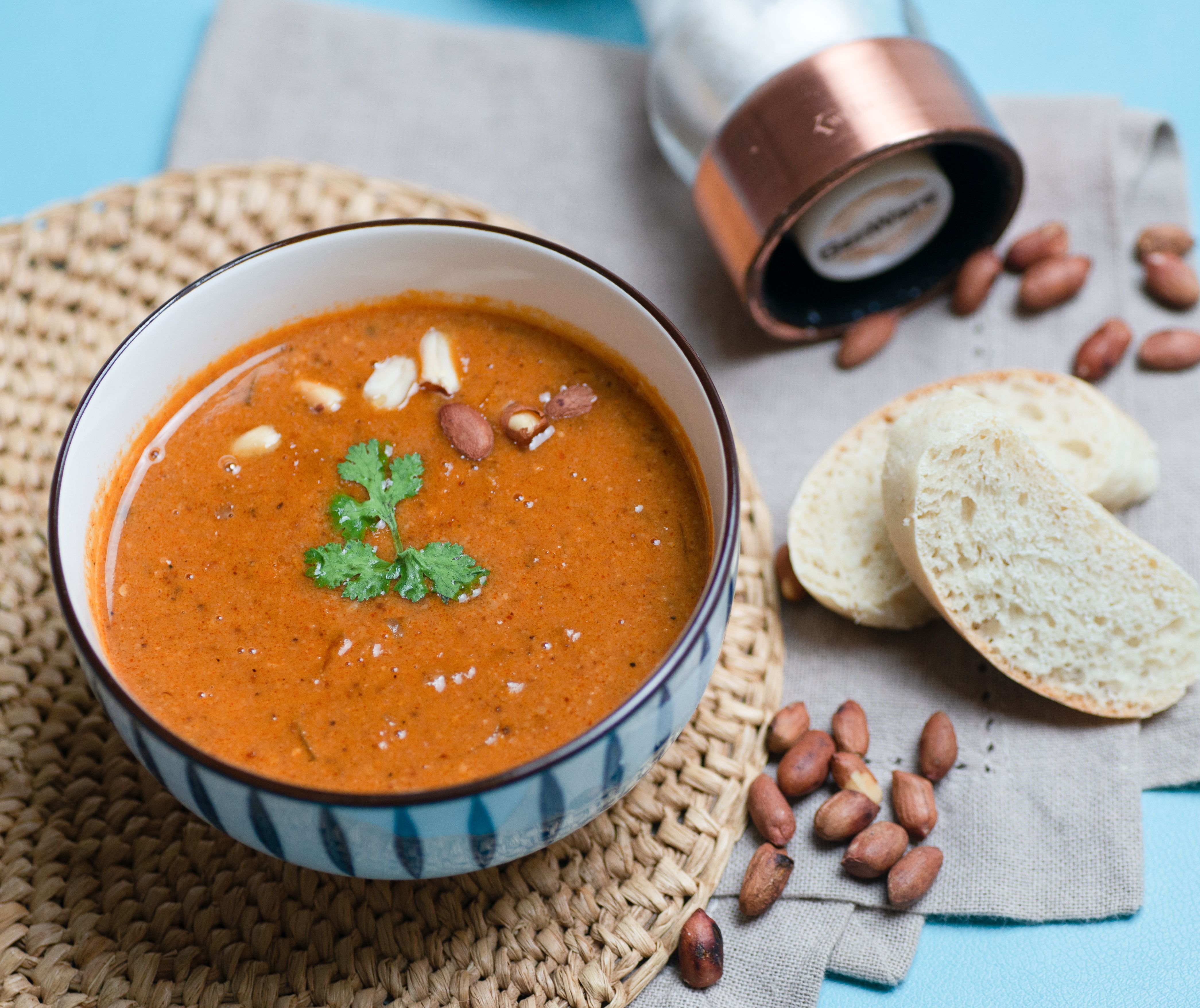
Photo: Lionel Ntasano / Pexels
Ghanaian
Groundnut Soup
The diets react (see scores below)
Common Ingredients
- groundnut paste
- chicken
- tomatoes
- onion
- ginger
- garlic
- scotch bonnet peppers
- stock
Specific recipes may vary.
Incompatible with 5 of 11 diets
Diet Ratings
Groundnut (peanut) paste is actually keto-friendly in principle — high in fat, moderate protein, and peanuts have roughly 4-5g net carbs per 2 tbsp. However, in traditional Ghanaian groundnut soup, a generous amount of paste is used alongside tomatoes and onion, which add moderate carbs. A typical serving could range from 8-15g net carbs depending on portion size, placing this dish in caution territory rather than a clear approve or avoid. The chicken and fat from the groundnut paste are positives. The main concerns are cumulative carbs from tomatoes, onions, and the volume of peanut paste used — peanuts are also technically legumes, which stricter keto protocols flag. With portion control and awareness of serving size, this dish can fit within daily carb limits.
Strict keto practitioners often flag peanuts/groundnuts as legumes rather than true nuts, arguing they carry a higher carb load and inflammatory potential compared to tree nuts; this camp would lean toward avoid. Conversely, lazy or flexible keto practitioners may count this as a high-fat, protein-rich soup and approve it outright given the favorable fat-to-carb ratio.
Groundnut Soup as described contains chicken as a primary protein and chicken stock, both of which are animal products and explicitly excluded from a vegan diet. While the base ingredients — groundnut paste, tomatoes, onion, ginger, garlic, and scotch bonnet peppers — are entirely plant-based, the inclusion of chicken and animal-derived stock makes this dish non-vegan. A vegan adaptation could substitute chicken with tofu, jackfruit, or mushrooms and use vegetable stock, preserving the rich groundnut flavor profile.
Groundnut Soup's central ingredient is groundnut paste (peanut butter/paste), made from peanuts — which are legumes, not true nuts. Legumes are firmly excluded from the paleo diet due to their lectin and phytate content and their absence from the assumed Paleolithic diet. This is not a debated point: peanuts and peanut products are consistently listed as off-limits by all major paleo authorities including Loren Cordain, Mark Sisson, and Robb Wolf. The remaining ingredients — chicken, tomatoes, onion, ginger, garlic, scotch bonnet peppers — are all paleo-compliant. However, the foundational base of the dish is groundnut paste, making the soup fundamentally non-paleo. Stock may also contain added salt or processed additives depending on preparation, but that is a secondary concern. The dish cannot be meaningfully modified while retaining its identity.
Groundnut Soup contains several Mediterranean-compatible elements: groundnuts (peanuts) are legumes/nuts rich in healthy fats and protein, tomatoes and aromatics (onion, ginger, garlic, scotch bonnet) are vegetables strongly aligned with Mediterranean principles, and chicken is an acceptable moderate-consumption protein. However, groundnut paste is calorie-dense and high in fat — while largely unsaturated, it is not a traditional Mediterranean ingredient and differs from the canonical olive oil fat source. The dish lacks olive oil entirely and is not a Mediterranean tradition. Chicken keeps it out of the 'avoid' category, but the heavy groundnut paste base and non-Mediterranean culinary tradition place it firmly in 'caution' territory.
Some modern Mediterranean diet interpretations emphasize dietary patterns rich in plant-based fats, legumes, and whole ingredients regardless of regional origin — under this view, groundnut paste as a minimally processed nut-based fat could be considered analogous to tahini or almond-based sauces used in some Eastern Mediterranean traditions, potentially warranting a more favorable rating.
Groundnut Soup is fundamentally incompatible with the carnivore diet. The base of the dish is groundnut (peanut) paste, which is a legume — entirely plant-derived and one of the most excluded food categories on carnivore. Beyond that, the soup contains tomatoes, onion, ginger, garlic, and scotch bonnet peppers — all plant foods that are strictly excluded. While chicken is carnivore-approved, it is a minor component surrounded by numerous plant-based ingredients. This dish cannot be modified into a carnivore meal without being entirely reconstructed; it is essentially a plant-forward soup that happens to contain chicken.
Groundnut Soup's primary issue is groundnut paste — groundnuts (peanuts) are legumes, which are explicitly excluded on Whole30. Despite all other ingredients being fully compliant (chicken, tomatoes, onion, ginger, garlic, scotch bonnet peppers, and stock are all whole, unprocessed foods that align perfectly with Whole30), the foundational ingredient of this dish is a hard no. There is no compliant substitution that would preserve the identity of this dish.
Groundnut Soup contains multiple high-FODMAP ingredients that make it unsuitable during the elimination phase. Garlic and onion are both high-FODMAP due to fructans and are used as core aromatics in this dish — they cannot be reduced to safe serving sizes in a soup base where FODMAPs leach into the broth. The stock is also likely to contain onion or garlic. Groundnut (peanut) paste is a moderate concern: peanuts are technically low-FODMAP at 32g per Monash, but groundnut paste in a soup base often exceeds this and may contain additives. The chicken, tomatoes, ginger, and scotch bonnet peppers are all low-FODMAP. However, the onion and garlic alone are disqualifying for the elimination phase — there is no realistic way to prepare this dish without them in quantities that exceed FODMAP thresholds, particularly as their fructans dissolve into the soup liquid.
Groundnut (peanut) soup contains several DASH-friendly ingredients — lean chicken, tomatoes, onions, garlic, ginger, and scotch bonnet peppers are all vegetables and lean proteins well-aligned with DASH principles. Groundnut paste (peanut butter/ground peanuts) is a nutrient-dense food providing magnesium, potassium, fiber, and unsaturated fats, and peanuts/legumes are explicitly encouraged on DASH. However, groundnut paste is calorie-dense and high in total fat, and a typical serving of this soup uses a substantial quantity, pushing total fat intake up significantly. The stock is a key concern — commercial or heavily salted stock can add considerable sodium, potentially pushing a single serving toward or beyond the DASH daily sodium ceiling. The overall dish sits in 'caution' territory: the ingredient profile is largely DASH-compatible, but portion size of groundnut paste and sodium from stock require careful management. Using low-sodium homemade stock and moderating the groundnut paste quantity would meaningfully improve the rating.
NIH DASH guidelines categorize nuts and nut products (including peanuts) as encouraged foods in the 4-5 servings/week nuts/seeds/legumes group, which supports a more favorable view of this dish when sodium is controlled. However, some DASH-oriented clinicians note that peanut-based soups consumed in traditional West African portions can deliver 600-900+ calories and 30-50g of fat per bowl, which conflicts with DASH's overall dietary fat moderation goals, particularly for weight management — an area where some updated DASH interpretations place greater emphasis.
Groundnut Soup has a solid Zone-compatible foundation but requires careful portioning due to the fat-heavy nature of groundnut (peanut) paste. The protein source — chicken — is lean and ideal for Zone. The vegetable base (tomatoes, onion, ginger, garlic, scotch bonnet peppers) provides low-glycemic carbohydrates rich in polyphenols and anti-inflammatory compounds, which Sears strongly endorses. The stock is neutral. The primary concern is groundnut paste: peanuts are high in fat (roughly 50% fat by weight), with a less favorable fat profile compared to Zone-ideal monounsaturated sources like olive oil or avocado — peanut fat is about 50% monounsaturated but also carries significant omega-6 polyunsaturated fat (~32%), which conflicts with Sears' anti-inflammatory emphasis on minimizing omega-6 intake. The paste also contributes meaningful carbohydrate (peanuts have modest net carbs) and some protein, making block counting more complex. If portioned carefully — moderate groundnut paste (~1-2 tablespoons per serving), adequate chicken, and vegetable-forward broth — this dish can approximate Zone ratios. The fat blocks will likely be satisfied entirely by the groundnut paste, leaving little room for additional fat. The dish is not a Zone disaster; it's a real-world meal requiring attention to paste quantity and total fat load per serving.
Some Zone practitioners flag peanuts more harshly due to their omega-6 content and lectin load (Sears' later writings, particularly 'The Zone Diet' post-2000, emphasize omega-6 reduction as central to anti-inflammatory eating). From this stricter anti-inflammatory Zone perspective, groundnut paste would be a 'disfavorable' fat source and the dish might score lower (4-5), with a recommendation to substitute a small amount of almond butter or reduce paste significantly. Conversely, strict block counters may find the dish workable if paste is limited and chicken portions are generous.
Groundnut (peanut) soup has a genuinely strong anti-inflammatory profile when evaluated ingredient by ingredient. Groundnut paste provides monounsaturated fats, vitamin E, resveratrol, and niacin — peanuts have modest anti-inflammatory credentials, though their omega-6 content is notable. Tomatoes deliver lycopene and other carotenoids, especially when cooked (cooking increases lycopene bioavailability). Onion, garlic, and ginger are well-established anti-inflammatory ingredients: garlic contains allicin and organosulfur compounds that reduce NF-κB signaling; ginger contains gingerols and shogaols that suppress COX-2. Scotch bonnet peppers are rich in capsaicin, a potent anti-inflammatory and antioxidant compound. Chicken (lean protein) is rated as acceptable to moderate in anti-inflammatory frameworks. Homemade stock avoids the additives and sodium of commercial alternatives. The main concern is the omega-6 load from groundnut paste — peanuts are relatively high in linoleic acid, and a paste-heavy dish may push omega-6 intake up, which is a point of caution. However, the overall ingredient composition — with no refined carbs, no added sugar, no seed oils, and a strong array of anti-inflammatory spices and vegetables — supports an 'approve' verdict at the lower end of the range.
Most anti-inflammatory frameworks would view peanuts with some reservation due to their relatively high omega-6 fatty acid content (linoleic acid), which in excess can shift the omega-6:omega-3 ratio unfavorably. Practitioners following stricter protocols (e.g., AIP or Wahls Protocol) may also flag peanuts as legumes with lectin content that could be problematic for autoimmune-sensitive individuals. That said, Dr. Weil's Anti-Inflammatory Pyramid includes nuts and legumes broadly, and mainstream research does not single out peanuts as pro-inflammatory in moderate whole-food consumption.
Groundnut (peanut) paste is the base of this soup, making it calorie-dense and high in fat — primarily unsaturated fat, which is preferable to saturated, but still significant in volume. A typical serving of groundnut soup contains a substantial fat load from the paste, which can worsen GLP-1 side effects including nausea, bloating, and delayed gastric emptying. On the positive side, chicken provides a solid lean protein source, tomatoes and onions contribute fiber and micronutrients, and the broth-based format is hydrating and easier to digest than solid heavy meals. Ginger is actually beneficial — it has anti-nausea properties that may partly counteract GLP-1 GI side effects. The scotch bonnet peppers are a meaningful concern: they are among the hottest chili peppers commonly used in cooking and can trigger or worsen reflux and nausea, which are already common on GLP-1 medications. The dish is nutrient-dense overall and not fried or ultra-processed, but the high fat content from groundnut paste and the heat level from scotch bonnet push it into caution territory. A modified version — using less groundnut paste, more chicken, and reducing or omitting scotch bonnet — would score higher.
Some GLP-1-focused dietitians may rate this more favorably on the basis that peanut-based foods provide unsaturated fats, plant protein, and high satiety per small serving, making them portion-efficient. Others would flag the fat load and spice level as likely to worsen nausea and reflux, particularly in the early weeks of GLP-1 treatment when GI side effects peak — individual tolerance to both high-fat and spicy foods varies considerably among GLP-1 patients.
*See how scores were generated at our methodology page.
Nutritional profile
Six traits that cut across every diet.
Fiber & Plants
How much whole-plant food and fiber it delivers.
Healthy Fats
The quality of its fats (unsaturated, omega-3).
Whole / Unprocessed
How close it is to its natural, unprocessed form.
Gut Gentle
How easy it is on digestion (low FODMAP, few irritants).
Low Glycemic
How little it spikes your blood sugar.
Protein Density
How much protein it packs per calorie.
Controversy Index
Higher controversy = more disagreement between diets.
Diet-Specific Tips
 Keto — 5/10
View tips
- Groundnut paste is high-fat but adds moderate net carbs per serving
- Tomatoes and onions contribute additional net carbs that accumulate
- Chicken adds clean protein — a keto positive
- Peanuts are technically legumes, flagged by strict keto protocols
- Traditional recipes use large quantities of paste, making portion control critical
- No added sugars or grains, which is a positive
- Total net carbs per serving likely 8-15g — manageable but requires tracking
 Mediterranean — 5/10
View tips
- Groundnut paste provides healthy unsaturated fats but is not a traditional Mediterranean fat source
- Chicken is an acceptable moderate-consumption protein per Mediterranean guidelines
- Strong vegetable base (tomatoes, onion, garlic, ginger) is Mediterranean-aligned
- No olive oil present — the canonical Mediterranean fat source is absent
- Dish is minimally processed with whole ingredients, no added sugars or refined grains
- Not a Mediterranean culinary tradition, limiting direct applicability of the diet's principles
 DASH — 5/10
View tips
- Groundnut paste provides DASH-encouraged unsaturated fats, magnesium, potassium, and fiber but is calorie- and fat-dense
- Chicken is a lean DASH-approved protein source
- Tomatoes, onions, garlic, ginger, and peppers are all DASH-favorable vegetables
- Stock sodium content is highly variable — commercial stock can add 400-900mg sodium per cup, a critical DASH concern
- Peanuts/legumes are explicitly included in the DASH eating plan but portion quantity in this soup exceeds typical DASH serving size
- Low-sodium homemade stock would significantly improve DASH compatibility
- No added sugars, tropical oils, red meat, or full-fat dairy — no major DASH red flags beyond sodium and total fat volume
 Zone — 6/10
View tips
- Groundnut (peanut) paste is high in omega-6 polyunsaturated fat, conflicting with Zone's anti-inflammatory principles
- Chicken is a lean, Zone-ideal protein source — favorable
- Vegetable base (tomatoes, peppers, onion, garlic, ginger) provides low-glycemic, polyphenol-rich carbohydrates — favorable
- Peanut paste makes fat block management critical — easy to over-consume fat in this dish
- Complex block counting due to peanuts contributing protein, fat, AND carbohydrates simultaneously
- No high-glycemic starches in the dish — favorable for carbohydrate quality
- Portion size of groundnut paste per serving is the key variable determining Zone compatibility
 Anti-Inflammatory — 7/10
View tips
- Groundnut paste: vitamin E, resveratrol, monounsaturated fats — but elevated omega-6 (linoleic acid) is a mild concern
- Garlic: allicin and organosulfur compounds suppress NF-κB inflammatory pathways
- Ginger: gingerols and shogaols inhibit COX-2, reducing prostaglandin production
- Scotch bonnet peppers: high capsaicin content — potent anti-inflammatory and antioxidant
- Tomatoes (cooked): lycopene bioavailability increases with heat — strong carotenoid source
- Onion: quercetin content supports reduced inflammatory cytokine expression
- Chicken (lean): acceptable in anti-inflammatory frameworks, moderate category
- No refined carbohydrates, added sugars, trans fats, or seed oils
 GLP-1 Friendly — 5/10
View tips
- High fat content from groundnut paste — primary concern; worsens gastric emptying delays and GI side effects
- Unsaturated fat profile of peanuts is preferable to saturated fat, partially mitigating the fat concern
- Chicken provides lean protein — supports muscle preservation goal
- Scotch bonnet peppers are very high heat and a significant reflux and nausea risk on GLP-1s
- Broth-based format supports hydration and is easier to digest than solid meals
- Ginger has evidence-supported anti-nausea properties — a minor benefit
- Tomatoes and onions add fiber and micronutrients
- Portion size is critical — a small serving manages fat load better than a standard portion
- No refined grains, no added sugar, no frying — favorable base profile