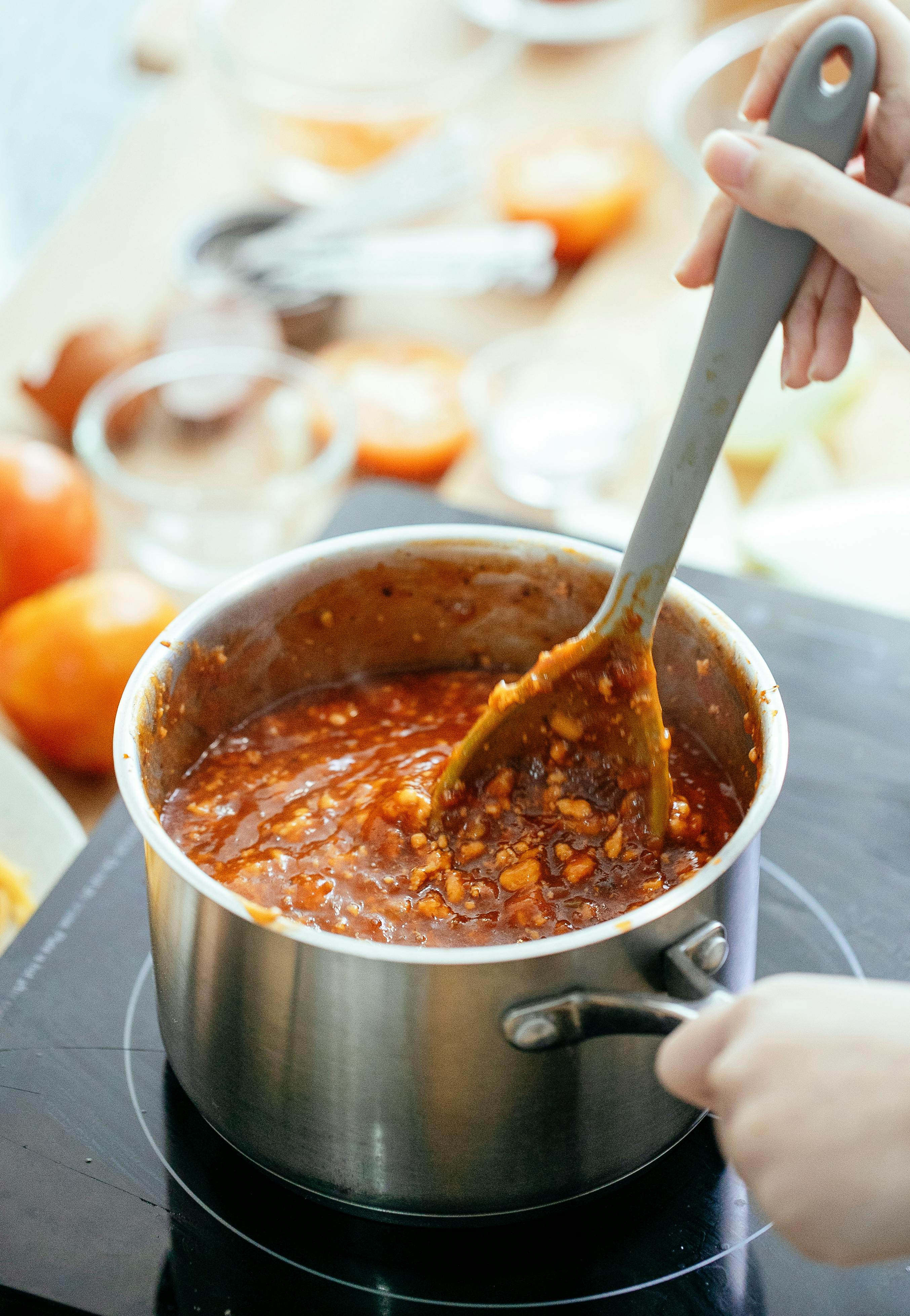
Photo: Katerina Holmes / Pexels
The diets react (see scores below)
Common Ingredients
- black-eyed peas
- palm oil
- ripe plantains
- tomatoes
- onion
- ginger
- scotch bonnet peppers
- dried fish
Specific recipes may vary.
Incompatible with 6 of 11 diets
Diet Ratings
Red Red is fundamentally incompatible with a ketogenic diet. The two primary ingredients — black-eyed peas and ripe plantains — are both high-carbohydrate foods that would blow a keto carb budget in a single serving. Black-eyed peas contain roughly 20-25g of net carbs per half-cup cooked, and ripe plantains are even more problematic at approximately 25-30g net carbs per half-cup, as ripening converts starches to sugars. A standard serving of Red Red would easily deliver 50-80g+ of net carbs, immediately breaking ketosis. While palm oil is a keto-friendly fat and dried fish provides quality protein, these positives are completely overshadowed by the dominant high-carb ingredients that define the dish structurally.
Red Red is a traditional Ghanaian bean stew that, in its standard preparation, contains dried fish — a clear animal product that disqualifies it from vegan compliance. While the base of black-eyed peas, palm oil, ripe plantains, tomatoes, onion, ginger, and scotch bonnet peppers is entirely plant-based, the dried fish is a direct animal-derived ingredient, not a trace contaminant. A vegan version of Red Red is easily achievable by simply omitting the dried fish, and many plant-based adaptations of this dish exist, but the dish as described cannot be approved.
Red Red is a traditional Ghanaian bean stew whose primary protein source is black-eyed peas, a legume that is firmly excluded from the paleo diet. Legumes contain lectins, phytates, and other anti-nutrients that paleo authorities consistently flag as problematic. While several individual ingredients are paleo-compliant — tomatoes, onion, ginger, scotch bonnet peppers, ripe plantains, and dried fish are all acceptable — and palm oil is a natural, non-seed oil generally permitted on paleo, the black-eyed peas are a deal-breaker. Legumes are among the most clearly and universally excluded food categories in the paleo framework, with no meaningful dissent from major paleo authorities on this point. The dish cannot be approved or even cautioned in its traditional form; the foundational ingredient is off-limits.
Red Red is a nutritionally rich Ghanaian dish built on black-eyed peas (an excellent legume, fully Mediterranean-aligned), tomatoes, onion, ginger, and scotch bonnet peppers (all Mediterranean-friendly vegetables/aromatics), ripe plantains (a whole fruit/starch), and dried fish (a Mediterranean-approved protein). The dish is largely plant-forward and legume-centered. The central tension is palm oil: it is a plant-derived oil but is high in saturated fat (~50%), which conflicts with the Mediterranean diet's core principle of using extra virgin olive oil as the primary fat. Palm oil is not part of Mediterranean culinary tradition and lacks the polyphenol benefits of EVOO. The dried fish is a positive modifier. If palm oil were substituted with olive oil, this dish would score 8-9. As prepared, it sits in the caution range — excellent nutritional bones undermined by a non-traditional, high-saturated-fat cooking oil.
Some modern Mediterranean diet researchers argue that unrefined red palm oil, as a minimally processed plant fat containing tocotrienols and beta-carotene, is not categorically worse than other plant oils, and that the overall dietary pattern (legumes, vegetables, fish) matters more than any single ingredient. A minority view within integrative nutrition holds that traditional whole-food fats from any culture can fit a Mediterranean-style pattern when the overall dish is plant-forward.
Red Red is almost entirely plant-based and is fundamentally incompatible with the carnivore diet. The primary protein source is black-eyed peas, a legume that is strictly excluded from all tiers of carnivore eating. Ripe plantains are a high-carbohydrate fruit, tomatoes, onion, ginger, and scotch bonnet peppers are all plant foods explicitly forbidden on carnivore. Palm oil, while a fat, is plant-derived and excluded. The only carnivore-compatible ingredient is the dried fish, which is a minor component and does not redeem the dish. This is a plant-dominant dish with virtually no animal-product foundation.
Red Red is a traditional Ghanaian bean stew made with black-eyed peas as the primary protein. Black-eyed peas are legumes, and legumes are explicitly excluded on the Whole30 program. The only legume exceptions are green beans, sugar snap peas, and snow peas — black-eyed peas are not among them. All other ingredients (palm oil, ripe plantains, tomatoes, onion, ginger, scotch bonnet peppers, dried fish) are individually Whole30-compliant, but the black-eyed peas make this dish a clear avoid regardless. There is no compliant substitution that would preserve the identity of this dish.
Red Red is a traditional Ghanaian black-eyed pea stew that is high-FODMAP at any standard serving due to multiple problematic ingredients. Black-eyed peas are legumes high in GOS (galacto-oligosaccharides), which are a major FODMAP trigger — Monash rates them as high-FODMAP even at modest servings, and as the primary protein/base of this dish they are consumed in significant quantities. Onion is one of the highest-FODMAP foods tested by Monash, containing large amounts of fructans, and is a core aromatic in this dish. Ripe plantains, while low-FODMAP at a small serving (about 1/3 of a medium plantain per Monash), are typically consumed in larger portions alongside this stew, pushing them into moderate-to-high FODMAP territory. The combination of GOS from black-eyed peas and fructans from onion alone makes this dish unsuitable during the elimination phase regardless of portion size. Palm oil, tomatoes, ginger, scotch bonnet peppers, and dried fish are individually low-FODMAP and do not contribute to the concern.
Red Red is a traditional Ghanaian dish with a mixed DASH profile. The black-eyed peas are an excellent DASH food — high in fiber, potassium, magnesium, and plant protein, squarely within the beans/legumes group DASH emphasizes. Tomatoes, onion, ginger, and scotch bonnet peppers are DASH-friendly vegetables with antioxidant and anti-inflammatory value. Ripe plantains provide potassium and fiber, though their glycemic load is moderate. However, two ingredients create significant DASH concerns: (1) Palm oil is a tropical oil high in saturated fat (~50% saturated), which NIH DASH guidelines explicitly limit alongside coconut and palm kernel oil — this is a core DASH violation used as the primary cooking fat. (2) Dried fish is typically very high in sodium (often 1,000–2,000mg+ per small serving depending on preparation), which conflicts with DASH's sodium limits of 1,500–2,300mg/day. The combination of palm oil and dried fish pulls this otherwise legume-forward dish into caution territory. If palm oil were replaced with canola or olive oil and low-sodium or fresh fish substituted for dried fish, the dish could approach approval.
NIH DASH guidelines categorically limit tropical oils including palm oil due to saturated fat content; however, some DASH-aligned practitioners note that palm oil's saturated fat profile differs from trans fats and that traditional dietary patterns using unrefined red palm oil alongside fiber-rich legumes may have different net cardiovascular effects — the AHA and NHLBI still recommend against palm oil, leaving this a point of clinical debate.
Red Red is a traditional Ghanaian dish with a mixed Zone profile. Black-eyed peas are a reasonable vegetarian protein source and provide fiber, but they are also high in carbohydrates, making block balancing tricky. Ripe plantains are a significant concern — they are high-glycemic, high-sugar carbs that Dr. Sears classifies as unfavorable, similar to bananas and raisins. Palm oil is the most problematic ingredient from a Zone perspective: it is high in saturated fat, not monounsaturated, and Sears specifically discourages saturated fat sources in favor of olive oil, avocado, and almonds. Dried fish is a lean protein positive, but likely present in small quantities as a flavoring agent rather than a primary protein block contributor. Tomatoes, onion, ginger, and scotch bonnet peppers are all favorable low-glycemic, polyphenol-rich vegetables that Sears would endorse. The overall dish skews heavily carbohydrate with an unfavorable fat source, making it difficult to hit the 40/30/30 ratio without significant modification — reducing plantains, substituting palm oil for olive oil, and increasing the fish or adding another lean protein.
Some Zone-informed practitioners working within traditional food cultures argue that palm oil, while high in saturated fat, contains tocotrienols and beta-carotene that have anti-inflammatory properties not captured by Sears' early writings. Sears' later work (The OmegaRx Zone, Zone Diet refinements post-2000) placed more emphasis on omega-6 to omega-3 ratios than saturated fat per se. Palm oil is not particularly high in omega-6 (unlike soybean or corn oil), so some practitioners would be less alarmed by it than Sears' original framework suggests. The black-eyed peas also provide both protein and carbs, which requires counting them in both blocks — a nuance that Zone vegetarian practitioners are familiar with and can navigate.
Red Red is a traditional Ghanaian dish with a genuinely mixed anti-inflammatory profile. On the positive side, black-eyed peas are an excellent anti-inflammatory food — high in fiber, plant protein, folate, and polyphenols that support gut health and reduce CRP. Tomatoes contribute lycopene and vitamin C; onion and ginger are well-documented anti-inflammatory aromatics; scotch bonnet peppers are extremely rich in capsaicin, a potent anti-inflammatory compound; and dried fish (likely anchovies or herrings) adds meaningful omega-3 fatty acids and protein. Ripe plantains provide resistant starch and potassium. The critical limiting factor is palm oil. While palm oil is not a trans fat and contains tocotrienols (a form of vitamin E with antioxidant activity), it is high in saturated fat (~50% palmitic acid), which anti-inflammatory frameworks consistently categorize as a food to limit. It lacks the oleocanthal and polyphenols of extra virgin olive oil. Dr. Weil and mainstream anti-inflammatory protocols distinguish palm oil from palm kernel oil (which is worse), but still recommend limiting it. The combination of a legume-rich base with anti-inflammatory spices and omega-3-containing dried fish partially offsets the palm oil concern, landing this dish in 'caution' territory rather than 'avoid.'
Some nutrition researchers, including those focused on traditional African dietary patterns, argue that unrefined (red) palm oil — as used traditionally in West African cooking — is meaningfully different from refined palm oil and contains significant beta-carotene and tocotrienols with antioxidant properties; this perspective would push the dish closer to a mild approval. Conversely, strict anti-inflammatory protocols (e.g., those emphasizing very low saturated fat intake) would rate palm oil-heavy dishes more harshly, closer to a 3–4, regardless of the beneficial ingredients.
Red Red is a traditional Ghanaian dish built on black-eyed peas and fried ripe plantains cooked in palm oil with a tomato-onion-ginger base and scotch bonnet peppers. It has genuine nutritional strengths — black-eyed peas deliver meaningful plant protein (around 13g per cooked cup) and are an excellent fiber source (11g per cup), supporting two of the top GLP-1 priorities. The tomato base adds micronutrients and water content. Dried fish, if present in meaningful quantity, adds a lean protein boost and omega-3 value. However, several ingredients create significant friction with GLP-1 dietary guidelines. Palm oil is high in saturated fat — it is the dominant cooking fat in this dish and typically used generously, which increases total fat per serving substantially and may worsen nausea, reflux, and bloating associated with slowed gastric emptying. Ripe plantains are high in simple sugars compared to green plantains, adding a glycemic load that is less ideal for GLP-1 patients managing blood sugar. Scotch bonnet peppers are among the hottest commonly used culinary chiles and are a meaningful reflux and nausea risk on GLP-1 medications. The combination of high saturated fat, high spice heat, and moderate glycemic load from sweet plantains pushes this dish into caution territory despite its strong fiber and protein foundation. A modified version — reduced palm oil, green or less-ripe plantains, milder spice — could score considerably higher.
Some GLP-1-focused dietitians note that black-eyed peas are one of the most protein- and fiber-dense legumes available and argue the dish can be appropriate when palm oil quantity is controlled and scotch bonnet is reduced or omitted — individual GI tolerance to spice varies widely among GLP-1 patients. Others maintain that palm oil's saturated fat profile makes it categorically problematic given how GLP-1 medications amplify fat-related GI side effects, regardless of portion size.
*See how scores were generated at our methodology page.
Nutritional profile
Six traits that cut across every diet.
Fiber & Plants
How much whole-plant food and fiber it delivers.
Healthy Fats
The quality of its fats (unsaturated, omega-3).
Whole / Unprocessed
How close it is to its natural, unprocessed form.
Gut Gentle
How easy it is on digestion (low FODMAP, few irritants).
Low Glycemic
How little it spikes your blood sugar.
Protein Density
How much protein it packs per calorie.
Controversy Index
Higher controversy = more disagreement between diets.
Diet-Specific Tips
 Mediterranean — 5/10
View tips
- Black-eyed peas are an excellent legume source, core to the Mediterranean diet
- Palm oil is high in saturated fat and not part of Mediterranean culinary tradition — conflicts with EVOO principle
- Tomatoes, onion, ginger, and peppers are Mediterranean-compatible vegetables
- Ripe plantains provide whole-food carbohydrates and natural sugars
- Dried fish aligns with the Mediterranean emphasis on fish and seafood
- No refined grains, added sugars, or processed ingredients
- Dish is non-Mediterranean in origin but largely plant-forward in structure
 DASH — 4/10
View tips
- Black-eyed peas are a core DASH legume — excellent source of fiber, potassium, and plant protein
- Palm oil is a tropical oil high in saturated fat (~50%), explicitly limited by NIH DASH guidelines
- Dried fish is typically very high in sodium, conflicting with DASH sodium limits of 1,500–2,300mg/day
- Ripe plantains provide potassium and fiber but add moderate glycemic load
- Tomatoes, onion, ginger, and peppers are DASH-friendly and nutrient-dense
- Dish could be improved significantly by substituting canola/olive oil for palm oil and fresh/low-sodium fish for dried fish
 Zone — 4/10
View tips
- Ripe plantains are high-glycemic, high-sugar carbs classified as unfavorable in Zone methodology
- Palm oil is high in saturated fat, not the monounsaturated fat Sears recommends
- Black-eyed peas serve as vegetarian protein but are carb-heavy, complicating block ratios
- Dried fish adds lean protein but likely in insufficient quantity to anchor a Zone meal
- Tomatoes, onion, ginger, and scotch bonnet peppers are favorable polyphenol-rich vegetables
- Dish as served would likely skew toward high carbohydrate and unfavorable fat, requiring significant portion modifications for Zone compliance
 Anti-Inflammatory — 5/10
View tips
- Black-eyed peas: high fiber, plant protein, and polyphenols — strongly anti-inflammatory
- Palm oil: high in saturated palmitic acid (~50%), a recognized pro-inflammatory fat to limit in anti-inflammatory frameworks
- Scotch bonnet peppers: exceptionally high in capsaicin, a well-researched anti-inflammatory compound
- Ginger: contains gingerols shown to reduce inflammatory markers
- Dried fish: contributes omega-3 fatty acids (EPA/DHA), anti-inflammatory
- Tomatoes and onions: lycopene, quercetin, and vitamin C add antioxidant support
- Ripe plantains: provide resistant starch and fiber; natural sugars are moderate and whole-food sourced
- No refined sugars, trans fats, or artificial additives — a clean whole-food ingredient list
 GLP-1 Friendly — 4/10
View tips
- Black-eyed peas provide strong plant protein (~13g/cup) and high fiber (~11g/cup) — supports top two GLP-1 priorities
- Palm oil is high in saturated fat and typically used in significant quantity — major concern for GLP-1 GI side effects
- Scotch bonnet peppers are extremely spicy and a meaningful risk for worsening reflux and nausea on GLP-1 medications
- Ripe plantains contribute simple sugars and glycemic load — less ideal than starchy or green plantains
- Dried fish adds lean protein and omega-3 value if present in meaningful quantity
- Dish is not easily portioned small due to the stew format and caloric density from palm oil
- Digestibility is compromised by high fat content given GLP-1 slowed gastric emptying