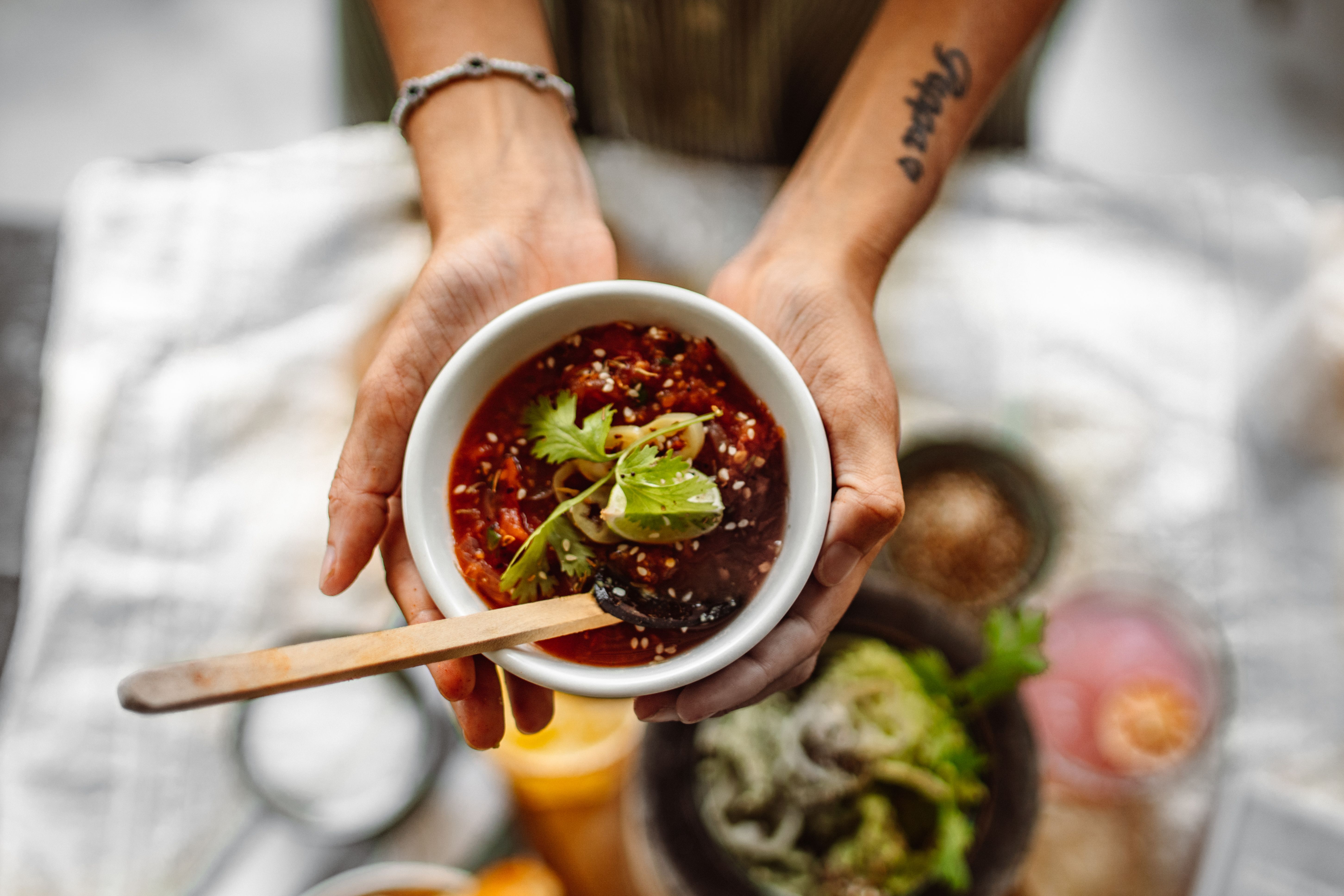
Photo: ROMAN ODINTSOV / Pexels
The diets react (see scores below)
Common Ingredients
- dried peppers
- ginger
- garlic
- onion
- dried shrimp
- dried fish
- tomato paste
- vegetable oil
Specific recipes may vary.
Incompatible with 6 of 11 diets
Diet Ratings
Shito is a Ghanaian black pepper sauce made primarily from dried peppers, aromatics (ginger, garlic, onion), dried seafood (shrimp and fish), tomato paste, and vegetable oil. The macronutrient profile is mixed for keto. The vegetable oil base makes it relatively high in fat, and the dried seafood adds protein. However, the combination of tomato paste (which concentrates natural sugars and carbs), onion, dried peppers, and ginger contributes a moderate but non-trivial carbohydrate load. Tomato paste is the primary concern, carrying roughly 10-12g net carbs per 100g. As a condiment used in small quantities (1-2 tablespoons), total net carbs per serving are likely manageable (2-5g), keeping it within cautious keto use. The vegetable oil is a wildcard — if it's a seed oil (soybean, canola), strict keto practitioners may object to its inflammatory profile, though this is a fat-quality concern rather than a carb issue. Overall, shito is acceptable in small portions but requires portion discipline.
Some strict keto practitioners would flag the tomato paste and onion combination as cumulatively problematic across a day's meals, particularly for those targeting the lower end of the 20g net carb threshold. Additionally, keto advocates who prioritize anti-inflammatory fats would reject shito outright if made with industrial seed oils.
Shito is a traditional Ghanaian chili sauce that explicitly contains dried shrimp and dried fish — both are animal products and direct violations of vegan dietary principles. Despite the otherwise plant-based base of dried peppers, ginger, garlic, onion, tomato paste, and vegetable oil, the seafood ingredients make this condiment categorically non-vegan. There is no ambiguity here: dried shrimp and dried fish are whole animal-derived ingredients, not trace contaminants or processing aids. A vegan version of shito could theoretically be made by omitting the seafood and substituting umami from ingredients like nori, smoked paprika, or soy sauce, but the traditional recipe as listed is not vegan-compatible.
Shito contains two clear paleo violations that disqualify it despite several compliant ingredients. The use of vegetable oil (a seed oil blend, typically soybean, canola, or similar) is explicitly excluded from the paleo diet in favor of animal fats, olive oil, or coconut oil. Tomato paste, while derived from a paleo-approved food, is a processed concentrate often containing added salt and sometimes preservatives, making it a processed food by paleo standards. The remaining ingredients — dried peppers, ginger, garlic, onion, dried shrimp, and dried fish — are largely paleo-compatible, though dried/processed seafood occupies a mild gray area due to potential additives. The combination of a prohibited seed oil and processed tomato paste makes this condiment a clear avoid under paleo guidelines.
Shito contains several Mediterranean-friendly ingredients: garlic, ginger, onion, dried peppers, tomato paste, and dried seafood (shrimp and fish) are all consistent with Mediterranean principles. Dried fish and shrimp align well with the diet's emphasis on seafood. However, the oil used is generic 'vegetable oil' rather than extra virgin olive oil, which is a notable departure from Mediterranean standards. Additionally, shito is typically made with a significant quantity of oil and is a concentrated, intensely flavored condiment used in small amounts. The high oil content from non-olive sources and the processing intensity (long-cooked, oil-preserved condiment) temper its score, but the core ingredients are largely compatible. Used sparingly as a condiment, it is acceptable.
Some Mediterranean diet interpreters might rate this more favorably, noting that dried seafood, aromatics, and chili are all traditional Mediterranean-adjacent ingredients, and that a small condiment serving limits any concerns about vegetable oil quantity. Others might flag it more strictly, as the heavy use of non-olive vegetable oil and the highly processed, oil-saturated nature of shito contradicts the principle of minimally processed foods with olive oil as the primary fat.
Shito is a Ghanaian chili sauce that is fundamentally incompatible with the carnivore diet. While it does contain dried shrimp and dried fish (animal products), these are minor components overwhelmed by a base of predominantly plant-derived ingredients: dried peppers, ginger, garlic, onion, tomato paste, and vegetable oil. The vegetable oil alone is a strict disqualifier — plant-based oils are explicitly excluded from carnivore. The spice and allium content (peppers, ginger, garlic, onion) adds further plant compounds carnivore practitioners avoid. Tomato paste is a processed plant food. This condiment is essentially a plant-based sauce with trace animal ingredients, making it firmly in the 'avoid' category with high confidence.
Shito's core ingredients — dried peppers, ginger, garlic, onion, dried shrimp, dried fish, tomato paste, and vegetable oil — are individually Whole30-compatible. Meat, seafood, vegetables, and natural fats are all allowed. However, several practical concerns warrant caution: (1) Commercially prepared shito almost universally contains added sugar, MSG (now allowed), and sometimes soy-based additives or other excluded ingredients, so label-reading is essential. (2) 'Vegetable oil' is a broad term — seed oils like canola, soybean, or corn oil are technically allowed on Whole30 but are generally discouraged; coconut oil or olive oil would be preferable. (3) Tomato paste should be checked for added sugar. If made at home from scratch with compliant ingredients and a clearly Whole30-friendly oil, this sauce is approvable. As commonly purchased, it is risky due to likely added sugars and other additives.
Some Whole30 practitioners argue that even a homemade, technically compliant shito still represents a rich, indulgent condiment that can encourage the kind of flavor-chasing the program aims to reset; however, the official Whole30 guidelines do not restrict condiments simply for being flavorful, provided all ingredients are compliant.
Shito is a Ghanaian black pepper sauce/condiment that contains multiple high-FODMAP ingredients that make it unsuitable during the elimination phase. Garlic and onion are among the highest-FODMAP foods per Monash University, both rich in fructans. These are not incidental ingredients — they are core flavor components of shito and present in significant quantities. Even small amounts of garlic and onion are high-FODMAP. Additionally, tomato paste becomes high-FODMAP at typical condiment servings (Monash rates tomato paste as high-FODMAP at 2 tablespoons/28g due to excess fructose). The combination of garlic, onion, and tomato paste makes this condiment a triple FODMAP threat. The dried shrimp and dried fish are low-FODMAP, as are the dried peppers, ginger, and vegetable oil, but the presence of garlic and onion alone is disqualifying regardless of serving size.
Shito is a Ghanaian black pepper sauce that poses multiple DASH diet concerns. Dried shrimp and dried fish are both notoriously high in sodium — dried shrimp alone can contain 500–800mg sodium per tablespoon. The condiment is typically used in concentrated amounts, and a single serving can easily contribute 400–900mg sodium. This is a critical issue for a diet targeting <2,300mg/day (and especially <1,500mg/day on low-sodium DASH). Additionally, shito is made with a generous quantity of vegetable oil, making it calorie-dense with high total fat content. The tomato paste adds some potassium, and the garlic, ginger, and onion are DASH-friendly aromatics, but these benefits are far outweighed by the sodium load from the dried seafood. As a condiment used to flavor meals, its concentrated sodium delivery makes it incompatible with DASH principles. A homemade low-sodium version omitting or minimizing dried seafood and reducing oil could improve its profile considerably.
Shito is a Ghanaian black pepper sauce/condiment made from dried peppers, aromatics (ginger, garlic, onion), dried shrimp and fish, tomato paste, and vegetable oil. From a Zone perspective, it has some genuinely favorable components and some concerns. The dried shrimp and fish contribute small amounts of lean protein, which aligns with Zone protein blocks. The peppers, ginger, garlic, and onion are anti-inflammatory, polyphenol-rich ingredients that Sears would strongly endorse — these are exactly the kinds of spices and aromatics that support eicosanoid balance. However, the primary concern is the vegetable oil, which is typically a high omega-6 seed oil (often palm oil or a blend in traditional Ghanaian preparation), conflicting with the Zone's anti-inflammatory emphasis on monounsaturated fats and omega-3s. Tomato paste is a moderate-glycemic concentrated carbohydrate, fine in small amounts. As a condiment used in small quantities, shito's macro contribution to a meal is modest — primarily fat and a trace of protein — making it a fat block contributor rather than a meal centerpiece. The key issue is the oil type: if palm oil or vegetable seed oil dominates, it increases saturated fat or omega-6 load respectively, both of which Sears discourages. Used sparingly as a flavoring agent alongside Zone-favorable proteins and vegetables, shito can fit. It should not be used in large amounts.
Some Zone practitioners would rate shito more favorably given its rich polyphenol profile from dried peppers, ginger, and garlic — ingredients Dr. Sears explicitly highlights in his later anti-inflammatory writings (The Anti-Inflammation Zone, 2005) as supporting healthy eicosanoid production. If made with olive oil rather than palm or seed oil, shito would score considerably higher, potentially reaching 7. The protein contribution from dried shrimp and fish, while small, is also a positive. The verdict heavily depends on the specific oil used and quantity consumed.
Shito is a Ghanaian black pepper sauce with a genuinely mixed anti-inflammatory profile. On the positive side, it contains several strongly anti-inflammatory ingredients: dried peppers (capsaicin, carotenoids), ginger (gingerols, shogaols), garlic (allicin, organosulfur compounds), and onion (quercetin, flavonoids) — all well-supported as anti-inflammatory by mainstream research and Dr. Weil's framework. Dried shrimp and dried fish contribute some omega-3s and marine nutrients, which are broadly anti-inflammatory. Tomato paste is concentrated in lycopene and other antioxidants. The significant concern is the vegetable oil, which in traditional shito recipes is used in large quantities — the sauce is essentially cooked in and preserved by oil. The type of oil matters enormously: if palm oil (traditional) is used, it carries saturated fat concerns; if it's a high-omega-6 seed oil like sunflower or corn oil, it tilts the dish toward a pro-inflammatory omega-6 load. The listing simply says 'vegetable oil,' which is ambiguous but typically points to refined seed oils. As a condiment used in small amounts, the oil burden per serving is moderated. The combination of genuinely potent anti-inflammatory spices (pepper, ginger, garlic, onion) with the omega-6 concern from vegetable oil and the high sodium content typical of dried seafood-based condiments lands this squarely in 'caution' territory.
A stricter anti-inflammatory interpretation (aligned with protocols emphasizing omega-6 minimization) would push this toward 'avoid' given the substantial refined vegetable oil content and high sodium from dried seafood — particularly if palm kernel oil or corn/sunflower oil is used. Conversely, practitioners focused on whole-food spice synergies (as in Dr. Weil's framework) might emphasize the remarkable concentration of anti-inflammatory botanicals (chili, ginger, garlic, onion) and rate this more favorably, especially given typical condiment-sized portions.
Shito is a Ghanaian black pepper sauce that is deeply problematic for GLP-1 patients across multiple criteria. It is heavily oil-based (vegetable oil is a primary ingredient, not a minor addition), making it high in fat per serving — a known trigger for nausea, bloating, and reflux, which GLP-1 medications already predispose patients to. It is intensely spicy from concentrated dried peppers, which can worsen GLP-1-related GI discomfort and reflux due to slowed gastric emptying. While dried shrimp and dried fish contribute trace protein, the quantities used as a condiment are negligible — insufficient to meaningfully count toward daily protein targets. The tomato paste adds minimal fiber. As a condiment, shito is used in small amounts, but even small servings deliver a high fat load and significant capsaicin exposure relative to any nutritional benefit. It offers essentially no fiber, no meaningful protein contribution, and empty fat calories in a context where every calorie must count nutritionally.
Some GLP-1-aware dietitians may note that shito is used in very small quantities as a flavor enhancer and that the dried seafood ingredients provide trace minerals and umami that support dietary adherence to culturally familiar meals — the argument being that cultural palatability improves overall diet quality and adherence. However, the high oil content and intense spice level remain consistent concerns regardless of serving size, and most GLP-1 clinical guidance would categorize this as a condiment to avoid or strictly minimize, particularly in the early dose-escalation phase when GI side effects are most severe.
*See how scores were generated at our methodology page.
Nutritional profile
Six traits that cut across every diet.
Fiber & Plants
How much whole-plant food and fiber it delivers.
Healthy Fats
The quality of its fats (unsaturated, omega-3).
Whole / Unprocessed
How close it is to its natural, unprocessed form.
Gut Gentle
How easy it is on digestion (low FODMAP, few irritants).
Low Glycemic
How little it spikes your blood sugar.
Protein Density
How much protein it packs per calorie.
Controversy Index
Higher controversy = more disagreement between diets.
Diet-Specific Tips
 Keto — 5/10
View tips
- Tomato paste contributes concentrated carbohydrates — use sparingly
- Dried shrimp and fish add keto-friendly protein with negligible carbs
- Onion and dried peppers add minor but real carb load
- High oil content aligns with keto fat macros, but oil type matters
- As a condiment in small servings (1-2 tbsp), net carbs are likely manageable
- Portion control is essential — larger servings risk exceeding carb limits
 Mediterranean — 5/10
View tips
- Contains dried shrimp and dried fish, aligning with Mediterranean seafood emphasis
- Garlic, onion, ginger, and dried peppers are Mediterranean-compatible aromatics
- Tomato paste is a Mediterranean-friendly ingredient
- Uses generic vegetable oil instead of extra virgin olive oil — a key departure
- High oil content overall, as shito is an oil-preserved condiment
- Consumed in small amounts as a condiment, limiting overall dietary impact
- Not a traditional Mediterranean dish but ingredients are largely compatible
 Whole30 — 5/10
View tips
- Core ingredients (dried fish, dried shrimp, peppers, aromatics) are Whole30-compliant
- Commercially prepared versions almost always contain added sugar — label-reading critical
- 'Vegetable oil' is ambiguous; soybean or corn oil is technically allowed but discouraged
- Tomato paste must be free of added sugar
- Homemade version with compliant oil and no added sugar would be approvable
- MSG is now Whole30-compatible per 2024 rule change
 Zone — 5/10
View tips
- Vegetable oil (likely high-omega-6 seed oil or palm oil) conflicts with Zone anti-inflammatory fat principles
- Dried shrimp and fish provide small lean protein contribution — Zone-favorable
- Dried peppers, ginger, garlic, and onion are rich in polyphenols — strongly aligned with Sears' anti-inflammatory focus
- As a condiment, portion size is small, limiting macro impact on overall meal balance
- Tomato paste is a moderately concentrated carb source — acceptable in small condiment quantities
- Oil type is the decisive variable: olive oil would make this Zone-friendly; palm or seed oil raises concerns
 Anti-Inflammatory — 5/10
View tips
- Strong anti-inflammatory spice base: dried peppers (capsaicin), ginger (gingerols), garlic (allicin), onion (quercetin)
- Dried shrimp and fish contribute marine omega-3s and beneficial nutrients
- Tomato paste provides concentrated lycopene and antioxidants
- Vegetable oil is used in large quantities — type unspecified but likely a high-omega-6 refined seed oil, which is a significant concern
- High sodium content from dried seafood may be a concern for systemic inflammation
- Used as a condiment in small portions, which limits per-serving oil and sodium load
- No refined sugars, artificial additives, or trans fats