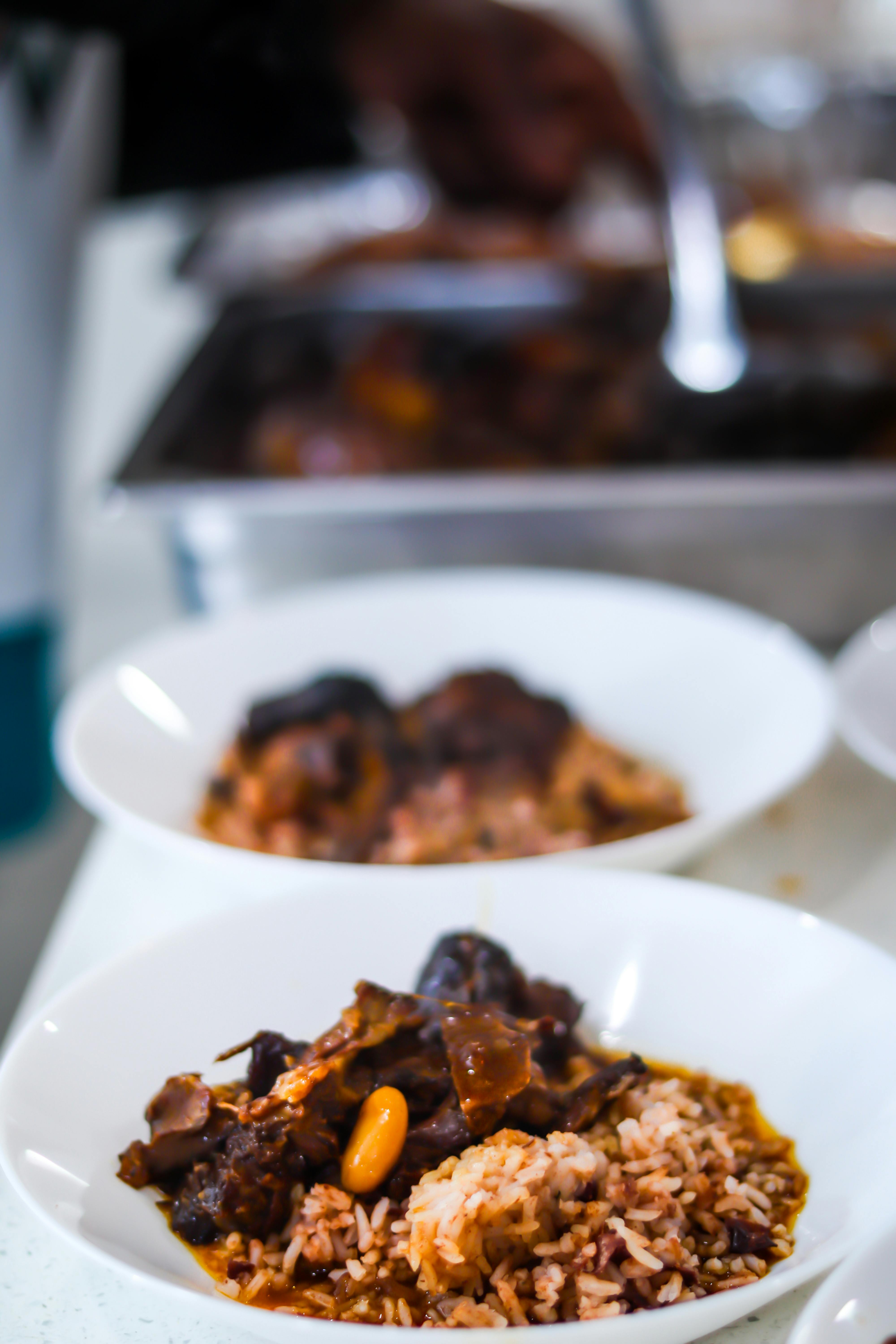
Photo: Thomas Wilson / Pexels
The diets react (see scores below)
Common Ingredients
- rice
- black-eyed peas
- sorghum leaves
- baking soda
- salt
- water
Specific recipes may vary.
Incompatible with 5 of 11 diets
Diet Ratings
Waakye is a traditional Ghanaian dish built on two high-carbohydrate staples: rice and black-eyed peas. Rice alone delivers approximately 45g of net carbs per cooked cup, and black-eyed peas add another 20-25g of net carbs per half-cup serving. Together, a single standard portion of Waakye easily delivers 60-80g or more of net carbs, which blows through the entire daily keto allowance (20-50g) in one meal. The dish contains no significant fat, and the protein source (legumes/beans) comes packaged with very high starch content, making it unsuitable for ketosis. There is no practical portion size that makes this dish keto-compatible. The sorghum leaves and salt are negligible, but they cannot offset the fundamental carbohydrate load of the base ingredients.
Waakye in this form is a traditional Ghanaian dish made entirely from whole plant foods. Rice and black-eyed peas form the protein-carbohydrate base, sorghum leaves (dried millet/sorghum stalks) give the dish its characteristic reddish-brown color, and baking soda, salt, and water complete the recipe. Every ingredient is unambiguously plant-derived with no animal products whatsoever. The dish is also nutritionally strong — legumes and whole grains together provide complementary amino acids, fiber, and micronutrients. It scores very high as a whole-food, minimally processed vegan meal. Note that in practice, Waakye is often served with accompaniments such as fried fish, boiled eggs, meat stew, or spaghetti — those additions would not be vegan — but the core dish as listed here is fully plant-based.
Waakye is fundamentally incompatible with the paleo diet. Its two primary ingredients — rice (a grain) and black-eyed peas (a legume) — are both explicitly excluded from the paleo framework. Grains and legumes are among the most clearly banned food categories in paleo due to their anti-nutrient content (lectins, phytates, saponins) and their absence from the Paleolithic diet. Added salt is also excluded. Sorghum leaves, baking soda, and water are relatively benign, but they cannot redeem a dish built entirely around non-paleo staples. There is no version of Waakye that could be made paleo-compliant without fundamentally changing what the dish is.
Waakye is a traditional Ghanaian dish combining rice and black-eyed peas, which is fundamentally a legume-grain combination highly valued in Mediterranean eating. Black-eyed peas are an excellent plant-based protein and fiber source, fully aligned with Mediterranean principles. The dish is minimally processed with whole, clean ingredients. However, the inclusion of white rice rather than a whole grain slightly reduces its standing under modern Mediterranean diet guidelines, which favor whole grains like brown rice, farro, or barley. The sorghum leaves used for color and flavor are a natural plant ingredient with no nutritional concerns. The dish contains no red meat, added sugars, unhealthy fats, or processed ingredients, making it largely compatible. The main reservation is the refined grain component, which is why it lands in the moderate 'caution' range rather than a strong approval.
Some Mediterranean diet practitioners note that traditional Mediterranean cuisines (e.g., Spanish, Greek) do incorporate white rice in dishes like paella or rice-based soups, and that the high legume content of Waakye compensates nutritionally for the refined grain. In this view, the dish's bean-to-rice ratio and whole-food preparation could justify an 'approve' rating.
Waakye is a traditional Ghanaian dish made entirely from plant-based ingredients — rice, black-eyed peas, sorghum leaves, baking soda, salt, and water. There is not a single animal-derived ingredient in this dish. Rice and black-eyed peas are grains and legumes respectively, both explicitly excluded on the carnivore diet. Sorghum leaves are plant matter. This dish is completely incompatible with carnivore principles at every level, including the most lenient interpretations.
Waakye contains two excluded ingredient categories: rice (a grain) and black-eyed peas (a legume). Both are explicitly prohibited on the Whole30 program. Rice is a grain and is fully excluded, and black-eyed peas are legumes — unlike the explicitly excepted green beans, sugar snap peas, and snow peas, black-eyed peas receive no such exception. Sorghum leaves (used for color, not the grain itself) and baking soda are generally considered compliant, and salt and water are fine, but the two primary structural ingredients make this dish incompatible with Whole30.
Waakye is a traditional Ghanaian dish combining rice and black-eyed peas cooked together with sorghum leaves. The primary FODMAP concern is the black-eyed peas, which are legumes high in galacto-oligosaccharides (GOS) — a major FODMAP category. Black-eyed peas are rated high-FODMAP by Monash University at standard serving sizes during the elimination phase. Rice itself is low-FODMAP, and sorghum leaves (used for color) and salt/water/baking soda are FODMAP-free. However, since black-eyed peas are a central, structural ingredient in this dish rather than an incidental garnish, there is no realistic way to consume Waakye at a low-FODMAP serving of black-eyed peas. A standard serving of this dish would deliver a significant GOS load, making it inappropriate for the elimination phase.
Monash University notes that very small portions of some canned legumes may be tolerated due to GOS leaching into canning liquid, but black-eyed peas cooked from scratch (as in Waakye) retain their full GOS content. Some FODMAP practitioners suggest that thorough rinsing or extended soaking and boiling of dried legumes can reduce GOS somewhat, but clinical evidence is insufficient to rely on this during strict elimination. The dose-dependent nature means that if someone consumes only a very small amount of black-eyed peas (~42g of canned per Monash), FODMAP load may be lower, but this is not representative of a standard Waakye serving.
Waakye is a traditional Ghanaian dish of rice and black-eyed peas cooked with dried sorghum leaves (which give it a distinctive reddish-brown color) and baking soda. The core ingredients — rice and black-eyed peas — are well-aligned with DASH principles: legumes are explicitly encouraged for their potassium, magnesium, fiber, and plant protein, and whole grains fit the grain servings. However, several factors temper the rating. First, the addition of salt during cooking is standard and amounts vary widely; even modest added salt can push a serving toward problematic sodium levels for a DASH dieter. Second, baking soda (sodium bicarbonate) contributes additional sodium — roughly 1,200mg of sodium per teaspoon — which is a common DASH concern with baked goods and dishes using it as a processing agent. Third, white rice is typically used rather than brown rice, missing the whole-grain fiber benefit. The dish as commonly consumed could be DASH-compatible if salt and baking soda are minimized and brown rice is substituted, but in standard preparation sodium is a legitimate concern. Sorghum leaves themselves are nutritionally benign and may add trace minerals. Overall, the bean-rice combination is a DASH-friendly base, but sodium additions pull the verdict to caution.
NIH DASH guidelines would flag the salt and baking soda as sodium sources requiring careful portioning. However, some DASH-oriented clinicians note that the legume-grain combination in Waakye provides an excellent plant-protein, high-fiber, potassium-rich profile that outweighs sodium concerns if the dish is prepared with minimal added salt and sodium bicarbonate — making it potentially approvable in a home-modified low-sodium preparation.
Waakye is a traditional Ghanaian dish combining rice and black-eyed peas, cooked with sorghum leaves (which impart color) and baking soda. From a Zone Diet perspective, this dish presents a significant carbohydrate imbalance. Both white rice and black-eyed peas are carbohydrate-dense: white rice is a high-glycemic 'unfavorable' carb in Zone terminology, while black-eyed peas contribute both protein and substantial carbohydrates. The combination creates a heavily carbohydrate-skewed dish with almost no fat and insufficient protein to achieve a 40/30/30 ratio. A typical serving would be dominated by carbs (likely 60-70% of calories), far exceeding the Zone's 40% carb target. Black-eyed peas do provide some plant protein, but not enough to balance the carb load from both legumes and rice together. The dish also lacks any meaningful fat source. To bring Waakye into Zone balance, one would need to dramatically reduce the rice portion, add a lean protein source (chicken, fish), and incorporate a monounsaturated fat. As served traditionally, it cannot achieve Zone ratios without significant modification. It scores above 'avoid' because black-eyed peas are a legitimate Zone protein/carb source and the dish contains no sugar or highly processed ingredients — it is simply macro-unbalanced as constructed.
Waakye is a traditional Ghanaian dish combining rice and black-eyed peas cooked with dried sorghum leaves (which give the dish its characteristic reddish-brown color), baking soda, and salt. The ingredient profile is largely plant-based and whole-food centered, which aligns well with anti-inflammatory principles. Black-eyed peas are a legume rich in fiber, polyphenols, and plant-based protein — all associated with reduced inflammatory markers like CRP. Rice provides complex carbohydrates; while white rice is less ideal than whole grains, the fiber and resistant starch contribution from the beans offsets some of this concern. Sorghum leaves contain flavonoids and tannins with antioxidant properties, and sorghum as a grain is itself recognized as anti-inflammatory. Baking soda is used in small culinary quantities and is not nutritionally significant. The dish is free of processed ingredients, added sugars, seed oils, trans fats, or refined additives. The bean-to-rice ratio matters — a higher bean proportion improves the overall anti-inflammatory profile. The main limitation is the use of white rice rather than a whole grain, which slightly blunts the score. As a whole-food, legume-centered dish with plant-based antioxidants and no pro-inflammatory ingredients, Waakye earns a solid approval.
Some anti-inflammatory practitioners following lower-glycemic protocols (e.g., Dr. Mark Hyman's approaches) would flag white rice as a refined carbohydrate that spikes blood glucose and drives insulin-related inflammation, and might suggest this dish is better suited as a 'caution' unless brown rice is substituted. Additionally, those following strict lectin-avoidance protocols (e.g., Dr. Steven Gundry's Plant Paradox) would raise concerns about lectins in black-eyed peas, though mainstream anti-inflammatory nutrition considers properly cooked legumes highly beneficial.
Waakye is a traditional Ghanaian dish of rice cooked with black-eyed peas and sorghum leaves (which give it a distinctive reddish-brown color). The combination provides a decent plant-based protein and fiber profile from the black-eyed peas, but the dish is predominantly carbohydrate-driven from the rice, and protein per serving remains modest relative to GLP-1 targets (roughly 8-12g per standard serving depending on the bean-to-rice ratio). The fiber contribution from black-eyed peas is a genuine positive — supporting digestion and helping counter GLP-1-related constipation. The dish is low in fat, easy to digest, and contains no fried, spicy, or high-sugar elements, which is favorable. Baking soda is used in traditional preparation to soften the beans and enhance the color from sorghum leaves; in the quantities used it is nutritionally negligible. The main limitation for GLP-1 patients is that this is a relatively high-glycemic, carbohydrate-dense base with incomplete protein — it would benefit significantly from pairing with a lean protein source (grilled fish, chicken, or eggs, which are common Ghanaian accompaniments) to approach the 15-30g protein per meal target. As a standalone dish it falls short on protein density per calorie. Portion sensitivity is also relevant: the rice component can feel heavy in large portions given slowed gastric emptying on GLP-1 medications.
Some GLP-1-focused dietitians would rate bean-and-grain combinations more favorably as complementary proteins and highlight the fiber and resistant starch benefits for blood sugar stabilization and gut health; others would flag the high refined carbohydrate load from white rice and recommend substituting brown rice or reducing the rice-to-bean ratio to improve the glycemic and protein-density profile. Individual tolerance of legumes also varies, as beans can cause gas and bloating which may compound GLP-1 GI side effects in some patients.
*See how scores were generated at our methodology page.
Nutritional profile
Six traits that cut across every diet.
Fiber & Plants
How much whole-plant food and fiber it delivers.
Healthy Fats
The quality of its fats (unsaturated, omega-3).
Whole / Unprocessed
How close it is to its natural, unprocessed form.
Gut Gentle
How easy it is on digestion (low FODMAP, few irritants).
Low Glycemic
How little it spikes your blood sugar.
Protein Density
How much protein it packs per calorie.
Controversy Index
Higher controversy = more disagreement between diets.
Diet-Specific Tips
 Vegan — 9/10
View tips
- Rice and black-eyed peas are whole plant foods with no animal derivatives
- Sorghum/millet leaves are a plant-based natural food coloring agent
- Baking soda and salt are mineral-based, fully vegan
- No dairy, eggs, meat, or any animal-derived ingredient present
- High nutritional value from legume-grain combination supports whole-food plant-based principles
- Common non-vegan accompaniments (fish, eggs, meat stew) are not part of this ingredient list
 Mediterranean — 6/10
View tips
- Black-eyed peas are an excellent plant-based protein and legume source, core to the Mediterranean diet
- White rice is a refined grain; modern Mediterranean guidelines prefer whole grains
- No red meat, processed ingredients, added sugars, or unhealthy fats
- Sorghum leaves are a natural, minimally processed plant ingredient
- Legume-grain combination mirrors Mediterranean staple pairings (e.g., lentils and rice in Mujaddara)
- Dish is prepared with water and minimal salt — no problematic cooking fats present
 DASH — 5/10
View tips
- Black-eyed peas are explicitly encouraged on DASH — excellent source of potassium, magnesium, fiber, and plant protein
- Baking soda (sodium bicarbonate) adds significant sodium per teaspoon, a DASH concern
- Added salt during cooking raises total sodium; amount is highly variable by preparation
- White rice is typically used rather than brown rice, reducing whole-grain fiber benefit
- No saturated fat, no added sugars, no processed meat — positives for DASH
- Sorghum leaves are nutritionally benign; likely contribute trace minerals
- Low-sodium version (no added salt, baking soda minimized, brown rice) would score higher (7-8)
 Zone — 4/10
View tips
- White rice is an 'unfavorable' high-glycemic carbohydrate in Zone Diet methodology
- Dual carbohydrate sources (rice + black-eyed peas) creates a heavily carb-dominant macro profile, estimated 60-70% calories from carbs
- Black-eyed peas provide some plant protein but insufficient to balance the combined carb load
- No fat source present — dish would provide near 0% fat calories, violating the 30% fat target
- No lean protein supplement — plant protein from beans alone is inadequate to reach the 30% protein target given the rice volume
- Dish is minimally processed with wholesome ingredients — no sugar, seed oils, or additives, which is a Zone-positive characteristic
- Significant modification required (reduce rice, add protein, add monounsaturated fat) to fit Zone blocks
 Anti-Inflammatory — 7/10
View tips
- Black-eyed peas are a legume high in fiber, polyphenols, and plant protein — strongly anti-inflammatory
- Sorghum leaves contain flavonoids and tannins with antioxidant activity
- Dish is entirely whole-food and plant-based with no processed, refined, or pro-inflammatory additives
- White rice is less ideal than whole grains for blood sugar and inflammation, partially offsetting benefits
- No seed oils, trans fats, added sugars, or artificial additives
- Bean-and-grain combination provides complementary amino acids and sustained energy with lower glycemic impact than rice alone
 GLP-1 Friendly — 6/10
View tips
- Moderate plant-based protein from black-eyed peas (~8-12g per serving), insufficient to meet GLP-1 per-meal protein targets without accompaniments
- Good dietary fiber from black-eyed peas supports digestion and helps counter GLP-1-related constipation
- High carbohydrate load from rice reduces protein density per calorie
- Low fat content is a positive — no frying, no high-fat ingredients
- Easy to digest when cooked soft; beans may cause gas/bloating in sensitive individuals
- Sorghum leaves and baking soda are nutritionally negligible in typical quantities
- Strongly benefits from pairing with a lean protein accompaniment (fish, chicken, eggs)
- Portion sensitivity important — large servings may feel heavy due to slowed gastric emptying