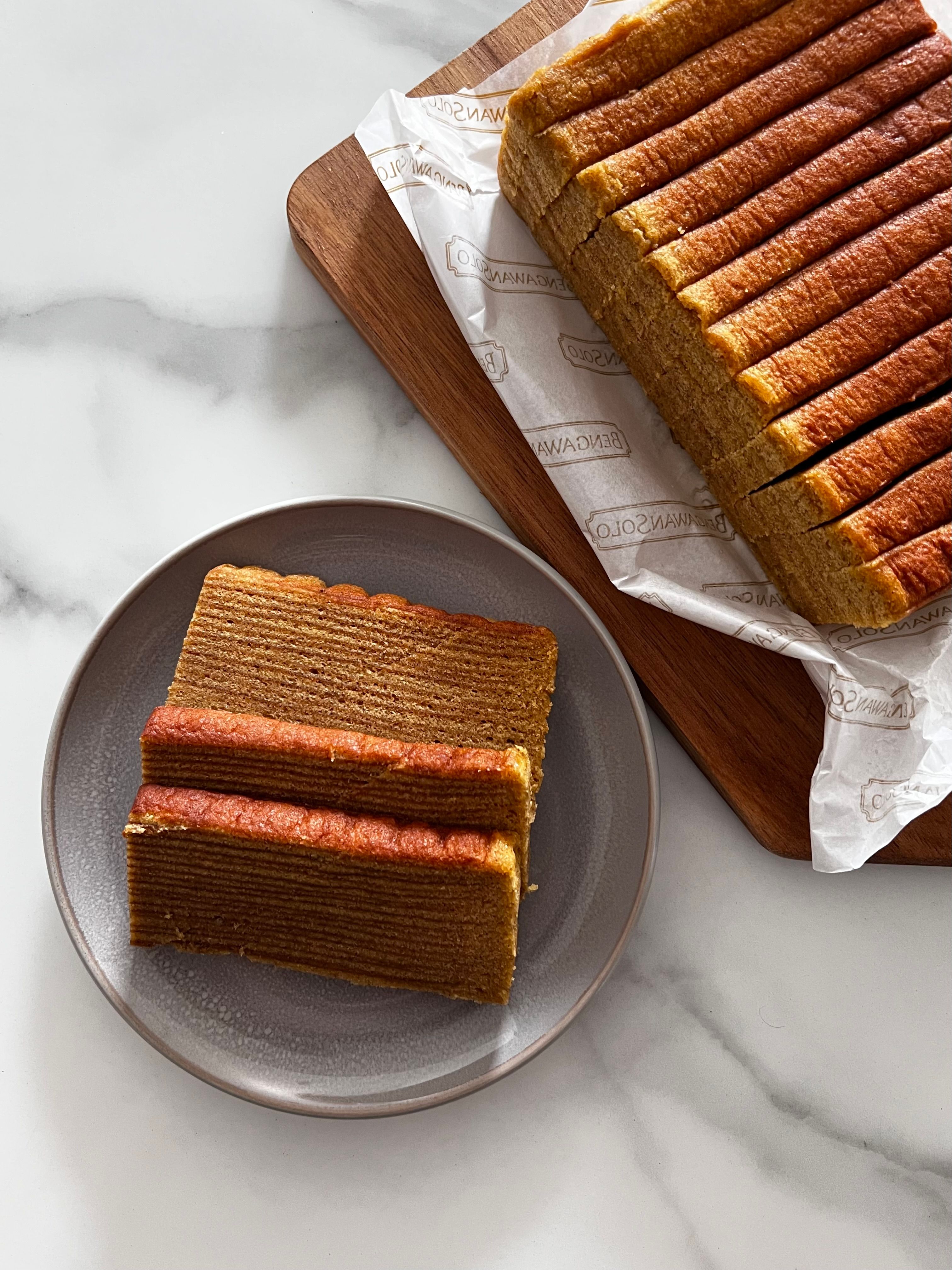
Photo: Anya Dunes / Pexels
The diets react (see scores below)
Common Ingredients
- coconut milk
- egg yolks
- flour
- sugar
- ghee
- nutmeg
- cardamom
Specific recipes may vary.
Incompatible with 10 of 11 diets
Diet Ratings
Bebinca is a traditional Goan layered dessert that is fundamentally incompatible with ketogenic eating. Its primary structure relies on wheat flour and large quantities of sugar, both of which are strictly excluded from keto. A single serving of Bebinca can contain 40-60g of net carbs or more, easily exceeding the entire daily keto carb budget in one snack. While it does contain keto-friendly ingredients like coconut milk, egg yolks, and ghee, these are entirely outweighed by the flour and sugar content. There is no meaningful way to consume a traditional serving without breaking ketosis.
Bebinca contains two clear animal-derived ingredients: egg yolks and ghee (clarified butter). Both are definitively non-vegan. Egg yolks are an animal product (avian), and ghee is a dairy derivative made from cow's milk fat. While coconut milk, flour, sugar, nutmeg, and cardamom are all plant-based, the presence of egg yolks and ghee makes this traditional Goan layered pudding entirely incompatible with a vegan diet. A vegan version could theoretically be made by substituting flax eggs or aquafaba for egg yolks and using vegan butter or coconut oil instead of ghee, but the traditional dish as described is not vegan.
Bebinca is a traditional Goan layered dessert that contains multiple non-paleo ingredients. Flour (wheat) is a grain and a clear paleo exclusion. Refined sugar is explicitly excluded from the paleo diet. These two ingredients alone disqualify the dish. While coconut milk, egg yolks, ghee, nutmeg, and cardamom are paleo-compatible or at least debated within the paleo community, the presence of wheat flour and refined sugar make this dish definitively non-paleo. There is no version of Bebinca that removes these core structural ingredients and remains recognizable as the dish.
Bebinca is a traditional Goan layered dessert that conflicts with Mediterranean diet principles on multiple fronts. It is high in added sugar, uses refined flour (not whole grain), relies on ghee (saturated animal fat) rather than olive oil as the primary fat, and coconut milk adds further saturated fat. Egg yolks alone are the only ingredient with any Mediterranean overlap, but they are used in a context that is otherwise nutritionally contrary to Mediterranean guidelines. The dish is essentially a sweet, refined, high-saturated-fat confection with no plant-forward whole food base.
Bebinca is a traditional Goan layered dessert that is fundamentally incompatible with the carnivore diet. While it contains egg yolks and ghee (animal-derived components), the dish is dominated by plant-based and processed ingredients: coconut milk (plant fat/liquid), flour (grain), sugar (processed plant carbohydrate), nutmeg (plant spice), and cardamom (plant spice). The primary macronutrient base is flour and sugar — both strictly excluded on carnivore. The egg yolks and ghee cannot redeem a dish that is essentially a grain-and-sugar dessert. No carnivore practitioner, from the strictest Lion Diet adherent to the most liberal 'animal-based' follower like post-2020 Saladino, would consider this compatible.
Bebinca contains multiple excluded ingredients: flour (a grain product) and sugar (added sugar) are both explicitly prohibited on the Whole30. Additionally, Bebinca is a traditional layered cake/pudding, which falls squarely into the 'no recreating baked goods/junk food' rule even if compliant substitutions were attempted. There is no compliant version of this dish possible within Whole30 rules.
Bebinca is a traditional Goan layered dessert. Most ingredients are individually low-FODMAP: coconut milk (low-FODMAP at ~125ml per serve), egg yolks (low-FODMAP), ghee (low-FODMAP, lactose-free), sugar (low-FODMAP in moderate amounts), nutmeg (low-FODMAP in small culinary amounts), and cardamom (low-FODMAP in small amounts). The critical issue is the flour — traditional Bebinca uses all-purpose wheat flour, which is high in fructans and problematic during the elimination phase. A standard serving of Bebinca would likely contain enough wheat flour to push it into high-FODMAP territory. Additionally, coconut milk quantity per slice could be moderate-to-high depending on recipe ratios, though coconut milk itself is low-FODMAP at standard portions. If made with a gluten-free flour substitute (e.g., rice flour), the dish could become much more low-FODMAP friendly. As served traditionally, the wheat flour content makes this a caution-to-avoid item.
Monash University has not specifically tested Bebinca, so exact FODMAP thresholds per slice are unknown. Some FODMAP practitioners would rate this as 'avoid' during strict elimination due to the wheat flour content, arguing that even small amounts of wheat-based flour can accumulate enough fructans to trigger symptoms, while others might permit a very small portion if the flour quantity per slice is minimal.
Bebinca is a traditional Goan layered dessert/snack whose core ingredients are fundamentally at odds with DASH dietary principles. Coconut milk is a tropical oil-based product high in saturated fat, which DASH explicitly limits. Ghee (clarified butter) is another source of high saturated fat and cholesterol. Egg yolks contribute additional cholesterol and saturated fat. The dish is heavily sweetened with sugar, placing it in the 'sweets' category that DASH recommends limiting to 5 or fewer servings per week. Refined flour (maida) provides little fiber. While spices like nutmeg and cardamom are DASH-neutral, they cannot offset the multiple DASH-incompatible components. The combination of coconut milk, ghee, and egg yolks creates a high saturated fat load that is directly contrary to DASH goals of reducing cardiovascular risk.
Bebinca is a traditional Goan layered dessert whose macronutrient profile is fundamentally incompatible with Zone principles. Its core ingredients — refined white flour, sugar, egg yolks, ghee, and coconut milk — combine to create a high-glycemic, high-saturated-fat food with virtually no lean protein and no low-GI carbohydrates. The flour and sugar together represent high-glycemic, 'unfavorable' carbohydrates in Zone terminology, spiking insulin rapidly. Ghee and coconut milk contribute heavily to saturated fat content, which Zone explicitly discourages in favor of monounsaturated fats. Egg yolks provide some protein but also significant saturated fat. There is no lean protein source to anchor a Zone block structure, no fiber-rich or low-GI carbohydrate to moderate glycemic response, and no monounsaturated fat source. The 40/30/30 ratio cannot be reasonably approximated even with careful portioning — the dish is structurally a refined carb and saturated fat bomb with negligible balancing protein. While small taste portions are technically possible, there is no practical way to use Bebinca as a Zone snack component without severely undermining the diet's goals.
Bebinca is a traditional Goan layered dessert with a mixed anti-inflammatory profile. On the positive side, it contains coconut milk (which provides medium-chain triglycerides and some anti-inflammatory lauric acid), cardamom (a modestly anti-inflammatory spice), and nutmeg (contains small amounts of anti-inflammatory compounds). However, the dish is built around a foundation of refined wheat flour and significant added sugar, both of which are pro-inflammatory — refined carbohydrates spike blood glucose and promote production of advanced glycation end products (AGEs). Ghee, while debated, is a saturated fat that anti-inflammatory guidelines recommend limiting. Egg yolks in moderate quantities are tolerable, but the overall nutritional architecture of this dish — high sugar, refined flour, saturated fat — places it firmly in the 'caution' category. The spices (nutmeg, cardamom) are present in minor culinary quantities and cannot meaningfully offset the pro-inflammatory load of the other ingredients. As an occasional treat rather than a dietary staple, it is acceptable, but it should not be a regular feature of an anti-inflammatory eating pattern.
Bebinca is a traditional Goan layered dessert made primarily from coconut milk, egg yolks, refined flour, sugar, and ghee — a combination that makes it a poor fit for GLP-1 patients on nearly every dietary criterion. It is high in saturated fat (coconut milk and ghee are both dense saturated fat sources), high in refined sugar, built on refined white flour with negligible fiber, and offers virtually no meaningful protein despite containing egg yolks. Caloric density is high relative to nutritional return, making it a textbook example of empty or near-empty calories for patients who are already eating significantly less. The high fat content is particularly problematic: GLP-1 medications slow gastric emptying, and a high-fat, rich dessert of this type is likely to worsen nausea, bloating, and reflux. The sugar load also conflicts with the blood sugar stabilization goal. While the spices (nutmeg, cardamom) are benign or mildly beneficial, they do not offset the core nutritional profile. A standard serving provides little that a GLP-1 patient needs and several things that are actively counterproductive.
*See how scores were generated at our methodology page.
Nutritional profile
Six traits that cut across every diet.
Fiber & Plants
How much whole-plant food and fiber it delivers.
Healthy Fats
The quality of its fats (unsaturated, omega-3).
Whole / Unprocessed
How close it is to its natural, unprocessed form.
Gut Gentle
How easy it is on digestion (low FODMAP, few irritants).
Low Glycemic
How little it spikes your blood sugar.
Protein Density
How much protein it packs per calorie.
Controversy Index
Higher controversy = more disagreement between diets.
Diet-Specific Tips
 Anti-Inflammatory — 4/10
View tips
- High refined flour content — pro-inflammatory refined carbohydrate
- Significant added sugar — promotes glycemic spikes and AGE formation
- Ghee (saturated fat) — recommended to limit in anti-inflammatory diets
- Coconut milk — provides lauric acid with modest anti-inflammatory properties, but also high in saturated fat
- Cardamom and nutmeg — minor anti-inflammatory spice benefits, insufficient to offset other ingredients
- Egg yolks — moderate; tolerable but contribute arachidonic acid in large quantities
- No omega-3s, no significant antioxidant or polyphenol sources present