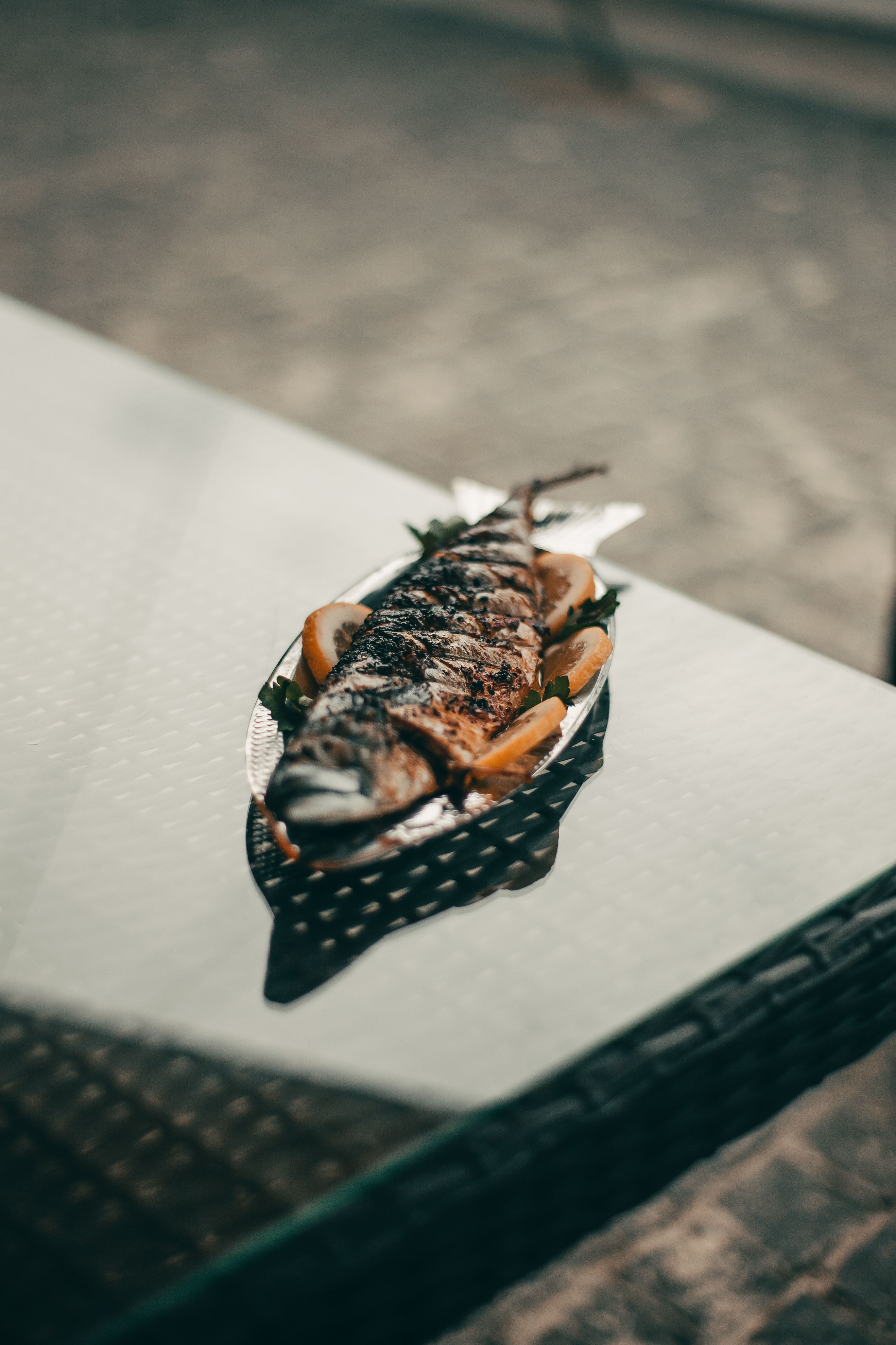
Photo: Dmitriy Tarasenko / Pexels
Indian
Fish Recheado
The diets react (see scores below)
Common Ingredients
- fish
- kashmiri chili
- garlic
- ginger
- cumin
- tamarind
- vinegar
- turmeric
- semolina
Specific recipes may vary.
Incompatible with 5 of 11 diets
Diet Ratings
Fish Recheado has a strong keto-friendly base (fish as the protein, spices like garlic, ginger, cumin, and turmeric), but contains two significant concerns. First, semolina (rava/sooji) is a wheat-derived grain with high net carbs (~60g per 100g) and is used as a coating for the fish — this is a direct keto incompatibility. Second, tamarind contains notable natural sugars (net carbs ~57g per 100g), and even in small paste quantities used in the marinade, it adds carbs. Vinegar and Kashmiri chili are fine in typical quantities. The dish could be made keto by substituting semolina with almond flour or simply pan-frying without coating, and minimizing tamarind. As traditionally prepared, it is a 'caution' due to the semolina coating and tamarind content rather than a full 'avoid,' since the problematic ingredients are used in relatively small amounts relative to the fish.
Fish Recheado is a Goan dish whose primary ingredient is fish — a clear animal product explicitly excluded under vegan dietary rules. The remaining ingredients (Kashmiri chili, garlic, ginger, cumin, tamarind, vinegar, turmeric, semolina) are all plant-based, but the dish cannot be considered vegan due to the central use of fish. There is no ambiguity here within the vegan community.
Fish Recheado contains two clear paleo violations: semolina (a refined wheat product, definitively excluded from all paleo frameworks) and vinegar (a processed, fermented product generally avoided in strict paleo). The base fish and spices — Kashmiri chili, garlic, ginger, cumin, turmeric — are fully paleo-approved, and tamarind is a naturally paleo-compatible souring agent. However, semolina is a grain derivative and is used as a coating in the traditional preparation, making this dish incompatible with paleo principles. The dish could theoretically be adapted (omitting semolina, substituting vinegar with more tamarind), but as traditionally prepared it must be avoided.
Fish Recheado is a Goan spiced fish dish whose core ingredients align well with Mediterranean diet principles. Fish is the primary protein, strongly encouraged 2-3 times weekly. The spice paste — kashmiri chili, garlic, ginger, cumin, tamarind, and turmeric — consists entirely of whole, plant-based aromatics and spices with no added sugars or unhealthy fats. Vinegar (likely palm or coconut in Goan tradition) is used in small quantities as a souring agent and poses no significant concern. The main flag is semolina, a refined grain used as a coating, which is mildly discouraged under modern Mediterranean guidelines that favor whole grains. However, semolina is a durum wheat product used in modest amounts as a crust, and it appears in traditional Mediterranean cuisines (e.g., Italian). Overall, this dish is whole-food, fish-forward, and spice-rich with no red meat, processed ingredients, or added sugars.
Some Mediterranean diet purists may flag semolina as a refined grain coating, preferring whole-grain or no coating at all. Additionally, the Indian spice profile (tamarind, cumin, turmeric) is non-traditional to Mediterranean cuisine, though modern interpretations of the diet focus on nutritional principles rather than strict geographic origin.
Fish Recheado is fundamentally incompatible with the carnivore diet. While fish itself is a fully approved carnivore food, this dish is defined by its recheado masala paste — a heavily plant-based spice and condiment blend. Kashmiri chili, ginger, cumin, and turmeric are plant-derived spices excluded from carnivore. Tamarind is a plant-based fruit used as a souring agent. Vinegar, while debated, is plant-fermented (typically from cane sugar or fruit) and not an animal product. Most critically, semolina is a wheat-derived grain — a hard plant food exclusion on any version of the carnivore diet. The fish protein base is the only carnivore-compatible element; every other ingredient violates carnivore principles, with semolina alone being a dealbreaker.
Fish Recheado contains semolina, which is a wheat-derived grain product. Grains — including all wheat products — are explicitly excluded on the Whole30 for the full 30 days. Semolina is commonly used in this Goan dish as a coating for the fish before frying, making it a core component of the dish as typically prepared. All other ingredients (fish, kashmiri chili, garlic, ginger, cumin, tamarind, vinegar, turmeric) are Whole30-compliant. The dish could theoretically be made without the semolina coating, but as conventionally prepared it is not compliant.
Fish Recheado contains two clearly high-FODMAP ingredients that make it unsuitable during the elimination phase: garlic (high in fructans — even small amounts are problematic as FODMAPs are water-soluble and infuse into the masala paste) and semolina (derived from durum wheat, high in fructans). The recheado masala is a wet paste where garlic is ground directly into the marinade and cooked into the fish, meaning FODMAP compounds fully transfer into the dish. Semolina is typically used as a coating for the fish before pan-frying, adding another wheat-based fructan source. Tamarind is generally low-FODMAP at typical culinary quantities. Kashmiri chili, ginger, cumin, vinegar, and turmeric are all low-FODMAP. Fish itself is protein-only and fully safe. However, garlic and semolina together make this dish a clear avoid during the elimination phase.
Fish Recheado is a Goan dish featuring fish stuffed or coated with a spiced masala paste and typically pan-fried or shallow-fried in a semolina crust. The core ingredients align reasonably well with DASH principles: fish is an excellent lean protein source encouraged by DASH, and the spice base (kashmiri chili, garlic, ginger, cumin, turmeric) contributes flavor without sodium concerns. Tamarind and vinegar add acidity without significant sodium. However, the semolina coating, while not a whole grain, is not categorically prohibited. The main DASH concerns are: (1) the cooking method — shallow or pan-frying adds fat, potentially saturated depending on oil used; (2) semolina is refined grain rather than the whole grain DASH emphasizes; (3) the masala paste in restaurant or traditional preparations can include added salt in significant quantities. Home preparation with minimal oil (e.g., a light pan-fry in canola or olive oil), sodium-controlled spice paste, and moderate portion size makes this quite DASH-compatible. As commonly prepared, the frying method and potential sodium in the masala push this to caution rather than full approval.
NIH DASH guidelines emphasize lean fish as a core protein and do not specifically restrict spiced fish preparations; a clinician applying updated DASH interpretation might approve this dish if prepared at home with olive/canola oil and no added salt, noting the anti-inflammatory spice profile and omega-3 potential from the fish as cardiovascular positives. However, traditional restaurant versions with higher sodium masala and deep frying would remain a caution.
Fish Recheado is a Goan spiced fish dish where whole fish is marinated in a vibrant recheado masala (Kashmiri chili, garlic, ginger, cumin, tamarind, vinegar, turmeric) and pan-fried with a semolina crust. The protein base — fish — is an excellent Zone-friendly lean protein, and the spice marinade contributes polyphenols and anti-inflammatory compounds (turmeric, ginger, garlic) that align well with Sears' anti-inflammatory philosophy. However, two components introduce Zone caution: (1) Semolina (rava) is a refined grain coating that is moderately high-glycemic, adding unfavorable carbohydrate blocks without fiber benefit; and (2) the dish as traditionally prepared lacks a structured carbohydrate source to balance the protein and fat blocks into a proper 40/30/30 meal — it functions as a protein-dominant component requiring Zone-friendly vegetable sides to complete the ratio. The tamarind and vinegar are fine in Zone quantities. The overall dish scores reasonably well because the core protein is excellent and the coating is modest, but the semolina crust and the need to build a complete Zone meal around it temper enthusiasm.
Zone practitioners who emphasize the anti-inflammatory and polyphenol benefits in Sears' later writings (The Anti-Inflammation Zone) might rate this higher, noting that the turmeric, ginger, garlic, and chili all contribute powerful polyphenols that Sears specifically advocates. Some would argue the semolina crust is thin enough in practice that its glycemic impact is minimal, pushing this closer to a 7. Conversely, strict early-Zone followers would flag semolina as an unfavorable refined carb and dock points for the missing vegetable carbohydrate blocks.
Fish Recheado is a Goan spiced fish dish with a strong anti-inflammatory profile. Fish — especially oily varieties commonly used in this dish like mackerel or pomfret — provides omega-3 fatty acids that are central to the anti-inflammatory framework. The recheado masala is built on powerhouse anti-inflammatory spices: turmeric (curcumin), garlic (allicin, thiosulfinates), ginger (gingerols, shogaols), chili/Kashmiri chili (capsaicin, carotenoids), and cumin (antioxidant phenolics). Tamarind provides polyphenols and tartaric acid. The use of vinegar is largely neutral. The main concern is semolina — a refined grain used as a coating — which contributes refined carbohydrates and offers little nutritional benefit. However, the coating is thin and the overall dish is dominated by anti-inflammatory fish protein and a spice paste with robust bioactive compounds. Confidence is medium rather than high because the type of fish used affects the omega-3 contribution significantly (fatty oily fish = excellent; lean white fish = moderate), and the semolina crust introduces a refined grain element that some practitioners would flag.
The semolina crust adds refined carbohydrates, and if a lean, low-omega-3 fish is used instead of oily fish like mackerel, the dish loses its strongest anti-inflammatory asset. Some stricter anti-inflammatory protocols (e.g., grain-free or autoimmune-focused approaches) would flag even modest refined grain coatings and the acidity of vinegar and tamarind as potential gut irritants for sensitive individuals.
Fish Recheado is a Goan dish featuring fish coated in a bold spiced paste (recheado masala) made from Kashmiri chili, garlic, ginger, cumin, tamarind, and vinegar, then typically pan-fried or shallow-fried with a semolina crust. The fish itself is an excellent high-protein, lean protein source that strongly supports GLP-1 dietary goals. However, the preparation method is the primary concern: shallow or pan-frying in oil adds significant fat, and the semolina crust, while not refined to the degree of white flour, is a low-fiber, low-protein coating that adds mostly empty carbohydrate calories. The Kashmiri chili component, while milder than fresh red chilies, is still a notable spice load that may worsen nausea or reflux in GLP-1 patients, particularly those in early weeks of the medication. Tamarind and vinegar are acidic and could aggravate reflux or gastric discomfort given slowed gastric emptying. On the positive side, the garlic, ginger, and turmeric have anti-inflammatory and pro-digestive properties. If prepared with minimal oil (baked or air-fried rather than pan-fried), a smaller spice load, and a smaller portion, this dish improves meaningfully. As traditionally prepared, it sits in caution territory due to fat from frying, spice-related GI risk, and low-fiber semolina coating.
Some GLP-1-focused dietitians would rate this higher, arguing that the fish protein core is the dominant nutritional factor and that Kashmiri chili is mild enough to be tolerated by most patients after the initial adjustment period. Others would rate it lower, emphasizing that any fried coating — even semolina — combined with acidic marinade ingredients creates a high-risk combination for nausea and reflux in patients with significantly slowed gastric emptying.
*See how scores were generated at our methodology page.
Nutritional profile
Six traits that cut across every diet.
Fiber & Plants
How much whole-plant food and fiber it delivers.
Healthy Fats
The quality of its fats (unsaturated, omega-3).
Whole / Unprocessed
How close it is to its natural, unprocessed form.
Gut Gentle
How easy it is on digestion (low FODMAP, few irritants).
Low Glycemic
How little it spikes your blood sugar.
Protein Density
How much protein it packs per calorie.
Controversy Index
Higher controversy = more disagreement between diets.
Diet-Specific Tips
 Keto — 4/10
View tips
- Semolina (wheat-based) coating is a grain and high in net carbs — primary keto disqualifier
- Tamarind adds natural sugars and carbs even in small paste quantities
- Fish is an excellent keto protein source — zero carbs, high protein
- Spices (Kashmiri chili, garlic, ginger, cumin, turmeric) are keto-compatible in typical marinade amounts
- Vinegar is keto-friendly and negligible in carbs
- Dish can be made keto-compliant by omitting or substituting the semolina coating and reducing tamarind
 Mediterranean — 8/10
View tips
- Fish is the primary protein — strongly encouraged 2-3 times per week
- All spices (kashmiri chili, garlic, ginger, cumin, tamarind, turmeric) are whole, plant-based ingredients
- No red meat, processed foods, or added sugars
- Semolina coating is a refined grain, mildly inconsistent with whole-grain preference
- Vinegar used in small quantity as a souring agent — negligible concern
- No olive oil specified, though cooking fat is not listed as an ingredient
 DASH — 6/10
View tips
- Fish is a DASH-approved lean protein, strongly encouraged
- Spice base (garlic, ginger, cumin, turmeric, kashmiri chili) adds flavor without sodium
- Semolina crust is a refined grain — DASH prefers whole grains
- Frying method adds fat; oil type and quantity affect DASH compatibility significantly
- Tamarind and vinegar are low-sodium acidulants — no concern
- Salt in marinade/masala paste can be a significant sodium source depending on preparation
- Home preparation with minimal canola/olive oil and no added salt improves DASH score considerably
 Zone — 6/10
View tips
- Excellent Zone-friendly lean protein source (fish)
- Semolina crust adds refined, moderate-GI carbohydrate blocks — unfavorable in Zone terminology
- Rich anti-inflammatory spice profile (turmeric, ginger, garlic, Kashmiri chili) aligns with Sears' polyphenol emphasis
- Dish is protein-dominant and requires Zone-favorable vegetable sides to achieve 40/30/30 balance
- Tamarind and vinegar contribute minimal carbohydrates and are Zone-neutral
- No significant saturated fat concern; frying oil choice matters — olive or avocado oil preferred
 Anti-Inflammatory — 8/10
View tips
- Fish provides omega-3 fatty acids (especially potent if oily fish like mackerel or sardines are used)
- Turmeric (curcumin) is a well-documented anti-inflammatory compound
- Garlic and ginger contribute allicin and gingerols with strong anti-inflammatory and antioxidant effects
- Kashmiri chili adds capsaicin and beneficial carotenoids
- Cumin contributes antioxidant phenolics
- Tamarind provides polyphenols
- Semolina coating is a refined grain — minor concern but reduces overall score slightly
- No seed oils, trans fats, added sugars, or processed additives
 GLP-1 Friendly — 5/10
View tips
- Fish is a high-quality lean protein source — strongly positive for GLP-1 patients
- Traditional pan-frying or shallow-frying adds significant fat, worsening nausea and bloating risk
- Semolina crust is low in fiber and protein — adds mostly refined carbohydrate calories
- Kashmiri chili is milder than fresh chilies but still a meaningful spice load that may trigger reflux or nausea
- Tamarind and vinegar add acidity, which may worsen GI discomfort given slowed gastric emptying
- Garlic, ginger, and turmeric are digestive-supportive and anti-inflammatory — minor positive
- Preparation method (baking or air-frying instead of frying) would significantly improve the rating
- Small portion size would reduce fat and spice load — portion-sensitive dish