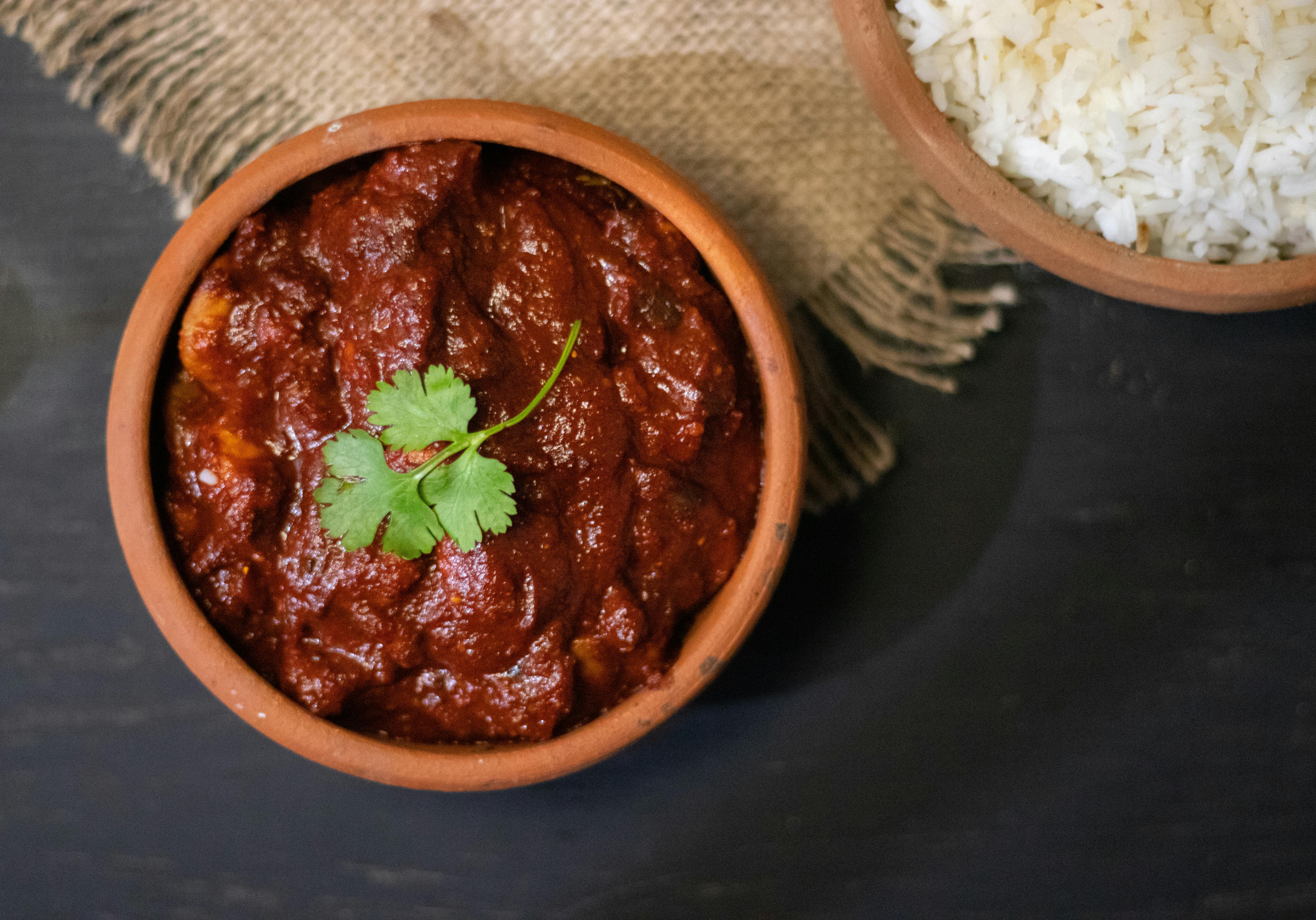
Photo: Yash Maramangallam / Pexels
The diets react (see scores below)
Common Ingredients
- pork
- pork liver
- kashmiri chili
- vinegar
- garlic
- ginger
- cumin
- cloves
- cinnamon
- tamarind
Specific recipes may vary.
Incompatible with 6 of 11 diets
Diet Ratings
Sorpotel is a Goan pork dish that is largely keto-compatible in its protein and fat profile — pork and pork liver are both excellent keto foods. The spices (cumin, cloves, cinnamon, garlic, ginger, Kashmiri chili) add negligible carbs. However, two ingredients introduce meaningful carb concerns: tamarind has a notable sugar and carb content (~10g net carbs per tablespoon of paste), and vinegar is generally fine but some preparations use sweetened varieties. Pork liver also contains moderate glycogen/carbs compared to muscle meat (~3-4g per 100g). In traditional Sorpotel, tamarind is used in moderate amounts for sourness, which could push the dish into a caution zone depending on portion size and preparation. A carefully made, tamarind-light version in moderate portions can fit keto, but the standard recipe warrants caution rather than a clear approve.
Some strict keto practitioners would flag pork liver more heavily, as organ meats contain higher carbohydrate content than muscle meat and some clinical protocols limit organ meats for blood sugar-sensitive individuals. Conversely, lazy keto adherents may approve this outright, arguing the tamarind and liver carbs are negligible at normal serving sizes.
Sorpotel is a traditional Goan pork dish containing pork meat and pork liver as its primary proteins. Both are animal flesh, making this dish categorically incompatible with a vegan diet. There is no ambiguity here — pork and organ meats are unequivocally animal products excluded under all definitions of veganism. The spices (Kashmiri chili, cumin, cloves, cinnamon), aromatics (garlic, ginger), and souring agents (vinegar, tamarind) are plant-based, but they are entirely secondary to the dish's identity as a pork-based preparation.
Sorpotel is a Goan pork dish made with pork, pork liver, and a spice-based sauce using vinegar, garlic, ginger, cumin, cloves, cinnamon, tamarind, and Kashmiri chili. Nearly every ingredient is paleo-compliant: pork and pork liver are nutrient-dense animal proteins fully endorsed by paleo, and all the spices and aromatics (garlic, ginger, cumin, cloves, cinnamon, tamarind, chili) are natural plant-based flavorings available to hunter-gatherers. Tamarind is a fruit-derived souring agent and is paleo-friendly. The one mild consideration is vinegar — typically apple cider or cane vinegar in Goan cooking — which is a fermented, processed product. Apple cider vinegar is widely accepted in the paleo community; cane vinegar is more processed but used in small quantities as a condiment/flavor agent. Most paleo practitioners would accept this dish as written, though strict Cordain-school paleo might flag vinegar and the possible use of added salt (not listed here but common in traditional recipes).
Strict Cordain-school paleo may raise concerns about vinegar, particularly cane or distilled varieties, as a processed fermented product. Additionally, if traditional salt is added during preparation (common in most real-world versions), that would push the dish into cautionary territory for purists who exclude added salt.
Sorpotel is a Goan pork dish featuring pork and pork liver as its primary proteins. Pork is red meat, which the Mediterranean diet restricts to only a few times per month. Combined with organ meat (liver), which is also high in saturated fat and not a staple of Mediterranean eating, this dish fundamentally contradicts core Mediterranean diet principles. While the spices (garlic, ginger, cumin, cloves, cinnamon) and acidic elements (vinegar, tamarind) are acceptable flavoring agents, they do not offset the central issue: a rich, pork-heavy main dish. There is no olive oil, no plant-based protein base, no whole grains or legumes, and the fat profile is dominated by animal saturated fat. This dish is incompatible with Mediterranean dietary patterns regardless of its preparation method.
Sorpotel contains pork and pork liver, which are carnivore-approved animal products, but the dish is heavily laden with plant-based ingredients that disqualify it entirely. Kashmiri chili, garlic, ginger, cumin, cloves, cinnamon, and tamarind are all plant-derived — spices, aromatics, and a plant-based souring agent. Vinegar may be acceptable in small amounts to some practitioners, but tamarind is a legume-derived fruit used as a primary flavor component here. The plant ingredients are not minor trace additives; they are core structural components of the dish's flavor profile. No carnivore practitioner across any camp — strict Lion Diet, Baker's approach, or even Saladino's more permissive animal-based framework — would consider this dish compliant. The ratio of plant compounds to animal ingredients makes this firmly an avoid.
Sorpotel is a traditional Goan pork dish whose listed ingredients are all Whole30-compliant. Pork and pork liver are allowed meats. Kashmiri chili, garlic, ginger, cumin, cloves, and cinnamon are all permitted herbs and spices. Vinegar (non-malt) is explicitly allowed on Whole30. Tamarind is a natural fruit-derived souring agent with no excluded components. There are no grains, legumes, dairy, added sugars, or other excluded ingredients in this recipe as listed.
Sorpotel contains multiple high-FODMAP ingredients that make it unsuitable during the elimination phase. Garlic is one of the highest-FODMAP foods tested by Monash University, being a significant source of fructans even in small amounts. Tamarind is high in excess fructose and is rated high-FODMAP by Monash. Cloves contain polyols (sorbitol) and are high-FODMAP in culinary amounts. The combination of garlic, tamarind, and cloves creates a dish that is high-FODMAP regardless of serving size. Pork itself is low-FODMAP, as is ginger, cumin, cinnamon, vinegar, and Kashmiri chili, but the problematic ingredients are integral to the dish's flavor base and cannot be easily omitted or reduced to safe thresholds in a traditional preparation.
Sorpotel is a traditional Goan dish featuring pork and pork liver cooked in a spiced, vinegar-based gravy. From a DASH diet perspective, this dish presents multiple significant concerns. Pork (particularly the fatty cuts traditionally used in Sorpotel) is a red meat high in saturated fat, which DASH explicitly limits. Pork liver, while rich in iron and micronutrients, is very high in dietary cholesterol and not emphasized in DASH guidelines. Traditional Sorpotel preparation often involves fatty cuts including pork fat/lard, and the dish is typically high in sodium from salting and preservation processes. The combination of red meat as the primary protein and organ meat (liver) directly conflicts with DASH's emphasis on lean poultry, fish, beans, and nuts over red and processed meats. The spices (cumin, cloves, cinnamon, ginger, garlic) and tamarind are DASH-neutral or mildly positive, but they cannot offset the core protein issues. Kashmiri chili adds flavor without significant sodium concern. The vinegar-based preparation does not meaningfully alter the nutritional profile of the meats involved.
Sorpotel is a traditional Goan pork dish that presents several Zone Diet challenges. The primary proteins — pork and pork liver — are not ideal Zone choices. Pork (especially the fattier cuts traditionally used in sorpotel, which includes offal and fatty pieces) carries significant saturated fat, conflicting with Zone's preference for lean proteins. However, pork liver is actually a relatively lean organ meat rich in protein and micronutrients, which partially redeems the dish. The spice base (Kashmiri chili, garlic, ginger, cumin, cloves, cinnamon, tamarind, vinegar) is Zone-friendly — these are polyphenol-rich, anti-inflammatory ingredients that Sears would view positively. The dish is essentially a protein-and-fat heavy preparation with no significant carbohydrate load, meaning it would need to be carefully portioned and paired with substantial low-glycemic vegetables (e.g., a large salad or steamed non-starchy vegetables) and a modest fat addition to hit the 40/30/30 ratio. The saturated fat content from fatty pork cuts is the primary concern. If made with leaner pork cuts and liver only, the Zone compatibility improves. As traditionally prepared with fatty pork pieces, it scores lower due to saturated fat load and difficulty balancing the carb block without additional sides.
Some Zone practitioners and Sears' later anti-inflammatory writings (notably 'The OmegaRx Zone' and 'Toxic Fat') acknowledge that not all saturated fat is equally harmful and that organ meats like liver carry significant nutritional value (B12, iron, protein). A Zone-adapted sorpotel made with leaner pork and liver, paired with a large vegetable side, could be a reasonable Zone meal. The vinegar and polyphenol-rich spices align with Sears' later emphasis on anti-inflammatory eating, offering some redemption for the dish.
Sorpotel is a Goan pork dish with a genuinely mixed anti-inflammatory profile. On the pro-inflammatory side, pork (especially fatty cuts used in traditional sorpotel) and pork liver are red/organ meats high in saturated fat and arachidonic acid, which are flagged as inflammatory under most anti-inflammatory frameworks. Red meat and full-fat pork are in the 'limit' category. However, the spice blend is a significant redeeming feature: garlic, ginger, cumin, cinnamon, and cloves are all well-established anti-inflammatory spices with polyphenol and antioxidant content backed by research. Kashmiri chili contributes capsaicin, another anti-inflammatory compound. Tamarind and vinegar provide acidic components with some antioxidant properties. Pork liver, while organ meat, is nutrient-dense and provides iron, B12, and zinc. The dish's overall balance tips toward caution rather than avoid because the potent spice matrix meaningfully counters the pro-inflammatory protein base, but the fatty pork and organ meat content prevent it from reaching approve territory. Traditional recipes often include fatty pork belly, which elevates saturated fat considerably.
Some anti-inflammatory practitioners (aligned with Dr. Weil's broader Mediterranean-influenced approach) would argue the dense anti-inflammatory spice profile — garlic, ginger, cinnamon, cloves, cumin — partially offsets the pork's inflammatory potential, and that moderate consumption of pork in the context of an otherwise healthy diet is acceptable. Conversely, stricter anti-inflammatory and AIP-aligned practitioners would rate this closer to 'avoid' given the red/organ meat base, saturated fat load, and arachidonic acid content in liver.
Sorpotel is a traditional Goan dish made from fatty pork cuts and pork liver cooked in a richly spiced, vinegar-based gravy. While it does provide meaningful protein, the fat profile is highly problematic for GLP-1 patients. Traditional sorpotel uses fatty pork pieces — often including skin, belly, and offal — which deliver high saturated fat per serving. High dietary fat is a primary driver of GLP-1 side effects including nausea, bloating, delayed gastric emptying exacerbation, and reflux. The dish is also intensely spiced with Kashmiri chili and multiple strong aromatics, which can worsen GI discomfort and reflux in patients already experiencing slowed gastric motility. Pork liver adds iron and micronutrients but also contributes to the rich, heavy nature of the dish. The vinegar component is unlikely to be a problem in small amounts but does not offset the core concerns. The overall dish profile — high saturated fat, heavy texture, intense spicing, difficult digestibility — directly conflicts with multiple GLP-1 dietary priorities and is likely to worsen side effects significantly.
*See how scores were generated at our methodology page.
Nutritional profile
Six traits that cut across every diet.
Fiber & Plants
How much whole-plant food and fiber it delivers.
Healthy Fats
The quality of its fats (unsaturated, omega-3).
Whole / Unprocessed
How close it is to its natural, unprocessed form.
Gut Gentle
How easy it is on digestion (low FODMAP, few irritants).
Low Glycemic
How little it spikes your blood sugar.
Protein Density
How much protein it packs per calorie.
Controversy Index
Higher controversy = more disagreement between diets.
Diet-Specific Tips
 Keto — 5/10
View tips
- Pork is high-fat, zero-carb — strongly keto-positive
- Pork liver adds moderate carbs (~3-4g/100g) but is nutrient-dense
- Tamarind is the primary carb risk, contributing sugars and net carbs
- Vinegar is low-carb but sweetened versions would increase carb load
- Spice blend is keto-friendly with minimal carb contribution
- Portion size is critical — smaller servings reduce tamarind carb impact
- No grains, starches, or added sugars in the base recipe
 Paleo — 8/10
View tips
- Pork and pork liver are nutrient-dense, paleo-approved animal proteins
- All spices (cumin, cloves, cinnamon, Kashmiri chili) are natural and paleo-compliant
- Garlic, ginger, and tamarind are whole food plant ingredients fully endorsed by paleo
- Vinegar is the primary gray-area ingredient — apple cider vinegar is widely accepted; cane vinegar less so
- No grains, legumes, dairy, or seed oils present
- Added salt (common in traditional recipes but not listed) would be a concern for strict paleo adherents
 Whole30 — 8/10
View tips
- Pork and pork liver are compliant proteins
- Vinegar is explicitly allowed (assuming non-malt variety such as wine or coconut vinegar, typical in Goan cooking)
- Tamarind is a natural fruit product and Whole30-compliant
- All spices (kashmiri chili, cumin, cloves, cinnamon) are permitted
- Garlic and ginger are compliant aromatics
- No excluded ingredients present in the listed recipe
 Zone — 4/10
View tips
- Fatty pork cuts traditionally used carry high saturated fat, conflicting with Zone's lean protein preference
- Pork liver is a lean, nutrient-dense protein source that partially redeems the dish
- No significant carbohydrate content — must be paired with low-glycemic vegetables to achieve 40% carb ratio
- Spice base (garlic, ginger, cloves, cinnamon, Kashmiri chili, tamarind) is polyphenol-rich and anti-inflammatory — Zone positive
- Vinegar is a Zone-approved condiment that may help moderate glycemic response
- Dish is carb-deficient as a standalone meal — requires significant vegetable pairing for Zone balance
- High saturated fat from traditional fatty pork pieces limits Zone compatibility without modification
 Anti-Inflammatory — 4/10
View tips
- Pork (fatty cuts) is high in saturated fat and arachidonic acid — pro-inflammatory, in the 'limit' category
- Pork liver is organ meat with high arachidonic acid content, a precursor to inflammatory eicosanoids
- Garlic and ginger are potent anti-inflammatory ingredients with substantial research support
- Cinnamon, cloves, and cumin contribute polyphenols and antioxidants with anti-inflammatory properties
- Kashmiri chili provides capsaicin, associated with reduced inflammatory markers
- Tamarind contains polyphenols and antioxidants with modest anti-inflammatory effects
- Vinegar (likely toddy or cane) is neutral to mildly beneficial
- Traditional preparation often uses fatty pork belly, increasing saturated fat load significantly
- Spice complexity is a meaningful counterbalance but insufficient to offset the protein base