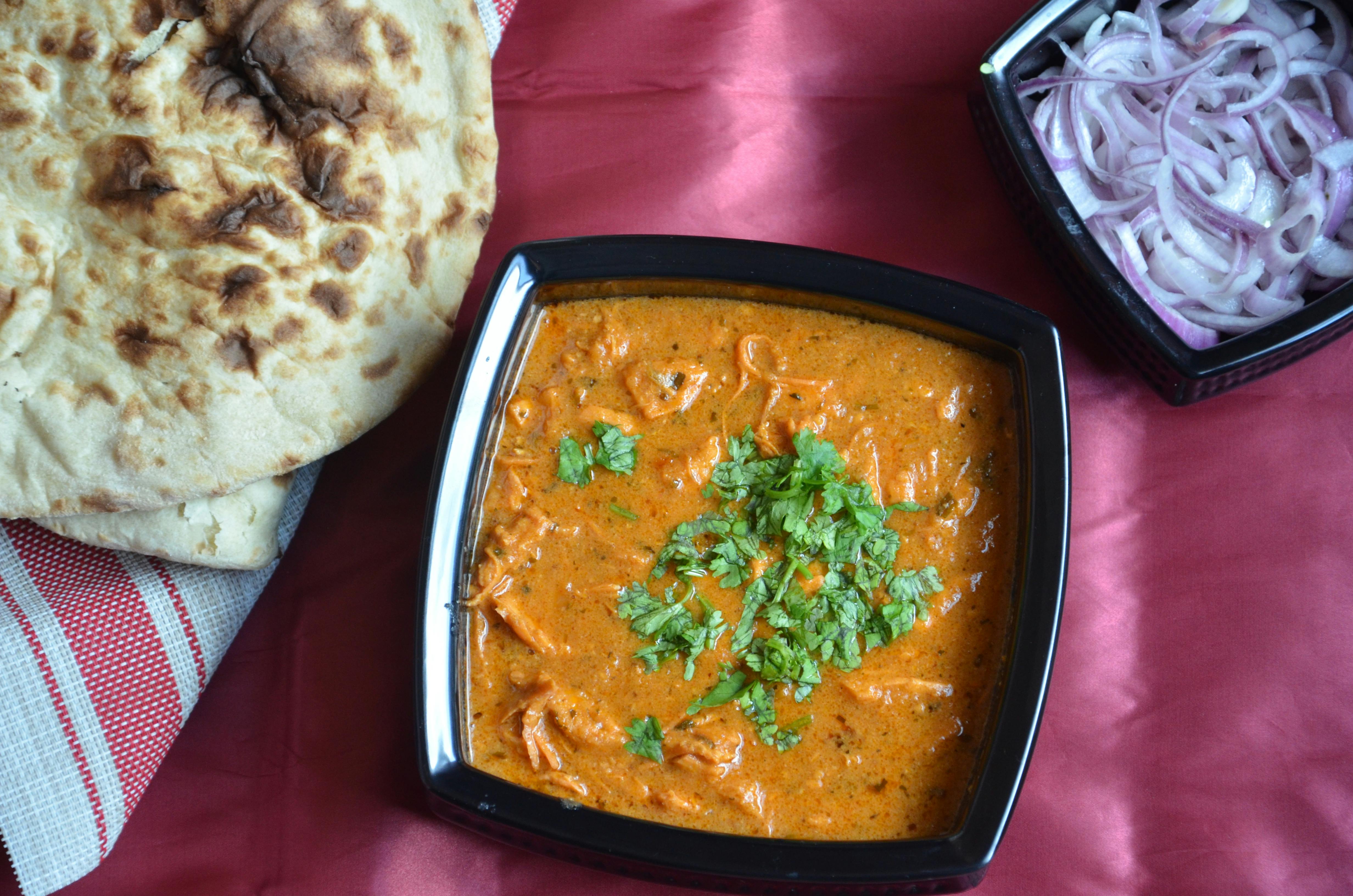
Photo: Saher Suthriwala / Pexels
The diets react (see scores below)
Common Ingredients
- chicken
- coconut
- poppy seeds
- kashmiri chili
- coriander seeds
- nutmeg
- star anise
- onion
- ginger
- garlic
Specific recipes may vary.
Incompatible with 3 of 11 diets
Diet Ratings
Xacuti is a Goan spiced curry featuring chicken as the primary protein alongside coconut, which is excellent for keto due to its high fat and fiber content. The spice blend (kashmiri chili, coriander seeds, nutmeg, star anise, poppy seeds) contributes minimal net carbs in typical cooking quantities. The main concerns are onion and the cumulative carb load from multiple spices and poppy seeds, which can add up. A standard serving is likely borderline — manageable within daily keto limits with portion control, but not as freely consumable as a simpler chicken-and-fat dish. The dish has no grains, added sugars, or starchy vegetables, making it generally keto-friendly, though the onion and spice volume warrant attention for strict practitioners.
Strict keto practitioners may flag the cumulative carb contribution of onion, poppy seeds, and multiple aromatic spices, arguing the dish requires careful portion sizing that makes it impractical for those targeting the lower end of the 20g net carb threshold. Lazy keto adherents, however, would consider this a solid keto meal given its high-fat coconut base and lean protein.
Xacuti is a Goan curry whose primary protein is chicken, a direct animal product. All remaining ingredients (coconut, poppy seeds, Kashmiri chili, coriander seeds, nutmeg, star anise, onion, ginger, garlic) are fully plant-based, but the dish as described is categorically non-vegan due to the chicken. No amount of plant-based spicing or coconut base can offset the inclusion of poultry.
Xacuti is a Goan spiced chicken curry that aligns well with paleo principles. Every ingredient in this dish is whole and unprocessed: chicken (clean animal protein), coconut (whole food fat source), poppy seeds (seeds are paleo-approved), Kashmiri chili, coriander seeds, nutmeg, and star anise (all natural spices), plus aromatic vegetables — onion, ginger, and garlic. There are no grains, legumes, dairy, seed oils, refined sugars, or processed additives present. The coconut provides healthy saturated fat consistent with paleo fat sources. This is essentially a hunter-gatherer-compatible meal that happens to be formalized into a traditional Indian recipe.
Xacuti is a Goan Indian curry featuring chicken as the primary protein, which fits Mediterranean diet guidelines as an acceptable moderate-consumption food (poultry, a few times per week). The spice profile — coriander seeds, kashmiri chili, nutmeg, star anise, ginger, garlic, onion — is rich in anti-inflammatory compounds and aligns well with the Mediterranean emphasis on herbs and aromatics. However, coconut is a significant ingredient here, providing saturated fat from a plant source that is not part of traditional Mediterranean dietary patterns, where extra virgin olive oil is the canonical fat. Poppy seeds are fine as a minor ingredient. The dish is whole-food, minimally processed, and plant-spice-forward, which are positive attributes, but the reliance on coconut (milk or flesh) as a foundational flavor and fat source rather than olive oil places it outside core Mediterranean practice.
Some modern integrative Mediterranean diet interpretations accept coconut as a plant-based fat with beneficial medium-chain triglycerides, and would view this dish more favorably given its whole-food ingredients, lean protein, and abundant spices. Traditional Goan cuisine has Portuguese colonial influences, and some researchers argue cross-cultural plant-forward dishes can be incorporated into a Mediterranean-style eating pattern.
Xacuti is a heavily spiced Indian curry that is fundamentally incompatible with the carnivore diet. While chicken is an animal product, the dish is dominated by plant-based ingredients: coconut, poppy seeds, Kashmiri chili, coriander seeds, nutmeg, star anise, onion, ginger, and garlic. The majority of the ingredient list consists of plant-derived spices, aromatics, and plant fats (coconut). On a strict carnivore diet, all of these are excluded — spices, seeds, alliums, roots, and plant oils/fats are all off the table. The dish cannot be modified into a carnivore-compatible version without fundamentally ceasing to be Xacuti. The chicken itself is the only carnivore-appropriate component.
Xacuti is a Goan curry featuring chicken with a coconut and whole-spice base. Every ingredient listed — chicken, coconut, poppy seeds, Kashmiri chili, coriander seeds, nutmeg, star anise, onion, ginger, and garlic — is fully compliant with Whole30 rules. These are all whole, unprocessed foods: a protein source, a natural fat (coconut), aromatic vegetables, and whole spices. There are no grains, legumes, dairy, added sugars, alcohol, or any other excluded ingredients. The dish is a straightforward spiced meat curry that aligns perfectly with the Whole30 philosophy of eating whole, nutrient-dense foods.
Xacuti contains multiple high-FODMAP ingredients that make it unsuitable during the elimination phase. Garlic and onion are the primary offenders — both are among the highest-fructan foods tested by Monash University and are explicitly excluded during elimination at any reasonable cooking quantity. These two ingredients alone are sufficient to classify the dish as avoid. Additionally, coconut used in significant quantities (as is typical in Xacuti, which is a coconut-heavy curry) can become moderate-to-high FODMAP depending on the form (coconut cream/milk in larger amounts contains polyols). Kashmiri chili, coriander seeds, nutmeg, star anise, ginger, poppy seeds, and chicken are all low-FODMAP, but the garlic and onion are non-negotiable disqualifiers in this dish's traditional preparation.
Xacuti is a Goan spiced chicken dish that combines DASH-friendly ingredients (lean chicken, aromatic spices, onion, ginger, garlic) with coconut, which is the primary concern. Coconut is high in saturated fat — a tropical oil/fat that DASH explicitly limits — and is a foundational ingredient in Xacuti, not merely incidental. The spice blend (coriander, kashmiri chili, star anise, nutmeg, poppy seeds) is generally DASH-compatible and adds antioxidants with minimal sodium. The chicken provides lean protein aligned with DASH principles. However, the quantity of coconut (typically grated coconut and/or coconut milk used generously in this dish) pushes it into caution territory due to saturated fat load. Sodium content depends on preparation — traditional homemade versions can be relatively low in added sodium, which is a positive. Overall, the dish has a mixed nutritional profile: excellent spices and lean protein offset by significant saturated fat from coconut.
NIH DASH guidelines categorically limit tropical oils and high-saturated-fat foods like coconut. However, some updated clinical interpretations and emerging nutritional science suggest that the saturated fat in whole coconut (as opposed to refined coconut oil) may behave differently metabolically, and some DASH-oriented dietitians allow modest coconut in the context of an otherwise low-saturated-fat diet — particularly when the dish is portion-controlled and sodium is kept low.
Xacuti is a Goan chicken curry that presents a mixed Zone profile. The chicken is an excellent lean protein source — a strong Zone building block. The spice blend (Kashmiri chili, coriander, nutmeg, star anise, ginger, garlic, onion) is rich in polyphenols, aligning well with Sears' anti-inflammatory emphasis. However, the coconut content is the primary Zone concern: coconut is high in saturated fat, which early Zone methodology strictly limited, though Sears' later work (The OmegaRx Zone, Zone Diet anti-inflammatory updates) became more nuanced about certain saturated fats. Poppy seeds add some fat as well. The dish lacks sufficient low-glycemic carbohydrates to complete a Zone meal on its own — it would need to be paired with vegetables to hit the 40% carb target. The overall fat profile skews toward saturated rather than monounsaturated, making it less ideal than, say, a chicken dish in olive oil. Portioning coconut carefully and serving alongside a generous portion of low-GI vegetables (cauliflower, leafy greens) would allow this dish to fit into a Zone meal plan.
Sears' earlier Zone books (Enter the Zone, 1995) categorized coconut fat negatively due to its saturated fat content and potential pro-inflammatory properties. However, his later writing and the broader evolution of nutritional science have softened this stance, with medium-chain triglycerides (MCTs) in coconut viewed more favorably by some Zone practitioners. Some Zone adherents would rate Xacuti more favorably, arguing that the polyphenol-rich spices and the lean chicken protein outweigh the coconut fat concern if portions are controlled.
Xacuti is a Goan curry with a genuinely strong anti-inflammatory ingredient profile. Chicken (lean poultry) is a 'moderate' protein in anti-inflammatory frameworks — acceptable and far preferable to red meat. The spice blend is a standout: kashmiri chili provides capsaicin, coriander seeds are rich in antioxidants, ginger and garlic are among the most well-researched anti-inflammatory foods (gingerols, allicin), and nutmeg and star anise contribute polyphenols and antimicrobial compounds. Onion adds quercetin, a notable flavonoid. Coconut is the main area of debate — it contributes saturated fat (lauric acid), which some anti-inflammatory frameworks flag as a concern, while others argue medium-chain triglycerides and lauric acid have neutral or even beneficial effects on inflammatory markers. Poppy seeds offer omega-6 linoleic acid but in small culinary quantities, which is not a significant concern. The dish is typically made without refined carbohydrates or processed additives. Overall, the spice density and lean protein place this dish comfortably in the 'approve' range, with the caveat that coconut's saturated fat content introduces some ambiguity.
The coconut content is the key contested element. Dr. Andrew Weil's framework and many mainstream anti-inflammatory protocols flag coconut cream or milk (often used in Xacuti) for its high saturated fat load, recommending it only in small amounts. However, paleo and some functional medicine practitioners (e.g., Mark Hyman) argue that coconut's lauric acid is metabolized differently from long-chain saturated fats and does not raise inflammatory markers in the same way — making the net effect more neutral or even mildly beneficial.
Xacuti is a Goan curry featuring chicken as its primary protein, which is a strong positive for GLP-1 patients. However, the dish is traditionally made with a significant amount of coconut — typically fresh grated coconut or coconut milk — which adds substantial saturated fat per serving. Coconut is calorie-dense and high in fat, which can worsen GLP-1 side effects like nausea, bloating, and reflux due to slowed gastric emptying. Poppy seeds and whole spices (coriander, star anise, nutmeg) contribute some fiber and micronutrients but in small quantities. Kashmiri chili is notably milder than most chilies and primarily adds color rather than intense heat, so it is unlikely to cause significant GI irritation — a meaningful distinction from hotter preparations. Aromatics like onion, ginger, and garlic are digestion-supportive in moderate amounts. The chicken itself is lean and protein-rich, but the coconut base is the limiting factor. If prepared with reduced coconut milk or light coconut milk and a modest portion size, this dish moves closer to acceptable; in a traditional preparation with full-fat coconut, the fat load is a material concern for GLP-1 patients.
Some GLP-1-focused RDs are permissive about coconut-based curries when chicken is the primary ingredient, arguing that the protein density and satiety value outweigh the fat concern if portions are kept small and the dish is not fried. Others are more cautious, noting that high saturated fat content specifically prolongs gastric emptying beyond the medication's already-significant effect, increasing nausea risk — particularly in the early dose-escalation phase.
*See how scores were generated at our methodology page.
Nutritional profile
Six traits that cut across every diet.
Fiber & Plants
How much whole-plant food and fiber it delivers.
Healthy Fats
The quality of its fats (unsaturated, omega-3).
Whole / Unprocessed
How close it is to its natural, unprocessed form.
Gut Gentle
How easy it is on digestion (low FODMAP, few irritants).
Low Glycemic
How little it spikes your blood sugar.
Protein Density
How much protein it packs per calorie.
Controversy Index
Higher controversy = more disagreement between diets.
Diet-Specific Tips
 Keto — 6/10
View tips
- Coconut provides beneficial saturated fat and fiber, reducing net carbs
- Chicken is an ideal keto protein source
- No grains, added sugars, or starchy vegetables
- Onion contributes meaningful net carbs (~4-5g per half onion used)
- Cumulative spice carbs (poppy seeds, coriander, star anise) add up across a full recipe
- Standard serving likely fits within daily keto limits with portion awareness
 Paleo — 8/10
View tips
- Chicken is a clean, unprocessed animal protein — fully paleo approved
- Coconut is an ideal paleo fat source (no seed oils involved)
- Poppy seeds are seeds — permitted on paleo
- All spices (Kashmiri chili, coriander, nutmeg, star anise) are natural and unprocessed
- Onion, ginger, and garlic are whole vegetables/aromatics — all paleo compliant
- No grains, legumes, dairy, refined sugar, seed oils, or additives present
- Dish is prepared from scratch with whole ingredients, consistent with paleo philosophy
 Mediterranean — 5/10
View tips
- Chicken is an acceptable moderate-frequency protein in the Mediterranean diet
- Coconut provides saturated plant fat not aligned with Mediterranean fat priorities (olive oil)
- Rich spice blend (coriander, chili, nutmeg, star anise, ginger, garlic) offers anti-inflammatory benefits
- Onion and garlic are staple Mediterranean aromatics
- No processed ingredients, refined grains, or added sugars
- Poppy seeds are a minor but compatible ingredient
- Not a traditional Mediterranean dish; cross-cultural compatibility requires interpretation
 Whole30 — 9/10
View tips
- Chicken is a fully compliant Whole30 protein
- Coconut (meat/milk) is an approved natural fat
- All spices (poppy seeds, Kashmiri chili, coriander seeds, nutmeg, star anise) are whole and compliant
- Aromatic base of onion, ginger, and garlic is fully approved
- No grains, legumes, dairy, or added sugars present
- Dish is a traditional curry, not a recreation of a junk food or baked good
 DASH — 4/10
View tips
- Coconut is a DASH-limited food due to high saturated fat content from a tropical source
- Chicken provides lean protein well-aligned with DASH guidelines
- Rich spice blend (coriander, chili, star anise, nutmeg, poppy seeds) adds flavor with negligible sodium
- Traditional preparation may have relatively low added sodium compared to processed alternatives
- Onion, ginger, and garlic contribute potassium and beneficial phytonutrients
- Portion size is critical — smaller servings reduce saturated fat impact
- No added sugar, refined grains, or heavily processed ingredients
 Zone — 5/10
View tips
- Chicken provides an excellent lean Zone protein source (~7g per block)
- Coconut contributes significant saturated fat, which early Zone strictly limited
- Rich polyphenol profile from Kashmiri chili, coriander, ginger, garlic supports Zone anti-inflammatory goals
- Dish is carbohydrate-light, requiring pairing with low-GI vegetables to achieve 40/30/30 ratio
- Poppy seeds add additional fat blocks that must be accounted for
- No high-glycemic carbohydrates present — a Zone positive
- Fat profile is predominantly saturated (coconut) rather than preferred monounsaturated (olive oil, avocado, almonds)
 Anti-Inflammatory — 7/10
View tips
- Chicken (lean poultry) is an approved moderate protein in anti-inflammatory diets
- Ginger and garlic are among the most evidence-backed anti-inflammatory ingredients
- Kashmiri chili provides capsaicin, shown to reduce inflammatory cytokines
- Coriander seeds, star anise, and nutmeg contribute antioxidant polyphenols
- Onion is a source of quercetin, a potent flavonoid with anti-inflammatory action
- Coconut (likely as milk/cream) adds saturated fat — debated within anti-inflammatory frameworks
- Poppy seeds add minor omega-6 in culinary amounts — not a meaningful concern
- No processed ingredients, refined carbohydrates, or added sugars
- High spice density is a hallmark of anti-inflammatory cooking
 GLP-1 Friendly — 5/10
View tips
- Chicken is a high-quality lean protein — strong positive
- Coconut is high in saturated fat and calorie-dense — primary limiting factor
- Traditional preparation uses full-fat coconut, worsening fat load per serving
- Kashmiri chili is mild and unlikely to cause GI irritation unlike hotter chilies
- Spices and aromatics are digestion-neutral to mildly supportive
- Dish is portion-sensitive — smaller servings significantly improve the profile
- Light coconut milk substitution would meaningfully improve the rating
- Not fried — a positive relative to other high-fat Indian preparations