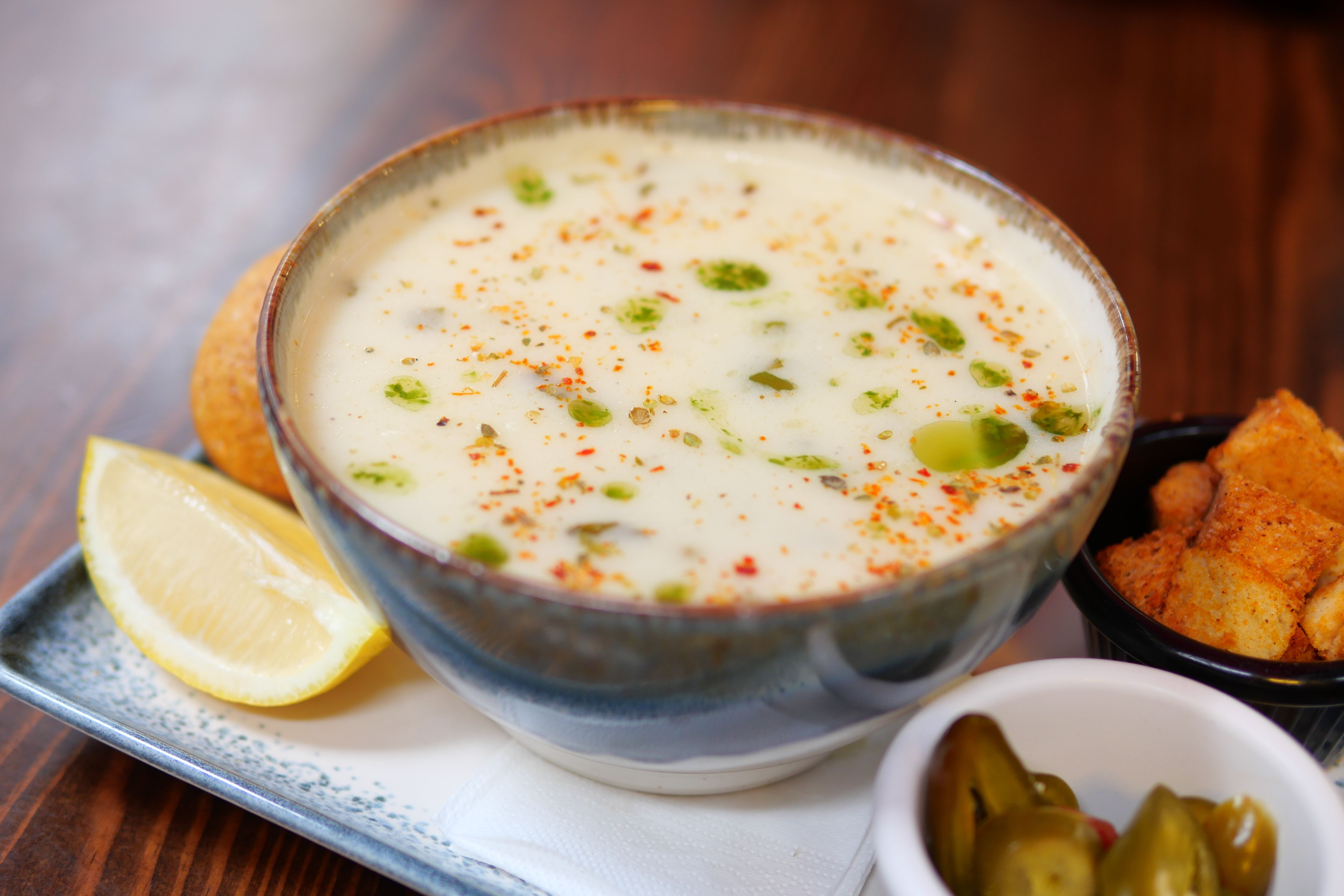
Photo: Towfiqu barbhuiya / Pexels
Greek
Avgolemono
The diets react (see scores below)
Common Ingredients
- chicken
- rice
- eggs
- lemon juice
- onion
- carrots
- celery
- dill
Specific recipes may vary.
Incompatible with 5 of 11 diets
Diet Ratings
Avgolemono is fundamentally incompatible with a ketogenic diet due to the inclusion of rice as a primary ingredient. Rice is a high-glycemic grain that delivers significant net carbs per serving — typically 15-25g of net carbs from rice alone in a standard bowl. Combined with carrots (which add additional net carbs), this soup would almost certainly exceed a significant portion of, or the entire, daily keto carb allowance in a single serving. The chicken, eggs, lemon juice, and celery are keto-friendly, but the rice is a non-negotiable disqualifier. A keto adaptation (substituting rice with cauliflower rice or simply omitting it) would change the verdict, but the traditional dish as described cannot be approved.
Avgolemono is a traditional Greek soup that contains multiple animal-derived ingredients. Chicken (poultry) is the primary protein, and eggs are a core structural component of the dish — the name itself derives from the Greek words for egg (avgo) and lemon (lemono). Both ingredients are strictly excluded under vegan dietary rules. There is no meaningful debate within the vegan community about either chicken or eggs; both are unambiguously animal products.
Avgolemono is a traditional Greek lemon-egg soup that is fundamentally disqualified from the paleo diet by one core ingredient: rice. Rice is a grain, and all grains are excluded from the paleo diet due to their anti-nutrient content (lectins, phytates) and their absence from the Paleolithic diet. The remaining ingredients — chicken, eggs, lemon juice, onion, carrots, celery, and dill — are all paleo-approved and would make an excellent base for a paleo soup. However, the rice is a structural component of the dish, not a garnish, making the dish as traditionally prepared non-paleo compliant.
Avgolemono is a traditional Greek soup that exemplifies Mediterranean cooking traditions. The dish features abundant vegetables (onion, carrots, celery), herbs (dill), and lemon juice — all strongly aligned with Mediterranean principles. Chicken is an acceptable moderate protein (poultry is permitted a few times per week), and eggs are similarly moderate. The primary concern is white rice, a refined grain that modern Mediterranean diet guidelines discourage in favor of whole grains. However, the overall dish is wholesome, minimally processed, and deeply rooted in Greek culinary tradition, making it a reasonable moderate choice rather than something to avoid.
Traditional Greek cuisine has always incorporated white rice in soups like avgolemono, and some Mediterranean diet authorities (particularly those emphasizing traditional dietary patterns over modern clinical refinements) would consider this dish fully approvable given its vegetable richness, lean protein, and cultural authenticity. Modern clinical guidelines, however, favor whole grains and might suggest substituting brown rice or orzo from whole wheat.
Avgolemono is fundamentally incompatible with the carnivore diet. While it contains carnivore-approved ingredients (chicken and eggs), the dish includes multiple plant-based components that are strictly excluded: rice (a grain), lemon juice (fruit-derived), onion, carrots, celery (vegetables), and dill (an herb). The majority of the dish's volume and flavor profile comes from plant foods. No amount of the animal-derived ingredients redeems a dish so heavily reliant on excluded foods. This is an avoid with high confidence — there is universal carnivore consensus that grains and vegetables are excluded.
Avgolemono contains rice, which is a grain explicitly excluded on the Whole30 program. All grains—including rice—are prohibited for the full 30 days. The remaining ingredients (chicken, eggs, lemon juice, onion, carrots, celery, dill) are all Whole30-compliant, but the presence of rice makes this dish incompatible with the program as traditionally prepared. A grain-free version could be made by omitting the rice or substituting with a compliant alternative (e.g., cauliflower rice), though the texture and character of the soup would differ significantly.
Avgolemono soup contains several low-FODMAP ingredients (chicken, rice, eggs, lemon juice, carrots, dill) but is complicated by three potentially problematic vegetables: onion, celery, and to a lesser degree carrots at high quantities. Onion is a significant source of fructans and is high-FODMAP at any culinary amount — it is the biggest red flag here. Celery contains polyols (mannitol) and is low-FODMAP only at 1 medium stalk (10g) per serve; typical soup portions often exceed this. Carrots are low-FODMAP at a standard serving (~75g). The soup base is frequently made by simmering whole onion and celery in the broth, then removing them — FODMAPs from onion (fructans) are water-soluble and leach into the broth, making even a strained onion-based stock problematic during elimination. However, if the recipe is modified to use spring onion greens only (no onion bulb), garlic-free stock, and celery is kept to a small portion, the dish can be made low-FODMAP. As traditionally prepared with whole onion in the broth, this dish poses a real FODMAP risk, warranting a caution rating rather than outright avoidance, since the degree of FODMAP transfer depends heavily on preparation method.
Monash University rates onion as high-FODMAP at any culinary serving, and since fructans are water-soluble, many clinical FODMAP dietitians advise that any broth simmered with onion — even if the onion is removed — should be avoided during strict elimination phase. Practitioners who follow this guidance would likely rate this dish 'avoid' unless explicitly prepared with onion-free, low-FODMAP stock.
Avgolemono as described contains mostly DASH-friendly ingredients: lean chicken protein, vegetables (onion, carrots, celery), herbs (dill), lemon juice (adds flavor without sodium), eggs, and white rice. The vegetable base provides potassium and fiber, and lean chicken is an endorsed DASH protein. The primary concern is sodium — homemade versions can be controlled, but restaurant or packaged broth-based soups often carry 700–1,000mg+ sodium per serving, which strains the DASH sodium budget. The eggs add some cholesterol and saturated fat, but in the quantities typical of avgolemono (1–2 eggs per pot), per-serving impact is modest. White rice is acceptable in DASH but whole grain options (like brown rice or barley) would improve the score. Overall, a homemade version with low-sodium broth is solidly DASH-compatible; commercial preparations warrant caution.
NIH DASH guidelines would endorse the vegetable and lean protein components but flag sodium in broth-based soups as a significant concern. Updated clinical interpretations note that homemade avgolemono with controlled sodium broth and the cholesterol reassessment in the 2020-2025 Dietary Guidelines make this dish more DASH-compatible than older egg-restrictive frameworks would suggest.
Avgolemono is a Greek lemon-egg chicken soup that contains several Zone-favorable ingredients alongside one Zone-unfavorable one. Chicken is a lean protein and a Zone ideal. Eggs contribute both lean protein and some fat. Lemon juice is low-glycemic and polyphenol-rich. The vegetable base — onion, carrots, celery — is Zone-favorable, providing low-glycemic carbohydrates with fiber. Dill adds polyphenols. The problematic ingredient is white rice, which is a high-glycemic, 'unfavorable' carbohydrate in Zone terminology — it raises blood sugar quickly and counts as a dense carb block with little fiber offset. However, in traditional avgolemono, rice is used in modest quantities as a thickener rather than as a bulk carbohydrate base, so the glycemic load can remain manageable if portioned carefully. The egg yolks add some saturated fat and fat blocks, but the overall fat content is moderate. With careful portioning — reducing rice, controlling soup volume, and pairing with additional lean protein if needed — avgolemono can be adapted to Zone ratios. It does not fit neatly as an 'out of the box' Zone meal due to the rice, but it is far from an 'avoid.' A Zone practitioner could treat the rice as their single grain block and balance the meal accordingly.
Some Zone practitioners and later Sears-aligned guidance would be more forgiving here: the rice quantity in avgolemono is traditionally small (often just 2-3 tablespoons dry per serving), which keeps the glycemic impact lower than a rice-heavy dish. The lemon juice and egg emulsion may also modestly blunt the glycemic response. More strict Zone adherents applying classic 'Enter the Zone' carbohydrate hierarchy would flag white rice as an 'unfavorable' carb and suggest substituting cauliflower rice or reducing the rice to a single carb block equivalent, reserving remaining carb blocks for the Zone-favorable vegetables already present.
Avgolemono is a traditional Greek lemon-egg soup with a genuinely favorable anti-inflammatory profile. Chicken is a lean protein explicitly endorsed by anti-inflammatory frameworks (moderate category). Eggs contribute choline, selenium, and lutein, which have anti-inflammatory properties. Lemon juice provides vitamin C and flavonoids. The aromatic vegetables — onion, carrots, and celery — supply quercetin, beta-carotene, and polyphenols that are associated with reduced inflammatory markers. Dill is an underrated anti-inflammatory herb rich in flavonoids including kaempferol. White rice is the weakest ingredient here — a refined carbohydrate that scores poorly individually — but in context it serves as a minor bulking agent in a nutrient-dense broth rather than a dietary staple. The overall dish is whole-food-based, minimally processed, low in saturated fat, free of seed oils or added sugars, and rooted in the Mediterranean dietary pattern, which has the strongest evidence base in anti-inflammatory nutrition. The soup format also enhances bioavailability of fat-soluble carotenoids from carrots. If made with brown rice instead of white, the score would rise further.
The egg component introduces some debate: certain anti-inflammatory practitioners flag the arachidonic acid in egg yolks as potentially pro-inflammatory, particularly in autoimmune contexts — the AIP protocol restricts eggs entirely. Additionally, white rice is considered a refined carbohydrate by Dr. Weil's guidelines and should be moderated; individuals with blood sugar sensitivity or metabolic inflammation may want to substitute brown rice or cauliflower rice.
Avgolemono is a strong GLP-1-friendly option. Chicken provides lean, high-quality protein that supports muscle preservation during weight loss. Eggs contribute additional protein and healthy fats from yolks in moderate amounts. The broth base makes it hydrating and easy to digest — a major advantage given GLP-1s slow gastric emptying. Vegetables (onion, carrots, celery) add fiber, micronutrients, and water content. Lemon juice supports palatability and provides vitamin C. Dill is a mild herb with no GI concerns. The main caution is rice, a refined carbohydrate with moderate glycemic impact and low fiber — but in traditional Avgolemono the rice quantity per serving is small, limiting its downside. Overall fat content is low, the dish is light and portion-friendly, and it is nutrient-dense per calorie. This is an ideal meal for patients managing GLP-1 side effects, particularly nausea or reduced appetite, as broth-based soups are among the most tolerable food formats.
*See how scores were generated at our methodology page.
Nutritional profile
Six traits that cut across every diet.
Fiber & Plants
How much whole-plant food and fiber it delivers.
Healthy Fats
The quality of its fats (unsaturated, omega-3).
Whole / Unprocessed
How close it is to its natural, unprocessed form.
Gut Gentle
How easy it is on digestion (low FODMAP, few irritants).
Low Glycemic
How little it spikes your blood sugar.
Protein Density
How much protein it packs per calorie.
Controversy Index
Higher controversy = more disagreement between diets.
Diet-Specific Tips
 Mediterranean — 6/10
View tips
- Chicken is acceptable poultry protein within Mediterranean moderation guidelines
- Eggs are a moderate Mediterranean food, appropriate a few times per week
- White rice is a refined grain, less preferred than whole grains in modern Mediterranean diet interpretations
- Abundant vegetables (onion, carrots, celery) and fresh herbs (dill) strongly support Mediterranean principles
- Lemon juice adds brightness and is a quintessential Mediterranean flavoring
- No processed ingredients, added sugars, or unhealthy fats present
- Deeply rooted in traditional Greek culinary heritage
 Low-FODMAP — 5/10
View tips
- Onion is high-FODMAP at any culinary serving due to fructans; water-soluble FODMAPs leach into broth even if onion is removed
- Celery contains mannitol (polyol) and is low-FODMAP only at ≤10g per serve — easily exceeded in soup
- Chicken, rice, eggs, and lemon juice are all low-FODMAP and safe
- Carrots are low-FODMAP at standard serving (≤75g)
- Dill is a low-FODMAP herb
- Dish can be made low-FODMAP with substitutions: spring onion greens, certified low-FODMAP stock, limited celery
- As traditionally prepared, onion-based broth is the primary FODMAP risk
 DASH — 7/10
View tips
- Lean chicken is a DASH-approved protein source
- Vegetables (carrots, celery, onion) provide potassium, fiber, and magnesium
- Lemon juice adds flavor without added sodium
- Eggs are moderate in cholesterol but per-serving impact is low in this dish
- Sodium in broth is the primary risk — homemade with low-sodium stock scores higher
- White rice is acceptable but whole grains would be preferred per DASH guidelines
- No saturated fat-heavy ingredients or added sugars present
 Zone — 6/10
View tips
- Chicken is a lean, Zone-ideal protein source
- White rice is a high-glycemic 'unfavorable' carb in Zone methodology
- Rice quantity is traditionally small, limiting glycemic impact
- Eggs contribute lean protein blocks with moderate fat
- Lemon juice provides polyphenols and is low-glycemic
- Vegetable base (onion, carrots, celery) provides favorable low-GI carbohydrates
- Overall fat content is moderate, largely from egg yolks
- Meal is adaptable to Zone ratios with rice reduction or substitution
 Anti-Inflammatory — 7/10
View tips
- Lean chicken protein aligns with anti-inflammatory guidelines
- Lemon juice provides vitamin C and anti-inflammatory flavonoids
- Onion and carrots supply quercetin and beta-carotene
- Dill is a flavonoid-rich anti-inflammatory herb
- Eggs are moderately anti-inflammatory but debated in some protocols
- White rice is a refined carbohydrate — the primary detractor
- No seed oils, trans fats, added sugars, or processed additives
- Strong alignment with the Mediterranean dietary pattern
 GLP-1 Friendly — 8/10
View tips
- Lean chicken protein supports muscle preservation goal
- Egg-lemon base adds protein and healthy fats without excess saturated fat
- Broth base is highly hydrating — important given reduced thirst on GLP-1s
- Easy to digest; ideal format for patients experiencing nausea or slowed gastric emptying
- Vegetables contribute fiber, micronutrients, and water content
- Rice is a low-fiber refined carb but quantity per serving is typically small
- Low overall fat content minimizes risk of nausea, bloating, and reflux
- Portion-friendly — satisfying in small servings due to protein and liquid volume