Photo: Jenny Sirimis / Pexels
The diets react (see scores below)
Common Ingredients
- white beans
- tomatoes
- carrots
- celery
- onion
- garlic
- olive oil
- parsley
Specific recipes may vary.
Incompatible with 5 of 11 diets
Diet Ratings
Fasolada is fundamentally incompatible with a ketogenic diet. White beans are the primary ingredient and are extremely high in net carbs — a single cup of cooked white beans contains approximately 40g of net carbs, which alone exceeds or meets the entire daily keto limit. The dish is essentially a legume-based soup, and no amount of portion control makes it keto-friendly in any practical serving size. The olive oil is the only clearly keto-compatible ingredient. Tomatoes, carrots, and onion add further net carbs, compounding the problem. This dish is high-carb, moderate-protein, and low-fat — essentially the inverse of the keto macronutrient profile.
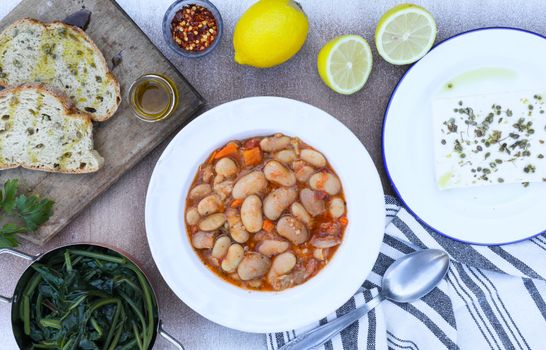
Fasolada is a traditional Greek white bean soup made entirely from whole plant foods. Every ingredient — white beans, tomatoes, carrots, celery, onion, garlic, olive oil, and parsley — is unambiguously plant-derived. There are no animal products, animal-derived additives, or ethically contested ingredients present. The dish is also nutritionally strong, featuring legumes as the primary protein source alongside fiber-rich vegetables and heart-healthy olive oil. It qualifies as a whole-food, plant-based meal, which places it at the top of the vegan approval scale.
Fasolada is a traditional Greek white bean soup, and its primary ingredient — white beans — is a legume, which is explicitly excluded from the paleo diet. Legumes contain lectins, phytates, and other antinutrients that paleo authorities argue were not a significant part of the Paleolithic diet and may impair gut health and nutrient absorption. While the remaining ingredients (tomatoes, carrots, celery, onion, garlic, olive oil, parsley) are all paleo-approved, the foundational protein source disqualifies this dish entirely. No substitution can salvage Fasolada as a paleo meal without fundamentally changing what the dish is.
Fasolada is considered the national dish of Greece and is a quintessential Mediterranean diet staple. Every single ingredient aligns perfectly with Mediterranean diet principles: white beans provide plant-based protein and fiber, tomatoes and vegetables (carrots, celery, onion, garlic) are core plant foods, extra virgin olive oil is the primary fat, and parsley adds fresh herbs. There are no processed ingredients, added sugars, refined grains, or animal products. This dish exemplifies the plant-forward, legume-rich, olive oil-centered eating pattern that defines the Mediterranean diet at its best.
Fasolada is a traditional Greek white bean soup that is entirely plant-based. Every single ingredient — white beans, tomatoes, carrots, celery, onion, garlic, olive oil, and parsley — is derived from plants. There are zero animal products in this dish. On the carnivore diet, all plant foods are strictly excluded, making this dish completely incompatible at every level. White beans are legumes, among the most excluded foods on carnivore due to their carbohydrate content, lectins, and antinutrients. Olive oil is a plant-derived oil, also excluded. This dish represents the exact opposite of carnivore eating principles.
Fasolada is a Greek white bean soup. White beans are legumes, which are explicitly excluded from the Whole30 program. Unlike the specific legume exceptions (green beans, sugar snap peas, snow peas), white beans (cannellini, navy, haricot, etc.) are standard legumes with no exception granted. All other ingredients — tomatoes, carrots, celery, onion, garlic, olive oil, and parsley — are fully Whole30-compliant, but the primary ingredient and protein source (white beans) makes this dish incompatible with the program.
Fasolada contains multiple high-FODMAP ingredients that make it unsuitable during the elimination phase. White beans are high in GOS (galacto-oligosaccharides) and fructans — a standard serving of white beans (around 100g or 1/2 cup) far exceeds low-FODMAP thresholds. Onion and garlic are among the highest-FODMAP foods tested by Monash University, both rich in fructans, and they form the aromatic base of this dish. Celery also contains polyols (mannitol) and is rated high-FODMAP at typical serving sizes. Together, these three ingredients alone would disqualify this dish regardless of portion size. While tomatoes, carrots, olive oil, and parsley are individually low-FODMAP and safe, they cannot offset the significant FODMAP load from the beans, onion, garlic, and celery. Fasolada as traditionally prepared is a high-FODMAP dish and should be avoided during the elimination phase.
Fasolada is an exceptionally DASH-compatible dish. White beans are a DASH star food — rich in potassium, magnesium, fiber, and plant-based protein, all nutrients the DASH diet explicitly emphasizes. The vegetable base (tomatoes, carrots, celery, onion, garlic) contributes additional potassium, magnesium, fiber, and antioxidants, directly aligning with DASH's 4-5 daily vegetable servings. Olive oil is a DASH-approved unsaturated fat replacing saturated fat sources. Parsley adds micronutrients with negligible caloric impact. When prepared at home without added salt or with only modest seasoning, sodium content can easily remain under 500mg per serving, well within both standard and low-sodium DASH targets. The dish contains no saturated fat, no added sugar, no processed ingredients, and no tropical oils. It is essentially a textbook DASH meal combining legumes and vegetables with a heart-healthy fat. The only minor consideration is that canned white beans, if used, add sodium — rinsing canned beans or using dried beans keeps sodium low.
Fasolada is a nutritious traditional Greek bean soup with several Zone-friendly elements, but requires careful portioning due to its macro imbalance. The dish is protein-source ambiguous — white beans serve as both the primary protein AND carbohydrate source, which is typical of legumes but creates a Zone challenge. White beans are classified as an 'unfavorable' carbohydrate in Zone terminology due to their higher glycemic load compared to non-starchy vegetables, though they are far better than refined grains. The carb-to-protein ratio skews heavily toward carbohydrates (roughly 3:1 by calories in beans alone), meaning a standard serving will be carb-heavy and protein-light relative to Zone's 40/30/30 target. The olive oil is ideal — a perfect Zone monounsaturated fat. The vegetable base (tomatoes, carrots, celery, onion, garlic, parsley) adds low-glycemic, polyphenol-rich carbs that Sears would strongly approve of. To fit Zone blocks properly, a serving should be moderate (roughly 1 cup), paired with additional lean protein (e.g., a small piece of fish or chicken on the side) to bring protein blocks in line, and the olive oil portion already in the dish counts toward fat blocks. As a standalone meal, the macro ratio is off; as a component of a larger Zone-balanced meal, it works well.
Some Zone practitioners and later Sears writings give legumes more credit than the original 'Enter the Zone' did — beans are high in fiber (lowering net carbs significantly), rich in polyphenols, and have a lower actual glycemic response than their carb content suggests. A stricter early-Zone reading would rate this lower (4-5) due to beans being 'unfavorable' carbs. A more nuanced anti-inflammatory Zone perspective (Sears' later work) acknowledges beans as a reasonable protein-carb combo food with good fiber offset, potentially rating it higher (7).
Fasolada is a near-ideal anti-inflammatory dish. White beans are a fiber-rich legume that support gut health and have been associated with reduced CRP and IL-6 levels. Extra virgin olive oil is one of the most well-researched anti-inflammatory fats, rich in oleocanthal and monounsaturated fatty acids. Tomatoes provide lycopene (a potent carotenoid antioxidant, more bioavailable when cooked), carrots contribute beta-carotene, and celery and parsley are rich in luteolin and apigenin — flavonoids with documented anti-inflammatory activity. Garlic contains allicin and organosulfur compounds that downregulate NF-κB inflammatory pathways. Onions supply quercetin, another well-studied anti-inflammatory flavonoid. Every single ingredient in this dish is on the 'emphasize' or at minimum 'acceptable' list of the anti-inflammatory framework. There are no refined carbohydrates, added sugars, seed oils, processed ingredients, or saturated fats. This is a whole-food, plant-based, Mediterranean dish with exceptional anti-inflammatory credentials.
Fasolada is a strong GLP-1 companion meal. White beans are a dual-purpose ingredient providing both meaningful plant protein (~15g per cup cooked) and substantial dietary fiber (~11g per cup), directly addressing the top two nutritional priorities. The tomato-based vegetable broth contributes additional fiber, micronutrients, and high water content — helpful for hydration given the reduced thirst response on GLP-1 medications. Olive oil is a recommended unsaturated fat and is typically used in moderate amounts in this dish. The soup format aids digestibility and easy gastric emptying, which is especially important given GLP-1-related slowed gastric motility. Portion flexibility is high — small servings are satisfying due to the fiber and fluid content. The dish is nutrient-dense per calorie, low in saturated fat, and free from fried, high-sugar, or processed ingredients. The main limitation is that bean protein is incomplete (lacks sufficient methionine) and the overall protein per serving may fall short of the 15-30g per meal target depending on portion size, particularly for patients relying on this as their sole protein source.
Some GLP-1-focused dietitians caution that legume-heavy meals can cause increased bloating and gas due to fermentable oligosaccharides (FODMAPs), which may compound GI side effects already common on GLP-1 medications — particularly in early weeks of treatment or dose escalation. Others consider legumes well-tolerated for most patients and prioritize their combined protein-fiber benefit, recommending gradual introduction rather than avoidance.
*See how scores were generated at our methodology page.
Nutritional profile
Six traits that cut across every diet.
Fiber & Plants
How much whole-plant food and fiber it delivers.
Healthy Fats
The quality of its fats (unsaturated, omega-3).
Whole / Unprocessed
How close it is to its natural, unprocessed form.
Gut Gentle
How easy it is on digestion (low FODMAP, few irritants).
Low Glycemic
How little it spikes your blood sugar.
Protein Density
How much protein it packs per calorie.
Controversy Index
Higher controversy = more disagreement between diets.
Diet-Specific Tips
 Vegan — 9/10
View tips
- All ingredients are whole plant foods with no animal-derived components
- White beans provide substantial plant-based protein and fiber
- Olive oil is plant-derived and uncontroversial in vegan diets
- No processed or ethically contested ingredients present
- Naturally vegan in its traditional preparation — no animal-product substitutions required
 Mediterranean — 10/10
View tips
- Legume-based protein — white beans are a Mediterranean diet cornerstone
- All-vegetable ingredient list with zero processed or refined components
- Extra virgin olive oil as the sole fat source, used generously as is traditional
- Rich in fiber, antioxidants, and plant micronutrients
- Authentic traditional Greek dish with centuries of Mediterranean dietary heritage
- No red meat, dairy, or added sugars present
 DASH — 9/10
View tips
- White beans are high in potassium, magnesium, fiber, and plant protein — core DASH nutrients
- All-vegetable base directly supports DASH vegetable serving goals
- Olive oil provides DASH-approved monounsaturated fat
- No saturated fat, trans fat, added sugar, or heavily processed ingredients
- Naturally low sodium when prepared with dried or rinsed canned beans
- Canned white beans without rinsing can add 300-400mg sodium per serving — opt for dried or rinsed
- Excellent source of soluble fiber supporting blood pressure reduction
 Zone — 6/10
View tips
- White beans are 'unfavorable' Zone carbohydrates — higher glycemic load than non-starchy vegetables, but significantly better than refined grains
- Beans serve dual macro role (protein + carb), creating inherent carb-to-protein imbalance relative to Zone's 30% protein target
- High fiber content in beans lowers net carbs substantially, partially redeeming the glycemic concern
- Olive oil is an ideal Zone monounsaturated fat — strongly favorable
- Vegetable base (tomatoes, celery, carrots, onion, garlic, parsley) is Zone-approved: low-glycemic, polyphenol-rich
- Dish lacks sufficient standalone protein — needs supplementation with lean animal protein to hit Zone's ~25g protein per meal target
- No processed ingredients, no refined carbs, no seed oils — anti-inflammatory profile aligns well with Sears' broader dietary philosophy
- Portion control is critical: a large bowl will significantly overshoot carbohydrate blocks
 Anti-Inflammatory — 9/10
View tips
- White beans: high-fiber legume, reduces CRP and supports gut microbiome
- Extra virgin olive oil: oleocanthal with ibuprofen-like COX-inhibiting properties
- Tomatoes: lycopene bioavailability enhanced by cooking
- Garlic: allicin and organosulfur compounds inhibit NF-κB inflammatory pathway
- Carrots: beta-carotene and antioxidant carotenoids
- Parsley and celery: rich in apigenin and luteolin, anti-inflammatory flavonoids
- Onion: quercetin, a well-researched anti-inflammatory flavonoid
- No refined carbs, added sugars, seed oils, or processed ingredients
- Mediterranean dietary pattern overall associated with reduced systemic inflammation
 GLP-1 Friendly — 8/10
View tips
- High fiber from white beans supports GLP-1 priority #2 and addresses constipation risk
- Moderate plant protein (~15g/cup) partially meets per-meal protein targets but may need supplementation
- Olive oil provides unsaturated fat in typically moderate quantities — aligned with GLP-1 guidelines
- Soup format and high water content support hydration and easy digestibility
- No fried, processed, high-sugar, or high-saturated-fat ingredients
- Legume FODMAPs may cause bloating in GLP-1-sensitive patients — individual tolerance varies
- Incomplete protein profile — pairing with a complementary protein source strengthens the meal