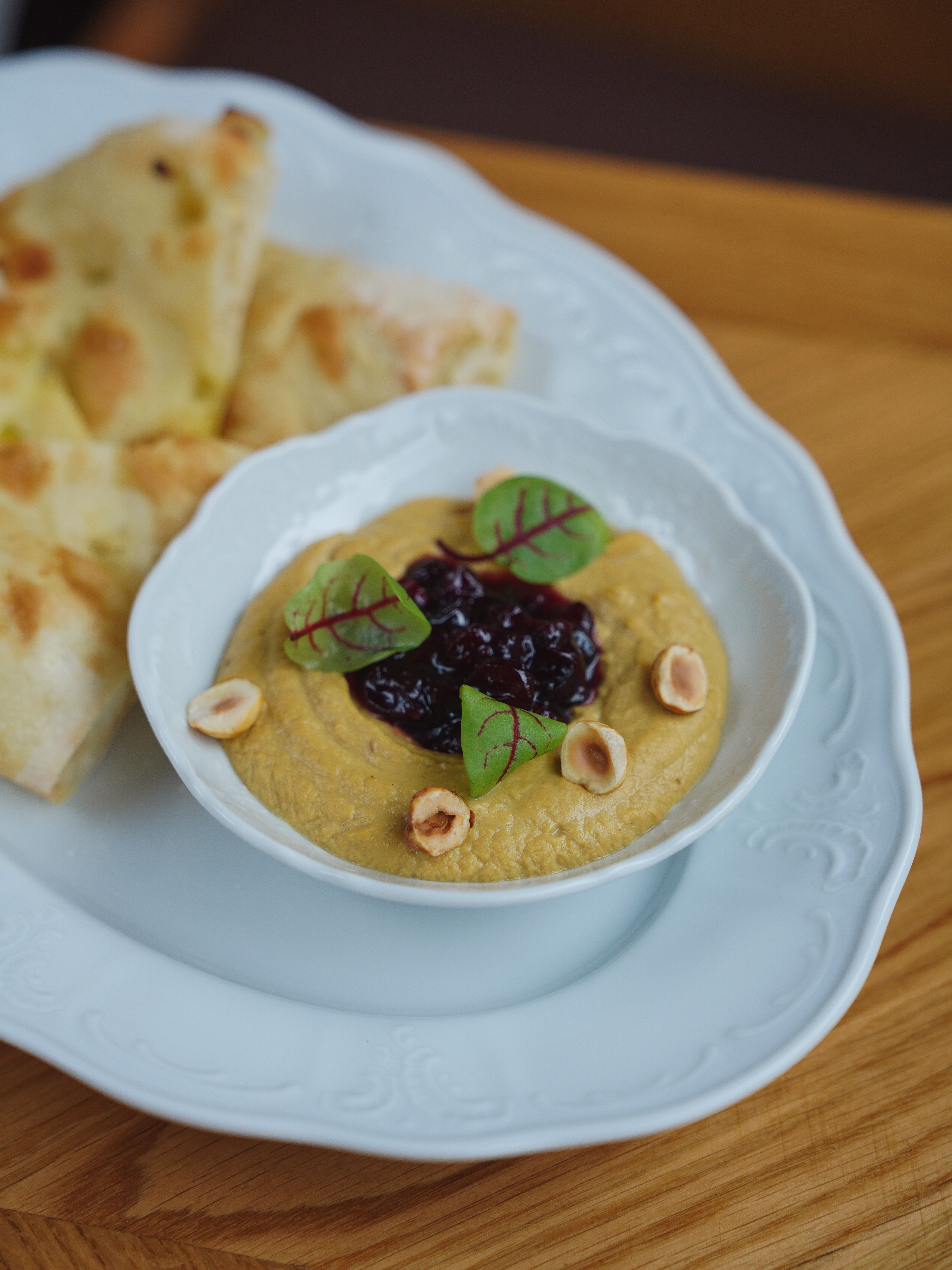
The diets react (see scores below)
Common Ingredients
- yellow split peas
- onion
- garlic
- lemon juice
- olive oil
- bay leaf
- capers
Specific recipes may vary.
Incompatible with 5 of 11 diets
Diet Ratings
Fava is a Greek purée made primarily from yellow split peas, which are a legume with very high net carbohydrate content. A standard serving (roughly 100g) of cooked yellow split peas contains approximately 20-25g of net carbs on its own, making even a modest portion of this dish capable of exceeding the entire daily keto carb budget. While the olive oil, garlic, lemon juice, capers, and onion are keto-friendly or acceptable in small amounts, the yellow split pea base is fundamentally incompatible with ketosis. This dish cannot be made keto-compliant without replacing its primary ingredient entirely.
Greek fava is a simple, whole-food plant-based dish made entirely from plant-derived ingredients. Yellow split peas form the protein-rich base, complemented by aromatic vegetables (onion, garlic, bay leaf), healthy fat (olive oil), acid (lemon juice), and briny capers. Every ingredient is unambiguously plant-based with no animal products or animal-derived additives. The dish is minimally processed and nutritionally dense, making it an excellent fit for both vegan and whole-food plant-based diets.
Fava is a Greek dip made primarily from yellow split peas, which are legumes — a category explicitly excluded from the paleo diet. Legumes contain lectins, phytates, and antinutrients that paleo authorities argue were not a significant part of the Paleolithic diet and contribute to gut permeability and inflammation. While several other ingredients (onion, garlic, lemon juice, olive oil, bay leaf) are paleo-compliant, and capers are generally acceptable, the foundational ingredient — yellow split peas — disqualifies the dish entirely. No amount of preparation removes the legume classification from split peas.
Fava is a quintessential Greek Mediterranean dish built entirely on plant-based staples. Yellow split peas (legumes) form the protein-rich base, complemented by aromatic vegetables (onion, garlic), extra virgin olive oil as the primary fat, lemon juice for brightness, and capers for a briny Mediterranean finish. Every single ingredient aligns perfectly with Mediterranean diet principles: legumes are strongly encouraged daily, olive oil is the canonical fat source, and no animal products, refined grains, added sugars, or processed ingredients are present. This dish is a textbook example of traditional Mediterranean eating from the Cyclades islands (particularly Santorini), where it has been a staple for centuries.
Fava is a Greek dish made entirely from plant-based ingredients. Yellow split peas are legumes — one of the most excluded food categories on the carnivore diet due to their plant origin, antinutrients, and lectins. Every single ingredient in this dish is plant-derived: the split peas, onion, garlic, lemon juice, olive oil, bay leaf, and capers. There is no animal product present whatsoever. This dish is incompatible with the carnivore diet at every level, including the most lenient interpretations.
Fava (the Greek dish) is made primarily from yellow split peas, which are legumes. Legumes are explicitly excluded on the Whole30 program. The only legume exceptions are green beans, sugar snap peas, and snow peas — split peas (a dried, mature legume) do not fall under any of these exceptions. All other ingredients (onion, garlic, lemon juice, olive oil, bay leaf, capers) are individually Whole30-compliant, but the foundational ingredient disqualifies the dish entirely.
Greek fava is a puréed dish made primarily from yellow split peas (a high-GOS legume), combined with onion and garlic — two of the most significant fructan sources in the FODMAP diet. This combination makes the dish unsuitable during the elimination phase at any standard serving size. Yellow split peas are high in GOS (galacto-oligosaccharides) and are not approved during elimination regardless of preparation method. Onion contains significant fructans and is one of the most problematic foods in the FODMAP diet. Garlic is similarly extremely high in fructans and is a clear 'avoid' food. The remaining ingredients — lemon juice, olive oil, bay leaf, and capers — are all low-FODMAP and pose no concern, but they cannot offset the three high-FODMAP ingredients that form the structural base of this dish.
Greek Fava (yellow split pea purée) is highly aligned with DASH diet principles. Yellow split peas are legumes — explicitly encouraged in DASH as an excellent source of plant-based protein, fiber, potassium, and magnesium. Olive oil is a DASH-approved unsaturated fat. Onion, garlic, and lemon juice add flavor with minimal sodium impact, supporting the DASH strategy of using herbs and aromatics instead of salt. The main caution is capers, which are typically brined and can be high in sodium (a small tablespoon of capers can contain 200-300mg sodium). If capers are used as a garnish in modest amounts, the dish remains DASH-friendly, but heavier use warrants attention. Overall, this dish is nutrient-dense, plant-forward, low in saturated fat, and consistent with DASH legume servings.
NIH DASH guidelines broadly endorse legumes and do not specifically address this dish. Some DASH clinicians would flag the sodium contribution from capers and the caloric density of olive oil, suggesting portion control for those on the stricter 1,500mg/day sodium target — swapping or omitting capers entirely would push the score closer to 9-10.
Greek fava (yellow split pea purée) is a nutritionally dense dish with a mixed Zone profile. Yellow split peas are legumes — higher in carbohydrates with moderate protein, and they carry a moderate glycemic index (GI ~22-32, relatively low for a legume). However, split peas are starchy and carb-dense, meaning portion control is essential to avoid carb block overload. The olive oil component is Zone-ideal — monounsaturated fat that fits perfectly as a fat block. Onion, garlic, lemon juice, capers, and bay leaf are all very low-glycemic aromatics and flavor enhancers that don't materially shift the macro balance. The main Zone challenge: fava is carb-forward with no dedicated lean protein source (the dish is listed as having no primary protein), so it cannot stand alone as a Zone meal. As a condiment/side in small portions (2-3 tablespoons), it can contribute carb blocks alongside a lean protein main. The split peas do provide some protein (~8g per half cup), but not enough lean protein per Zone standards to balance a meal on its own. Capers and lemon juice add polyphenols, which aligns with Sears' anti-inflammatory emphasis. Overall: useful as a Zone condiment in controlled portions, but requires pairing with lean protein and careful carb accounting.
Some Zone practitioners note that legumes like split peas, while higher in carbs, have significant fiber content that reduces net carbs and slows glycemic response — making them more favorable than their total carb count suggests. Dr. Sears' later writings on polyphenols and anti-inflammatory eating also support legumes as beneficial foods, potentially nudging this toward a moderate approve when portioned carefully alongside lean protein.
Greek fava is a remarkably anti-inflammatory dish from top to bottom. Yellow split peas are legumes — a cornerstone of anti-inflammatory eating — providing plant protein, soluble fiber, and resistant starch that support a healthy gut microbiome and reduce systemic inflammation markers like CRP. Olive oil delivers oleocanthal and oleic acid, both well-documented anti-inflammatory compounds. Garlic and onion contribute quercetin, allicin, and organosulfur compounds with proven anti-inflammatory and immunomodulatory properties. Lemon juice adds vitamin C and flavonoids. Bay leaf contains eugenol and other polyphenols with antioxidant activity. Capers are one of the richest dietary sources of quercetin and kaempferol, powerful anti-inflammatory flavonoids. The dish contains no refined carbohydrates, no added sugars, no processed ingredients, no trans fats, and no pro-inflammatory seed oils. It is entirely plant-based, high in fiber, and representative of the Mediterranean dietary pattern that underpins much of anti-inflammatory nutrition science. This is essentially an ideal anti-inflammatory condiment.
Fava is a Greek yellow split pea purée that offers a solid nutritional profile for GLP-1 patients. Yellow split peas provide meaningful plant-based protein (roughly 8g per 100g cooked) and significant fiber (~8g per 100g cooked), supporting both the #1 and #2 GLP-1 dietary priorities. The dish is easy to digest in purée form, which is well-suited to the slowed gastric emptying caused by GLP-1 medications. Olive oil adds unsaturated fat — a preferred fat type — though the quantity used matters; a generous drizzle can push fat content higher and may contribute to mild GI discomfort in sensitive patients. Lemon juice and capers add flavor with negligible caloric cost. The dish is nutrient-dense per calorie, works well in small portions as a spread or dip, and contains no refined grains, added sugars, or problematic ingredients. The primary limitation is that it is categorized as a condiment, meaning protein contribution per typical serving (2–4 tbsp) will be modest — likely 4–7g — rather than a standalone protein source. It should be paired with a primary protein at the meal.
Some GLP-1-focused dietitians may rate this more cautiously due to the olive oil quantity being variable and potentially higher than expected in restaurant or traditional preparations, which could worsen nausea or reflux in patients with active GI side effects. Others note that legume-based dishes like fava are highly encouraged as dual protein-fiber sources, and some practitioners would recommend it as a small meal component rather than limiting it to condiment-sized portions.
*See how scores were generated at our methodology page.
Nutritional profile
Six traits that cut across every diet.
Fiber & Plants
How much whole-plant food and fiber it delivers.
Healthy Fats
The quality of its fats (unsaturated, omega-3).
Whole / Unprocessed
How close it is to its natural, unprocessed form.
Gut Gentle
How easy it is on digestion (low FODMAP, few irritants).
Low Glycemic
How little it spikes your blood sugar.
Protein Density
How much protein it packs per calorie.
Controversy Index
Higher controversy = more disagreement between diets.
Diet-Specific Tips
 Vegan — 9/10
View tips
- Yellow split peas are a whole legume — fully plant-based and nutritious
- All aromatics (onion, garlic, bay leaf) are unambiguously vegan
- Olive oil and lemon juice are standard plant-based ingredients
- Capers are plant-based (pickled flower buds)
- No animal products, dairy, eggs, or animal-derived additives present
- Whole-food preparation aligns with whole-food plant-based principles, earning a high score
 Mediterranean — 10/10
View tips
- Yellow split peas are a high-fiber, high-protein legume — a Mediterranean diet cornerstone
- Extra virgin olive oil is the sole fat source, perfectly aligned with Mediterranean principles
- No animal products, refined grains, added sugars, or processed ingredients
- Capers and lemon juice are traditional Mediterranean flavor enhancers with health benefits
- Deeply rooted in Greek culinary tradition, especially Santorini and the Cyclades
- 100% plant-based and minimally processed
 DASH — 8/10
View tips
- Yellow split peas are DASH-approved legumes: high fiber, potassium, magnesium, and plant protein
- Olive oil provides heart-healthy monounsaturated fat, consistent with DASH fat guidelines
- Capers are brined and contribute sodium — modest use is acceptable, but portion matters on low-sodium DASH
- No saturated fat, no added sugar, no refined grains — strong DASH nutritional profile
- Lemon juice, garlic, and onion enhance flavor without sodium, a core DASH flavor strategy
- Rich in potassium and magnesium from split peas, supporting blood pressure reduction
 Zone — 5/10
View tips
- Yellow split peas are carb-dense but relatively low-GI with meaningful fiber, reducing net carb impact
- No primary lean protein — cannot serve as a complete Zone meal without pairing
- Olive oil is an ideal Zone monounsaturated fat block
- Capers, garlic, lemon juice contribute polyphenols consistent with Sears' anti-inflammatory focus
- As a condiment in small portions (2-3 tbsp), carb blocks remain manageable
- Requires strict portioning to avoid carb block excess in a Zone-balanced plate
 Anti-Inflammatory — 9/10
View tips
- Yellow split peas: legume high in fiber and plant protein, supports gut microbiome and reduces CRP
- Extra virgin olive oil: oleocanthal and oleic acid are well-established anti-inflammatory compounds
- Garlic: allicin and organosulfur compounds have strong anti-inflammatory and immunomodulatory effects
- Onion: rich in quercetin, a potent anti-inflammatory flavonoid
- Capers: among the highest dietary sources of quercetin and kaempferol
- Lemon juice: vitamin C and citrus flavonoids support antioxidant defense
- Bay leaf: eugenol and polyphenols with antioxidant activity
- No pro-inflammatory ingredients: zero refined carbs, added sugar, trans fats, or processed additives
- Represents core Mediterranean dietary pattern linked to reduced systemic inflammation
 GLP-1 Friendly — 7/10
View tips
- Yellow split peas provide meaningful plant-based protein and high fiber — supports GLP-1 priorities #1 and #2
- Puréed texture is easy to digest — well-suited to slowed gastric emptying
- Olive oil is a preferred unsaturated fat, but quantity is variable and should be moderate to avoid GI discomfort
- As a condiment, per-serving protein contribution is modest (4–7g); should be paired with a primary protein source
- No refined grains, added sugars, fried elements, or problematic ingredients
- Works well in small portions — portion-friendly for reduced appetite
- Lemon juice and capers add flavor with negligible caloric or fat impact