Photo: Peyman Hamsayeh / Pexels
The diets react (see scores below)
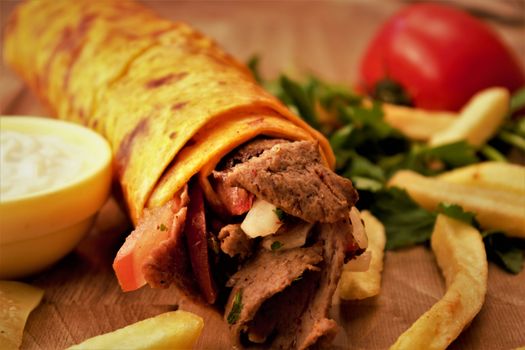
Common Ingredients
- pork
- yogurt
- garlic
- oregano
- pita
- tomatoes
- onion
- tzatziki
Specific recipes may vary.
Incompatible with 6 of 11 diets
Diet Ratings
Traditional gyros are fundamentally incompatible with ketogenic eating due to the pita bread, which is a grain-based wrap contributing approximately 30-35g of net carbs per piece — enough to potentially exceed or consume the entire daily keto carb budget in a single serving. While the pork, garlic, oregano, and tzatziki are all keto-friendly, and tomatoes and onion are manageable in small amounts, the pita is a non-negotiable disqualifier. The dish as traditionally served cannot be made keto-compatible without a complete structural overhaul (removing the pita entirely and serving as a bowl or lettuce wrap). Even then, the yogurt marinade and tzatziki contain small amounts of carbs that require monitoring.
Gyros contains multiple animal-derived ingredients that are strictly excluded from a vegan diet. Pork is the primary protein — a direct animal product. Yogurt is a dairy product derived from animal milk. Tzatziki is a sauce made from yogurt (dairy) and cucumber, adding another layer of dairy-based ingredients. These are not trace contaminants but core, foundational components of the dish. The remaining ingredients (garlic, oregano, pita, tomatoes, onion) are plant-based, but the presence of pork, yogurt, and tzatziki makes this dish entirely incompatible with a vegan diet.
Gyros contains multiple non-paleo ingredients that are clearly excluded from the diet. Pita bread is a wheat-based grain product, which is strictly avoided on paleo. Yogurt is a dairy product, excluded under paleo rules. Tzatziki is typically made with yogurt and sometimes added salt, making it doubly non-compliant. While pork, garlic, oregano, tomatoes, and onion are all paleo-approved ingredients, the foundational components of a gyros — pita and yogurt/tzatziki — are definitive paleo violations. This dish cannot be considered paleo in its traditional form without a complete structural overhaul (e.g., lettuce wrap instead of pita, coconut yogurt-based tzatziki).
Gyros is an iconic Greek street food with several Mediterranean-friendly components — yogurt-based tzatziki, fresh tomatoes, onion, garlic, and oregano are all excellent. However, the primary protein is pork, which is red meat and should be limited to a few times per month under strict Mediterranean diet guidelines. The pita bread is typically made from refined white flour, a refined grain that contradicts core principles. Together, these two elements — red meat and refined grain wrap — pull the dish away from Mediterranean ideals despite its cultural origins. Enjoyed occasionally, it is not a staple; consumed frequently, it conflicts with the diet's emphasis on limiting red meat and refined grains.
Traditional Greek cuisine does include pork and white pita as culturally normal foods, and some Mediterranean diet researchers who emphasize the holistic traditional Greek eating pattern (rather than strict macronutrient rules) would argue that gyros consumed in moderation — perhaps weekly, as part of an otherwise plant-rich diet — is compatible. The Oldways Preservation Trust's traditional Mediterranean Diet Pyramid places red meat 'a few times per month,' leaving room for occasional gyros within a broader healthy pattern.
Gyros as traditionally prepared is fundamentally incompatible with the carnivore diet. While the pork itself is a perfectly acceptable carnivore food, the dish is overwhelmingly dominated by plant-based and processed ingredients. Pita bread is a grain-based product and a strict exclusion. Tomatoes and onion are plant foods, fully excluded. Garlic and oregano are plant-derived spices/herbs, excluded on strict carnivore. Tzatziki contains cucumber (plant), garlic (plant), and herbs (plant), making it largely off-limits despite its yogurt base. The yogurt marinade is a dairy product with some community debate, but it is a minor consideration given the volume of excluded ingredients. This dish is essentially a plant-heavy wrap — the carnivore-compatible pork component is buried under multiple layers of excluded foods. There is no meaningful way to adapt this dish while retaining its identity as gyros.
Gyros contains multiple excluded ingredients that make it clearly non-compliant with Whole30. Pita bread is a grain-based wrap/bread product, which is explicitly excluded both as a grain (wheat) and as a wrap/bread format under the 'no recreating baked goods' rule. Yogurt is dairy, which is excluded. Tzatziki sauce is traditionally made with yogurt (dairy), making it also non-compliant. Even if the pork, garlic, oregano, tomatoes, and onion are individually compliant, the combination of pita, yogurt, and tzatziki means this dish cannot be made compliant in its traditional form.
Traditional gyros contains multiple high-FODMAP ingredients that make it unsuitable during the elimination phase. Pita bread is made from wheat and is high in fructans. Garlic is one of the highest-FODMAP foods known, rich in fructans even in small amounts. Onion is similarly high in fructans and a major FODMAP trigger. Tzatziki is a double problem: it contains both yogurt (high in lactose) and garlic. The marinade yogurt also contributes lactose. Tomatoes are low-FODMAP at standard servings, and oregano and pork are fine, but the cumulative load of wheat pita, garlic, onion, and lactose-containing dairy makes this dish clearly high-FODMAP as traditionally prepared. There is no realistic way to order or prepare a standard gyros that avoids all of these triggers simultaneously without fundamentally changing the dish.
Gyros presents a mixed DASH diet profile. On the positive side, it contains DASH-friendly ingredients: tomatoes and onions (vegetables), yogurt/tzatziki (dairy component), garlic and oregano (flavorful herbs that reduce need for salt), and pita provides grain servings. However, the dish has several DASH concerns: pork is a red meat that DASH limits — traditional gyros meat is fatty pork shoulder or a pork-beef blend with high saturated fat content and significant sodium from seasoning and marinades. A typical gyros sandwich can contain 900–1,500mg sodium, which is a substantial portion of the DASH daily sodium budget (1,500–2,300mg). Tzatziki adds modest sodium. The pita, if white flour-based (most commonly), is a refined grain rather than a whole grain. The combination of red/processed meat, potentially high sodium load, and refined grains makes this a 'caution' food that can fit into DASH only occasionally and in controlled portions. A leaner preparation using chicken or turkey with low-sodium seasoning and whole wheat pita would score considerably higher.
NIH DASH guidelines categorically limit red meat and emphasize lean poultry and fish as preferred proteins, placing standard pork gyros in caution territory. However, some updated DASH-oriented clinicians note that an occasional gyros made with lean pork tenderloin, low-sodium preparation, and whole wheat pita can fit within a broadly DASH-compliant Mediterranean-style eating pattern, particularly given the dish's vegetable content and yogurt-based sauce.
Gyros present a mixed Zone picture. The pork protein is acceptable but less ideal than skinless chicken or fish due to higher saturated fat content, and the cut used in gyros (often shoulder or a blend) can be moderately fatty. The pita bread is a higher-glycemic refined carbohydrate that Sears classifies as 'unfavorable' — it will spike insulin and is difficult to portion into a single carb block without reducing the serving to a very small piece. On the positive side, tomatoes and onion are favorable Zone vegetables, and tzatziki (yogurt, cucumber, garlic) adds a modest protein contribution with probiotics. The yogurt marinade is a reasonable ingredient. The real Zone challenge here is the pita-to-protein-to-vegetable ratio: a standard gyros serving is pita-heavy, making the 40/30/30 macro balance difficult to achieve without significant modification — such as using a half pita, increasing the vegetable load, or eating it open-faced. As a snack category item, the total caloric load of a full gyros also skews large. It can be incorporated into a Zone day with careful portioning but is not a convenient Zone-friendly choice.
Some Zone practitioners note that in Sears' later writings (particularly 'The Mediterranean Zone'), he embraces Mediterranean dietary patterns — including moderate pita, yogurt-marinated meats, and vegetable-rich preparations — as broadly anti-inflammatory and compatible with Zone principles when polyphenol and omega-3 intake is otherwise adequate. In this context, a gyros with extra vegetables, a half pita, and lean pork could be viewed as a reasonable Zone-Mediterranean hybrid meal rather than a problematic choice.
Gyros presents a mixed anti-inflammatory profile. On the positive side, garlic and oregano are well-established anti-inflammatory spices with polyphenol and organosulfur content. Tomatoes provide lycopene, a potent carotenoid antioxidant. Onions contribute quercetin. Yogurt and tzatziki (yogurt-based with garlic and cucumber) provide probiotics that support gut health and may modulate inflammatory pathways. These Mediterranean elements align well with anti-inflammatory principles. However, pork is a red meat — not the fatty fish or plant proteins emphasized by anti-inflammatory frameworks — and depending on the cut and preparation, it can be high in saturated fat and arachidonic acid, both linked to increased inflammatory markers. Traditional gyros pork is often fatty shoulder or a compressed meat mixture, which worsens the saturated fat load. Pita bread, unless made from whole grain, is a refined carbohydrate that provides minimal nutritional benefit and may spike blood glucose. Overall, the dish reflects the broader Mediterranean dietary pattern in its flavoring and condiments, but the pork-heavy protein base and refined pita bread prevent a higher score. A version made with lean pork loin and whole wheat pita would be more favorable.
Some anti-inflammatory practitioners, particularly those aligned with traditional Mediterranean diet research, would view gyros more favorably — noting that pork consumed in modest portions as part of a vegetable- and herb-rich meal (as is typical in Greece) is not categorically harmful, and that the overall dish composition reflects the Mediterranean pattern associated with reduced cardiovascular and inflammatory risk. Conversely, stricter anti-inflammatory protocols like the Autoimmune Protocol (AIP) would rate this lower, cautioning against pork's arachidonic acid content, refined grain pita, and potentially nightshade tomatoes for sensitive individuals.
A pork gyros offers a meaningful protein contribution from the pork and tzatziki (yogurt base), and the tomatoes, onion, and garlic add modest fiber and micronutrients. However, traditional gyros pork is a fatty, seasoned rotisserie meat — often a blend of pork shoulder or leg with added fat — making the saturated fat content a notable concern for GLP-1 patients who are sensitive to high-fat meals. The refined white pita bread adds simple carbohydrates with limited fiber and nutritional density. Tzatziki is generally well-tolerated and beneficial (yogurt protein, hydration from cucumber), and oregano/garlic are GLP-1-neutral. The main drawbacks are the fatty pork cut, the refined pita, and the moderate portion challenge — a full gyros wrap can be heavy and difficult to tolerate given slowed gastric emptying. In a small portion (half a wrap) with lean pork trimmed of visible fat, it becomes more acceptable. As a snack category item, the volume and fat load are mismatched for GLP-1-appropriate snacking.
Some GLP-1-focused dietitians may rate this more favorably if lean pork loin is used instead of shoulder, noting that the tzatziki and protein combination supports satiety in small portions. Others would flag the refined pita and fatty pork as reliably problematic for patients experiencing nausea or reflux, particularly around injection day.
*See how scores were generated at our methodology page.
Nutritional profile
Six traits that cut across every diet.
Fiber & Plants
How much whole-plant food and fiber it delivers.
Healthy Fats
The quality of its fats (unsaturated, omega-3).
Whole / Unprocessed
How close it is to its natural, unprocessed form.
Gut Gentle
How easy it is on digestion (low FODMAP, few irritants).
Low Glycemic
How little it spikes your blood sugar.
Protein Density
How much protein it packs per calorie.
Controversy Index
Higher controversy = more disagreement between diets.
Diet-Specific Tips
 Mediterranean — 4/10
View tips
- Pork is red meat, limited to a few times per month on Mediterranean diet
- Pita is typically refined white flour, a refined grain
- Tzatziki and yogurt are acceptable dairy components in moderation
- Tomatoes, onion, and garlic are excellent Mediterranean vegetables
- Oregano and garlic reflect authentic Mediterranean flavoring
- Culturally authentic Greek dish but not a dietary staple
 DASH — 4/10
View tips
- Pork is a red meat limited on DASH diet
- High sodium load from seasoned meat and tzatziki (900–1,500mg per serving)
- Tomatoes and onions provide beneficial DASH vegetables
- Yogurt/tzatziki contributes dairy, though full-fat versions conflict with low-fat dairy guidance
- Pita is typically refined grain, not whole grain
- Garlic and oregano are DASH-friendly flavorings
- Portion size and preparation method significantly affect DASH compatibility
- Chicken or turkey substitution would improve DASH score substantially
 Zone — 5/10
View tips
- Pita bread is a refined, higher-glycemic carbohydrate classified as 'unfavorable' in Zone terminology
- Standard gyros portions are pita-heavy, making 40/30/30 ratio difficult without modification
- Pork (especially shoulder-blend cuts) carries more saturated fat than ideal Zone proteins like chicken or fish
- Tomatoes and onion are favorable low-glycemic Zone carbohydrates that improve the dish's profile
- Tzatziki (yogurt, cucumber, garlic) contributes modest protein and is Zone-compatible
- Categorized as a snack but caloric load of a full gyros is more meal-sized, requiring portion control
- Mediterranean dietary context gives some Zone credibility per Sears' later anti-inflammatory writings
 Anti-Inflammatory — 5/10
View tips
- Pork is a red meat with moderate-to-high saturated fat depending on cut — not favored by anti-inflammatory guidelines
- Garlic and oregano are potent anti-inflammatory ingredients with organosulfur compounds and polyphenols
- Tomatoes and onions contribute lycopene and quercetin, beneficial antioxidants
- Yogurt/tzatziki provides probiotics supporting gut-immune axis
- Traditional pita is likely refined white flour — a neutral-to-negative refined carbohydrate
- Overall dish reflects Mediterranean flavoring patterns but protein source and bread base limit anti-inflammatory score
 GLP-1 Friendly — 5/10
View tips
- Pork gyros meat is typically a fatty cut (shoulder/mixed), raising saturated fat content and GLP-1 nausea/bloating risk
- Refined white pita is low in fiber and nutrient-dense calories — counterproductive for GLP-1 patients
- Tzatziki (yogurt, cucumber, garlic) is a positive element: protein, hydration, easy digestibility
- Tomatoes and onion contribute modest fiber and micronutrients
- As a snack, the full portion is too large and too fat-heavy; only half a wrap would be appropriate
- Slowed gastric emptying makes high-fat, moderate-volume meals harder to tolerate
- Protein content is adequate but fat quality undermines overall rating