Photo: Catherine Franken / Pexels
The diets react (see scores below)
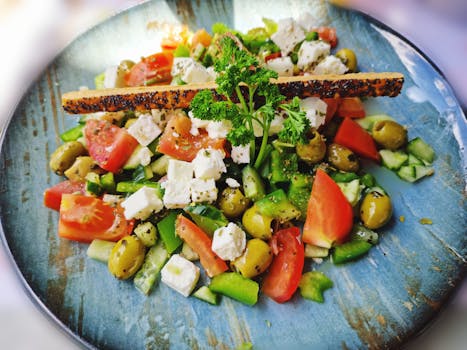
Common Ingredients
- tomatoes
- cucumber
- feta
- red onion
- green peppers
- kalamata olives
- oregano
- olive oil
Specific recipes may vary.
Incompatible with 5 of 11 diets
Diet Ratings
Horiatiki (Greek village salad) is a naturally keto-friendly dish. The base ingredients are low-carb vegetables (cucumber, green peppers, tomatoes), high-fat feta cheese, kalamata olives, and olive oil. A standard serving has roughly 6-10g net carbs, well within keto limits. Tomatoes and red onion contribute the most carbs, but in typical salad portions they remain manageable. Feta and olives provide healthy fats, and olive oil dressing reinforces the high-fat macro profile. No grains, added sugars, or starchy ingredients are present. This dish fits comfortably within ketogenic parameters for most people.
Some strict keto practitioners flag tomatoes as borderline due to their natural sugars and moderate carb content, and caution that larger portions or sweeter tomato varieties could add up quickly. Those following very tight clinical keto protocols (under 20g net carbs/day) may prefer to limit tomato quantity or avoid them altogether.
Horiatiki (Greek village salad) contains feta cheese, which is a dairy product derived from sheep's or goat's milk. Dairy is unambiguously excluded from a vegan diet. All other ingredients — tomatoes, cucumber, red onion, green peppers, kalamata olives, oregano, and olive oil — are fully plant-based, but the presence of feta makes this dish non-vegan. A vegan version could be made by substituting feta with a plant-based alternative (e.g., marinated tofu or commercial vegan feta).
Horiatiki (Greek village salad) is disqualified by its primary ingredient: feta cheese. Dairy is excluded from the paleo diet, and feta is a processed, brined dairy product — not a borderline case like ghee (which has casein and lactose removed). The remaining ingredients — tomatoes, cucumber, red onion, green peppers, kalamata olives, oregano, and olive oil — are all paleo-compliant and would form a perfectly acceptable paleo salad base. However, the dish as defined is built around feta cheese, and removing it would fundamentally change the dish. The salad cannot be rated based on its compliant components alone when the primary protein and defining ingredient is non-paleo.
Horiatiki (Greek village salad) is one of the most iconic dishes of the Mediterranean diet and represents its principles almost perfectly. The base is composed entirely of fresh vegetables — tomatoes, cucumber, red onion, and green peppers — which are foundational plant-based foods eaten daily in the Mediterranean. Kalamata olives add healthy monounsaturated fats and are a staple of Greek cuisine. Extra virgin olive oil is used as the dressing, fulfilling its role as the primary fat source. Feta cheese is a traditional, minimally processed dairy product consumed in moderate amounts in Greek culture, fitting well within the 'moderate dairy' guideline. Oregano adds flavor without any nutritional concern. There are no refined grains, added sugars, or processed ingredients. This dish is not merely compatible with the Mediterranean diet — it is a defining expression of it.
Horiatiki (Greek village salad) is almost entirely plant-based and is fundamentally incompatible with the carnivore diet. The dish consists of tomatoes, cucumber, red onion, green peppers, kalamata olives, oregano, and olive oil — all plant-derived and strictly excluded on carnivore. The sole animal-derived ingredient is feta cheese, which itself is debated within the carnivore community. Even if feta were acceptable, it represents a minor component of a dish that is overwhelmingly composed of forbidden plant foods. No meaningful adaptation is possible without completely reconstructing the dish.
Horiatiki (Greek village salad) contains feta cheese, which is a dairy product explicitly excluded from the Whole30 program. All dairy except ghee and clarified butter is off-limits for the 30 days. All other ingredients in the dish — tomatoes, cucumber, red onion, green peppers, kalamata olives, oregano, and olive oil — are fully Whole30 compliant. However, feta is a core, defining ingredient of this dish, and its presence makes the dish non-compliant as traditionally prepared.
Horiatiki contains two significant high-FODMAP ingredients that make it problematic during the elimination phase. Red onion is one of the highest-fructan foods in the Monash database and is high-FODMAP even in very small amounts (just a few grams). Feta cheese, while often thought to be low-FODMAP due to low lactose from the aging process, is rated by Monash as low-FODMAP only at 45g — a portion that is frequently exceeded in a traditional Greek salad where feta is a dominant component. The remaining ingredients are generally low-FODMAP: tomatoes (low at 65g), cucumber (low at 75g), green peppers (low at 52g), kalamata olives (low at around 15 olives), oregano (low at typical seasoning amounts), and olive oil (low-FODMAP). However, the red onion alone is disqualifying — it cannot be served in any meaningful quantity without triggering high-FODMAP intake of fructans. A modified version without red onion (substituting the green tops of scallions or omitting entirely) and with a carefully measured feta portion could be made low-FODMAP, but the traditional dish as described should be avoided during elimination.
Horiatiki (Greek village salad) contains several DASH-positive elements — tomatoes, cucumber, red onion, and green peppers are excellent non-starchy vegetables rich in potassium, fiber, and micronutrients. Olive oil aligns well with DASH's emphasis on healthy unsaturated fats. However, two key ingredients pull the dish toward 'caution': feta cheese is full-fat and notably high in sodium (roughly 300–400mg per ounce), and kalamata olives are salt-cured, adding further sodium. A typical serving of this salad can easily contribute 600–900mg of sodium, a significant portion of the 1,500–2,300mg DASH daily limit. Feta is also not a low-fat dairy, which DASH explicitly emphasizes. The dish is not inherently bad — the vegetable base is excellent — but portion size and sodium load require mindful management for DASH adherence.
NIH DASH guidelines specify low-fat or fat-free dairy and limited sodium, which feta and olives clearly challenge. However, some updated clinical interpretations note that the Mediterranean dietary pattern (of which horiatiki is a staple) shares many DASH goals and has strong cardiovascular evidence; some DASH-oriented dietitians allow small amounts of full-fat feta and olives given their overall nutrient profile, provided total daily sodium stays within limits.
Horiatiki (Greek village salad) aligns well with Zone Diet principles. The vegetable base — tomatoes, cucumber, green peppers, and red onion — provides low-glycemic carbohydrate blocks rich in polyphenols and fiber. Kalamata olives and olive oil supply predominantly monounsaturated fats, which are ideal Zone fat sources. Feta cheese provides the protein block, though it is a moderate-fat dairy with some saturated fat content. The overall macro balance of this dish naturally approximates Zone ratios reasonably well: vegetables supply carbs, feta supplies protein, and olives plus olive oil supply fat. The main consideration is portioning: olive oil and olives together can push fat calories high, and feta alone may not supply the full ~25g protein target for a meal (roughly 50-60g feta provides only ~7-8g protein), so this dish works best as a Zone-friendly side or light meal supplemented with additional lean protein. No high-glycemic ingredients, no processed components, and strong anti-inflammatory credentials make this an excellent Zone choice.
Feta is a higher-saturated-fat protein source compared to Zone-preferred lean proteins (chicken breast, fish, egg whites). Early Zone methodology (Enter the Zone) emphasized limiting saturated fat strictly, which would push feta into the 'caution' category. Sears' later anti-inflammatory writings are somewhat more permissive toward certain dairy fats, but feta is still not a 'favorable' Zone protein in the classic sense. Additionally, the combination of olive oil dressing and olives means fat grams can easily exceed the 10-15g/meal Zone target if portions are generous.
Horiatiki (Greek village salad) is a strongly anti-inflammatory dish by design. Tomatoes supply lycopene and vitamin C; cucumbers offer hydration and quercetin; red onions are rich in quercetin and anthocyanins; green peppers provide vitamin C and flavonoids — all colorful vegetables with meaningful antioxidant and polyphenol content. Kalamata olives are a core Mediterranean anti-inflammatory food, providing oleic acid, hydroxytyrosol, and polyphenols. Extra virgin olive oil is one of the most researched anti-inflammatory foods, containing oleocanthal (a natural COX inhibitor) and oleic acid. Oregano is a potent herb with rosmarinic acid and other polyphenols that reduce inflammatory markers. The only moderating factor is feta cheese — a full-fat dairy product, which the anti-inflammatory framework recommends limiting due to saturated fat. However, feta is relatively lower in fat compared to aged hard cheeses, and fermented dairy may carry modest anti-inflammatory benefits via probiotics and bioactive peptides. In typical serving portions, feta does not materially undermine the dish's overall profile. The combination of EVOO, colorful vegetables, olives, and oregano makes this a textbook Mediterranean anti-inflammatory meal.
Feta is a full-fat cheese, and strict anti-inflammatory protocols flag saturated fat from dairy as a contributor to inflammatory signaling (elevated CRP, IL-6). Dr. Weil's framework recommends limiting high-fat cheese, and some practitioners would suggest a smaller portion or substitution with a lower-fat alternative. Additionally, nightshades (tomatoes, green peppers) are embraced by mainstream anti-inflammatory guidance for their antioxidant content, but AIP and autoimmune-focused protocols (e.g., Dr. Tom O'Bryan) exclude them due to potential lectin and solanine sensitivity in predisposed individuals.
Horiatiki (Greek village salad) is a nutrient-dense, whole-food dish with genuine strengths for GLP-1 patients — high water content from tomatoes and cucumber supports hydration, the vegetables provide fiber and micronutrients, and olive oil contributes heart-healthy unsaturated fats. However, it falls short as a standalone meal because its protein content is low to moderate: a typical serving delivers roughly 5–8g of protein from feta, well below the 15–30g per meal target. Feta is also a relatively high-sodium, moderate-saturated-fat cheese, and kalamata olives add additional fat. The olive oil dressing, while the preferred fat type, contributes meaningful calories in a context where every calorie must earn its nutritional keep. The dish is easy to digest, not greasy or fried, and unlikely to worsen GLP-1 GI side effects — which works in its favor. As a side dish or starter paired with a high-protein main (grilled chicken, fish, or legumes), it earns a solid supporting role. As a primary meal for a GLP-1 patient, the protein gap is a meaningful concern.
Some GLP-1-focused RDs are comfortable recommending Horiatiki as a light meal given its whole-food ingredient profile, low caloric density, and hydration value — particularly for patients in early stages when appetite suppression is most severe and palatability matters more than hitting precise protein targets. Others flag feta and olives more firmly due to saturated fat and sodium content, especially in patients with cardiovascular comorbidities common in the GLP-1 population.
*See how scores were generated at our methodology page.
Nutritional profile
Six traits that cut across every diet.
Fiber & Plants
How much whole-plant food and fiber it delivers.
Healthy Fats
The quality of its fats (unsaturated, omega-3).
Whole / Unprocessed
How close it is to its natural, unprocessed form.
Gut Gentle
How easy it is on digestion (low FODMAP, few irritants).
Low Glycemic
How little it spikes your blood sugar.
Protein Density
How much protein it packs per calorie.
Controversy Index
Higher controversy = more disagreement between diets.
Diet-Specific Tips
 Keto — 8/10
View tips
- Olive oil and feta provide strong fat content supporting keto macros
- Kalamata olives add additional healthy fats and minimal carbs
- Tomatoes contribute natural sugars (~3-4g net carbs per 100g) — portion awareness advised
- Cucumber and green peppers are very low in net carbs
- Red onion is slightly higher in carbs; keep portions small
- No grains, added sugars, or starchy ingredients
- Estimated net carbs per standard serving: ~7-10g, keto-compatible
 Mediterranean — 10/10
View tips
- Abundant fresh vegetables as the primary base (tomatoes, cucumber, red onion, green peppers)
- Extra virgin olive oil as the sole fat source — core Mediterranean principle
- Kalamata olives provide additional healthy fats and are a Greek dietary staple
- Feta cheese is a traditional, minimally processed dairy used in moderate, appropriate quantity
- Zero refined grains, added sugars, or processed ingredients
- Oregano reflects authentic Mediterranean herb usage
- Dish is widely recognized by researchers as a canonical Mediterranean diet food
 DASH — 5/10
View tips
- Excellent DASH-aligned vegetable base (tomatoes, cucumber, peppers, red onion)
- Olive oil is a preferred DASH fat source
- Feta cheese is full-fat, not DASH-recommended low-fat dairy
- Feta is high in sodium (~300–400mg per oz), raising overall dish sodium significantly
- Kalamata olives are salt-cured, adding additional sodium
- Combined sodium per serving can approach or exceed 700–900mg depending on portion
- No added sugars, no processed meats, no trans fats — structurally sound otherwise
- Portion control of feta and olives can make this dish more DASH-compatible
 Zone — 8/10
View tips
- Vegetable base (tomatoes, cucumber, peppers, onion) provides low-glycemic, high-polyphenol carbohydrate blocks
- Olive oil and kalamata olives are ideal monounsaturated fat sources — core Zone-approved fats
- Feta cheese supplies protein but is higher in saturated fat than Zone-preferred lean proteins
- No high-glycemic carbohydrates, no processed ingredients, no refined sugars
- Strong anti-inflammatory profile: omega-3-containing olives, polyphenol-rich vegetables, olive oil
- Protein quantity may be insufficient for a standalone meal — feta alone likely falls short of 25g protein target
- Fat portions (olives + olive oil combined) require monitoring to stay within Zone block targets
 Anti-Inflammatory — 8/10
View tips
- Extra virgin olive oil: high oleocanthal and oleic acid content — top-tier anti-inflammatory fat
- Kalamata olives: rich in polyphenols (hydroxytyrosol), oleic acid, and antioxidants
- Tomatoes and green peppers: lycopene, vitamin C, and flavonoids — colorful antioxidant-rich vegetables
- Red onion: high quercetin and anthocyanin content linked to reduced inflammatory markers
- Oregano: concentrated rosmarinic acid and polyphenols with demonstrated anti-inflammatory activity
- Feta cheese: full-fat dairy is a limiting factor; saturated fat content should be moderated
- No refined carbohydrates, added sugars, or processed ingredients
- Overall Mediterranean dietary pattern — associated with reduced CRP and systemic inflammation in population studies
 GLP-1 Friendly — 5/10
View tips
- Low protein per serving (~5–8g from feta) — well below the 15–30g per meal target
- High hydration value from tomatoes and cucumber — supports GLP-1 hydration needs
- Moderate fiber from vegetables — positive contribution toward 25–30g daily goal
- Olive oil is the preferred unsaturated fat type, but adds calorie density
- Feta contributes some saturated fat and high sodium — moderate concern
- Kalamata olives add healthy monounsaturated fats but increase total fat load
- Easy to digest — unlikely to worsen nausea, bloating, or reflux
- Works well as a side dish paired with lean protein; insufficient as a standalone GLP-1 meal