Photo: Nazlı Gaylan Azili / Pexels
The diets react (see scores below)
Common Ingredients
- wild greens
- dandelion greens
- olive oil
- lemon
- salt
- garlic
Specific recipes may vary.
Incompatible with 2 of 11 diets
Diet Ratings
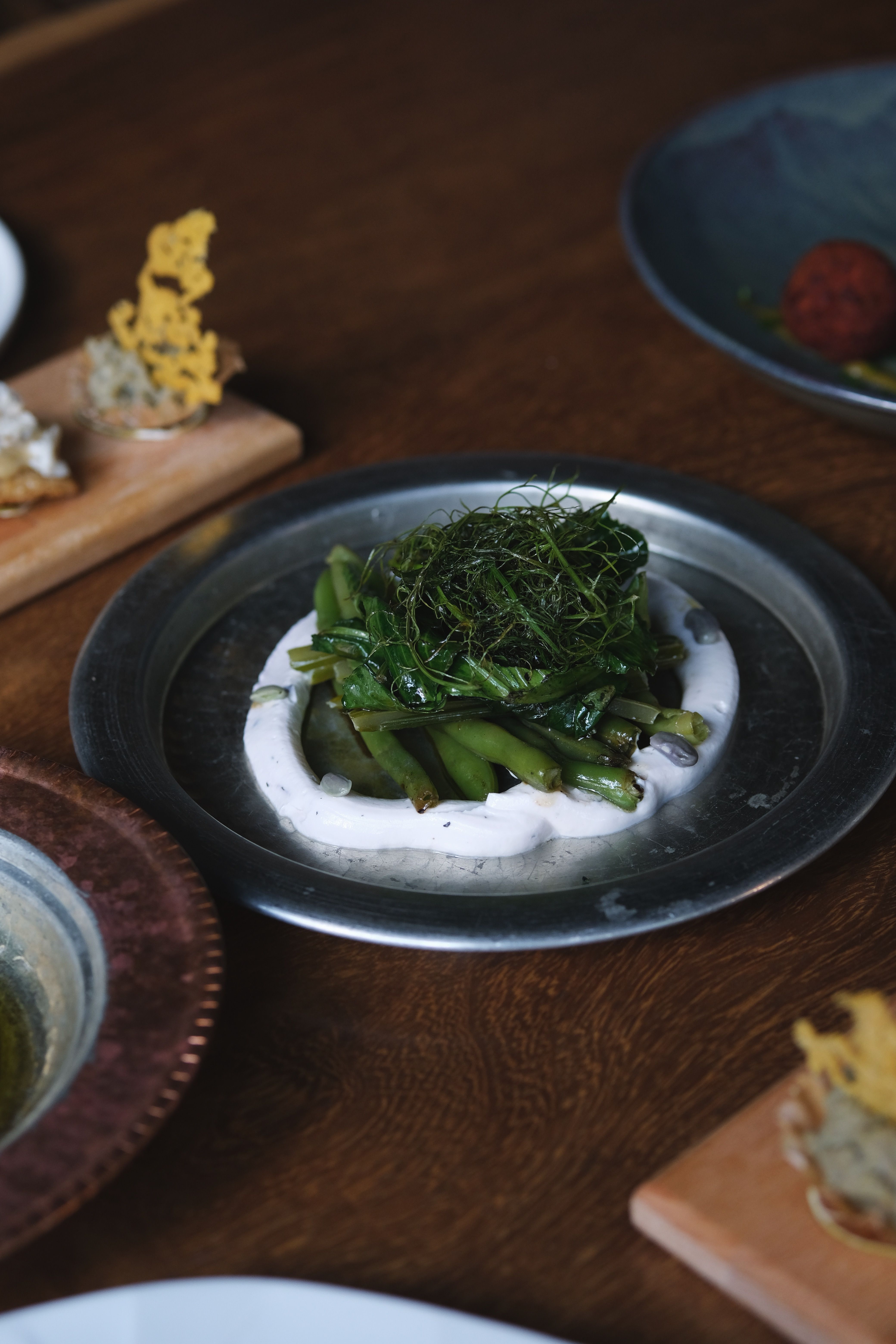
Horta is a simple Greek dish of boiled wild greens (typically dandelion, chicory, or similar leafy greens) dressed with olive oil, lemon juice, garlic, and salt. All ingredients are naturally keto-compatible. Dandelion greens and other wild leafy greens are low in net carbs (roughly 3-5g net carbs per 100g cooked), high in fiber, and rich in micronutrients. Olive oil adds healthy monounsaturated fats, aligning well with keto's fat-prioritization principle. Lemon juice is used sparingly as a dressing and contributes negligible net carbs in typical serving amounts. Garlic in small quantities is also fine. A standard serving of horta fits comfortably within a daily 20-50g net carb budget with room to spare.
Horta is a traditional Greek dish of boiled or sautéed wild greens dressed with olive oil, lemon juice, salt, and garlic. Every single ingredient is entirely plant-based: wild greens and dandelion greens are leafy vegetables, olive oil is a plant-derived fat, lemon is a fruit, and salt and garlic are naturally vegan. There are no animal products, animal-derived ingredients, or ethically contested components. This is also a whole-food preparation with minimal processing, making it exemplary not just for strict vegans but for whole-food plant-based advocates as well. It scores the maximum possible rating.
Horta is a simple Greek dish of boiled wild greens dressed with olive oil and lemon — most components are strongly paleo-compliant. Wild greens and dandelion greens are among the most ancestrally authentic foods available, olive oil is a paleo-accepted fat, lemon is a whole fruit, and garlic is a natural herb. The single disqualifying ingredient is added salt, which is explicitly excluded under strict paleo rules as a processed/refined additive not available in meaningful quantities to Paleolithic hunter-gatherers. Salt drops this otherwise excellent dish from a clear approve into caution territory. Without salt, this would score a 9.
Many modern paleo practitioners and frameworks (including Mark Sisson's Primal Blueprint) tolerate modest amounts of high-quality salt (sea salt, pink Himalayan) as a practical concession, arguing the mineral content and culinary utility justify inclusion. Under this more permissive interpretation, Horta would be fully approved.
Horta is a quintessential Mediterranean and Greek dish that embodies the diet's core principles perfectly. Wild greens and dandelion greens are nutrient-dense, fiber-rich leafy vegetables consumed abundantly in traditional Greek cuisine. Extra virgin olive oil is the canonical fat of the Mediterranean diet, used generously here. Lemon juice provides vitamin C and enhances mineral absorption. Garlic is a traditional Mediterranean flavoring with well-documented health benefits. This dish contains zero processed ingredients, no refined grains, no added sugars, and no animal products — it is literally foraged plant foods dressed with olive oil, making it an ideal Mediterranean staple.
Horta is entirely plant-based — wild greens and dandelion greens are the primary components, dressed with olive oil (a plant oil), lemon juice (fruit), and garlic (a plant). There is not a single animal-derived ingredient in this dish. It violates every tier of the carnivore diet, from the strictest Lion Diet all the way to the most lenient animal-based approaches. All carnivore authorities unanimously exclude plant foods, and this dish is 100% plant-derived with no ambiguity whatsoever.
Horta is a traditional Greek dish of boiled or sautéed wild greens dressed with olive oil, lemon juice, and salt — sometimes with garlic. Every ingredient in this dish is explicitly compliant with Whole30: wild greens and dandelion greens are vegetables, olive oil is a natural fat, lemon is a fruit (and its juice is allowed), salt is explicitly permitted, and garlic is an herb/vegetable. There are no excluded ingredients whatsoever. This is exactly the kind of whole, minimally processed, plant-based side dish the Whole30 program encourages.
Horta as traditionally prepared contains garlic as a standard ingredient, which is a high-FODMAP food due to fructans. Even small amounts of garlic are problematic during the elimination phase, as fructans leach into the dish during cooking. The wild greens and dandelion greens themselves are generally low-FODMAP in standard servings, and olive oil, lemon juice, and salt are all low-FODMAP. However, the presence of garlic — a key flavoring — makes this dish unsuitable for the elimination phase as prepared. The dish could be made low-FODMAP by substituting garlic-infused oil for the garlic and olive oil combination, but as traditionally presented, it must be rated avoid.
Horta is an exemplary DASH diet dish. It consists primarily of wild greens and dandelion greens, which are among the most nutrient-dense vegetables available — rich in potassium, calcium, magnesium, and fiber, all of which are the key micronutrients DASH emphasizes. Olive oil is a heart-healthy unsaturated fat explicitly compatible with DASH principles. Lemon juice provides flavor without sodium. Garlic adds flavor with negligible sodium and potential cardiovascular benefits. The only minor concern is added salt; however, home preparation allows precise sodium control, and the dish as traditionally served uses only a modest pinch. This dish aligns almost perfectly with DASH's emphasis on vegetables, healthy fats, and low sodium, and is a strong example of a Mediterranean-style side dish that fits within DASH guidelines.
Horta is an excellent Zone Diet-compatible side dish. The base ingredients—wild greens and dandelion greens—are exactly the kind of low-glycemic, high-fiber, polyphenol-rich vegetables that Dr. Sears champions as the backbone of Zone carbohydrate blocks. Dandelion greens in particular are nutrient-dense, very low in net carbs, and rich in antioxidants. Olive oil provides ideal monounsaturated fat, aligning perfectly with Zone fat recommendations. Lemon adds minimal carbohydrate load. Garlic contributes polyphenols with negligible macro impact. The only caveat is that this dish lacks protein, so it functions as a carb+fat component that needs a lean protein source alongside it to complete a Zone-balanced meal. As a side dish, however, it is nearly ideal—it delivers favorable carb blocks and fat blocks simultaneously while supporting the anti-inflammatory focus central to Sears' framework.
Horta is a quintessential anti-inflammatory dish. Wild and dandelion greens are among the most nutrient-dense foods available, rich in vitamins A, C, and K, folate, calcium, and a broad spectrum of antioxidants and polyphenols including luteolin, quercetin, and beta-carotene. Dandelion greens specifically have been studied for their ability to reduce NF-kB-mediated inflammatory signaling. Extra virgin olive oil — a cornerstone of the anti-inflammatory food pyramid — contributes oleocanthal, a compound with COX-inhibiting properties comparable to ibuprofen at culinary doses. Lemon juice adds vitamin C and flavonoids that enhance antioxidant activity. Garlic provides allicin and organosulfur compounds with well-documented anti-inflammatory and immunomodulatory effects. The dish is naturally low in saturated fat, contains no refined carbohydrates, no added sugars, and no processed ingredients. Boiling (the traditional preparation) reduces oxalates in greens, improving mineral bioavailability. This dish represents the Mediterranean dietary pattern at its most concentrated and unprocessed, and aligns perfectly with every major anti-inflammatory dietary framework.
Horta is an excellent GLP-1-friendly side dish. Wild and dandelion greens are nutrient-dense per calorie, high in fiber, vitamins (A, C, K), and minerals, with very low fat. Olive oil adds heart-healthy unsaturated fat in modest amounts, and lemon juice supports palatability and digestion. The dish is easy to digest when cooked (boiled greens are soft and gentle on a slowed digestive system), hydrating, and low in calories — making every bite nutritionally meaningful. The primary drawback is near-zero protein, so it must be paired with a protein source to meet GLP-1 dietary priorities. As a side dish, that is expected and acceptable. Portion size is naturally small-friendly.
*See how scores were generated at our methodology page.
Nutritional profile
Six traits that cut across every diet.
Fiber & Plants
How much whole-plant food and fiber it delivers.
Healthy Fats
The quality of its fats (unsaturated, omega-3).
Whole / Unprocessed
How close it is to its natural, unprocessed form.
Gut Gentle
How easy it is on digestion (low FODMAP, few irritants).
Low Glycemic
How little it spikes your blood sugar.
Protein Density
How much protein it packs per calorie.
Controversy Index
Higher controversy = more disagreement between diets.
Diet-Specific Tips
 Keto — 8/10
View tips
- Wild and dandelion greens are low net-carb leafy vegetables, fully keto-compatible
- Olive oil provides healthy fats consistent with keto macros
- Lemon juice used as a light dressing contributes minimal net carbs per serving
- No grains, added sugars, or starchy vegetables present
- Whole, unprocessed ingredients align with keto's preference for clean eating
- Large portions could accumulate carbs but a typical serving is well within limits
 Vegan — 10/10
View tips
- All ingredients are whole plant foods with no animal-derived components
- Wild greens and dandelion greens are nutrient-dense leafy vegetables
- Olive oil is a plant-based fat with no animal origin
- Lemon, garlic, and salt are universally vegan
- No processing concerns — this is a traditional whole-food dish
- Meets both ethical vegan and whole-food plant-based standards
 Paleo — 5/10
View tips
- Wild greens and dandelion greens are highly paleo-authentic — foraged leafy vegetables are ancestral staples
- Olive oil is a well-accepted paleo fat source
- Lemon juice is a whole, unprocessed fruit ingredient
- Garlic is a natural, paleo-approved aromatic
- Added salt is explicitly excluded under strict paleo rules as a refined/processed additive
- Dish is otherwise unprocessed and minimally prepared — preparation method aligns with paleo philosophy
 Mediterranean — 10/10
View tips
- Wild and dandelion greens are nutrient-dense, fiber-rich leafy vegetables — a Mediterranean dietary cornerstone
- Extra virgin olive oil is the primary fat, used exactly as the diet prescribes
- Lemon and garlic are traditional Mediterranean flavor enhancers with health benefits
- Completely whole-food, plant-based — no processing, no refined ingredients
- Horta is a centuries-old traditional Greek dish widely recognized as a Mediterranean diet staple
- No animal products, added sugars, or refined grains present
 Whole30 — 10/10
View tips
- Wild greens and dandelion greens are fully compliant vegetables
- Olive oil is an approved natural fat
- Lemon juice is explicitly allowed under Whole30 rules
- Salt is explicitly permitted by the program
- Garlic is a compliant herb/vegetable
- No excluded ingredients present — no grains, dairy, legumes, added sugar, or alcohol
- Simple, whole-food preparation honors the spirit of Whole30
 DASH — 9/10
View tips
- Dandelion and wild greens are exceptionally high in potassium, calcium, and magnesium — core DASH nutrients
- Olive oil provides monounsaturated fat, consistent with DASH-approved vegetable oils
- Lemon juice replaces or reduces need for salt, supporting low-sodium preparation
- Added salt should be minimized or omitted for low-sodium DASH (<1,500mg/day) adherents
- No saturated fat, no added sugar, no processed ingredients
- High dietary fiber supports cardiovascular and metabolic health goals of DASH
 Zone — 8/10
View tips
- Dandelion and wild greens are extremely low-glycemic, high-fiber vegetables—ideal Zone carb blocks
- Olive oil is the gold-standard Zone monounsaturated fat source
- Polyphenol-rich ingredients (greens, garlic, lemon) align with Sears' anti-inflammatory emphasis
- No protein present—must be paired with lean protein to form a complete Zone meal
- Very low net carbohydrate load makes portion control easy
- No unfavorable ingredients: no sugar, refined grains, or saturated fat
 Anti-Inflammatory — 9/10
View tips
- Wild and dandelion greens are exceptionally rich in antioxidants, polyphenols, and anti-inflammatory flavonoids
- Extra virgin olive oil provides oleocanthal with COX-inhibiting anti-inflammatory properties
- Garlic contributes allicin and organosulfur compounds that suppress NF-kB inflammatory pathways
- Lemon juice adds vitamin C and flavonoids that amplify antioxidant activity
- No refined carbohydrates, added sugars, processed ingredients, or pro-inflammatory fats
- Exemplifies the Mediterranean dietary pattern, consistently associated with reduced CRP and inflammatory markers in research
 GLP-1 Friendly — 8/10
View tips
- High fiber from wild and dandelion greens supports digestion and helps prevent GLP-1-related constipation
- Very low fat — olive oil used in modest amounts provides unsaturated fats without triggering nausea or reflux
- Nutrient-dense per calorie: rich in vitamins A, C, K, and minerals critical when eating in reduced quantities
- No protein — must be paired with a protein-rich main to meet the 15-30g per meal target
- Cooked greens are easy to digest, appropriate for slowed gastric emptying
- High water content supports hydration, important given reduced thirst sensation on GLP-1s
- Lemon and garlic are mild and unlikely to worsen reflux at typical serving levels