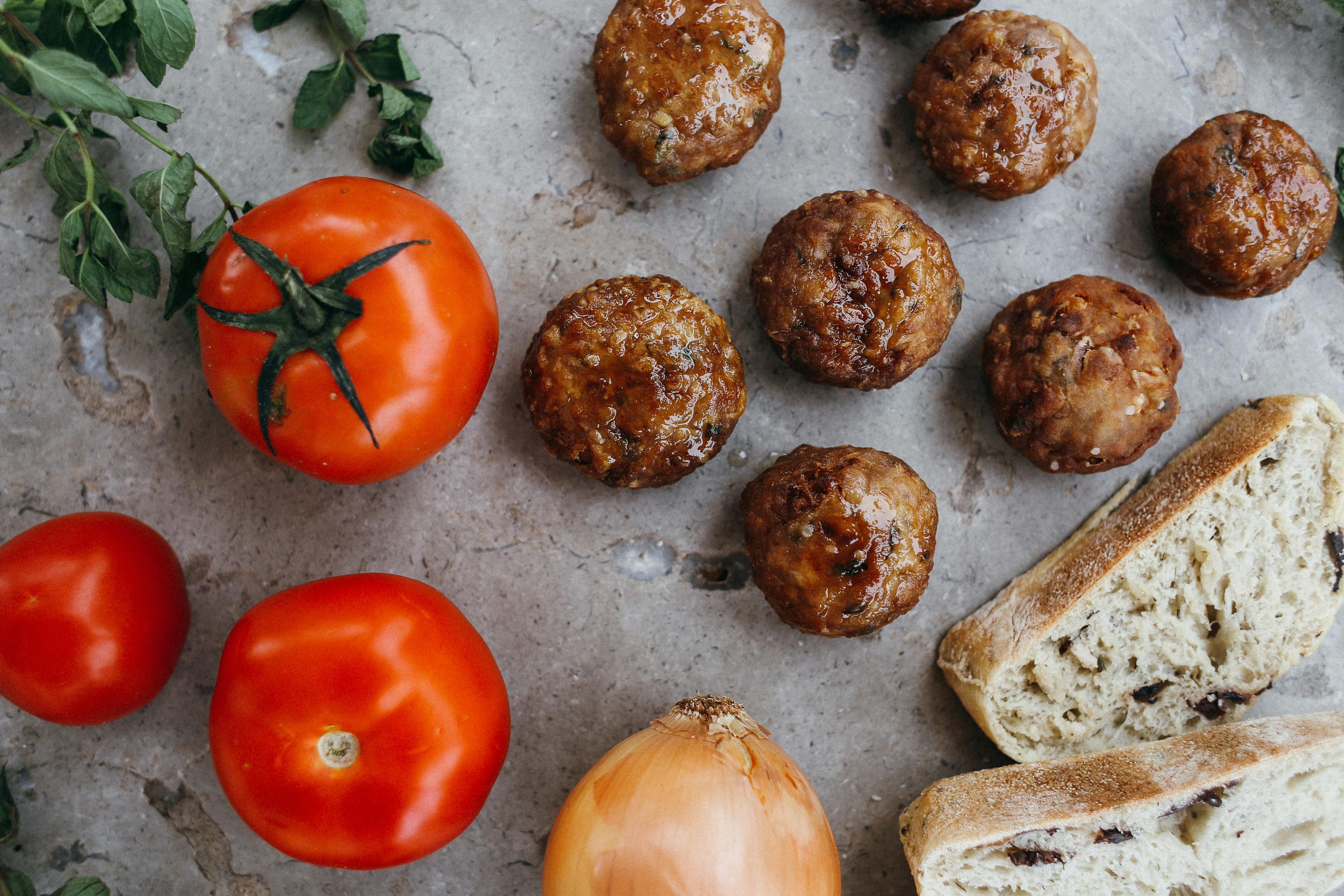
Photo: Rachel Claire / Pexels
The diets react (see scores below)
Common Ingredients
- ground beef
- pork
- onion
- garlic
- mint
- oregano
- breadcrumbs
- egg
Specific recipes may vary.
Incompatible with 7 of 11 diets
Diet Ratings
Keftedes are Greek meatballs made with ground beef and pork, which are inherently keto-friendly protein and fat sources. However, the traditional recipe includes breadcrumbs as a binder, which introduces wheat-based grains and raises the net carb count significantly. A standard serving of keftedes (4-6 meatballs) can easily contribute 10-20g of net carbs from breadcrumbs alone, depending on the amount used. The onion, garlic, mint, and oregano add minimal carbs. The dish is salvageable with a simple substitution — replacing breadcrumbs with almond flour, crushed pork rinds, or parmesan — making it fully keto-approved. As traditionally prepared, however, it requires caution and portion control to avoid exceeding daily carb limits.
Keftedes are Greek meatballs containing multiple animal products: ground beef and pork (meat) and egg (animal-derived). These are core, non-optional ingredients that make this dish entirely incompatible with a vegan diet. There is no ambiguity here — this dish is fundamentally built on animal products.
Keftedes contain breadcrumbs, which are made from wheat — a grain that is strictly excluded from the paleo diet. Breadcrumbs are a core structural ingredient in this dish, not a minor additive, making the recipe fundamentally non-paleo. The remaining ingredients — ground beef, pork, onion, garlic, mint, oregano, and egg — are all paleo-compliant and would earn a strong approval on their own. However, the presence of breadcrumbs disqualifies the dish as traditionally prepared. A paleo-adapted version could substitute almond flour or omit the binder entirely, but the classic recipe cannot be approved.
Keftedes are traditional Greek meatballs combining ground beef and pork — two red meats that the Mediterranean diet restricts to only a few times per month. The dual red meat base makes this dish doubly problematic from a Mediterranean diet standpoint, as it delivers a high saturated fat load. Breadcrumbs (refined grain) add further concern. While herbs, garlic, and onion are Mediterranean staples, they do not offset the primary protein issue. As a snack, this is particularly misaligned — snacks in the Mediterranean pattern lean toward nuts, fruit, or vegetables, not red meat preparations.
Traditional Greek culinary practice has long included keftedes as a celebratory or occasional dish, and some Mediterranean diet researchers acknowledge that small portions of traditional red meat preparations, deeply embedded in cultural food heritage, can coexist within an overall plant-forward dietary pattern when consumed infrequently. The egg and herb components are wholesome, and some practitioners would rate this as 'caution' rather than 'avoid' if portion size is modest and frequency is limited.
Keftedes are Greek meatballs that contain multiple carnivore-incompatible ingredients. While the base of ground beef and pork is excellent, the dish includes breadcrumbs (grain-based binder), onion, garlic, fresh mint, and dried oregano — all plant-derived and excluded on a carnivore diet. The egg is carnivore-approved, but the breadcrumbs alone disqualify this dish as a grain product and processed plant food. The herbs and aromatics further violate the no-plant-foods rule. This dish as traditionally prepared cannot be considered carnivore-compatible.
Keftedes contain breadcrumbs, which are made from wheat — a grain explicitly excluded on the Whole30 program. This single ingredient disqualifies the dish regardless of how compliant the other ingredients are. Ground beef, pork, onion, garlic, mint, oregano, and egg are all Whole30-compatible, but the breadcrumbs make this dish a clear avoid.
Keftedes contains multiple high-FODMAP ingredients that make it unsuitable during the elimination phase. Onion is one of the highest-FODMAP foods tested by Monash University, containing significant fructans at any reasonable serving size. Garlic is similarly high in fructans and is a primary FODMAP offender even in very small amounts. Traditional breadcrumbs are made from wheat, which is high in fructans. These three ingredients collectively make this dish clearly high-FODMAP regardless of portion size. Ground beef, pork, egg, mint, and oregano are low-FODMAP and would otherwise be safe, but the onion, garlic, and wheat breadcrumbs cannot be mitigated by portion control in a standard keftedes recipe.
Keftedes are Greek meatballs made from a combination of ground beef and pork — both red meats that DASH guidelines explicitly recommend limiting. The dual red meat base contributes significant saturated fat, which DASH restricts to reduce cardiovascular risk. While the dish includes DASH-friendly aromatics (onion, garlic, mint, oregano), these don't offset the core protein concerns. The breadcrumbs add refined carbohydrates with minimal fiber benefit, and traditional preparation often involves pan-frying in oil, adding further fat. The portion-dense, snack-format presentation makes overconsumption of saturated fat likely. DASH guidelines emphasize lean poultry, fish, beans, and nuts as preferred proteins, with red meat reserved for rare, small-portion occasions. A beef-pork meatball combination as a snack sits clearly outside DASH recommendations.
NIH DASH guidelines categorically limit red meat and high saturated fat foods; however, some updated clinical interpretations note that if keftedes are made with lean ground beef (≤10% fat), baked rather than fried, and consumed in very small portions as an occasional treat, the saturated fat load may be manageable within an otherwise strict DASH framework. Substituting ground turkey or chicken would substantially improve DASH compatibility.
Keftedes are Greek meatballs combining ground beef and pork — a mixed protein source that presents moderate Zone compatibility. The beef/pork blend introduces more saturated fat than Zone's preferred lean proteins (skinless chicken, fish), but is not categorically excluded. The breadcrumbs add a high-glycemic carbohydrate filler that disrupts block calculations and is considered an 'unfavorable' Zone carb — though in small quantities per meatball, the glycemic load may be manageable. The egg contributes lean protein favorably. Herbs (mint, oregano, garlic, onion) are Zone-positive polyphenol sources. As a snack component, keftedes could be portioned into a Zone-balanced snack paired with a low-GI carb source (e.g., cucumber slices, bell pepper) and a monounsaturated fat. The main challenge is the saturated fat from the pork/beef blend and the breadcrumb filler, requiring careful portioning to stay within Zone ratios. Choosing lean ground beef (90%+ lean) and minimizing breadcrumbs would move this closer to a Zone-favorable protein block.
Sears' earlier Zone writings (Enter the Zone) more strictly limited fatty red meat and would rate this lower due to the pork and fatty beef content. His later anti-inflammatory work (The Anti-Inflammation Zone) softened this stance somewhat, acknowledging that context and overall meal balance matter more than categorical exclusion of red meat. Some Zone practitioners would approve this in small portions as a valid protein block, while strict early-Zone adherents would flag the saturated fat more heavily.
Keftedes are Greek meatballs combining ground beef and pork — both red meats that anti-inflammatory guidelines recommend limiting due to their saturated fat content and association with elevated inflammatory markers like CRP and IL-6. The dual red meat base is the primary concern, as neither beef nor pork is inherently anti-inflammatory at typical serving quantities. However, the dish has meaningful redeeming qualities: garlic is a well-documented anti-inflammatory ingredient with allicin and organosulfur compounds; oregano and mint both contribute polyphenols and antioxidants valued in anti-inflammatory eating; and egg provides choline and selenium. Breadcrumbs represent a refined carbohydrate component, which is mildly negative but not a dominant concern in the small quantities used as a binder. Onion adds quercetin, a flavonoid with anti-inflammatory properties. The preparation method matters significantly — shallow or deep frying in seed oils (common for keftedes) would worsen the inflammatory profile, while baking or pan-cooking in olive oil keeps it more acceptable. As an occasional snack rather than a dietary staple, the dish sits in 'caution' territory: not acutely harmful, but not a food anti-inflammatory eating emphasizes.
Some anti-inflammatory practitioners, including followers of Mediterranean diet frameworks (which shares significant overlap with anti-inflammatory eating), would note that small portions of red meat in the context of an overall plant-rich diet are acceptable and that the herb-forward Mediterranean character of keftedes partially offsets concerns — Dr. Weil's framework does allow red meat occasionally. Conversely, stricter anti-inflammatory and autoimmune protocol (AIP) adherents would flag both the red meat load and the gluten-containing breadcrumbs as problematic, potentially scoring this lower.
Keftedes are Greek meatballs made from a blend of ground beef and pork — a combination that is moderately high in saturated fat compared to leaner proteins like chicken breast or turkey. A typical serving (3–4 meatballs) provides a reasonable amount of protein (roughly 15–20g), which is a meaningful positive for GLP-1 patients. However, the beef-pork blend introduces significant saturated fat, which can worsen GLP-1 side effects like nausea, bloating, and reflux due to slowed gastric emptying. Breadcrumbs add refined carbohydrates with minimal fiber or nutritional value. The dish is traditionally pan-fried or shallow-fried, further increasing fat content — though baked versions reduce this concern. Herbs (mint, oregano, garlic, onion) are beneficial and well-tolerated. This dish is acceptable in a modified, baked form with leaner meat ratios, but the standard version presents enough fat-related GI risk to warrant caution for GLP-1 patients.
Some GLP-1-focused dietitians accept moderate red meat consumption as a practical protein source, particularly for patients with limited dietary variety, and would consider baked keftedes made with a leaner beef blend (90/10) as a reasonable occasional option. Others caution against all high-saturated-fat red meat combinations given the compounding GI burden with GLP-1-slowed gastric emptying, recommending substitution with ground turkey or chicken instead.
*See how scores were generated at our methodology page.
Nutritional profile
Six traits that cut across every diet.
Fiber & Plants
How much whole-plant food and fiber it delivers.
Healthy Fats
The quality of its fats (unsaturated, omega-3).
Whole / Unprocessed
How close it is to its natural, unprocessed form.
Gut Gentle
How easy it is on digestion (low FODMAP, few irritants).
Low Glycemic
How little it spikes your blood sugar.
Protein Density
How much protein it packs per calorie.
Controversy Index
Higher controversy = more disagreement between diets.
Diet-Specific Tips
 Keto — 4/10
View tips
- Breadcrumbs are a grain-based ingredient incompatible with strict keto
- Ground beef and pork are ideal high-fat, moderate-protein keto foods
- Onion and garlic add small but non-negligible carbs
- Standard serving could contribute 10-20g net carbs from breadcrumbs
- Easy keto modification: substitute breadcrumbs with almond flour or pork rinds
- Egg is keto-friendly and commonly used as a binder
 Zone — 5/10
View tips
- Mixed beef/pork protein increases saturated fat above Zone-preferred lean protein sources
- Breadcrumbs are an unfavorable high-glycemic Zone carb filler disrupting block balance
- Egg contributes a Zone-favorable lean protein component
- Herbs (mint, oregano, garlic, onion) provide Zone-positive polyphenols
- As a snack, portion control is critical — 2-3 small meatballs can fit a 1-block protein serving
- Pairing with low-GI vegetables and monounsaturated fat is essential for Zone balance
- Choosing lean ground beef (90%+ lean) and reducing breadcrumbs improves Zone compatibility
 Anti-Inflammatory — 4/10
View tips
- Ground beef and pork are red meats flagged for limiting in anti-inflammatory diets due to saturated fat and pro-inflammatory potential
- Garlic is a well-supported anti-inflammatory ingredient with organosulfur compounds
- Oregano and mint contribute meaningful polyphenols and antioxidants
- Breadcrumbs add refined carbohydrates, a mildly negative factor
- Onion provides quercetin, an anti-inflammatory flavonoid
- Preparation method (frying vs. baking, oil choice) significantly affects overall inflammatory rating
- Portion context as an occasional snack is more acceptable than a dietary staple
 GLP-1 Friendly — 4/10
View tips
- Beef-pork blend is moderately high in saturated fat, which worsens GLP-1 GI side effects
- Typically pan-fried or shallow-fried, significantly increasing fat per serving
- Breadcrumbs are refined carbohydrates with negligible fiber contribution
- Provides meaningful protein (15–20g per serving) — a positive factor
- Herbs and aromatics are GLP-1-friendly and well-tolerated
- Baked version with leaner meat ratio would score higher (5–6)
- Small portion size as a snack limits total fat load, partially mitigating concern