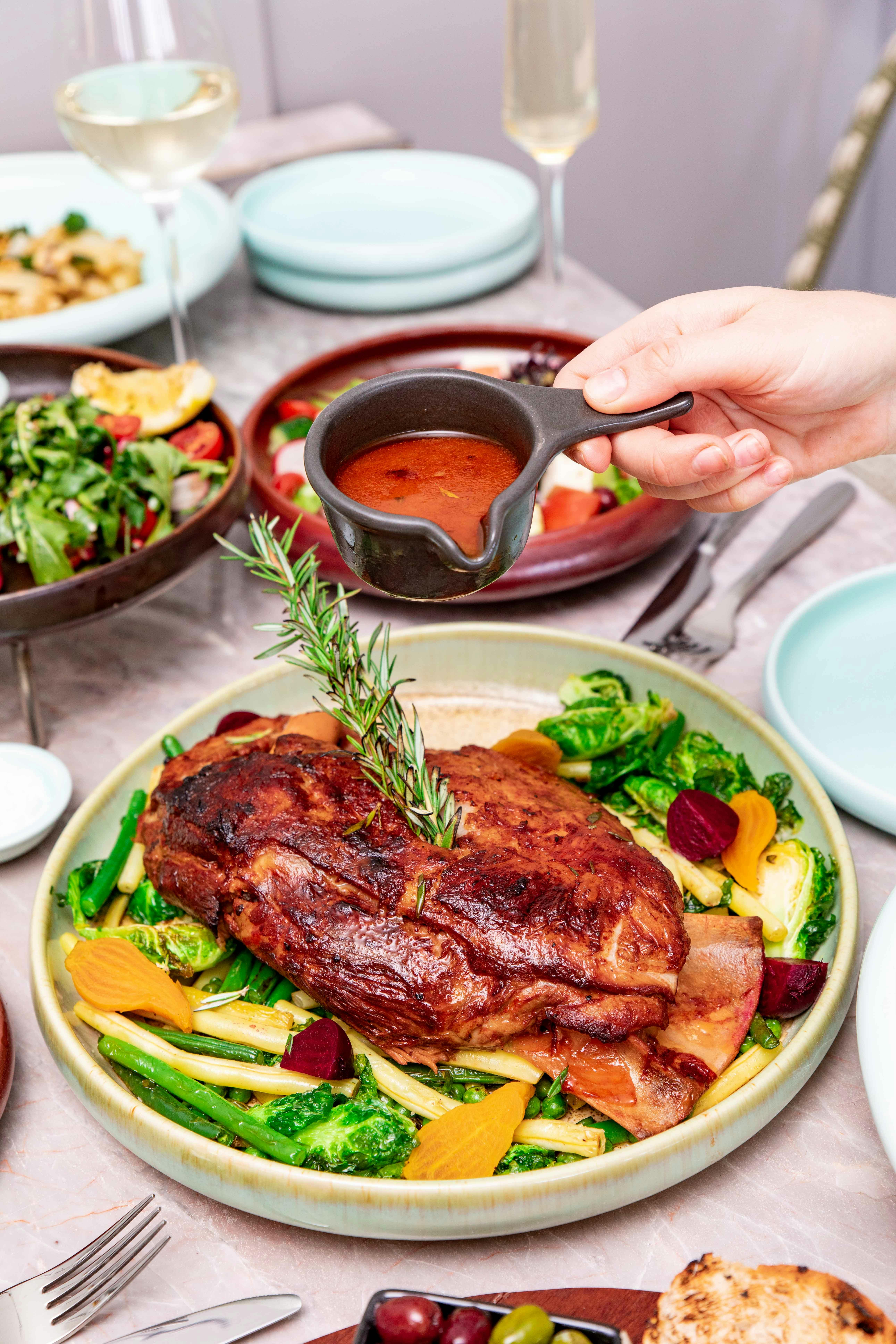
Photo: Team Picsfast / Pexels
The diets react (see scores below)
Common Ingredients
- lamb
- garlic
- lemon juice
- oregano
- potatoes
- olive oil
- onion
- feta
Specific recipes may vary.
Incompatible with 6 of 11 diets
Diet Ratings
Kleftiko is fundamentally incompatible with ketogenic eating due to the inclusion of potatoes as a core ingredient. Potatoes are a starchy vegetable with approximately 15-17g net carbs per 100g, and a typical serving of Kleftiko includes a substantial portion. A single medium potato can contain 30-35g net carbs, which alone would consume or exceed the entire daily keto carb allowance. The remaining ingredients — lamb, garlic, lemon juice, oregano, olive oil, onion, and feta — are largely keto-friendly or neutral, with lamb being an excellent high-fat protein source and olive oil providing healthy fats. However, the potatoes are not a garnish but a defining, structural component of the dish that cannot be removed without fundamentally changing the recipe. The onion and lemon juice add minor carb load on top. While someone could theoretically request a modified version without potatoes, the dish as traditionally prepared is a clear avoid.
Kleftiko contains two clear animal products: lamb (meat) and feta (dairy cheese). Both are unambiguously excluded from a vegan diet. Lamb is slaughtered animal flesh, and feta is a cheese made from sheep's or goat's milk. The remaining ingredients — garlic, lemon juice, oregano, potatoes, olive oil, and onion — are all plant-based, but the presence of lamb and feta makes this dish entirely incompatible with veganism. A vegan adaptation would require replacing the lamb with a plant-based protein (e.g., jackfruit, chickpeas, or cauliflower) and omitting or substituting the feta with a plant-based alternative.
Kleftiko contains several paleo-approved ingredients — lamb, garlic, lemon juice, oregano, olive oil, and onion are all unambiguously paleo-friendly. However, two ingredients disqualify this dish: feta cheese is a dairy product excluded under paleo rules, and white potatoes are discouraged by The Paleo Diet's guidelines (Cordain school). With feta as a clear dairy violation and white potatoes as a debated-but-often-excluded ingredient, the dish cannot be approved or placed in caution without significant modification. The combination of both problematic ingredients pushes this to an avoid verdict.
Some modern paleo frameworks — notably Mark Sisson's Primal Blueprint and Whole30 — permit white potatoes, and a minority of practitioners accept ghee and certain aged cheeses; however, feta is a fresh, unfermented dairy product with no meaningful casein/lactose removal, making even the most lenient paleo voices unlikely to endorse it. Removing the feta and swapping white potatoes for sweet potatoes would shift this dish firmly into approved territory.
Kleftiko is a traditional Greek slow-roasted lamb dish that sits in tension with Mediterranean diet principles. The majority of ingredients are exemplary — extra virgin olive oil, garlic, lemon juice, oregano, potatoes, and onion are all Mediterranean staples. However, lamb is red meat, which the Mediterranean diet limits to a few times per month. The dish is not inherently unhealthy, but its primary protein source places it outside the 'approve' category despite its deeply traditional Greek roots. Feta adds moderate dairy, which is acceptable in small amounts. Enjoyed occasionally as part of an otherwise plant-forward diet, Kleftiko is compatible but not a dietary staple.
Traditional Mediterranean dietary patterns, particularly in rural Greece and Crete, historically included lamb and goat on festive or weekly occasions, and some researchers argue that lean lamb in a dish rich with vegetables, olive oil, and herbs reflects authentic Mediterranean eating rather than contradicting it. The original Seven Countries Study populations who showed cardiovascular benefits did consume small amounts of red meat regularly.
Kleftiko is fundamentally incompatible with the carnivore diet. While lamb is an excellent ruminant meat and a carnivore staple, this dish is heavily laden with plant-based ingredients. Potatoes and onion are plant foods with significant carbohydrates, olive oil is a plant-derived oil, lemon juice and oregano are plant-derived, and garlic is excluded on carnivore. Feta cheese adds a debated dairy component, but it is irrelevant given the multiple disqualifying plant ingredients. The dish as a whole cannot be adapted without stripping away the core character of the recipe — what remains would simply be roasted lamb, not Kleftiko.
Kleftiko contains feta cheese, which is dairy and explicitly excluded from the Whole30 program. All other ingredients — lamb, garlic, lemon juice, oregano, potatoes, olive oil, and onion — are fully compliant. However, the inclusion of feta disqualifies the dish as traditionally prepared. To make this Whole30-compatible, feta must be omitted entirely.
Kleftiko contains multiple high-FODMAP ingredients that make it unsuitable during the elimination phase. Garlic is one of the highest-FODMAP foods known, rich in fructans, and is typically used in significant quantities in this dish. Onion is similarly high in fructans and is a major FODMAP trigger for most IBS sufferers. Feta cheese contains lactose, which is a disaccharide FODMAP — while feta is lower in lactose than soft cheeses, it still contributes FODMAP load. Lamb, lemon juice, oregano, potatoes, and olive oil are all individually low-FODMAP, but the combination of garlic and onion as structural ingredients in the marinade/cooking base makes this dish impossible to make low-FODMAP without fundamentally changing the recipe. These are not incidental garnishes — garlic and onion are core flavour components of Kleftiko, baked directly with the lamb, meaning their FODMAPs fully infuse the dish.
Kleftiko is a traditional Greek slow-cooked lamb dish that presents a mixed DASH profile. On the positive side, it includes several DASH-friendly components: olive oil (a heart-healthy unsaturated fat), garlic, onion, lemon juice, oregano, and potatoes (a good source of potassium). However, lamb is a red meat that DASH guidelines recommend limiting due to its saturated fat content — a slow-cooked lamb shoulder or leg, commonly used for kleftiko, can carry significant saturated fat depending on the cut. Feta cheese, while relatively lower in calories than many cheeses, adds sodium (a typical 30g serving contains ~300-400mg), which is a concern on a diet targeting <2,300mg/day and especially on the stricter <1,500mg/day version. The dish is not heavily processed and avoids added sugars, refined grains, or tropical oils, which is favorable. Portion size is the key lever: a modest portion with a lean lamb cut, reduced feta, and emphasis on the vegetable components can make this acceptable within DASH limits, but traditional preparation with generous lamb and feta pushes it toward 'caution' territory.
NIH DASH guidelines explicitly limit red meat, placing lamb in the 'limit' category regardless of preparation. However, some updated DASH-oriented Mediterranean diet researchers note that lamb consumed in traditional Mediterranean portions — smaller, alongside abundant vegetables — aligns with the broader cardiovascular benefits seen in Mediterranean dietary patterns, and that the co-presence of olive oil, herbs, and potassium-rich vegetables partially offsets the saturated fat concern.
Kleftiko presents several Zone challenges. Lamb is not a lean protein — it carries significant saturated fat, making it an 'unfavorable' protein source in Zone terminology. A typical serving will push saturated fat well above Zone targets even when olive oil (a favorable fat) is included. The larger problem is potatoes, which are explicitly identified by Dr. Sears as a high-glycemic, unfavorable carbohydrate to avoid or strictly limit. Potatoes are a staple ingredient in traditional Kleftiko, making the dish structurally difficult to Zone-balance. On the positive side, olive oil is the ideal Zone fat, garlic, onion, oregano, and lemon juice are polyphenol-rich and anti-inflammatory, and feta (in moderation) is an acceptable low-fat cheese. To make this more Zone-compatible, one would need to: (1) use a leaner cut of lamb or trim aggressively, (2) replace or substantially reduce potatoes with low-glycemic vegetables like zucchini, bell peppers, or artichokes, and (3) keep portions of both lamb and feta controlled. As traditionally prepared, the potato-and-fatty-lamb combination makes Zone ratio balancing very difficult without significant recipe modification.
Kleftiko is a traditional Greek slow-cooked lamb dish with a mixed anti-inflammatory profile. On the positive side, it features olive oil (a cornerstone anti-inflammatory ingredient with oleocanthal), garlic and oregano (both with meaningful anti-inflammatory polyphenols), lemon juice (vitamin C, flavonoids), and onion (quercetin). Potatoes contribute fiber and potassium. The slow-cooking method with sealed steam helps retain nutrients. However, the primary protein — lamb — is red meat with significant saturated fat content, which anti-inflammatory frameworks consistently place in the 'limit' category. Feta, while not high-fat by cheese standards, adds saturated fat and sodium. Traditional Kleftiko is often made with bone-in lamb shoulder, a fattier cut, further increasing saturated fat load. The dish is not without merit — the Mediterranean herb profile, olive oil base, and aromatic vegetables provide real anti-inflammatory benefit — but the red meat foundation and full-fat dairy inclusion prevent an 'approve' rating. Occasional consumption in the context of an otherwise anti-inflammatory diet is reasonable; it should not be a dietary staple.
Dr. Andrew Weil's Anti-Inflammatory Food Pyramid permits lean red meat occasionally (a few times per month), and some Mediterranean diet researchers argue that traditionally prepared lamb in modest portions — particularly grass-fed — carries a more favorable omega-3 to omega-6 ratio than conventionally raised beef, making dishes like Kleftiko an acceptable part of an anti-inflammatory Mediterranean eating pattern. Stricter anti-inflammatory protocols, however, would flag the combination of red meat and full-fat feta as a meaningful saturated fat burden that should be minimized.
Kleftiko is a slow-braised lamb dish that presents a mixed nutritional profile for GLP-1 patients. Lamb is a complete protein source and does contribute meaningfully to daily protein targets, but it is also a fatty red meat with significant saturated fat content — particularly in the slow-cooked, bone-in cuts traditionally used in kleftiko, where fat renders into the braising liquid and is absorbed by the potatoes. The feta adds additional saturated fat and sodium. Olive oil is a preferred unsaturated fat, and the lemon, garlic, and oregano are GLP-1-neutral. Potatoes provide some fiber and potassium but are a starchy, moderate-glycemic carbohydrate with limited protein density. The slow-cooking method does make the lamb tender and easier to digest than grilled or fried preparations, which is a genuine advantage. However, the overall fat load per serving — between the lamb fat, olive oil, and feta — is high enough to risk worsening GLP-1 side effects such as nausea, bloating, and reflux. Portion size is critical here: a small serving focused on lean lamb pieces (avoiding fatty cuts and braising juices) with vegetables could be acceptable, but a standard restaurant or home portion is likely too high in fat for GLP-1 patients, especially early in treatment.
Some GLP-1-focused dietitians view slow-cooked lamb as an acceptable red meat option given its high protein yield and the digestibility benefits of long braising — particularly for patients who tolerate red meat well and need calorie-dense meals to meet protein targets. Others caution that the saturated fat load in typical lamb preparations consistently worsens GI side effects and recommend substituting with chicken or fish in Mediterranean-style dishes.
*See how scores were generated at our methodology page.
Nutritional profile
Six traits that cut across every diet.
Fiber & Plants
How much whole-plant food and fiber it delivers.
Healthy Fats
The quality of its fats (unsaturated, omega-3).
Whole / Unprocessed
How close it is to its natural, unprocessed form.
Gut Gentle
How easy it is on digestion (low FODMAP, few irritants).
Low Glycemic
How little it spikes your blood sugar.
Protein Density
How much protein it packs per calorie.
Controversy Index
Higher controversy = more disagreement between diets.
Diet-Specific Tips
 Mediterranean — 5/10
View tips
- Lamb is red meat — Mediterranean diet recommends limiting to a few times per month
- Olive oil, garlic, lemon, oregano, and onion are core Mediterranean ingredients
- Potatoes provide whole food carbohydrates
- Feta is moderate dairy, acceptable in small portions
- Slow-roasting method is traditional and avoids processed cooking techniques
- Deeply rooted in Greek culinary tradition, which is a foundation of the Mediterranean diet
 DASH — 4/10
View tips
- Lamb is a red meat — DASH guidelines recommend limiting red meat due to saturated fat
- Feta adds notable sodium, a key DASH concern
- Olive oil is DASH-compatible as a healthy unsaturated fat
- Potatoes, garlic, onion contribute potassium and fiber in line with DASH principles
- No added sugars, refined grains, or tropical oils — positive factors
- Traditional portion sizes of lamb may exceed DASH red meat limits
- Low-sodium feta or reduced feta quantity would improve DASH compatibility
 Zone — 4/10
View tips
- Lamb is a high-saturated-fat protein, classified as 'unfavorable' in Zone — exceeds Zone's lean protein preference
- Potatoes are explicitly listed by Dr. Sears as a high-glycemic carbohydrate to avoid
- Olive oil is the ideal Zone monounsaturated fat — a strong positive
- Garlic, onion, oregano, and lemon provide polyphenols consistent with Zone anti-inflammatory goals
- Feta is usable in Zone in small amounts as a low-fat dairy protein/fat source
- Dish is structurally potato-dependent, making Zone-ratio balancing require significant modification
- As traditionally prepared, carb load skews high-glycemic and fat skews saturated — difficult to achieve 40/30/30 without recipe overhaul
 Anti-Inflammatory — 5/10
View tips
- Lamb is red meat — limited in anti-inflammatory frameworks due to saturated fat content
- Olive oil is a high-value anti-inflammatory fat (oleocanthal, monounsaturated)
- Garlic and oregano provide meaningful anti-inflammatory polyphenols
- Feta adds saturated fat and sodium — full-fat dairy is in the 'limit' category
- Lemon juice and onion contribute antioxidants and quercetin
- Potatoes are neutral — whole food carbohydrate with fiber and potassium
- Slow-cooking method preserves nutrient integrity
- Overall dish reflects Mediterranean flavor principles but is anchored by pro-inflammatory protein
 GLP-1 Friendly — 4/10
View tips
- High saturated fat from lamb — especially braised fatty cuts — likely to worsen GLP-1 GI side effects
- Feta and olive oil add to overall fat load per serving
- Good protein source if lean lamb portions are prioritized
- Slow-braising improves digestibility compared to fried or grilled preparations
- Potatoes are starchy carbohydrates with limited protein density — reduce portion
- Standard serving size likely exceeds fat tolerance for many GLP-1 patients
- Lemon, garlic, oregano are GLP-1-neutral and beneficial for palatability at small portions