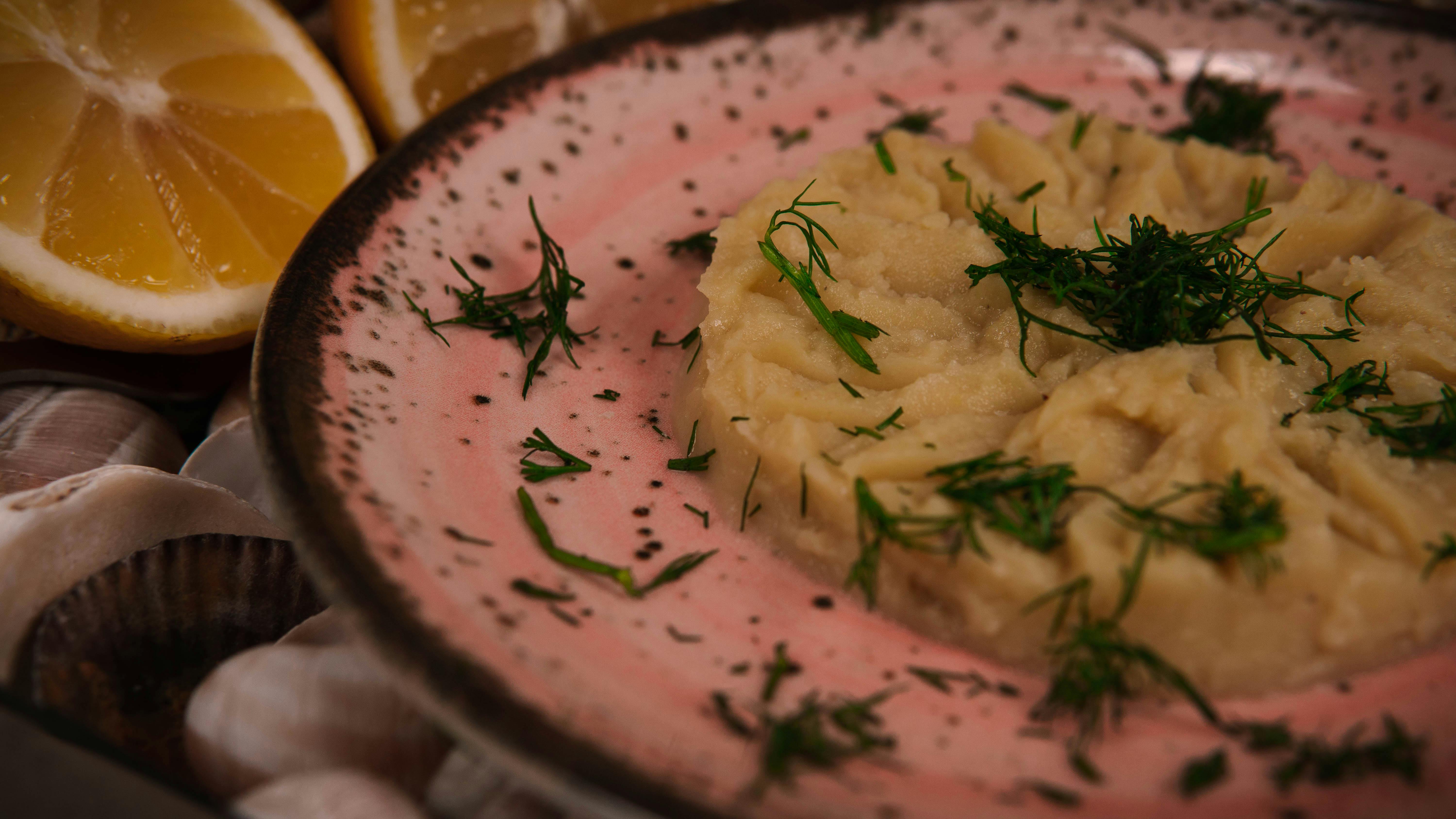
Photo: Ömer Kayan / Pexels
The diets react (see scores below)
Common Ingredients
- fish roe
- bread
- olive oil
- lemon juice
- onion
- water
Specific recipes may vary.
Incompatible with 6 of 11 diets
Diet Ratings
Traditional taramosalata contains bread as a primary bulking ingredient, which is a grain-based, high-carb component that makes the dish incompatible with ketogenic eating in its standard form. Fish roe and olive oil are excellent keto foods — high in healthy fats and protein with minimal carbs — but bread typically constitutes a significant portion of the recipe and dramatically raises the net carb content. Lemon juice and onion add minor carbs but are not the primary concern. The dish as traditionally prepared cannot be considered keto-friendly due to the bread base.
Taramosalata is a Greek dip made primarily from fish roe (tarama), which is a direct animal product — specifically the salted and cured eggs of fish such as carp or cod. Fish roe is unambiguously an animal-derived ingredient, making this dish entirely incompatible with a vegan diet. There is no meaningful debate within the vegan community on this point.
Taramosalata is a traditional Greek fish roe dip that is fundamentally incompatible with paleo due to the inclusion of bread (typically white or sourdough wheat bread), which is a grain-based product strictly excluded from the paleo diet. While several ingredients are paleo-compliant — fish roe is an excellent ancestral food, olive oil is a preferred paleo fat, lemon juice and onion are approved — the bread is a non-negotiable disqualifier. Bread serves as the primary binder and bulk ingredient in this dish, not merely a trace additive, making it impossible to simply overlook. The dish as traditionally prepared cannot be considered paleo-compatible.
Taramosalata is a traditional Greek condiment with deep roots in Mediterranean cuisine, particularly associated with Lent and mezze culture. Its primary ingredients align well with Mediterranean principles: fish roe provides omega-3 fatty acids and protein consistent with the diet's emphasis on seafood, extra virgin olive oil is the foundational fat, and lemon juice and onion are classic Mediterranean aromatics. Bread is used as a binder/emulsifier, which introduces some refined carbohydrates, but in the small quantities typical of this preparation it is not a significant concern. The dish is fish-forward and plant-fat-forward, making it a genuine Mediterranean staple.
Some modern Mediterranean diet practitioners note that commercial taramosalata often uses white bread (refined grain) and may contain high sodium from cured roe, and some versions substitute cheaper oils for olive oil. Traditional homemade preparation with whole grain bread and quality extra virgin olive oil is preferable, and the refined-bread base gives some nutritionists pause even in authentic versions.
Taramosalata is fundamentally incompatible with the carnivore diet despite containing fish roe, which would otherwise be an approved animal product. The dish is heavily plant-based in composition: bread (grain) serves as a primary filler/emulsifier, olive oil is a plant-derived fat, lemon juice is fruit-derived, and onion is a vegetable. These four plant-based ingredients are all strictly excluded on carnivore. The fish roe itself is the only carnivore-compliant ingredient. This is not a case of trace additives — bread and olive oil are structural, load-bearing components of the recipe, making the dish irredeemably non-carnivore as prepared.
Taramosalata as traditionally prepared contains bread, which is a grain-based ingredient explicitly excluded on Whole30. Bread (typically white bread or bread crumbs) is used as a thickening and binding agent in this Greek fish roe dip. While all other ingredients — fish roe, olive oil, lemon juice, onion, and water — are fully Whole30 compliant, the bread disqualifies the dish in its standard form. A grain-free version substituting bread with a compliant thickener (such as cauliflower or extra olive oil emulsification) could theoretically be made compliant, but as the dish commonly exists, it must be rated avoid.
Taramosalata contains two significant high-FODMAP ingredients that make it problematic during the elimination phase. First, bread (typically white wheat bread) is a primary structural ingredient containing fructans, which are high-FODMAP even in moderate quantities. Second, onion is one of the highest-FODMAP foods tested by Monash University, containing significant fructans at any reasonable serving size. Fish roe, olive oil, lemon juice, and water are all low-FODMAP and safe. However, the combination of wheat bread and onion makes this dip essentially unavoidable during strict elimination. A modified version using gluten-free bread and omitting onion (or using the green tops of spring onions) could be made low-FODMAP, but traditional taramosalata as described contains these high-FODMAP ingredients.
Some FODMAP practitioners note that taramosalata is used as a condiment in small amounts (1-2 tablespoons), and the per-serving FODMAP load from bread and onion may be diluted enough to be tolerable for some individuals. However, Monash University's strict elimination phase guidance advises avoiding onion entirely at any quantity, making even small servings of this dip risky during elimination.
Taramosalata is a Greek dip made from fish roe (tarama), bread, olive oil, lemon juice, onion, and water. While it contains DASH-friendly components — olive oil (a healthy unsaturated fat), lemon juice, and onion — fish roe is inherently high in sodium and cholesterol. Commercial tarama (cured, salted fish roe) can contain 1,000–1,500mg of sodium per 100g, making even modest portions a significant sodium load relative to DASH's 1,500–2,300mg daily limit. The dish is also calorie-dense due to olive oil content. On the positive side, fish roe provides omega-3 fatty acids, potassium, and protein, and olive oil aligns with DASH's emphasis on healthy fats. However, the high sodium from the cured roe is the primary concern, making this a 'use sparingly' condiment rather than a DASH staple. Homemade versions using fresh or minimally salted roe with controlled oil quantities could score slightly higher.
NIH DASH guidelines broadly limit high-sodium fish products and cured fish; however, some DASH-aligned Mediterranean diet practitioners note that taramosalata used as a small condiment portion (1–2 tablespoons) contributes meaningful omega-3s and unsaturated fats, arguing that context and portion size matter more than categorical exclusion of traditional Mediterranean foods.
Taramosalata presents a mixed Zone Diet profile. The fish roe provides lean protein with beneficial omega-3 fatty acids, which aligns well with Zone and anti-inflammatory principles. Olive oil as the primary fat source is ideal — a monounsaturated fat that Sears explicitly favors. Lemon juice and onion contribute negligible carbs and polyphenols. However, the bread (typically white bread or white bread crumbs in traditional recipes) is a high-glycemic carbohydrate that Sears classifies as 'unfavorable.' It raises the glycemic load of the dish and disrupts the ideal Zone macro balance. As a condiment, taramosalata is typically consumed in small quantities, which limits the glycemic impact of the bread content. If the bread component is minimized or substituted with a lower-GI alternative, this dish becomes quite Zone-friendly. In traditional portions as a dip, the fat-to-carb ratio skews heavily toward fat, making it difficult to use as a standalone Zone block without careful pairing with lean protein and low-GI vegetables to rebalance the 40/30/30 ratio.
Some Zone practitioners would rate this more favorably, arguing that as a condiment used in small amounts, the bread's glycemic contribution is negligible and the omega-3-rich fish roe combined with monounsaturated olive oil makes taramosalata a net positive anti-inflammatory food consistent with Sears' later writings emphasizing omega-3s and polyphenols over strict macro accounting. Others note the high sodium content of fish roe as an additional concern not captured by Zone's macro framework.
Taramosalata presents a genuinely mixed anti-inflammatory profile. On the positive side, fish roe (typically carp or cod roe) is rich in omega-3 fatty acids (EPA and DHA), vitamin B12, and antioxidants like astaxanthin, all of which are strongly anti-inflammatory. Extra virgin olive oil contributes oleocanthal and monounsaturated fats, and lemon juice provides vitamin C. Onion adds quercetin, a flavonoid with anti-inflammatory properties. However, the dish has meaningful limitations: commercial taramosalata is often made with refined white bread as a base, contributing refined carbohydrates with minimal nutritional benefit. Fish roe is also high in sodium, and commercial preparations frequently add large amounts of refined seed oils (sunflower or vegetable oil) as a cheaper substitute or extender for olive oil, significantly worsening the omega-6 profile. The homemade version described here — using olive oil rather than seed oils — is meaningfully better than commercial versions. For a home-prepared taramosalata with genuine EVOO, the anti-inflammatory benefits of the roe and olive oil are real, but the refined bread base and the high sodium content temper the score. Using whole grain bread would improve the profile considerably.
Some anti-inflammatory practitioners would rate homemade taramosalata more favorably (approaching 'approve') given the genuine omega-3 richness of fish roe and the prominent role of EVOO — both cornerstones of Dr. Weil's Anti-Inflammatory Pyramid and the Mediterranean diet framework. Others, particularly those focused on sodium load or who follow stricter autoimmune protocols (e.g., AIP), would be more cautious about roe due to its high sodium content and the fact that many commercial versions use pro-inflammatory seed oils, making ingredient sourcing critical to the verdict.
Taramosalata is a Greek fish roe dip made primarily from cured fish roe (tarama), bread as a binder, and a substantial amount of olive oil emulsified in. While fish roe provides some protein and beneficial omega-3 fatty acids, the dish is calorie-dense and fat-heavy per serving due to the high olive oil content — olive oil is an unsaturated fat, which is preferred over saturated fat, but the sheer volume used in taramosalata makes it a high-fat condiment overall. The bread base adds refined carbohydrates with low fiber value. Protein per typical serving (2–3 tablespoons) is modest — not a meaningful protein contributor. As a condiment, small portions limit the damage, but it does not support the GLP-1 priority of high protein density per calorie or easy digestibility in larger amounts. The high fat load may worsen nausea or bloating in GLP-1 patients, particularly around injection days. Lemon juice and onion are nutritionally negligible here. Not a harmful occasional condiment in a teaspoon-sized portion, but not a food that earns its caloric place on a GLP-1 plate.
Some GLP-1-focused dietitians may view taramosalata more favorably in strict small portions, noting that olive oil and fish roe provide anti-inflammatory omega-3 fats and that the Mediterranean dietary pattern it belongs to is broadly supported for metabolic health. However, others caution that the fat density per calorie is too high to justify regular inclusion given GLP-1 patients' reduced caloric budgets and heightened GI sensitivity to fatty foods.
*See how scores were generated at our methodology page.
Nutritional profile
Six traits that cut across every diet.
Fiber & Plants
How much whole-plant food and fiber it delivers.
Healthy Fats
The quality of its fats (unsaturated, omega-3).
Whole / Unprocessed
How close it is to its natural, unprocessed form.
Gut Gentle
How easy it is on digestion (low FODMAP, few irritants).
Low Glycemic
How little it spikes your blood sugar.
Protein Density
How much protein it packs per calorie.
Controversy Index
Higher controversy = more disagreement between diets.
Diet-Specific Tips
 Mediterranean — 8/10
View tips
- Fish roe as primary protein aligns with Mediterranean seafood emphasis
- Extra virgin olive oil as the primary fat — canonical Mediterranean fat source
- Traditional Greek dish with long cultural history in Mediterranean cuisine
- Lemon juice and onion are core Mediterranean flavor ingredients
- Bread used as emulsifier introduces refined carbohydrates, though in small amounts
- Sodium content from cured/salted roe warrants moderate consumption
- Served as a condiment/mezze, so portion sizes are naturally limited
 DASH — 4/10
View tips
- Fish roe (tarama) is high in sodium due to curing/salting — primary DASH concern
- Olive oil provides heart-healthy monounsaturated fats, aligned with DASH
- High cholesterol content from fish roe may concern some DASH clinicians
- Omega-3 fatty acids in fish roe are cardiovascular-beneficial
- Typically consumed as a condiment, so portion size limits sodium exposure
- No added sugars, no saturated fat from tropical oils
- Low-sodium or fresh roe versions would score significantly higher
 Zone — 5/10
View tips
- Fish roe provides lean protein and beneficial omega-3 fatty acids — Zone-favorable
- Olive oil is the ideal Zone fat source (monounsaturated)
- White bread is a high-glycemic 'unfavorable' carbohydrate in Zone terminology
- As a condiment, small portion sizes limit glycemic impact of bread
- Macro profile skews high-fat, making 40/30/30 rebalancing necessary in the overall meal
- Polyphenols from lemon juice and onion support anti-inflammatory Zone goals
 Anti-Inflammatory — 5/10
View tips
- Fish roe is a notable source of omega-3 fatty acids (EPA/DHA), supporting an anti-inflammatory profile
- Extra virgin olive oil contributes oleocanthal and MUFAs — core anti-inflammatory ingredients
- Refined white bread base adds refined carbohydrates with minimal nutritional value
- High sodium content from fish roe is a concern for inflammatory conditions
- Commercial versions often substitute or supplement with pro-inflammatory seed oils (sunflower/vegetable oil) — homemade with EVOO is significantly better
- Lemon juice and onion provide vitamin C and quercetin respectively, modest anti-inflammatory contributions
- Whole grain bread substitution would materially improve the dish's anti-inflammatory score
 GLP-1 Friendly — 4/10
View tips
- High fat content per serving due to substantial olive oil — may worsen GLP-1 GI side effects
- Low protein density per calorie — fish roe provides some protein but not in meaningful amounts at condiment serving sizes
- Refined bread base adds low-fiber carbohydrates
- Omega-3 fatty acids from fish roe are a modest positive
- Unsaturated fat source (olive oil) preferred over saturated but still high total fat
- Small condiment portions reduce risk but also reduce any nutritional benefit
- Not a meaningful fiber contributor
- Calorie-dense relative to nutritional return — poor nutrient density per calorie for GLP-1 patients