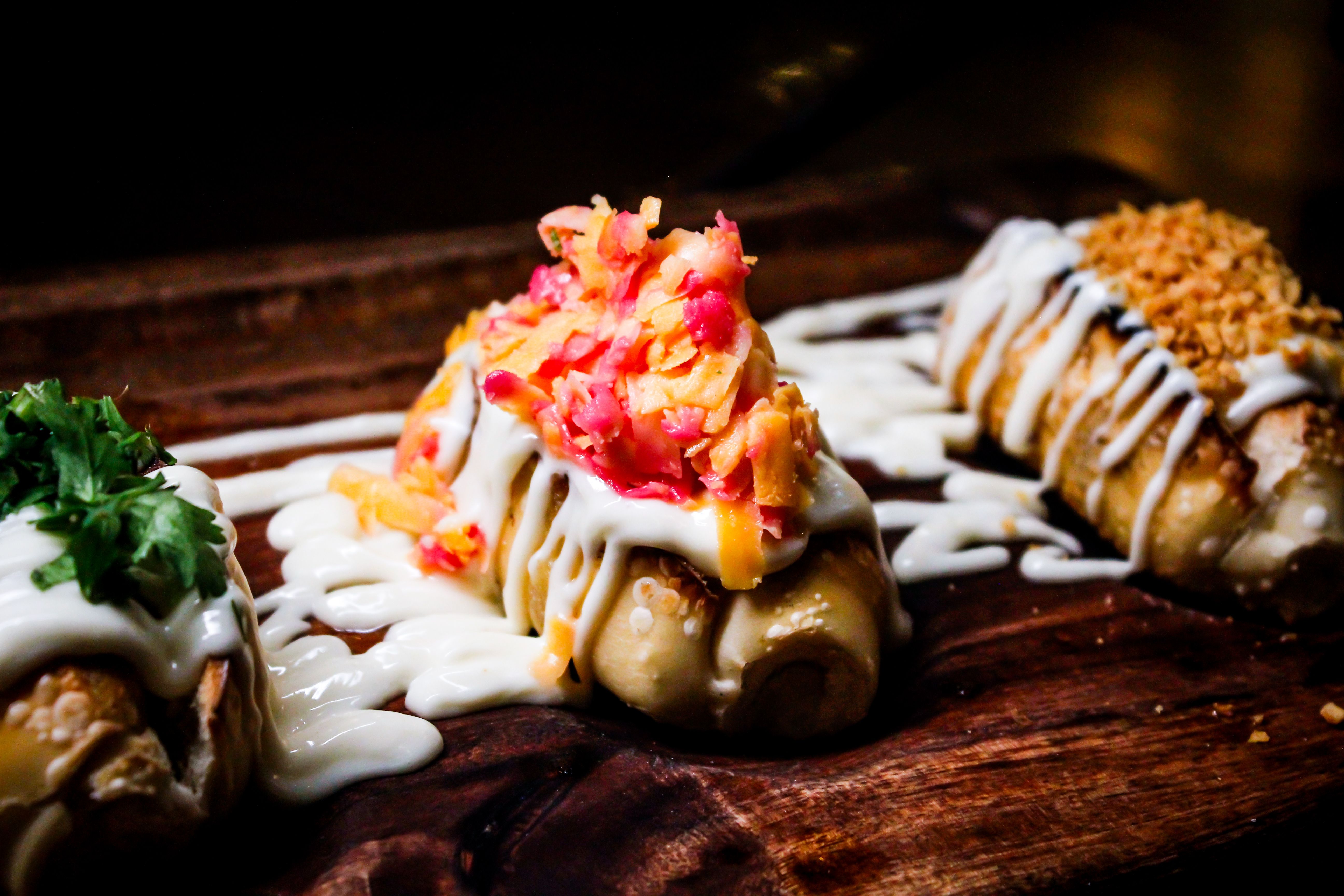
Photo: Caio Niceas / Pexels
Guatemalan
Chuchitos
The diets react (see scores below)
Common Ingredients
- corn masa
- pork
- tomatoes
- guajillo chiles
- lard
- corn husks
- garlic
- onion
Specific recipes may vary.
Incompatible with 8 of 11 diets
Diet Ratings
Chuchitos are a Guatemalan tamale-style snack whose primary structure is corn masa (nixtamalized corn dough), which is extremely high in net carbohydrates. A single chuchito typically contains 25-40g of net carbs from the masa alone, making even one serving potentially sufficient to break ketosis. While the pork filling, lard, guajillo chiles, tomatoes, garlic, and onion are relatively keto-friendly in isolation, the corn masa base is fundamentally incompatible with a ketogenic diet. There is no practical way to consume chuchitos in a standard serving without severely exceeding the daily net carb limit.
Chuchitos contain multiple animal-derived ingredients that make them incompatible with a vegan diet. Pork is a direct animal product (meat), and lard is rendered pig fat — both are clearly non-vegan. These are not peripheral or trace ingredients but core structural and flavoring components of the dish. The corn husks used as wrappers are the only vegan element beyond the plant-based base ingredients.
Chuchitos are fundamentally built on corn masa, which is a processed grain product made from nixtamalized corn. Corn is explicitly excluded from the paleo diet as a grain. The corn husks used as wrappers are non-food and irrelevant to the assessment. While several ingredients are paleo-compliant — pork, tomatoes, guajillo chiles, garlic, and onion are all approved whole foods, and lard is an accepted animal fat — the foundational ingredient (corn masa) makes this dish incompatible with paleo principles. No amount of compliant accompaniments can offset a grain-based staple that defines the dish's structure and identity.
Chuchitos are Guatemalan tamales made with corn masa and pork, bound together with lard as the primary fat. From a Mediterranean diet perspective, this dish presents multiple red flags: lard is a saturated animal fat that directly contradicts the principle of extra virgin olive oil as the primary fat source; pork in this context is a red meat filling, which should be limited to only a few times per month; and the refined corn masa offers little fiber compared to whole grains emphasized in the diet. The combination of lard-enriched masa with red meat makes this dish a poor fit for regular consumption under Mediterranean diet principles.
Some Mediterranean diet interpreters might note that the tomatoes, garlic, onion, and guajillo chiles represent a meaningful vegetable component, and that occasional red meat consumption is not strictly forbidden. If the dish were modified to use olive oil instead of lard and a leaner protein, it could approach 'caution' territory, reflecting how traditional preparations sometimes differ from ideal guidelines.
Chuchitos are a Guatemalan tamale-style dish built on a corn masa (ground corn dough) base, which is a plant-derived grain product entirely incompatible with the carnivore diet. The majority of the ingredients are plant-based: corn masa, tomatoes, guajillo chiles, corn husks (used as wrappers), garlic, and onion. While pork and lard are carnivore-approved animal products, they represent a minor component of this dish surrounded by multiple excluded plant foods. Even setting aside the masa, the tomatoes, chiles, garlic, and onion are all vegetables/plant ingredients explicitly prohibited on carnivore. This dish cannot be adapted to carnivore without being fundamentally deconstructed into something unrecognizable.
Chuchitos are Guatemalan tamales made with corn masa (corn/grain) as their primary wrapper and structural ingredient. Corn is explicitly excluded on the Whole30 as a grain. Regardless of the compliant nature of the other ingredients (pork, tomatoes, guajillo chiles, lard, garlic, onion), the corn masa alone disqualifies this dish. Additionally, even if a grain-free masa substitute were used, chuchitos would fall under the 'no recreating baked goods/junk food' rule, as tamales are functionally equivalent to wraps or dough-based comfort foods that the Whole30 explicitly prohibits in spirit.
Chuchitos contain two high-FODMAP ingredients that make them unsuitable during the elimination phase: garlic (high in fructans at any culinary amount) and onion (also high in fructans, one of the most concentrated FODMAP sources). These are not incidental — they are core flavoring components cooked into the pork filling and tomato-guajillo sauce, meaning their FODMAPs are distributed throughout the dish. Guajillo chiles are generally considered low-FODMAP in small amounts, corn masa (nixtamalized corn flour) is low-FODMAP, pork is low-FODMAP, tomatoes are low-FODMAP at standard servings, and lard is fat-based and FODMAP-free. However, the garlic and onion alone are sufficient to classify this dish as high-FODMAP and unsuitable during elimination. There is no practical way to consume a standard Chuchito and avoid the fructans from these ingredients.
Chuchitos are Guatemalan tamale-like snacks made with corn masa mixed with lard, filled with pork, tomatoes, guajillo chiles, garlic, and onion, wrapped in corn husks. Several DASH concerns arise: (1) Lard is high in saturated fat, which DASH explicitly limits — this is the primary red flag. (2) Pork as prepared in traditional fillings may include fatty cuts with moderate-to-high sodium depending on seasoning. (3) The dish does have positive DASH-aligned elements: corn masa provides whole grain carbohydrates and fiber; tomatoes, guajillo chiles, garlic, and onion are all DASH-friendly vegetables rich in potassium and antioxidants. (4) Sodium content is moderate but variable depending on seasoning and salt added during preparation. Overall, the lard and potentially fatty pork pull this into caution territory — the dish is not a DASH staple but can be consumed occasionally if portion-controlled and modified (e.g., replacing lard with vegetable oil, using lean pork loin).
NIH DASH guidelines explicitly restrict saturated fat and lard-based preparations, placing traditional chuchitos firmly in the caution-to-avoid range. However, some updated clinical interpretations note that lard contains oleic acid (a monounsaturated fat) and that traditional whole-food preparations with vegetables and minimal processing may be preferable to ultra-processed snack alternatives, suggesting occasional consumption is acceptable within an otherwise adherent DASH pattern.
Chuchitos are a Guatemalan tamale-style snack made with corn masa and pork, presenting several Zone Diet challenges. The corn masa is a high-glycemic, starchy carbohydrate that counts as an 'unfavorable' Zone carb — similar to corn or white bread in its glycemic impact, making it difficult to keep within a low-glycemic 40% carb block framework. Lard adds saturated fat rather than the preferred monounsaturated fat (olive oil, avocado, almonds), conflicting with Zone's anti-inflammatory fat priorities. The pork filling can be lean or fatty depending on the cut, adding further variability. On the positive side, tomatoes, guajillo chiles, garlic, and onion are favorable Zone carb sources with polyphenol and anti-inflammatory properties, and the pork does provide protein. However, the ratio is skewed: masa dominates the caloric profile with high-glycemic carbs, fat comes primarily from lard (saturated), and the protein portion may be modest relative to the carb load. A small, carefully portioned chuchito could technically fit into a Zone snack block structure, but the unfavorable carb and fat sources require significant caution. It is not categorically 'avoid' because the dish contains real food ingredients and lean protein, but it is difficult to balance Zone ratios without major modifications.
Some Zone practitioners following Sears' later anti-inflammatory framework might note that lard, while saturated, is not as inflammatory as seed oils (omega-6-heavy), and a small chuchito portion could be treated as a 1-block carb snack with adjustments. The tomato-chile sauce provides polyphenols that align with Sears' anti-inflammatory emphasis in later works like 'The Zone Diet' and 'Toxic Fat,' potentially softening the caution rating slightly toward a 5.
Chuchitos are small Guatemalan tamales made with corn masa, pork, tomato-guajillo chile sauce, and lard, wrapped in corn husks. The dish has a mixed anti-inflammatory profile. On the positive side, guajillo chiles provide capsaicin and carotenoids (both anti-inflammatory), tomatoes contribute lycopene and polyphenols, and garlic and onion are well-established anti-inflammatory alliums. Corn masa (nixtamalized corn) is a whole grain derivative with some fiber and minerals. On the negative side, lard is a saturated fat source that anti-inflammatory guidelines recommend limiting, and pork falls in the 'limit' category as a red/fatty meat. The overall dish is not heavily processed or laden with trans fats or refined sugar, but the combination of lard and pork raises its pro-inflammatory potential compared to a similar dish made with olive oil and lean poultry. The portion is relatively small (it's a snack-sized tamale), which mitigates concern somewhat. Occasional consumption is acceptable, but the lard and pork content prevent a full approval.
Some anti-inflammatory practitioners note that lard, while high in saturated fat, is less oxidatively unstable than refined seed oils and contains a meaningful proportion of monounsaturated fat (oleic acid), leading a minority of researchers (including ancestral diet advocates) to view it as preferable to industrial vegetable oils. However, mainstream anti-inflammatory frameworks including Dr. Weil's pyramid clearly place saturated animal fats like lard in the 'limit' category, supporting a cautious rating.
Chuchitos are small Guatemalan tamales made with corn masa mixed with lard, filled with pork and a tomato-guajillo chile sauce, steamed in corn husks. While they contain some protein from the pork and modest fiber from the masa and vegetables, the combination of lard in the masa and fatty pork as the primary protein creates a high-fat, high-saturated-fat profile that is problematic for GLP-1 patients. Lard is a saturated fat that worsens nausea, bloating, and reflux — core GLP-1 side effects — and slowed gastric emptying means a fatty, dense masa-based food will sit in the stomach for an extended period, increasing discomfort. The protein density per calorie is low relative to the fat and refined carbohydrate load from the masa. The guajillo chile sauce adds mild-to-moderate spice that may irritate an already sensitive GI tract. As a snack, the calorie-to-nutrient ratio is poor for patients who must maximize nutritional value from small portions. The overall profile — lard-enriched refined carb, fatty pork, spiced sauce — conflicts with multiple GLP-1 dietary priorities simultaneously.
Some GLP-1-focused dietitians note that small traditional tamales can be modified (substituting lard with a small amount of olive oil, using leaner pork or chicken) to improve tolerability, and that the tomato-based sauce provides lycopene and the masa contributes some fiber. However, as traditionally prepared, clinical consensus among obesity medicine RDs would flag the lard and fatty pork as significant concerns that outweigh these modest benefits.
*See how scores were generated at our methodology page.
Nutritional profile
Six traits that cut across every diet.
Fiber & Plants
How much whole-plant food and fiber it delivers.
Healthy Fats
The quality of its fats (unsaturated, omega-3).
Whole / Unprocessed
How close it is to its natural, unprocessed form.
Gut Gentle
How easy it is on digestion (low FODMAP, few irritants).
Low Glycemic
How little it spikes your blood sugar.
Protein Density
How much protein it packs per calorie.
Controversy Index
Higher controversy = more disagreement between diets.
Diet-Specific Tips
 DASH — 4/10
View tips
- Lard is high in saturated fat, directly conflicting with DASH fat guidelines
- Pork filling may include fatty cuts and variable sodium from seasoning
- Corn masa provides fiber and whole grain carbohydrates — DASH positive
- Tomatoes, guajillo chiles, garlic, and onion are potassium-rich DASH-friendly ingredients
- Sodium content is preparation-dependent and could be reduced
- Portion control is critical — traditional serving size may be 2-3 pieces
- Modification with vegetable oil instead of lard and lean pork would improve DASH compatibility
 Zone — 4/10
View tips
- Corn masa is a high-glycemic 'unfavorable' Zone carbohydrate, dominating the dish's caloric profile
- Lard is a saturated fat, conflicting with Zone's preference for monounsaturated fats like olive oil
- Pork provides protein but cut determines leanness — fatty pork increases saturated fat further
- Tomatoes, guajillo chiles, garlic, and onion are favorable Zone carb ingredients with polyphenol benefits
- As a snack, portion size is small, making it theoretically possible to fit into a 1-block Zone snack with careful control
- 40/30/30 ratio is difficult to achieve given masa's carb dominance and lard's saturated fat contribution
- Processed/traditional dish with no easy macro substitution without changing the recipe fundamentally
 Anti-Inflammatory — 4/10
View tips
- Lard adds significant saturated fat, a pro-inflammatory concern in anti-inflammatory guidelines
- Pork is a red/fatty meat recommended to be limited on anti-inflammatory diets
- Guajillo chiles provide anti-inflammatory capsaicin and carotenoids
- Tomatoes contribute lycopene and polyphenols
- Garlic and onion are well-established anti-inflammatory alliums
- Nixtamalized corn masa offers some fiber and is a minimally processed whole grain base
- No refined sugars, trans fats, or artificial additives
- Small snack portion limits overall saturated fat load per serving