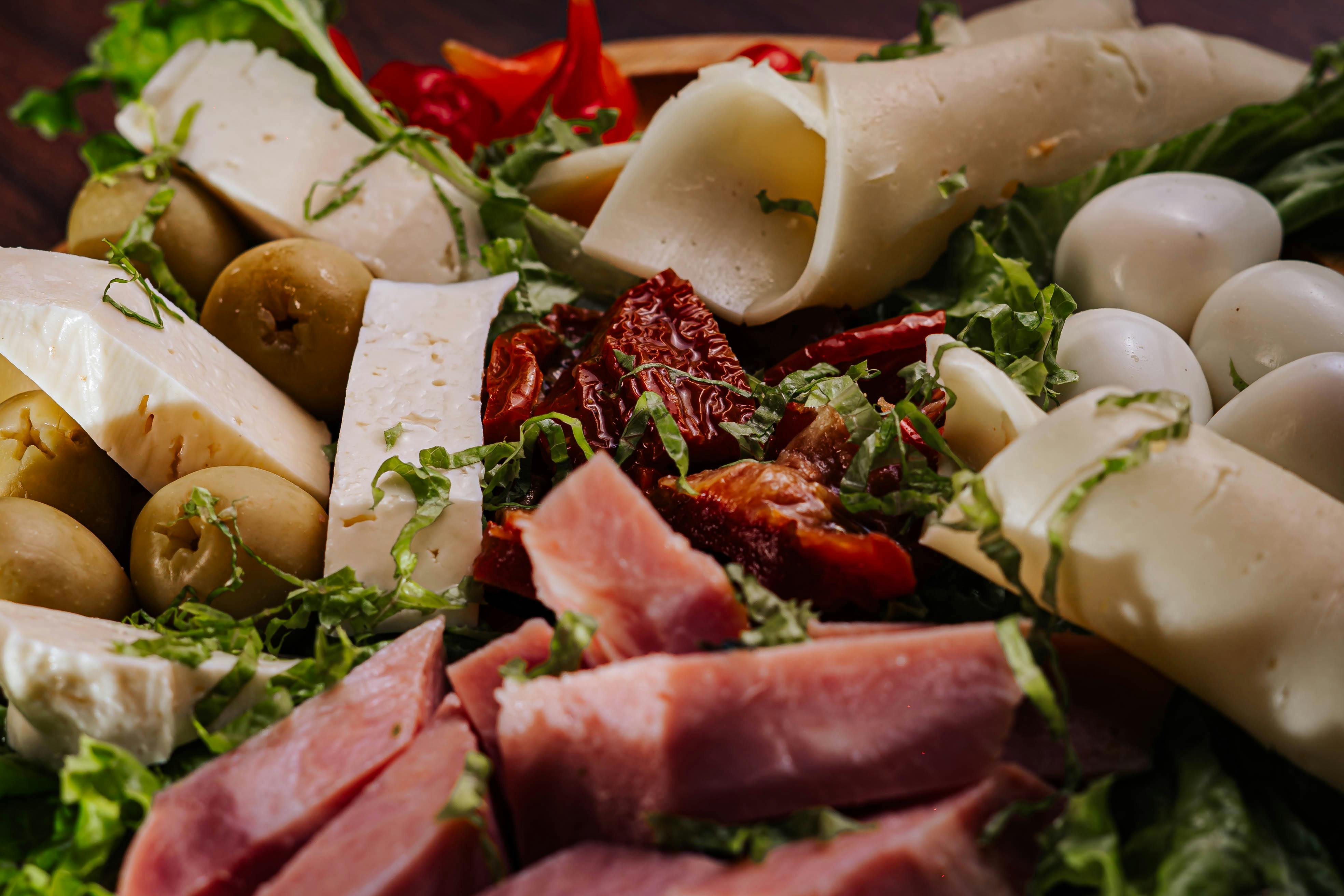
Photo: pedro furtado / Pexels
The diets react (see scores below)
Common Ingredients
- cured sausages
- ham
- chicken
- beets
- cauliflower
- carrots
- green beans
- cheese
- olives
- vinegar
Specific recipes may vary.
Incompatible with 7 of 11 diets
Diet Ratings
Fiambre is a complex Guatemalan salad that combines keto-friendly proteins (cured sausages, ham, chicken) and fats (cheese, olives) with several problematic ingredients. Beets are high in net carbs (~7g per 100g) and are a significant concern. Carrots add moderate net carbs (~7g per 100g). The dish typically contains large quantities of vegetables in a vinegar-based dressing, making portion control critical. The keto-friendly elements — meats, cheese, olives — are offset by the beets and carrots. In a standard serving, the combined net carbs from beets and carrots could push a portion well toward or past the daily limit. Cauliflower and green beans are relatively low-carb and acceptable. The vinegar dressing is generally fine. Whether this fits keto depends heavily on serving size and the ratio of meats/cheese to high-carb vegetables, especially beets.
Strict keto practitioners would likely rate this as 'avoid' due to beets being a naturally sweet, high-carb root vegetable with meaningful sugar content that could disrupt ketosis even in small amounts; they argue no portion of beet-heavy dishes is truly safe.
Fiambre is a traditional Guatemalan All Saints' Day salad containing multiple animal products. The dish includes cured sausages, ham, and chicken (all meat products), as well as cheese (dairy). These are unambiguous animal-derived ingredients that directly violate vegan dietary rules. There is no version of this dish that could be considered vegan without a fundamental reconstruction of its core components.
Fiambre contains multiple non-paleo ingredients that are clear violations of paleo principles. Cured sausages and ham are processed meats typically containing added salt, preservatives, nitrates, and fillers — all excluded from paleo. Cheese is dairy, which is excluded. Green beans are legumes, also excluded. Vinegar in its processed commercial form is generally discouraged, and the curing/pickling process of the meats adds further processing concerns. While several ingredients are individually paleo-compatible (chicken, beets, cauliflower, carrots, olives), the dish as a whole is disqualified by the processed meats, dairy cheese, legumes (green beans), and cured/preserved components. This is a traditional Guatemalan celebration salad built around preserved and fermented ingredients — fundamentally at odds with paleo philosophy.
Fiambre is a traditional Guatemalan salad combining a large variety of cured meats (sausages, ham) alongside vegetables, cheese, olives, and vinegar. While the vegetable base (beets, cauliflower, carrots, green beans) and olives are genuinely Mediterranean-friendly, the dish is dominated by cured processed meats and ham, which are high in sodium, saturated fat, and preservatives. These processed meats directly contradict core Mediterranean diet principles that limit red meat to a few times per month and minimize processed foods. The chicken is acceptable in moderation, and the vinegar dressing is fine, but the overall protein profile is heavily weighted toward processed and cured meats, making this dish difficult to endorse under Mediterranean diet guidelines.
Some Mediterranean diet interpretations — particularly those rooted in traditional Spanish or Italian regional practices — acknowledge that small amounts of cured meats like jamón or salumi appear in traditional Mediterranean cuisines and may be acceptable as a condiment or flavor accent in an otherwise vegetable-rich dish. From this perspective, if the cured meats were used sparingly and the dish were primarily vegetable-forward, a 'caution' verdict might be defensible.
Fiambre is a Guatemalan salad that is fundamentally incompatible with the carnivore diet. While it does contain animal-derived ingredients (cured sausages, ham, chicken, cheese), the dish is built around a substantial base of plant foods: beets, cauliflower, carrots, green beans, and olives. Vinegar, though often animal-derived (e.g., white vinegar from fermentation), is frequently plant-based and is a minor concern compared to the volume of vegetables present. The vegetables alone disqualify this dish outright under all tiers of carnivore eating. Even the most permissive carnivore practitioners (Saladino's 'animal-based' approach) do not include root vegetables, cruciferous vegetables, or legumes like green beans. The dish cannot be rescued by its animal components — the plant ingredients are structural and inseparable from the recipe.
Fiambre contains two clear Whole30-excluded ingredients: cheese (dairy) and cured sausages (which typically contain added sugar, nitrates, and other non-compliant additives). While many of the other ingredients are fully compliant — chicken, ham (if sugar-free), beets, cauliflower, carrots, green beans, olives, and vinegar — the presence of cheese alone disqualifies this dish. Cured sausages as commonly prepared almost universally contain added sugar and other excluded ingredients. This dish cannot be made Whole30-compliant in its traditional form without removing the cheese and sourcing very specifically processed meats.
Fiambre is a complex Guatemalan salad with many ingredients, several of which are problematic on the low-FODMAP elimination diet. The most significant concern is the cured sausages, which typically contain garlic, onion, and other high-FODMAP seasonings (fructans) — this alone is often disqualifying. Ham can also contain high-FODMAP additives like honey, onion, or HFCS depending on preparation. Cheese is a mixed category: hard aged cheeses (like parmesan) are low-FODMAP, but softer cheeses common in Guatemalan cuisine may contain lactose. Cauliflower is low-FODMAP only at a small serving (1/2 cup), and in a mixed salad where portions are hard to control, intake can easily exceed safe limits. Olives are generally low-FODMAP. Beets are moderate-FODMAP (contain excess fructose and GOS) and become high-FODMAP at larger servings. Carrots, green beans, and chicken are low-FODMAP. Vinegar (plain) is low-FODMAP. The combination of cured meats with almost certain garlic/onion seasoning and the moderate-FODMAP vegetables at realistic serving sizes makes this dish very difficult to safely consume during the elimination phase.
Monash University has not tested Fiambre as a dish, so ratings rely on individual ingredient assessment. A FODMAP practitioner might note that if cured meats without garlic/onion could be sourced and cheese were hard/aged, the dish could potentially be adapted — but traditional Fiambre as prepared is almost certainly non-compliant.
Fiambre is a traditional Guatemalan salad that, while containing some DASH-friendly vegetables (beets, cauliflower, carrots, green beans), is dominated by high-sodium, high-saturated-fat components that directly conflict with DASH principles. Cured sausages and ham are processed red meats with very high sodium content (often 800–1,200mg per serving), which alone can exceed the daily DASH sodium limit. Olives, while heart-healthy in small amounts, add additional sodium. Cheese (typically full-fat varieties used in fiambre) contributes saturated fat and sodium. The combination of multiple cured/processed meats in a single dish makes this a high-sodium, high-saturated-fat preparation that NIH/NHLBI DASH guidelines explicitly discourage. DASH specifically limits processed meats, full-fat dairy, and high-sodium foods — all of which are central, non-optional ingredients in authentic fiambre.
Fiambre is a traditional Guatemalan All Saints' Day salad that is a complex mixed dish with both Zone-friendly and Zone-challenging components. On the positive side, it contains excellent low-glycemic vegetables (cauliflower, green beans, carrots, beets in moderation), lean proteins (chicken), olives as a monounsaturated fat source, and vinegar which can actually help lower the glycemic index of a meal. However, the dish presents notable Zone challenges: cured sausages and ham are processed meats with higher saturated fat content and sodium, which Zone discourages in favor of lean proteins. Cheese adds saturated fat. Beets, while nutritious, are moderately higher glycemic than most Zone-favorable vegetables. The protein sources are mixed — chicken is ideal Zone protein, but cured meats are 'unfavorable' Zone proteins due to saturated fat and processing. The macronutrient ratio would likely skew toward higher fat (from cured meats and cheese) and the carbohydrate load from multiple vegetables and beets could be balanced but requires careful portioning. This dish can fit into Zone eating with portion control — emphasizing the chicken, vegetables, and olives while minimizing the cured sausages and cheese — but as traditionally prepared in generous portions for a celebratory meal, it would be difficult to hit the 40/30/30 target.
Some Zone practitioners would rate this more favorably, noting that the vinegar-dressed vegetable base is fundamentally Zone-compatible and the protein diversity, while not ideal, still provides adequate lean protein from chicken. The vegetable-forward nature of the salad aligns well with Sears' emphasis on 8 servings of vegetables per day. A stricter Zone reading would penalize this more heavily for the processed cured meats and cheese, which represent saturated fat sources Sears consistently identifies as 'unfavorable' and potentially pro-inflammatory.
Fiambre is a traditional Guatemalan ceremonial salad with a highly mixed inflammatory profile. On the positive side, it contains a variety of vegetables — beets (rich in betalains and nitrates with anti-inflammatory properties), cauliflower (glucosinolates, fiber), carrots (beta-carotene), and green beans (fiber, antioxidants) — as well as olives (oleic acid, polyphenols) and vinegar (acetic acid, modest metabolic benefits). These vegetable and olive components align well with anti-inflammatory principles. However, the dish is also heavily loaded with processed and cured meats (sausages, ham) which are high in saturated fat, sodium, nitrates from curing, and pro-inflammatory additives — all of which are flagged under anti-inflammatory guidelines. Chicken is a moderate-tier protein, acceptable but unremarkable. Cheese adds saturated fat and full-fat dairy, which is in the 'limit' category. The overall dish is dominated in volume by vegetables and acid-marinated ingredients, which partially offsets the processed meat burden, but the cured sausages in particular are a meaningful inflammatory concern. The net effect is a mixed profile: anti-inflammatory vegetable base undercut by processed meat and full-fat dairy content.
Some anti-inflammatory practitioners would score this lower (closer to 3) given the prominent role of processed/cured meats, which are consistently linked to elevated CRP and cancer risk in epidemiological research — Dr. Weil explicitly limits these. Conversely, a food-pattern perspective might argue that the sheer volume and diversity of vegetables, combined with vinegar and olives, partially neutralizes the processed meat impact when consumed in the traditional context of a modest portion during a cultural celebration.
Fiambre is a traditional Guatemalan cold salad combining cured meats (sausages, ham), chicken, cheese, olives, pickled vegetables (beets, cauliflower, carrots, green beans), and vinegar. It offers a meaningful mix of protein sources and fiber-rich vegetables, which aligns partially with GLP-1 dietary priorities. However, the cured sausages and ham are high in saturated fat, sodium, and preservatives — processed meats that GLP-1 guidelines generally limit. The cheese adds additional saturated fat. The vinegar-based pickling is actually a mild positive (supports digestion, no added sugar typically), and the vegetable variety contributes fiber and micronutrients. The dish's overall fat profile is the primary concern: the combination of multiple processed fatty meats and cheese in a single serving can worsen GLP-1 side effects including nausea, bloating, and reflux due to slowed gastric emptying. Chicken is a lean protein positive that partially offsets this. The dish is not fried and is not high in sugar, which keeps it out of the avoid category. Portion size is critical — a small serving emphasizing the chicken, vegetables, and olives over the cured meats would make this more acceptable.
Some GLP-1-focused dietitians may rate this more favorably given its vegetable volume and multi-protein composition, arguing that the vinegar base and fiber content from beets and green beans meaningfully support digestion and satiety. Others would flag the cured sausage and ham more strongly, noting that processed meats are consistently associated with worsened GI side effects in GLP-1 patients and should be treated as a category to avoid rather than moderate.
*See how scores were generated at our methodology page.
Nutritional profile
Six traits that cut across every diet.
Fiber & Plants
How much whole-plant food and fiber it delivers.
Healthy Fats
The quality of its fats (unsaturated, omega-3).
Whole / Unprocessed
How close it is to its natural, unprocessed form.
Gut Gentle
How easy it is on digestion (low FODMAP, few irritants).
Low Glycemic
How little it spikes your blood sugar.
Protein Density
How much protein it packs per calorie.
Controversy Index
Higher controversy = more disagreement between diets.
Diet-Specific Tips
 Keto — 4/10
View tips
- Beets are high in net carbs and sugar — primary concern
- Carrots add moderate net carbs
- Cured meats, ham, and chicken are keto-friendly protein sources
- Cheese and olives contribute healthy fats
- Cauliflower and green beans are low-carb acceptable vegetables
- Vinegar-based dressing is keto-compatible
- Portion control is essential — beet and carrot quantities determine keto compatibility
- Traditional servings of fiambre are large and mixed, making carb isolation difficult
 Zone — 5/10
View tips
- Excellent low-glycemic vegetable base (cauliflower, green beans, carrots) strongly Zone-favorable
- Chicken is a lean, ideal Zone protein source
- Cured sausages and ham are processed, higher-fat proteins discouraged in Zone
- Cheese adds saturated fat, pushing beyond Zone's preferred monounsaturated fat profile
- Olives provide desirable monounsaturated fat
- Vinegar dressing is Zone-positive and may improve glycemic response
- Beets are moderately higher glycemic but acceptable in small portions
- Complex dish requires careful portioning to hit 40/30/30 macronutrient ratio
- Overall fat profile skews toward saturated fat from cured meats, counter to Zone anti-inflammatory goals
 Anti-Inflammatory — 4/10
View tips
- Cured sausages and ham are processed meats high in saturated fat, sodium, and nitrites — pro-inflammatory
- Beets, cauliflower, carrots, and green beans provide antioxidants, fiber, and anti-inflammatory phytonutrients
- Olives contribute oleic acid and polyphenols — anti-inflammatory
- Vinegar adds modest metabolic and antimicrobial benefits
- Cheese adds saturated fat from full-fat dairy — should be limited
- Chicken is an acceptable lean protein in the anti-inflammatory framework
- Overall profile is a conflict between a strong vegetable base and significant processed meat content
 GLP-1 Friendly — 4/10
View tips
- Cured sausages and ham are processed, high-saturated-fat meats that may worsen GLP-1 GI side effects
- Chicken is a lean protein positive within the dish
- Cheese adds additional saturated fat load
- Good variety of fiber-rich vegetables (beets, cauliflower, carrots, green beans)
- Vinegar-based dressing is GLP-1-friendly — low sugar, may support digestion
- High sodium content from cured meats is a secondary concern
- Not fried, not carbonated, not high in added sugar — avoids the worst GLP-1 triggers
- Portion-sensitive: small servings emphasizing vegetables and chicken are more acceptable