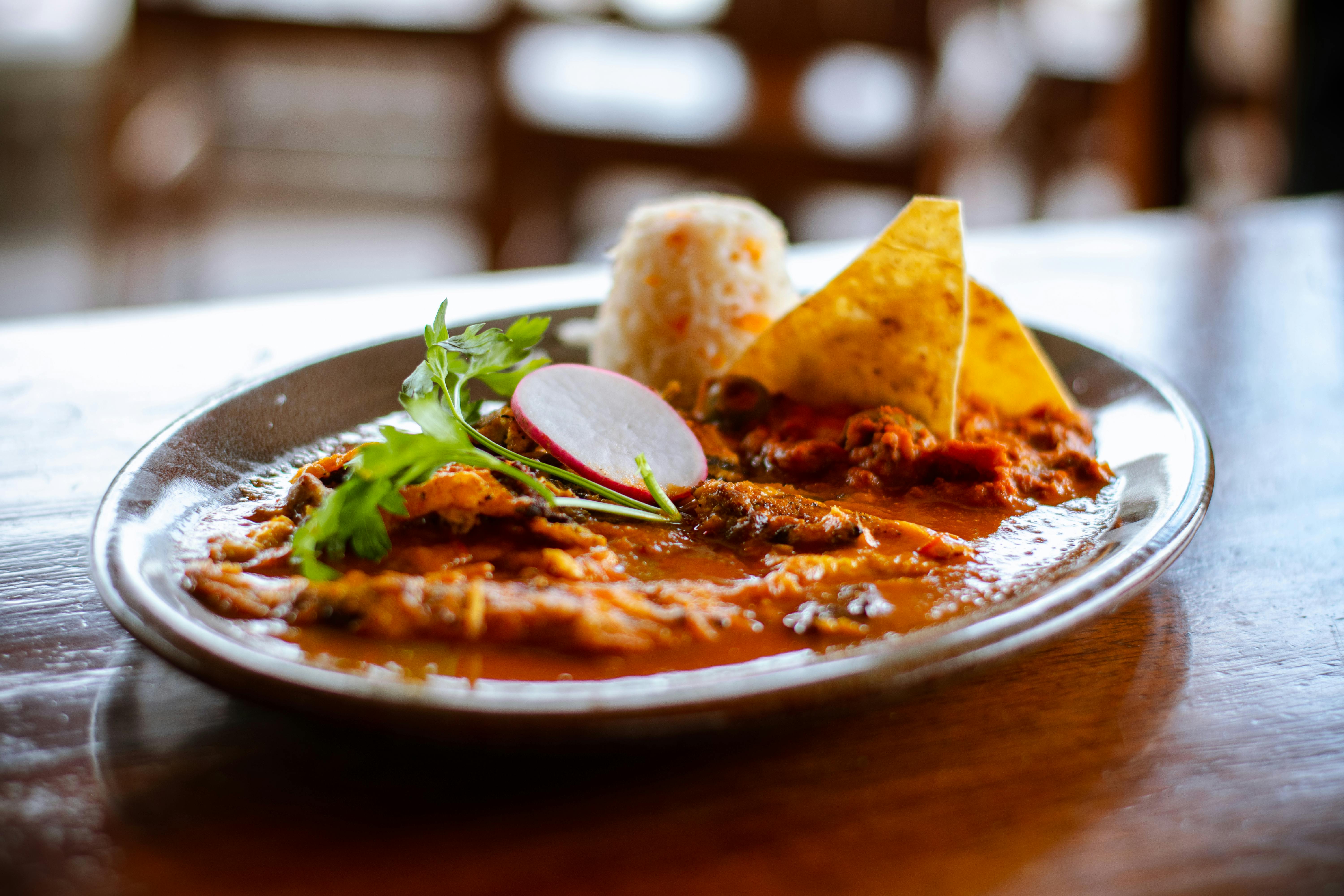
Photo: César O'neill / Pexels
The diets react (see scores below)
Common Ingredients
- flank steak
- tomatoes
- tomatillos
- guajillo chiles
- potatoes
- carrots
- garlic
- onion
Specific recipes may vary.
Incompatible with 5 of 11 diets
Diet Ratings
Hilachas is a traditional Guatemalan stew that is fundamentally incompatible with ketogenic eating due to the inclusion of potatoes and carrots as core, non-optional ingredients. Potatoes are one of the highest net-carb vegetables (approximately 15-17g net carbs per 100g), and combined with carrots (roughly 7-8g net carbs per 100g) and the natural sugars in tomatoes, tomatillos, and guajillo chiles, a standard serving would easily exceed the entire daily keto carb budget of 20-50g. The flank steak itself is keto-friendly, and the chile-tomato base in isolation would be borderline acceptable, but the starchy vegetables are structural to the dish and cannot be removed without fundamentally changing its identity. This is not a dish that can be easily modified for keto compliance.
Hilachas is a traditional Guatemalan stew built around flank steak as its primary protein. Beef is unambiguously an animal product and is entirely incompatible with a vegan diet. While the remaining ingredients — tomatoes, tomatillos, guajillo chiles, potatoes, carrots, garlic, and onion — are all plant-based, the inclusion of flank steak makes this dish non-vegan. A vegan adaptation could theoretically substitute the beef with jackfruit, mushrooms, or legumes to replicate the shredded texture, but the dish as described cannot be approved.
Hilachas is a traditional Guatemalan shredded beef stew built on largely paleo-friendly ingredients: flank steak, tomatoes, tomatillos, guajillo chiles, carrots, garlic, and onion are all fully approved whole foods. The sticking point is the white potatoes, which place this dish squarely in debated territory. Loren Cordain and The Paleo Diet's official guidance discourages white potatoes due to their glycemic load and glycoalkaloid content, while many modern paleo practitioners and protocols (Whole30, Mark Sisson) accept them as a whole-food tuber. Because the majority of the dish is clean and unprocessed, and the only contested ingredient is white potatoes, this lands at a moderate caution rather than a full avoid.
Mark Sisson (The Primal Blueprint) and Whole30 both permit white potatoes as a whole-food carbohydrate source, arguing that their glycoalkaloids are not a meaningful concern for most people and that they were consumed by some ancestral populations. Under that interpretation, Hilachas would be fully approved with a score of 7-8.
Hilachas is a Guatemalan beef stew featuring shredded flank steak as the primary protein. While the dish contains several Mediterranean-friendly ingredients — tomatoes, tomatillos, garlic, onion, potatoes, and carrots — the centerpiece is red meat (beef), which the Mediterranean diet restricts to a few times per month. Regular consumption would conflict with the diet's principles. The vegetable-rich sauce and absence of processed ingredients or added sugars are positive attributes, but they cannot offset the fundamental issue of beef as the primary protein. Flank steak is also a relatively lean cut, which is a mild mitigating factor.
Some Mediterranean diet practitioners argue that lean red meat in a vegetable-forward stew, consumed occasionally, is compatible with the diet's flexible, traditional-eating philosophy — particularly if portion sizes are modest and the dish is consumed infrequently (a few times per month). The abundance of tomatoes, aromatics, and root vegetables would be seen as redeeming factors in this interpretation.
Hilachas is a traditional Guatemalan beef stew that, while built on a carnivore-friendly base of flank steak, is overwhelmingly composed of plant-based ingredients. The sauce is made from tomatoes, tomatillos, and guajillo chiles — all plant foods explicitly excluded from the carnivore diet. The dish also contains potatoes and carrots (starchy vegetables), plus garlic and onion as aromatics. The only carnivore-compliant component is the flank steak itself. The plant ingredients are not incidental seasonings but structural, load-bearing components of the dish, making this incompatible with carnivore eating. The beef alone could be salvaged, but the dish as prepared must be avoided.
Hilachas is a traditional Guatemalan braised beef dish made with shredded flank steak simmered in a tomato-tomatillo-chile sauce with root vegetables. Every ingredient listed — flank steak, tomatoes, tomatillos, guajillo chiles, potatoes, carrots, garlic, and onion — is a whole, unprocessed food that is explicitly compatible with Whole30. There are no grains, legumes, dairy, added sugars, alcohol, or any other excluded ingredients. This is exactly the kind of nutrient-dense, whole-food meal the Whole30 program is designed to support.
Hilachas contains two major high-FODMAP ingredients that make it unsuitable during the elimination phase: garlic (high in fructans at any culinary amount) and onion (also high in fructans and one of the highest-FODMAP foods tested by Monash University). Both are used as foundational aromatics in this dish and cannot be removed without fundamentally changing the recipe. The remaining ingredients are largely low-FODMAP — flank steak is safe, tomatoes are low-FODMAP at standard servings, tomatillos are low-FODMAP, guajillo chiles are generally low-FODMAP in typical culinary quantities, potatoes are low-FODMAP (skin-on in moderate portions), and carrots are low-FODMAP. However, the presence of both garlic and onion as structural flavor components means the dish as traditionally prepared is high-FODMAP and should be avoided during elimination. A low-FODMAP adaptation could use garlic-infused oil and the green tops of scallions in place of garlic and onion.
Hilachas features flank steak as its primary protein, which is a leaner cut of beef compared to fattier options like ribeye or brisket. DASH guidelines limit red meat broadly, though lean cuts are acceptable in moderation. The dish's vegetable base — tomatoes, tomatillos, potatoes, carrots, garlic, and onion — is strongly aligned with DASH principles, providing potassium, magnesium, fiber, and antioxidants. Guajillo chiles add flavor with minimal sodium and no saturated fat. The main concerns are: (1) red meat, which DASH advises limiting in favor of poultry, fish, and plant proteins; and (2) sodium, which depends heavily on preparation — traditional recipes may add significant salt, and the stew base with chiles and tomato sauce can accumulate sodium if seasoned generously. Prepared with minimal added salt, this dish sits closer to a moderate DASH-compatible meal; with standard seasoning, sodium may push it toward caution territory. Portion control on the beef and limiting added salt are the key levers.
NIH DASH guidelines broadly limit red meat regardless of cut, favoring poultry and fish. However, updated clinical interpretations note that lean cuts like flank steak have a saturated fat profile closer to poultry, and some DASH-oriented dietitians consider small portions of lean red meat acceptable within a nutrient-rich vegetable stew context like this one.
Hilachas is a Guatemalan stew featuring shredded flank steak in a tomato-tomatillo-guajillo chile sauce with potatoes and carrots. From a Zone perspective, this dish has both favorable and unfavorable elements. On the positive side, flank steak is a relatively lean cut of beef that provides good protein, and the tomatoes, tomatillos, guajillo chiles, garlic, and onion are all low-glycemic, polyphenol-rich vegetables that Zone strongly favors. The stew format naturally combines protein with vegetables in a way that aligns with Zone meal construction. However, potatoes are explicitly categorized as 'unfavorable' high-glycemic carbohydrates in Dr. Sears' Zone framework and are a meaningful component of the dish. Carrots, while acceptable in Zone, are moderate-glycemic and require portion control. Flank steak, while leaner than many beef cuts, is still a red meat and not the ideal Zone protein (which would be skinless chicken or fish). The dish also lacks meaningful monounsaturated fat unless olive oil is used in preparation. With portion adjustment — reducing potatoes significantly, increasing the vegetable-sauce ratio, and keeping the steak portion to approximately 3 oz — Hilachas can be incorporated into a Zone meal, but it requires deliberate modification of the traditional recipe.
Some Zone practitioners in later Sears writings (particularly post-'Toxic Fat') would note that the anti-inflammatory spices (guajillo chiles, garlic, tomatoes, tomatillos) and the omega-3 potential of grass-fed flank steak partially offset the potato concern. If the potato portion is kept very small (1/4 cup or less) as a minor carb block, and the dish is served with additional low-glycemic vegetables, stricter Zone coaches might treat this as a reasonable unfavorable-carb meal that fits within an overall favorable weekly Zone pattern.
Hilachas is a Guatemalan stew featuring shredded flank steak in a tomato-tomatillo-chile sauce with root vegetables. The dish has a genuinely mixed anti-inflammatory profile. On the positive side: tomatoes and tomatillos contribute lycopene and vitamin C; guajillo chiles provide capsaicin and carotenoids with documented anti-inflammatory effects; garlic and onion deliver quercetin, allicin, and organosulfur compounds that reduce inflammatory markers; carrots add beta-carotene; and the stew format (braised with vegetables, no added seed oils typically) avoids many processed food concerns. On the cautionary side: flank steak is red meat, which the anti-inflammatory framework recommends limiting due to saturated fat content and arachidonic acid, even though flank is a leaner cut compared to ribeye or brisket. Potatoes are a starchy carbohydrate that raises glycemic load, though they are whole food sources. The dish contains no omega-3-rich ingredients, no olive oil as written, and no particularly potent anti-inflammatory spices like turmeric or ginger. Overall, this is a whole-food, vegetable-forward stew anchored by a lean cut of red meat — better than many red meat dishes, but the beef and starchy vegetables keep it from an approval rating under strict anti-inflammatory guidelines.
Some anti-inflammatory practitioners following AIP or autoimmune-focused protocols would flag tomatoes, tomatillos, and chiles as nightshades potentially problematic for inflammation in sensitive individuals. Conversely, Dr. Weil's framework and mainstream anti-inflammatory nutrition would view those same ingredients positively for their antioxidant and polyphenol content, leaving the lean red meat as the primary concern.
Hilachas is a slow-cooked Guatemalan beef stew made with shredded flank steak in a tomato-tomatillo-guajillo chile sauce with potatoes and carrots. Flank steak is a relatively lean cut of beef compared to fattier cuts like chuck or short rib, which gives this dish a better fat profile than many beef stews. The tomato, tomatillo, and vegetable base adds fiber, micronutrients, and high water content — positives for GLP-1 patients. However, the dish has several caution-level concerns: beef carries more saturated fat than preferred proteins (chicken, fish, tofu), the chile-based sauce may trigger reflux or nausea in GLP-1 patients sensitive to spicy foods, and the potatoes add starchy carbohydrates with limited protein contribution. The overall dish is moderately nutrient-dense but lacks the protein-per-calorie density of ideal GLP-1 proteins. In a small, controlled portion — emphasizing the beef and broth with vegetables, moderating potatoes — this can be an acceptable meal. A larger portion with extra potato becomes less favorable.
Some GLP-1-focused dietitians accept lean beef as a quality protein source and would rate traditional stews like this more favorably given the vegetable-rich, high-moisture base and relatively lean cut; others restrict all red meat due to saturated fat content and the clinical consensus to prefer poultry, fish, and plant proteins during rapid weight loss on GLP-1 therapy. Individual tolerance to guajillo chiles varies — mild preparations may be well tolerated, but spice-sensitive patients may experience worsened nausea or reflux.
*See how scores were generated at our methodology page.
Nutritional profile
Six traits that cut across every diet.
Fiber & Plants
How much whole-plant food and fiber it delivers.
Healthy Fats
The quality of its fats (unsaturated, omega-3).
Whole / Unprocessed
How close it is to its natural, unprocessed form.
Gut Gentle
How easy it is on digestion (low FODMAP, few irritants).
Low Glycemic
How little it spikes your blood sugar.
Protein Density
How much protein it packs per calorie.
Controversy Index
Higher controversy = more disagreement between diets.
Diet-Specific Tips
 Paleo — 5/10
View tips
- Flank steak is a fully paleo-approved whole protein
- Tomatoes, tomatillos, guajillo chiles, carrots, garlic, and onion are all approved whole vegetables
- White potatoes are the sole debated ingredient — excluded by Cordain/The Paleo Diet, accepted by Sisson and Whole30
- No grains, legumes, dairy, seed oils, or refined sugar present
- Dish appears to be prepared in traditional whole-food form with no processed additives
 Whole30 — 7/10
View tips
- Flank steak is a compliant protein with no additives
- Tomatoes and tomatillos are compliant vegetables
- Guajillo chiles are a natural dried pepper — fully compliant
- Potatoes and carrots are compliant vegetables (white potatoes are allowed on Whole30)
- Garlic and onion are compliant aromatics
- No grains, legumes, dairy, or added sugars present
- Traditional preparation uses no excluded ingredients
 DASH — 5/10
View tips
- Flank steak is a lean red meat cut — acceptable in moderation but DASH limits red meat overall
- Rich vegetable base (tomatoes, tomatillos, carrots, potatoes, garlic, onion) strongly aligns with DASH
- Guajillo chiles add flavor without saturated fat or significant sodium
- Sodium level depends heavily on preparation — low-salt versions score higher
- High potassium and fiber content from vegetables supports DASH goals
- No high-saturated-fat ingredients or added sugars present
 Zone — 5/10
View tips
- Potatoes are explicitly 'unfavorable' high-glycemic carbs in Zone — a significant drawback
- Flank steak is a relatively lean beef cut, acceptable but not ideal Zone protein (prefer skinless poultry or fish)
- Tomatoes, tomatillos, guajillo chiles, garlic, and onion are favorable low-glycemic, polyphenol-rich Zone vegetables
- Dish lacks a clear monounsaturated fat source unless olive oil is used in preparation
- Stew format makes block portioning feasible — protein and vegetable ratios can be adjusted
- Carrots are moderate-glycemic and require portion awareness in Zone
 Anti-Inflammatory — 5/10
View tips
- Flank steak is red meat — limit per anti-inflammatory guidelines, though it is a leaner cut
- Tomatoes and tomatillos provide lycopene and vitamin C (anti-inflammatory antioxidants)
- Guajillo chiles contribute capsaicin and carotenoids with anti-inflammatory properties
- Garlic and onion are strongly anti-inflammatory (quercetin, allicin, organosulfur compounds)
- Carrots add beta-carotene (carotenoid antioxidant)
- Potatoes increase glycemic load but are minimally processed whole foods
- No omega-3 sources, turmeric, ginger, or olive oil — misses key anti-inflammatory boosters
- Whole-food, braised preparation without refined oils or additives is a positive
 GLP-1 Friendly — 5/10
View tips
- Flank steak is a leaner beef cut, better than fatty red meat but higher in saturated fat than preferred GLP-1 proteins
- Tomato-tomatillo-vegetable base adds fiber, micronutrients, and high water content
- Guajillo chiles are mildly spicy but may worsen nausea or reflux in sensitive GLP-1 patients
- Potatoes contribute starchy carbohydrates with limited protein density
- Broth-based preparation is easy to digest and GLP-1-friendly in texture
- Portion control critical — emphasize beef and broth, moderate potatoes
- Protein content is moderate but not optimized per calorie compared to chicken or fish