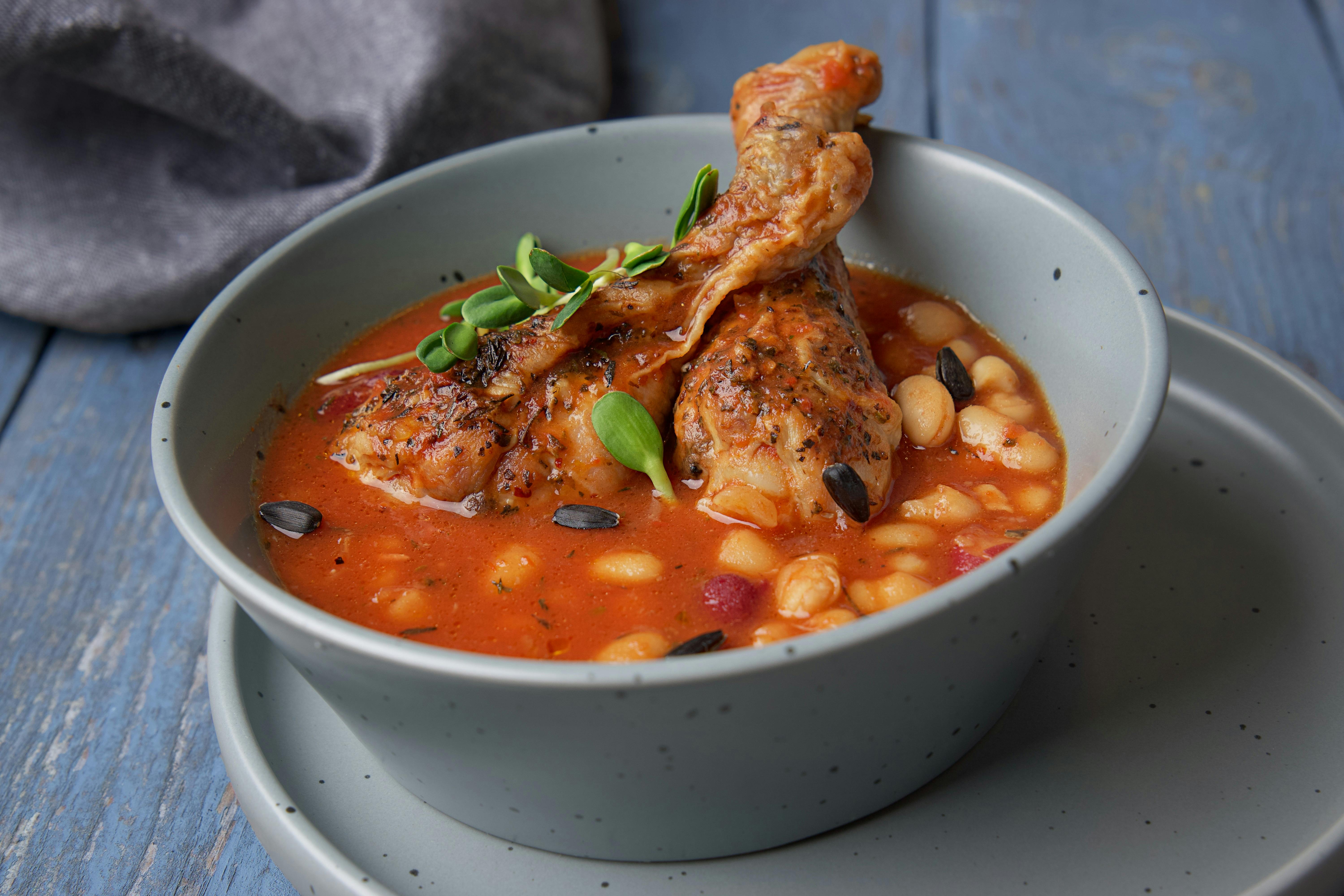
Photo: Sylwester Ficek / Pexels
The diets react (see scores below)
Common Ingredients
- turkey
- achiote
- guajillo chiles
- tomatoes
- tomatillos
- garlic
- onion
- cilantro
- mint
Specific recipes may vary.
Incompatible with 3 of 11 diets
Diet Ratings
Kak'ik is a traditional Guatemalan turkey soup with a chile-tomato-tomatillo base. The protein source (turkey) is lean and keto-compatible. The broth ingredients — guajillo chiles, tomatoes, tomatillos, garlic, and onion — each carry moderate net carbs individually, but in a typical soup serving where they function as flavoring agents dissolved into broth, the per-serving carb load is manageable. Achiote (annatto) adds minimal carbs. The main concern is cumulative net carbs from tomatoes, tomatillos, onion, and guajillo chiles; a generous serving could push toward or past the lower 20g daily threshold. In a moderate portion (1–1.5 cups), this soup is likely within keto range, but the dish is not high in fat, which makes it a poor macro fit even if carbs are controlled. With careful portioning it can fit keto, but it is not a naturally keto-optimized dish.
Some stricter keto practitioners would flag the combination of tomatoes, tomatillos, and guajillo chiles as carrying enough cumulative net carbs — plus natural sugars — to warrant avoidance, especially for those targeting the lower 20g daily net carb limit or managing metabolic conditions requiring tight ketosis.
Kak'ik is a traditional Guatemalan turkey soup, and turkey is the central, defining ingredient of this dish. Turkey is poultry — a direct animal product — making this dish entirely incompatible with a vegan diet. The remaining ingredients (achiote, guajillo chiles, tomatoes, tomatillos, garlic, onion, cilantro, mint) are all plant-based, but the primary protein renders the dish non-vegan without exception.
Kak'ik is a traditional Guatemalan turkey soup whose ingredients align closely with Paleolithic eating principles. Turkey is a lean, unprocessed protein fully approved by all paleo frameworks. Achiote (annatto seed paste) is a natural seed-derived spice with no additives in its pure form. Guajillo chiles, tomatoes, and tomatillos are all whole vegetables/fruits available in nature. Garlic, onion, cilantro, and mint are herbs and vegetables with no paleo objections. There are no grains, legumes, dairy, refined sugars, seed oils, or processed ingredients in the traditional preparation. The dish is essentially a whole-food, herb-spiced meat broth — a format entirely consistent with hunter-gatherer eating patterns. The main caveat is that commercially prepared achiote paste may contain added salt or preservatives, so the score is 9 rather than 10.
Kak'ik is a traditional Guatemalan turkey soup that aligns reasonably well with Mediterranean diet principles. Turkey is a lean poultry protein, which the Mediterranean diet permits in moderate amounts (a few servings per week). The dish is rich in plant-based ingredients — tomatoes, tomatillos, garlic, onion, cilantro, and mint — which are strongly encouraged. Achiote and guajillo chiles add phytonutrients and anti-inflammatory compounds. The primary concern is that turkey is not a Mediterranean staple (fish/seafood would be preferred), and the cooking fat is unspecified — traditional preparation may not use olive oil. Overall, this is a wholesome, minimally processed, vegetable-forward soup with lean poultry, making it acceptable in moderation but not a core Mediterranean dish.
Kak'ik is a traditional Guatemalan turkey soup, but it is dominated by plant-based ingredients that are strictly excluded on the carnivore diet. While turkey itself is an acceptable animal protein, the dish's flavor base consists almost entirely of plant foods: guajillo chiles, tomatoes, tomatillos, garlic, onion, cilantro, mint, and achiote (annatto). These are not minor seasonings — they are structural, load-bearing components of the dish that define its character. Achiote is a seed-derived spice paste, guajillo chiles and tomatoes/tomatillos are nightshades, and the aromatics (garlic, onion, cilantro, mint) are all plant-derived. The turkey component alone would be carnivore-compatible, but as prepared, this dish cannot be considered carnivore in any tier of the diet.
Kak'ik is a traditional Guatemalan turkey soup whose core ingredients are all Whole30-compliant. Turkey is an approved protein. Achiote (annatto seed paste/powder) is a natural spice/coloring agent with no excluded ingredients. Guajillo chiles, tomatoes, tomatillos, garlic, onion, cilantro, and mint are all whole vegetables, aromatics, and herbs explicitly allowed on the program. There are no grains, legumes, dairy, added sugars, alcohol, or other excluded ingredients present. As a whole-food, broth-based soup built around meat and vegetables, this dish aligns perfectly with Whole30's philosophy. One practical note: if using store-bought achiote paste, labels should be checked to ensure no added sugars, starches, or non-compliant fillers are included, as commercial versions occasionally contain additives.
Kak'ik contains two major high-FODMAP ingredients that make it unsuitable during the elimination phase: garlic (high in fructans — one of the most problematic FODMAP foods with no safe serving size) and onion (also very high in fructans, avoided entirely during elimination). These are structural, non-optional components of the dish, not garnishes. While turkey is an excellent low-FODMAP protein and achiote, guajillo chiles, tomatoes, tomatillos, cilantro, and mint are generally low-FODMAP or acceptable in standard portions, the garlic and onion alone are sufficient to classify this dish as high-FODMAP. There is no ambiguity here — both garlic and onion are definitively high-FODMAP per Monash University at any meaningful culinary quantity used in a soup base.
Kak'ik is a traditional Guatemalan turkey soup with an ingredient profile that aligns well with DASH principles. Turkey is a lean protein explicitly encouraged in DASH guidelines. The base is built from tomatoes, tomatillos, garlic, and onion — all vegetables rich in potassium, magnesium, and fiber. Guajillo chiles contribute antioxidants and minimal calories. Achiote (annatto) is a natural spice/colorant with no sodium concern. Cilantro and mint are low-calorie herbs. The soup format is broth-based, not cream-based, keeping saturated fat low. The primary DASH concern is sodium: traditional preparation relies on natural ingredients without added salt beyond cooking seasoning, so sodium is manageable — however, if salted heavily or made with salted broth, sodium could rise. As typically prepared with fresh/natural ingredients, this dish scores well. The turkey skin, if left on during cooking, adds some saturated fat, which is a minor caution.
NIH DASH guidelines broadly endorse lean poultry and vegetable-rich soups, supporting a strong approval here. However, some DASH-oriented clinicians note that traditional preparations may include turkey with skin (raising saturated fat) and that sodium added during cooking is often underestimated in restaurant or home settings — these practitioners might rate it 'caution' unless prepared with skinless turkey and minimal added salt.
Kak'ik is a traditional Guatemalan turkey soup that aligns well with Zone Diet principles. Turkey is a lean protein source that fits cleanly into Zone protein blocks (~7g per block). The vegetable base — tomatoes, tomatillos, garlic, and onion — provides low-glycemic carbohydrates rich in polyphenols, which Sears specifically encourages for their anti-inflammatory properties. Guajillo chiles are low in carbohydrates and high in polyphenols. Achiote (annatto) is a spice/natural colorant with negligible macronutrient impact. Cilantro and mint contribute polyphenols with virtually no caloric load. The dish is naturally low in fat, which means a small portion of monounsaturated fat (e.g., a drizzle of olive oil or a few almonds on the side) would be needed to complete the Zone block ratio at mealtime. The soup format also aids portion control. There is no added sugar, no high-glycemic starch, and no problematic saturated fat. This dish is a strong Zone-compatible meal requiring only minor fat supplementation to achieve the 40/30/30 target.
Kak'ik is a traditional Mayan turkey soup with a remarkably strong anti-inflammatory ingredient profile. Turkey as the primary protein is a lean poultry source — explicitly in the 'moderate/acceptable' category and far preferable to red meat. The spice and vegetable base is where this dish truly shines from an anti-inflammatory standpoint. Achiote (annatto) contains bixin and norbixin, carotenoid antioxidants with demonstrated anti-inflammatory properties. Guajillo chiles are rich in capsaicin and carotenoids (including beta-carotene and lycopene), both linked to reduced inflammatory markers. Tomatoes provide lycopene and vitamin C; tomatillos offer withanolides and antioxidants. Garlic contains allicin and organosulfur compounds that suppress NF-κB inflammatory pathways — one of the most well-researched anti-inflammatory foods. Onion is high in quercetin, a potent flavonoid. Cilantro and mint both contribute anti-inflammatory polyphenols. The dish is prepared as a broth-based soup with no refined carbohydrates, added sugars, processed ingredients, or problematic fats. It is naturally low in saturated fat and calories while being nutrient-dense. The combination of colorful vegetables, anti-inflammatory spices, and lean protein makes this an excellent representative of anti-inflammatory eating principles.
Kak'ik is a traditional Guatemalan turkey soup that aligns well with GLP-1 dietary priorities. Turkey is a lean, high-quality protein source that supports muscle preservation during weight loss. The broth-based format is easy to digest, gentle on the slowed gastric system, and contributes to hydration — both important for GLP-1 patients. Tomatoes, tomatillos, garlic, and onion add fiber, micronutrients, and antioxidants with minimal calories. Achiote is a spice paste used in small amounts and is generally well-tolerated. The primary concern is the guajillo chiles: while guajillo is considered a mild-to-medium heat chile, spice sensitivity varies significantly among GLP-1 patients and could worsen nausea or reflux in some individuals. The dish is naturally low in fat, nutrient-dense per calorie, and portion-friendly as a soup. Protein content will depend on turkey portion size — a generous serving of turkey in the broth can easily deliver 25-35g of protein per bowl, meeting per-meal targets.
Some GLP-1-focused dietitians caution against any chile-containing dishes during the early adjustment period, as slowed gastric emptying can amplify sensitivity to capsaicin and worsen reflux or nausea even with mild chiles like guajillo; others consider guajillo well within acceptable limits given its low heat level and the dilution effect of a broth-based preparation.
*See how scores were generated at our methodology page.
Nutritional profile
Six traits that cut across every diet.
Fiber & Plants
How much whole-plant food and fiber it delivers.
Healthy Fats
The quality of its fats (unsaturated, omega-3).
Whole / Unprocessed
How close it is to its natural, unprocessed form.
Gut Gentle
How easy it is on digestion (low FODMAP, few irritants).
Low Glycemic
How little it spikes your blood sugar.
Protein Density
How much protein it packs per calorie.
Controversy Index
Higher controversy = more disagreement between diets.
Diet-Specific Tips
 Keto — 5/10
View tips
- Turkey is a lean, keto-compatible protein but adds no meaningful fat
- Tomatoes and tomatillos contribute net carbs (~3–4g per 100g) and accumulate across a serving
- Guajillo chiles add moderate carbs; dried chiles are more concentrated than fresh
- Onion and garlic add minor but non-trivial carbs at soup scale
- Achiote is low-carb and compatible
- No grains or added sugars present
- Dish is low-fat overall — poor macro alignment even if net carbs are controlled
- Portion size is the primary control lever for keto compatibility
 Paleo — 9/10
View tips
- Turkey is a fully paleo-approved lean protein
- Achiote (annatto) is a natural seed spice — paleo-compliant in pure form, but commercial paste may contain added salt or additives
- Guajillo chiles, tomatoes, and tomatillos are whole fruits/vegetables with no paleo objections
- Garlic, onion, cilantro, and mint are all paleo-approved aromatics and herbs
- No grains, legumes, dairy, refined sugar, or seed oils in the traditional recipe
- Broth-based preparation method aligns well with paleo philosophy of minimal processing
 Mediterranean — 6/10
View tips
- Turkey is a lean poultry — acceptable in moderation per Mediterranean guidelines
- Abundant plant ingredients: tomatoes, tomatillos, garlic, onion, herbs
- No processed ingredients, added sugars, or refined grains
- Cooking fat unspecified — Mediterranean compliance depends on use of olive oil
- Fish or legumes would be more aligned as primary protein
- Achiote and guajillo chiles provide beneficial phytonutrients
 Whole30 — 9/10
View tips
- Turkey is a fully approved Whole30 protein
- Achiote is a natural spice/coloring — compliant, but store-bought paste should be label-checked
- Guajillo chiles, tomatoes, tomatillos are compliant whole vegetables
- Garlic, onion, cilantro, and mint are all approved aromatics/herbs
- No grains, legumes, dairy, or added sugars present
- Broth-based whole-food soup aligns well with Whole30 spirit
 DASH — 8/10
View tips
- Turkey is a DASH-recommended lean protein
- Rich vegetable base (tomatoes, tomatillos, onion, garlic) provides potassium, magnesium, and fiber
- Broth-based soup format keeps saturated fat low
- Guajillo chiles, achiote, cilantro, and mint are DASH-compatible spices and herbs
- No added sugar, refined grains, or high-sodium processed ingredients
- Sodium level depends on preparation — naturally low if unsalted, but can rise with heavy seasoning or salted broth
- Turkey skin if included adds saturated fat; skinless preparation preferred for DASH
 Zone — 8/10
View tips
- Turkey is a lean, Zone-favorable protein source — fits neatly into Zone protein blocks
- Tomatoes and tomatillos are low-glycemic, polyphenol-rich vegetables — highly favorable Zone carb sources
- Guajillo chiles and achiote add polyphenols and anti-inflammatory compounds with minimal glycemic impact
- Garlic and onion are Zone-favorable low-glycemic carbohydrates
- No added sugars, refined starches, or high-glycemic ingredients
- Naturally low in fat — requires supplemental monounsaturated fat (olive oil, avocado) to complete Zone 40/30/30 ratio
- Soup format supports portion control and block tracking
 Anti-Inflammatory — 8/10
View tips
- Turkey (lean poultry) — acceptable protein, low in saturated fat
- Achiote/annatto — carotenoid antioxidants (bixin, norbixin) with anti-inflammatory activity
- Guajillo chiles — capsaicin and carotenoids reduce inflammatory markers
- Tomatoes and tomatillos — lycopene, vitamin C, and withanolides
- Garlic — allicin and organosulfur compounds suppress NF-κB pathways
- Onion — quercetin flavonoid with well-documented anti-inflammatory effects
- Cilantro and mint — polyphenol contributors
- Broth-based preparation — no refined carbs, added sugars, or inflammatory fats
- No processed ingredients or additives
 GLP-1 Friendly — 8/10
View tips
- Turkey provides lean, high-quality protein — strong alignment with GLP-1 protein priority
- Broth-based soup supports hydration, a critical need for GLP-1 patients
- Easy to digest format suits slowed gastric emptying
- Low fat profile minimizes nausea and bloating risk
- Vegetables (tomatoes, tomatillos, onion, garlic) contribute fiber and micronutrient density
- Guajillo chiles are mild but may trigger reflux or nausea in spice-sensitive GLP-1 patients
- Achiote used in small amounts — generally well-tolerated
- Protein yield per bowl is portion-dependent; adequate turkey quantity is important to meet 15-30g per meal target