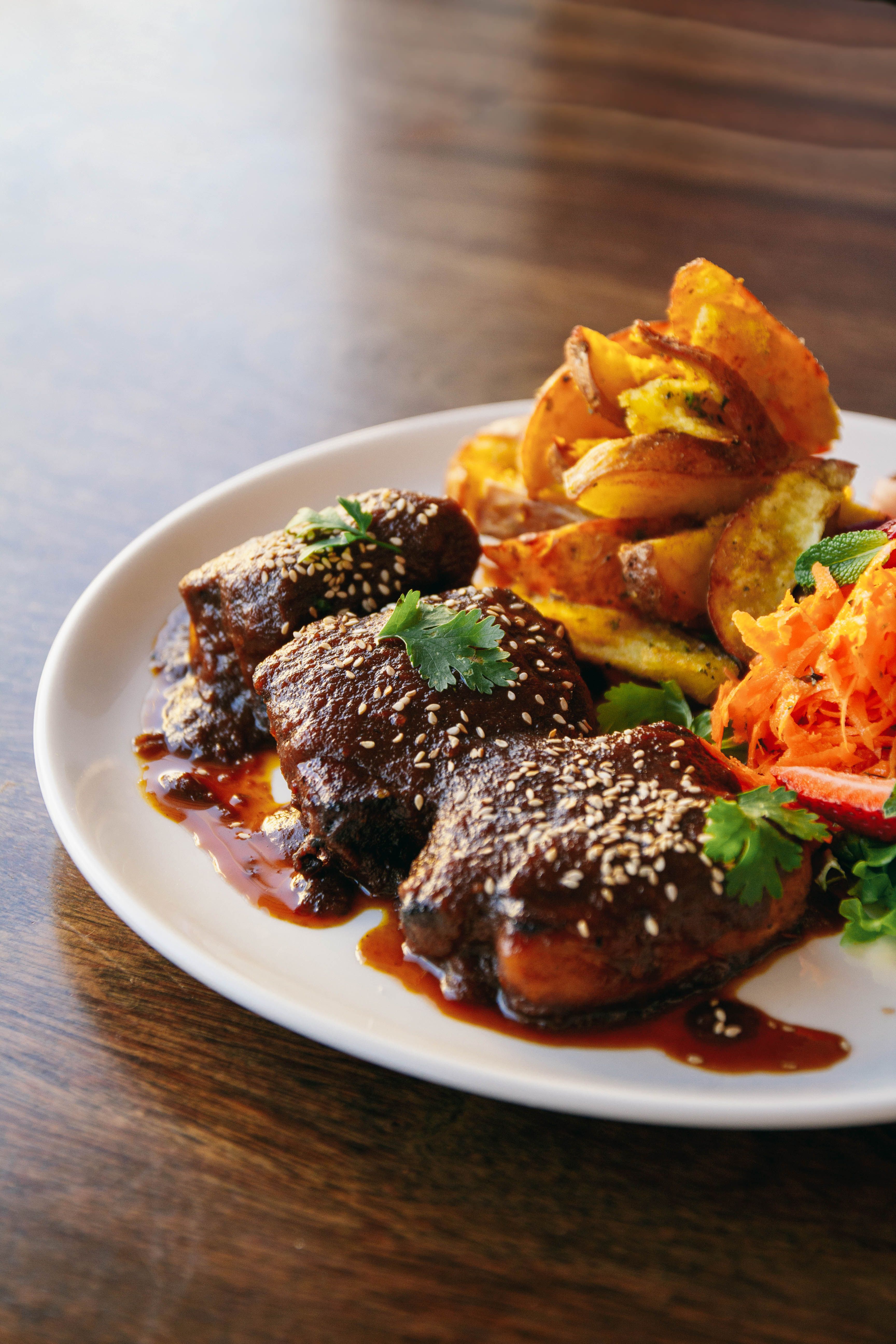
Guatemalan
Pepian
The diets react (see scores below)
Common Ingredients
- chicken
- pumpkin seeds
- sesame seeds
- tomatoes
- tomatillos
- guajillo chiles
- garlic
- onion
- cinnamon
Specific recipes may vary.
Incompatible with 5 of 11 diets
Diet Ratings
Pepian is a traditional Guatemalan sauce built on pumpkin seeds and sesame seeds — both keto-friendly high-fat ingredients — combined with chicken, which is an excellent protein source. However, the sauce base includes tomatoes, tomatillos, guajillo chiles, onion, and cinnamon, which collectively add moderate carbohydrates. Tomatillos and tomatoes each contribute roughly 3-5g net carbs per 100g, and guajillo chiles are notably higher in carbs than fresh chiles. In a restaurant or traditional serving, the sauce is used generously, and the cumulative net carbs from the sauce ingredients could push a single serving into the 10-20g net carb range, which is workable on keto but requires careful portion awareness. Pepian is traditionally served with rice or tortillas — those accompaniments must be omitted entirely. Eaten as chicken in sauce only, with a moderate portion of the mole-style sauce, it can fit within daily limits for many keto practitioners.
Strict or therapeutic keto practitioners may flag the combined carb load from tomatillos, tomatoes, and dried chiles as too high and unpredictable when dining out, where sauce quantities are hard to control. They would argue the dish should be avoided unless home-prepared with measured, reduced sauce portions.
Pepian is a traditional Guatemalan mole-style stew whose primary protein is chicken, a direct animal product. Chicken is unambiguously excluded from a vegan diet. While the sauce base — pumpkin seeds, sesame seeds, tomatoes, tomatillos, guajillo chiles, garlic, onion, and cinnamon — is entirely plant-based and would be vegan-compatible on its own, the dish as presented contains chicken as its defining ingredient and primary protein source, making it non-vegan.
Pepian is a traditional Guatemalan mole-style sauce made from whole, unprocessed ingredients that align well with paleo principles. Chicken is a clean protein source. Pumpkin seeds and sesame seeds are both paleo-approved. Tomatoes, tomatillos, guajillo chiles, garlic, and onion are all vegetables/fruits available to hunter-gatherers. Cinnamon is a paleo-approved spice. There are no grains, legumes, dairy, refined sugars, or seed oils in this dish as listed. The entire ingredient list consists of whole, minimally processed foods that would have been accessible in some form to pre-agricultural humans. The main consideration is preparation method — if seeds are toasted dry and the sauce is made without added salt or vegetable oils, this dish is solidly paleo-compliant.
Pepian is a Guatemalan stew with a notably Mediterranean-compatible ingredient profile despite its Mesoamerican origins. The sauce base of pumpkin seeds, sesame seeds, tomatoes, tomatillos, garlic, onion, and spices like cinnamon is rich in plant-based whole foods, healthy fats, and antioxidants — all strongly aligned with Mediterranean principles. Chicken is the protein, which falls into the moderate/acceptable category (poultry). The dish contains no refined grains, added sugars, or processed ingredients. The main limiting factors are the use of chicken rather than fish or legumes as the primary protein, and the absence of olive oil as the cooking fat (traditional preparation uses the seeds' own oils or neutral oils). Overall, this is a nutritionally dense, whole-food dish that fits well within Mediterranean-style eating with minor caveats.
Some Mediterranean diet purists would rate this higher, noting that pumpkin and sesame seeds provide healthy unsaturated fats analogous to nuts and olive oil, and that the vegetable-forward sauce composition mirrors traditional Levantine and North African stews. The dish could be easily adapted by using olive oil, making it a near-ideal Mediterranean meal.
Pepian is a Guatemalan stew that is fundamentally incompatible with the carnivore diet. While it contains chicken as the protein base, the dish is defined by its sauce made almost entirely from plant-derived ingredients: pumpkin seeds, sesame seeds, tomatoes, tomatillos, guajillo chiles, garlic, onion, and cinnamon. The majority of the dish by ingredient count and flavor profile is plant-based. Seeds, vegetables, nightshades, alliums, and spices are all explicitly excluded from the carnivore diet. This is not a borderline case — the sauce IS the dish, and it is 100% plant-derived. Only the chicken itself would be carnivore-compatible.
Pepian is a traditional Guatemalan seed-based sauce served over chicken. Every ingredient listed is explicitly Whole30-compliant: chicken (meat), pumpkin seeds and sesame seeds (natural fats/seeds), tomatoes, tomatillos, guajillo chiles, garlic, onion (all vegetables), and cinnamon (a spice). There are no grains, legumes, dairy, added sugars, or other excluded ingredients. This is a whole-food, minimally processed dish that aligns perfectly with Whole30 principles.
Pepian contains multiple high-FODMAP ingredients that make it unsuitable during the elimination phase. Garlic is one of the highest-FODMAP foods (fructans) and is a core flavoring in this dish — even small amounts are problematic. Onion is similarly very high in fructans and central to the recipe. Both are used as foundational aromatics in Pepian, not as garnishes, meaning the FODMAP load will be significant. Tomatillos have limited Monash data but are generally treated with caution. The remaining ingredients — chicken (protein, no FODMAPs), pumpkin seeds (low-FODMAP at ~2 tbsp), sesame seeds (low-FODMAP at small amounts), tomatoes (low-FODMAP at standard serving), guajillo chiles (low-FODMAP at small amounts), and cinnamon (low-FODMAP) — are individually acceptable. However, the garlic and onion alone are disqualifying for the elimination phase. There is no realistic way to consume a standard serving of traditionally prepared Pepian without ingesting high amounts of fructans from these two ingredients.
Pepian is a traditional Guatemalan mole-style stew featuring lean chicken as the primary protein, which aligns well with DASH guidelines for lean poultry. The ingredient list is notably DASH-friendly: tomatoes and tomatillos contribute potassium, antioxidants, and fiber; garlic and onion provide beneficial phytonutrients; guajillo chiles are low-sodium and rich in vitamins A and C; and cinnamon adds flavor without salt. Pumpkin seeds (pepitas) and sesame seeds are explicitly endorsed by DASH as sources of magnesium, potassium, healthy unsaturated fats, and plant-based protein — though seeds are calorie-dense and portion control matters. The dish is naturally low in sodium when home-prepared, contains no added refined sugar, no tropical oils, and no full-fat dairy. Saturated fat content is modest, coming primarily from seeds (mostly unsaturated) and skin-on chicken if used. The overall nutritional profile — lean protein, vegetables, seeds, and spices — closely mirrors DASH dietary priorities. The main caution is that restaurant or packaged versions may add significant sodium or lard, and seed quantities should be portion-controlled given caloric density.
NIH DASH guidelines do not specifically address traditional seed-based mole sauces; most DASH practitioners would approve this dish given its whole-food ingredients, but some conservative clinicians may flag the caloric density and fat content of pumpkin and sesame seeds, recommending strict portion control to stay within DASH's 4-5 nuts/seeds servings per week.
Pepian is a traditional Guatemalan mole-style stew that aligns reasonably well with Zone Diet principles. The primary protein — chicken — is a lean, Zone-favorable protein source, providing the right building block for a balanced meal. The sauce base features tomatoes, tomatillos, garlic, and onion, all of which are low-glycemic Zone-favorable vegetables rich in polyphenols. Guajillo chiles contribute additional polyphenols and anti-inflammatory compounds Sears emphasizes in his later writings. The fat profile is the key complexity: pumpkin seeds and sesame seeds provide predominantly polyunsaturated and monounsaturated fats, which are generally acceptable in Zone but are higher in omega-6 than pure monounsaturated sources like olive oil or avocado that Sears most recommends. Cinnamon has anti-inflammatory properties consistent with Zone principles. The main Zone challenge is portion control — seed-based sauces are calorie-dense and fat-heavy, so the fat block count can easily run high, potentially throwing off the 40/30/30 ratio. A properly portioned serving (moderate sauce, adequate chicken, served with low-GI vegetables) can fit Zone blocks well. This is not a perfectly engineered Zone meal but is far more Zone-compatible than most traditional stews.
Some Zone practitioners may rate this lower due to the high omega-6 content from pumpkin and sesame seeds, which Sears explicitly discourages in favor of monounsaturated fats. In Sears' anti-inflammatory framework (particularly 'The OmegaRx Zone' and later works), elevated omega-6 intake competes with omega-3 utilization and can promote inflammation. A stricter Zone interpretation would suggest limiting seed-heavy sauces and replacing with olive oil-based preparations. However, the whole-food, minimally processed nature of these seeds and their micronutrient density (zinc, magnesium, iron) makes them more acceptable than processed omega-6 seed oils.
Pepian is a traditional Guatemalan mole-style stew with a remarkably strong anti-inflammatory ingredient profile. Pumpkin seeds (pepitas) are rich in zinc, magnesium, and alpha-linolenic acid (ALA), an omega-3 precursor, and have demonstrated anti-inflammatory properties in research. Sesame seeds contribute lignans (sesamin, sesamolin) and vitamin E with known antioxidant activity. Tomatoes and tomatillos provide lycopene, quercetin, and vitamin C — well-established anti-inflammatory compounds. Guajillo chiles contain capsaicin and carotenoids that reduce inflammatory markers. Garlic (allicin, quercetin), onion (quercetin, sulfur compounds), and cinnamon are all emphasized anti-inflammatory spices with solid research backing. Chicken as the primary protein is in the 'moderate' category — lean poultry is acceptable and far preferable to red meat. The dish is whole-food based with no refined carbohydrates, added sugars, or processed additives. The primary concern is sesame seeds' omega-6 content and pumpkin seeds' moderate omega-6 load, but both are delivered in a matrix of fiber, minerals, and antioxidants that contextualize the impact. Overall, this dish aligns well with Dr. Weil's Anti-Inflammatory Pyramid across multiple food categories simultaneously.
Pumpkin seeds and sesame seeds are moderately high in omega-6 fatty acids, and strict anti-inflammatory protocols (particularly those focused on omega-3/omega-6 ratio optimization) might counsel moderation with seed-heavy dishes. Additionally, tomatoes and tomatillos are nightshades — mainstream anti-inflammatory nutrition (Dr. Weil) considers them beneficial for their antioxidants, but Autoimmune Protocol (AIP) advocates such as Dr. Tom O'Bryan exclude nightshades entirely due to potential lectin and alkaloid sensitivity in susceptible individuals.
Pepian is a traditional Guatemalan seed-based stew with genuine nutritional strengths but meaningful fat considerations for GLP-1 patients. The chicken provides solid lean protein (15–25g per serving depending on portion), and the tomato/tomatillo/vegetable base adds fiber, micronutrients, and high water content — all beneficial. However, pumpkin seeds and sesame seeds are the backbone of the sauce and are calorie-dense and high in fat (mostly unsaturated, which is favorable), meaning the fat load per serving can be meaningful depending on sauce concentration. Guajillo chiles are relatively mild and unlikely to worsen reflux for most patients, though individual sensitivity varies. Cinnamon, garlic, and onion are all fine. The dish is not fried and is easy to digest in moderate portions. Overall, this is a nutrient-dense whole-food dish — not an empty-calorie concern — but the seed-heavy sauce means fat content is the limiting factor, placing it in caution territory rather than approve.
Some GLP-1 nutrition practitioners would rate this higher, noting that pumpkin and sesame seeds provide magnesium, zinc, and unsaturated fats that support metabolic health, and that the fat is food-matrix fat rather than added oil — arguing the overall nutrient density justifies an approve rating. Others would keep it at caution, emphasizing that high fat per serving (even unsaturated) can worsen nausea and slow gastric emptying in GLP-1 patients already experiencing delayed stomach motility, particularly on injection day or during dose escalation.
*See how scores were generated at our methodology page.
Nutritional profile
Six traits that cut across every diet.
Fiber & Plants
How much whole-plant food and fiber it delivers.
Healthy Fats
The quality of its fats (unsaturated, omega-3).
Whole / Unprocessed
How close it is to its natural, unprocessed form.
Gut Gentle
How easy it is on digestion (low FODMAP, few irritants).
Low Glycemic
How little it spikes your blood sugar.
Protein Density
How much protein it packs per calorie.
Controversy Index
Higher controversy = more disagreement between diets.
Diet-Specific Tips
 Keto — 5/10
View tips
- Pumpkin seeds and sesame seeds are keto-approved high-fat, moderate-protein ingredients
- Chicken is an ideal keto protein source
- Tomatillos and tomatoes add moderate net carbs (~3-5g per 100g each)
- Guajillo chiles are dried and more carb-dense than fresh peppers
- Onion adds additional carbs, especially if used generously
- Traditional accompaniments (rice, tortillas) must be strictly avoided
- Sauce carb load is portion-dependent and difficult to estimate when dining out
- Cinnamon is negligible in carb contribution at culinary quantities
 Mediterranean — 6/10
View tips
- Chicken is an acceptable moderate protein in Mediterranean diet
- Pumpkin seeds and sesame seeds provide healthy unsaturated fats aligned with Mediterranean principles
- Rich plant-based sauce with tomatoes, tomatillos, garlic, and onion is strongly Mediterranean-compatible
- No refined grains, added sugars, or heavily processed ingredients
- Traditional fat source is seed-based rather than olive oil
- Cinnamon and chiles reflect anti-inflammatory spice use consistent with Mediterranean cooking
 DASH — 8/10
View tips
- Lean chicken aligns with DASH poultry recommendations
- Pumpkin and sesame seeds are DASH-endorsed sources of magnesium, potassium, and healthy fats
- Tomatoes and tomatillos provide potassium and antioxidants with low sodium
- No added salt, refined sugar, tropical oils, or full-fat dairy in traditional preparation
- Guajillo chiles add flavor complexity without sodium
- Seeds are calorie-dense — portion size should be monitored
- Sodium content can increase substantially in restaurant or packaged versions
 Zone — 7/10
View tips
- Chicken is a lean, Zone-ideal protein source
- Tomatoes, tomatillos, garlic, and onion are low-glycemic Zone-favorable vegetables
- Pumpkin and sesame seeds provide healthy fats but are omega-6 dominant rather than monounsaturated
- No high-glycemic carbohydrates in the dish itself
- Rich in polyphenols from chiles, tomatoes, and spices — consistent with Sears' anti-inflammatory focus
- Fat content from seeds requires careful portioning to maintain 30% fat ratio without overcounting fat blocks
- Cinnamon may support blood sugar regulation, consistent with Zone glycemic goals
- Whole-food, minimally processed ingredients align with Zone anti-inflammatory principles
 Anti-Inflammatory — 8/10
View tips
- Pumpkin seeds: ALA omega-3, zinc, magnesium, anti-inflammatory minerals
- Sesame seeds: lignans (sesamin), vitamin E, antioxidant properties
- Tomatoes and tomatillos: lycopene, quercetin, vitamin C — strong antioxidant profile
- Guajillo chiles: capsaicin and carotenoids reduce inflammatory markers
- Garlic and onion: allicin, quercetin, sulfur compounds — well-researched anti-inflammatory
- Cinnamon: emphasized anti-inflammatory spice, reduces CRP
- Chicken: lean poultry, acceptable moderate-category protein
- Whole-food dish: no refined carbs, added sugars, or processed additives
- Nightshade concern (tomatoes, tomatillos) for autoimmune-sensitive individuals
- Omega-6 load from seeds is contextually offset by fiber and antioxidant matrix
 GLP-1 Friendly — 6/10
View tips
- Good lean protein source from chicken
- Seed-based sauce adds meaningful unsaturated fat — caution for GLP-1 side effects
- Tomatoes and tomatillos provide fiber, water content, and micronutrients
- Guajillo chiles are mild and unlikely to worsen reflux for most patients
- No frying, no refined carbohydrates, no added sugar — whole-food dish
- Portion-sensitive: smaller sauce-to-protein ratio improves the rating
- Nutrient density is high — not an empty-calorie concern