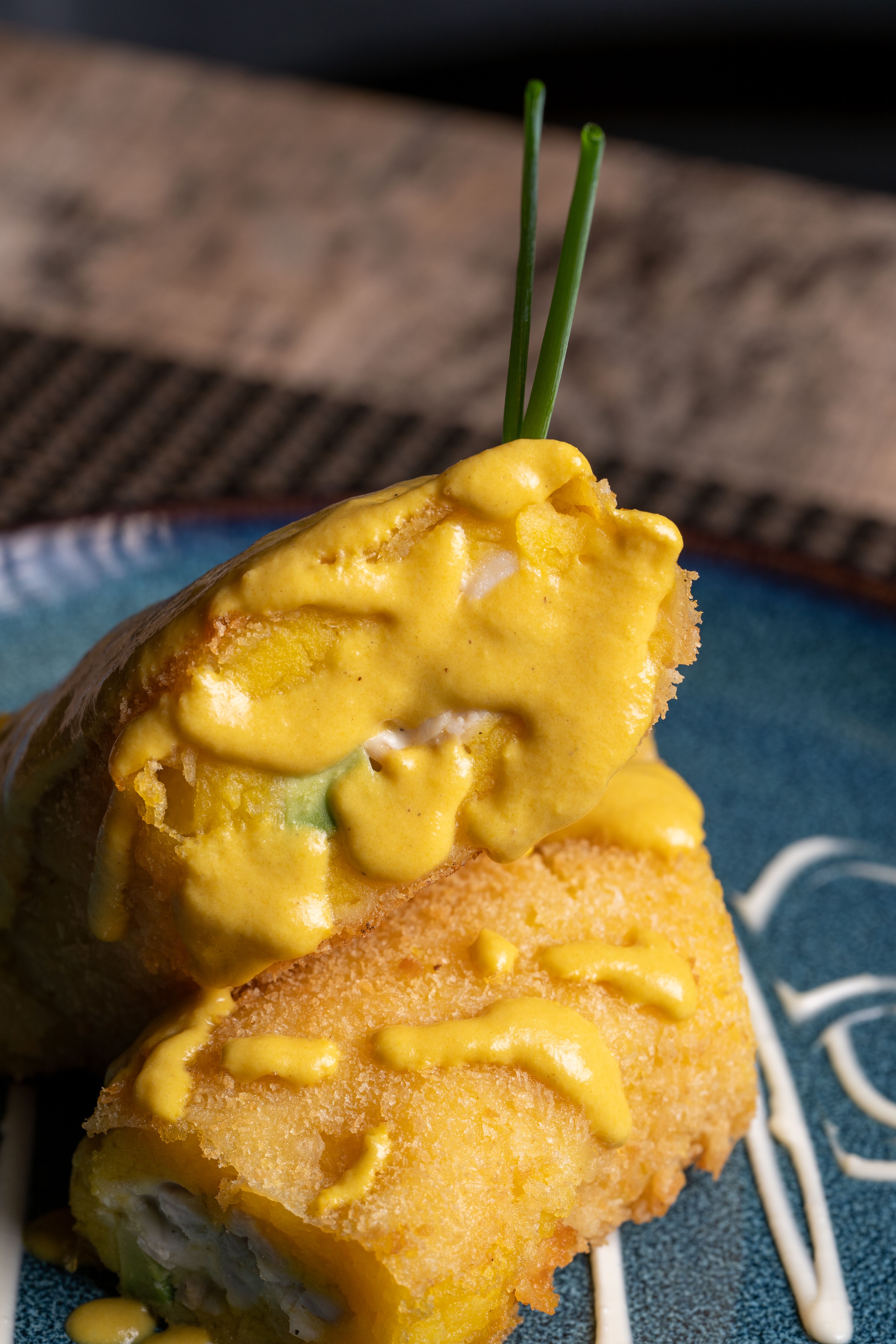
Photo: Nano Erdozain / Pexels
Guatemalan
Rellenitos
The diets react (see scores below)
Common Ingredients
- ripe plantains
- black beans
- sugar
- cinnamon
- oil
Specific recipes may vary.
Incompatible with 7 of 11 diets
Diet Ratings
Rellenitos are fundamentally incompatible with a ketogenic diet. Ripe plantains are extremely high in net carbs (roughly 25-30g net carbs per 100g), functioning more like a starchy fruit than a vegetable. Black beans add another significant carb load (~20g net carbs per 100g). Added sugar is explicitly prohibited on keto. A single rellenito could easily contain 30-50g of net carbs on its own, which meets or exceeds the entire daily keto carb budget. There is no realistic portion size that makes this dish keto-compatible.
Rellenitos are a traditional Guatemalan snack made entirely from whole plant foods. Ripe plantains are mashed and filled with sweetened black beans seasoned with cinnamon, then fried in oil. Every ingredient — plantains, black beans, sugar, cinnamon, and oil — is plant-derived with no animal products or animal-derived ingredients present. The dish features two whole foods (plantains and black beans) as its primary components, with minimal processing. The frying in oil and added sugar slightly reduce the score from a whole-food-plant-based perspective, but the dish is solidly vegan-compliant.
Rellenitos contain multiple non-paleo ingredients that make this dish incompatible with the Paleolithic diet. Black beans are legumes, which are explicitly excluded from paleo due to their lectin and phytate content. Refined sugar is a processed food with no place in paleo eating. The oil listed is unspecified but almost certainly a seed or vegetable oil (such as canola or corn oil), which are also excluded. While ripe plantains and cinnamon are paleo-approved, they are minor elements here — the dish is fundamentally built around legumes and refined sugar, both firm 'avoid' categories with strong paleo consensus against them.
Rellenitos feature several Mediterranean-friendly ingredients — ripe plantains (a whole fruit), black beans (an excellent legume and plant protein), and cinnamon. However, the added sugar is a concern, as Mediterranean diet principles minimize added sugars. The frying in oil introduces extra fat; if the oil were extra virgin olive oil it would be more compatible, but traditionally this dish uses neutral vegetable oil. The combination of beans and plantains is nutritious and plant-forward, but the sweetened, fried preparation moves it away from core Mediterranean principles toward an occasional treat.
Some Mediterranean diet interpreters would view the beans and plantains positively as whole-food, plant-based ingredients and argue that modest added sugar in an otherwise nutrient-dense snack is acceptable in moderation, particularly given the legume base which aligns strongly with Mediterranean eating patterns.
Rellenitos are entirely plant-based and incompatible with the carnivore diet. Every single ingredient — ripe plantains, black beans, sugar, cinnamon, and oil — is either plant-derived or a processed plant product. Plantains are a starchy fruit, black beans are a legume, sugar is a refined carbohydrate, cinnamon is a plant spice, and the oil is a plant-derived fat. There are zero animal products present. This dish is essentially the opposite of carnivore-approved eating, combining high-carb plant foods with sugar and plant oils, all of which are explicitly excluded under every tier of the carnivore diet.
Rellenitos contain two clearly excluded ingredients: (1) black beans, which are legumes and explicitly banned on Whole30, and (2) sugar, which is an added sugar and explicitly excluded. Either violation alone would disqualify this dish. Additionally, even if those ingredients were swapped, rellenitos are a fried sweet snack that would likely fall under the 'no recreating junk food/sweets' rule given their dessert-like nature.
Rellenitos are a Guatemalan snack made from mashed ripe plantains stuffed with sweetened black bean paste, then fried. The primary FODMAP concern is black beans, which are high in GOS (galacto-oligosaccharides) and fructans. Monash University rates black beans as high-FODMAP at typical serving sizes — a standard serve of rellenitos would contain enough black bean filling to exceed safe GOS thresholds. Ripe plantains are generally low-FODMAP at a small serving (about 1/3 medium plantain), but riper plantains have higher fructose content and the quantity used per serving could push toward moderate FODMAP levels. Sugar and cinnamon are low-FODMAP. Oil is low-FODMAP. The black bean component is the decisive factor — it makes this dish unsuitable during the elimination phase regardless of portion size, as a meaningful filling of black beans will exceed GOS limits.
Rellenitos are fried plantain balls filled with sweetened black bean paste, flavored with sugar and cinnamon. The ingredients themselves contain several DASH-positive elements: ripe plantains are rich in potassium and fiber, black beans provide plant-based protein, fiber, magnesium, and potassium — all core DASH nutrients. However, the dish is deep-fried in oil (adding significant fat calories and potentially unhealthy fats depending on oil type) and contains added sugar in the filling. The combination of frying and added sugar pushes this away from ideal DASH territory. The sodium content is naturally low, which is a positive. If baked or pan-fried with minimal oil and reduced sugar, this dish would score higher. As commonly prepared (deep-fried, sweetened), it earns a cautious rating — acceptable occasionally but not a DASH staple due to added sugar and frying method.
NIH DASH guidelines emphasize limiting added sugars and excess fat, which would flag the frying and sweetening of this dish; however, some DASH-oriented nutritionists note that the base ingredients (plantains, black beans) are nutritionally dense DASH foods, and modest preparation modifications (baking, reducing sugar) could make this a compliant snack, suggesting the verdict depends heavily on preparation method rather than the dish categorically.
Rellenitos are a Guatemalan snack made by wrapping sweetened black bean paste inside mashed ripe plantains, then frying in oil. From a Zone perspective, this dish is deeply problematic. Ripe plantains are a high-glycemic carbohydrate source — Zone-unfavorable even compared to other fruits, as ripeness dramatically increases their sugar content and glycemic load. Added sugar compounds this further, pushing the carb profile into territory that is nearly impossible to balance within a 40/30/30 ratio. The dish provides virtually no lean protein (black beans contribute some protein but in a ratio far too low relative to the carbohydrate load, and bean protein is incomplete for Zone block purposes). The fat comes from frying oil, which while potentially neutral, adds caloric density without monounsaturated benefit unless specifically olive oil is used. The macro profile is heavily skewed: very high carbohydrate (high-glycemic), negligible usable protein, and added fat from frying. There is no realistic portion adjustment that would bring this into Zone balance while still constituting the dish as intended. This is essentially a sweet, fried, carbohydrate-dominant snack with no lean protein anchor.
Rellenitos present a genuinely mixed anti-inflammatory profile. On the positive side, ripe plantains provide fiber, potassium, vitamin C, and B6, and their resistant starch supports gut health and a favorable microbiome — both linked to reduced systemic inflammation. Black beans are a standout anti-inflammatory ingredient: rich in fiber, plant-based protein, polyphenols (particularly anthocyanins in the black seed coat), and folate, with research showing legumes reduce CRP and other inflammatory markers. Cinnamon is an approved anti-inflammatory spice with meaningful antioxidant and blood-sugar-modulating effects. The oil is unspecified — if olive oil or avocado oil, it's a net positive; if a refined seed oil (corn, soybean, sunflower), it introduces pro-inflammatory omega-6 load, which is a concern especially given frying. The main liabilities are the added sugar (which is pro-inflammatory at any significant dose) and the frying method, which concentrates oil absorption and, depending on oil type, can produce oxidized lipids. The sugar content is modest per individual piece but present. The dish is not a health food by design, but neither is it a processed, additive-laden item — it's a traditional whole-food snack. For the general population, the legume and spice benefits partially offset the sugar and frying concerns, placing it in cautious moderation territory.
Some anti-inflammatory practitioners would score this lower due to the frying method and added sugar — Dr. Weil's framework emphasizes limiting added sugars and discourages deep-frying as a preparation method regardless of ingredients. Conversely, whole-food-focused practitioners like those aligned with the Blue Zones or Mediterranean-adjacent dietary patterns would view the black bean and plantain base favorably and consider this a culturally appropriate, minimally processed snack acceptable in moderate portions.
Rellenitos are deep-fried sweet plantain balls filled with sweetened black bean paste, typically made with added sugar and cinnamon, then fried in oil. While black beans provide some fiber and modest protein, the overall nutritional profile is problematic for GLP-1 patients. The frying method adds significant fat, which worsens nausea, bloating, and reflux — the most common GLP-1 side effects. Ripe plantains are high in simple sugars, and added sugar in the filling compounds the glycemic load. Protein content per serving is low (roughly 3-5g), falling far short of the 15-30g per meal target. The combination of high sugar, fried fat, and dense starchy carbohydrates makes this a poor fit for the reduced appetite window GLP-1 patients have — every calorie needs to count nutritionally, and rellenitos deliver primarily sugar, starch, and fat. Digestibility is also a concern given the frying and sugar content.
Some GLP-1-aware dietitians may note that the black bean filling does provide fiber and plant-based protein, and that a small portion (1 piece) in a culturally important context is not catastrophically harmful — the concern is primarily with the frying and sugar rather than the dish concept entirely. A modified version (baked, unsweetened or lightly sweetened bean filling) could move this into caution territory.
*See how scores were generated at our methodology page.
Nutritional profile
Six traits that cut across every diet.
Fiber & Plants
How much whole-plant food and fiber it delivers.
Healthy Fats
The quality of its fats (unsaturated, omega-3).
Whole / Unprocessed
How close it is to its natural, unprocessed form.
Gut Gentle
How easy it is on digestion (low FODMAP, few irritants).
Low Glycemic
How little it spikes your blood sugar.
Protein Density
How much protein it packs per calorie.
Controversy Index
Higher controversy = more disagreement between diets.
Diet-Specific Tips
 Vegan — 8/10
View tips
- Plantains are a whole plant food — fully vegan
- Black beans provide plant-based protein with no animal involvement
- Sugar is plant-derived (though highly refined sugar may raise minor whole-food concerns, it contains no animal products)
- Cinnamon is a plant-based spice
- Frying oil is plant-derived; type of oil not specified but assumed vegetable/plant-based
- No dairy, eggs, meat, or animal-derived additives in traditional preparation
 Mediterranean — 5/10
View tips
- Black beans are an excellent legume and align well with Mediterranean plant-forward emphasis
- Ripe plantains provide whole-food fruit-based carbohydrates
- Added sugar contradicts Mediterranean principle of minimizing added sugars
- Fried preparation adds calories and depends on oil type — not specified as olive oil
- Overall dish is plant-based but sweetened and fried, making it an occasional food rather than a staple
 DASH — 5/10
View tips
- Ripe plantains are potassium-rich and DASH-friendly as a fruit/starchy vegetable
- Black beans are an excellent DASH food — high in fiber, magnesium, potassium, and plant protein
- Added sugar in the bean filling is a DASH concern
- Deep frying adds excess fat calories and may involve less healthy oils
- Naturally low in sodium — a DASH positive
- Baked or lightly pan-fried versions with reduced sugar would score 7-8
 Anti-Inflammatory — 5/10
View tips
- Black beans: strongly anti-inflammatory — high fiber, anthocyanins, polyphenols, shown to reduce CRP
- Ripe plantains: beneficial fiber, resistant starch, vitamins C and B6, supports gut microbiome
- Cinnamon: approved anti-inflammatory spice with antioxidant and glycemic-regulating properties
- Added sugar: pro-inflammatory; even modest amounts contribute negatively
- Frying method: increases oil absorption; oxidized lipids from high-heat frying are pro-inflammatory
- Oil type unspecified: olive or avocado oil would improve score; refined seed oils would lower it
- No processed additives, artificial preservatives, or trans fats — whole-food traditional preparation