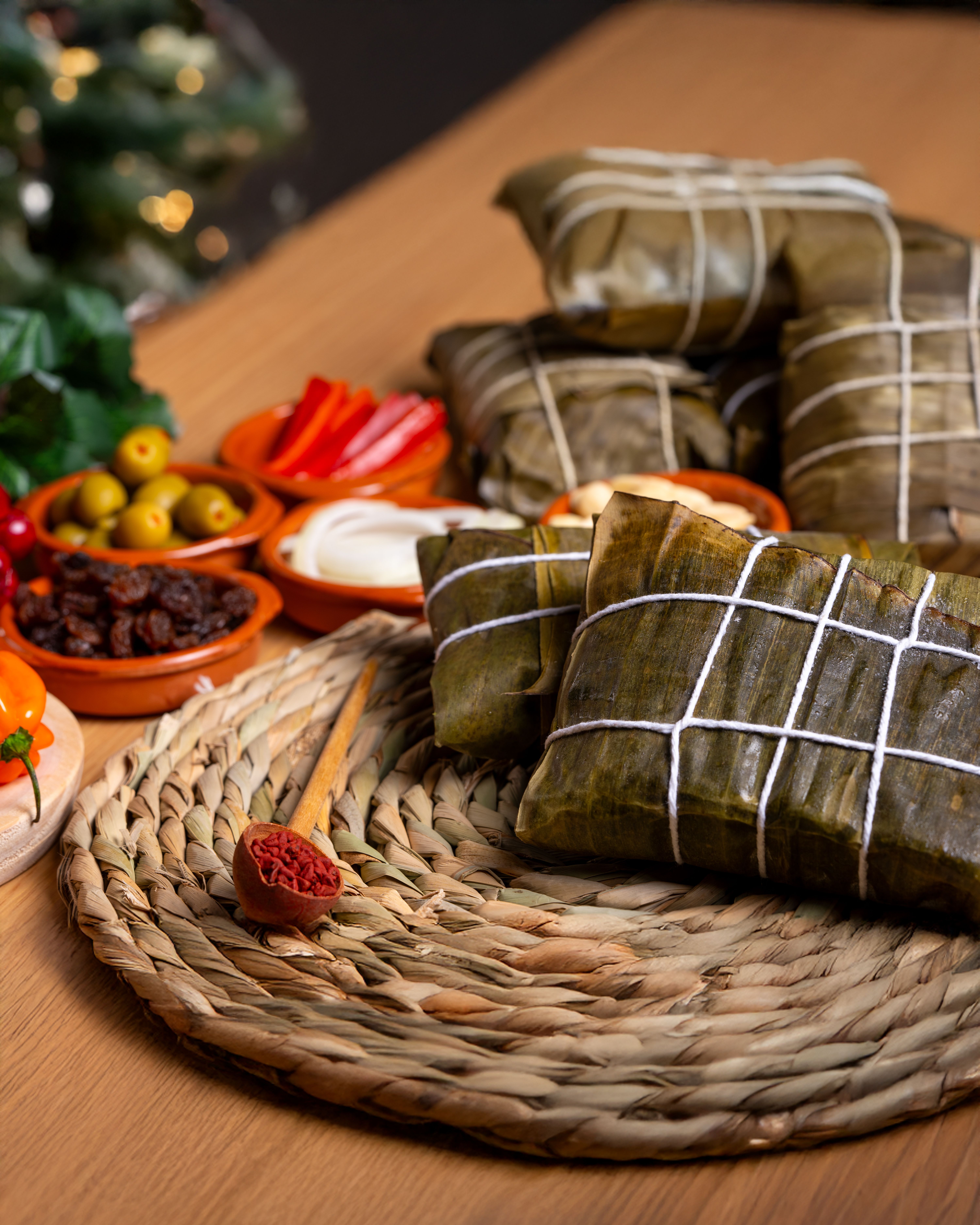
Photo: Nano Erdozain / Pexels
Guatemalan
Tamales Colorados
The diets react (see scores below)
Common Ingredients
- corn masa
- pork
- tomatoes
- guajillo chiles
- bell pepper
- olives
- capers
- banana leaves
- lard
Specific recipes may vary.
Incompatible with 8 of 11 diets
Diet Ratings
Tamales Colorados are fundamentally built on corn masa, which is a high-carb, grain-based dough made from nixtamalized corn. A single tamale can contain 25-40g of net carbs from the masa alone, making it virtually impossible to fit even one serving into a daily keto budget of 20-50g net carbs. While several individual ingredients are keto-friendly — lard is an excellent fat source, pork is a quality protein, guajillo chiles, tomatoes, and bell peppers are manageable in small quantities, and olives and capers are keto-approved — the corn masa is the structural and caloric foundation of the dish and cannot be separated from it. The banana leaves are merely a cooking wrapper and contribute no carbs, but they cannot offset the disqualifying masa component. This dish is incompatible with ketosis in any standard serving size.
Tamales Colorados contain multiple animal-derived ingredients that make them entirely incompatible with a vegan diet. Pork is a direct animal product, and lard is rendered pig fat — both are unambiguously non-vegan. These are core, structural ingredients in the dish, not trace contaminants. There is no meaningful debate within the vegan community about pork or lard.
Tamales Colorados are fundamentally incompatible with the Paleo diet. The primary structural ingredient is corn masa, which is a processed grain product made from corn — one of the most clearly excluded foods in Paleo. Corn is a grain, and masa (nixtamalized ground corn) is a processed form of it, making it doubly non-compliant. While several other ingredients are Paleo-friendly — pork, tomatoes, guajillo chiles, bell pepper, and lard are all approved — and banana leaves are simply a cooking wrapper, the dish cannot exist without its corn masa base. Olives are generally Paleo-approved, and capers are acceptable in their natural form. However, the foundational ingredient disqualifies this dish entirely. There is no meaningful way to 'modify' a tamale and still call it a tamale — the masa is the dish.
Tamales Colorados present multiple significant conflicts with Mediterranean diet principles. The primary fat source is lard (animal saturated fat), directly contradicting the core principle of extra virgin olive oil as the primary fat. The primary protein is pork, a red meat that should be limited to only a few times per month. The corn masa is a refined/processed grain product rather than a whole grain. While the dish does include beneficial Mediterranean-compatible ingredients — tomatoes, guajillo chiles, bell pepper, olives, and capers — these cannot offset the foundational issues of lard as cooking fat and red meat as the primary protein. This dish is essentially incompatible with Mediterranean diet principles in its traditional preparation.
Tamales Colorados are fundamentally incompatible with the carnivore diet. The dish is built on corn masa, a grain-based starch that forms the bulk of the tamale and is strictly excluded from all tiers of carnivore eating. Beyond the masa, the recipe includes multiple plant foods: tomatoes, guajillo chiles, bell pepper, olives, capers, and banana leaves (used as wrapping). The only carnivore-compatible ingredient is lard (pure animal fat) and the pork itself. With the majority of the dish's volume and flavor profile derived from plant foods and grains, this dish scores at the absolute bottom of carnivore compatibility. Even the most lenient 'animal-based' practitioners would not consider this dish acceptable.
Tamales Colorados are excluded on Whole30 for two distinct reasons. First, the primary structural ingredient is corn masa (ground corn dough), and corn is explicitly listed as an excluded grain on the Whole30 program. Second, even if corn were somehow substituted, tamales fall squarely into the 'no recreating baked goods/junk food' category — they are explicitly named in the program's list of excluded food forms (wraps, tortillas, and similar grain-based dough preparations). The remaining ingredients — pork, tomatoes, guajillo chiles, bell pepper, olives, capers, banana leaves (used for wrapping), and lard — are individually Whole30-compatible, but the corn masa alone is a disqualifying excluded grain.
Tamales Colorados contain several individually manageable ingredients, but the combination and typical serving size create meaningful FODMAP risk. Corn masa (nixtamalized corn flour) is low-FODMAP at standard tamale portions (~100g). Pork, lard, tomatoes, bell pepper, banana leaves (wrapping only, not eaten), and capers are all low-FODMAP. The main concerns are: (1) guajillo chiles — Monash has not extensively tested dried chiles, but small amounts used as a sauce base are generally considered low-FODMAP by practitioners; however, larger quantities or concentrated chile paste could accumulate fructans. (2) Olives — low-FODMAP at ~15g (about 2-3 olives), but if the recipe is generous with olives, portions could push into moderate territory. (3) The overall dish is a composite, and while no single ingredient is a clear high-FODMAP offender, the cumulative load from multiple borderline ingredients (chiles, olives at higher amounts) warrants caution. This is a traditional dish where preparation and portioning vary widely, making a confident 'approve' difficult during the strict elimination phase.
Monash University has not specifically tested traditional Guatemalan tamales or guajillo chile-based sauces, leaving some ambiguity. Clinical FODMAP practitioners often advise caution with complex multi-ingredient dishes during elimination, as individual ingredient tolerances may be acceptable but cumulative FODMAP load from the full dish is harder to predict — particularly when chile quantities and olive amounts are not standardized.
Tamales Colorados contain several DASH-compatible ingredients — corn masa (whole grain base), tomatoes, guajillo chiles, and bell peppers provide fiber, potassium, and antioxidants. However, two ingredients raise significant DASH concerns: lard is high in saturated fat, which DASH explicitly limits, and olives/capers contribute notable sodium. Pork can be lean (loin) or fatty depending on cut, adding further variability. The overall dish is calorie-dense and typically high in sodium from the combined effect of capers, olives, and seasoned masa. It is not a core DASH food but could be consumed occasionally in portion-controlled amounts if lard is minimized and sodium-heavy ingredients are reduced. The banana leaves themselves are neutral (used for wrapping, not eaten).
NIH DASH guidelines clearly limit saturated fat and sodium, making traditional lard-based tamales a caution or avoid item. However, some updated DASH-oriented clinicians note that if lard is replaced with a small amount of unsaturated vegetable oil, the pork is a lean cut, and capers/olives are used sparingly, the dish's vegetable content and whole-grain masa could make it an acceptable occasional meal within a broader DASH pattern.
Tamales Colorados present a mixed Zone Diet profile. The corn masa (masa harina) is a high-glycemic, starchy carbohydrate that Dr. Sears classifies as an 'unfavorable' carb — it will spike insulin and dominate the carbohydrate blocks without much fiber offset. Lard is a saturated animal fat, which the Zone explicitly discourages in favor of monounsaturated fats like olive oil. The pork filling can be lean or fatty depending on the cut; typical tamale preparations use fattier pork shoulder, adding more saturated fat to the equation. On the positive side, the tomatoes, guajillo chiles, and bell peppers are Zone-favorable low-glycemic vegetables rich in polyphenols and antioxidants — exactly what Sears promotes. Olives and capers add Mediterranean-style flavor and olives contribute some monounsaturated fat. The overall macronutrient ratio of a typical tamale skews heavily toward carbohydrates and saturated fat, making it difficult to achieve the 40/30/30 Zone balance in a single serving without significant modification. A single tamale might serve as a small carb-heavy component of a larger Zone meal, but as a main dish it would require careful pairing with additional lean protein and monounsaturated fat sources while limiting portion size of the tamale itself.
Some Zone practitioners argue that traditional whole-food preparations like tamales, despite using masa, are far preferable to processed carbohydrates because the corn is ground whole and the dish contains real food ingredients. Sears' later writings in 'The Anti-Inflammation Zone' and 'Toxic Fat' emphasize polyphenol-rich foods and omega-3 balance over strict GI concerns, and the rich chile-tomato-pepper sauce here delivers meaningful polyphenols. Under this lens, a small-portion tamale with lean pork and a large vegetable side could be considered a workable Zone meal at the higher end of the caution range.
Tamales Colorados present a mixed anti-inflammatory profile. On the positive side, guajillo chiles are rich in carotenoids and capsaicin with documented anti-inflammatory properties. Tomatoes contribute lycopene and polyphenols. Bell peppers are high in vitamin C and antioxidants. Olives and capers provide beneficial polyphenols — capers are particularly rich in quercetin and rutin, which have notable anti-inflammatory activity. Corn masa (nixtamalized) is a whole grain-adjacent ingredient with reasonable fiber content. However, the dish has meaningful concerns: lard is high in saturated fat, which is categorized under 'limit' in anti-inflammatory frameworks, though it is notably free of trans fats and lower in omega-6 than many seed oils. Pork is a red/processed meat category concern — while traditional pork cuts are less problematic than processed meats, pork fat is high in saturated fat. The overall dish is calorie-dense and fat-heavy due to lard in the masa and pork as the protein. The vegetable and chile components redeem it somewhat, but this is not a dish that would be recommended frequently in an anti-inflammatory eating pattern.
Some anti-inflammatory commentators (including those influenced by Mediterranean or traditional food frameworks) note that lard from pasture-raised pigs has a more favorable fatty acid profile than many refined seed oils, and that traditional whole-food preparations like tamales — using minimally processed ingredients without additives or trans fats — are preferable to many modern processed foods. Conversely, stricter anti-inflammatory protocols (e.g., those emphasizing AIP or Dr. Weil's pyramid) would flag both the pork and lard content as significant concerns warranting infrequent consumption.
Tamales Colorados are a poor fit for GLP-1 patients in their traditional form. The masa dough is made with lard, adding significant saturated fat that worsens GLP-1 side effects like nausea, bloating, and reflux. Pork filling in traditional tamales is typically a fatty cut (shoulder or butt), compounding the fat load. Corn masa is a refined, starchy carbohydrate with low fiber and low protein density per calorie. A single tamale can easily deliver 15-20g of fat alongside modest protein, inverting the desired macronutrient profile. The overall dish is calorie-dense, fat-heavy, and protein-poor per calorie — the opposite of what GLP-1 patients need. Gastric emptying is already slowed by the medication, and a high-fat, dense food like this is likely to sit heavily, prolonging discomfort. The tomatoes, chiles, bell pepper, olives, and capers are nutritionally positive but constitute a small fraction of the dish's overall caloric and macronutrient profile.
Some GLP-1-focused dietitians note that a small portion of a tamale alongside a higher-protein side could be acceptable occasionally, and that individual fat tolerance on GLP-1s varies — patients further along in treatment with stabilized GI side effects may tolerate moderate-fat traditional foods better than newly initiated patients. However, the lard-based masa and fatty pork make this difficult to justify as a regular meal choice even in moderation.
*See how scores were generated at our methodology page.
Nutritional profile
Six traits that cut across every diet.
Fiber & Plants
How much whole-plant food and fiber it delivers.
Healthy Fats
The quality of its fats (unsaturated, omega-3).
Whole / Unprocessed
How close it is to its natural, unprocessed form.
Gut Gentle
How easy it is on digestion (low FODMAP, few irritants).
Low Glycemic
How little it spikes your blood sugar.
Protein Density
How much protein it packs per calorie.
Controversy Index
Higher controversy = more disagreement between diets.
Diet-Specific Tips
 DASH — 4/10
View tips
- Lard is high in saturated fat, which DASH explicitly limits
- Capers and olives are high-sodium ingredients that conflict with DASH sodium targets
- Corn masa provides a whole-grain base compatible with DASH
- Tomatoes, guajillo chiles, and bell peppers are DASH-friendly vegetables rich in potassium and fiber
- Pork fat content varies by cut — lean pork is acceptable on DASH, but fatty cuts are not
- Traditional preparation is calorie-dense and not portion-controlled
- Low-sodium adaptation (replacing lard with vegetable oil, reducing capers/olives) would improve DASH compatibility
 Zone — 4/10
View tips
- Corn masa is a high-glycemic 'unfavorable' carbohydrate in Zone terminology — high in starch, moderate fiber
- Lard is saturated fat, directly counter to Zone's preference for monounsaturated fats (olive oil, avocado, almonds)
- Pork filling can be high in saturated fat depending on cut (shoulder vs. loin)
- Tomatoes, guajillo chiles, and bell peppers are Zone-favorable polyphenol-rich vegetables
- Olives contribute beneficial monounsaturated fat
- Overall macro ratio heavily skewed toward carbohydrates and saturated fat — hard to balance to 40/30/30
- Portion control critical: one small tamale as part of a larger balanced plate is more workable than eating multiple tamales as a standalone meal
 Anti-Inflammatory — 4/10
View tips
- Lard is high in saturated fat — listed under 'limit' in anti-inflammatory guidelines
- Pork as primary protein raises moderate inflammatory concern, particularly fat content
- Guajillo chiles are rich in carotenoids and capsaicin — anti-inflammatory
- Tomatoes and bell peppers contribute lycopene, vitamin C, and antioxidant polyphenols
- Capers and olives are high in quercetin, rutin, and oleuropein — strongly anti-inflammatory
- Corn masa provides fiber but lacks the omega-3 or polyphenol density of more emphasized grains
- No trans fats, artificial additives, or refined sugars — a clean traditional preparation
- Banana leaves used for steaming — no inflammatory additives introduced in cooking method