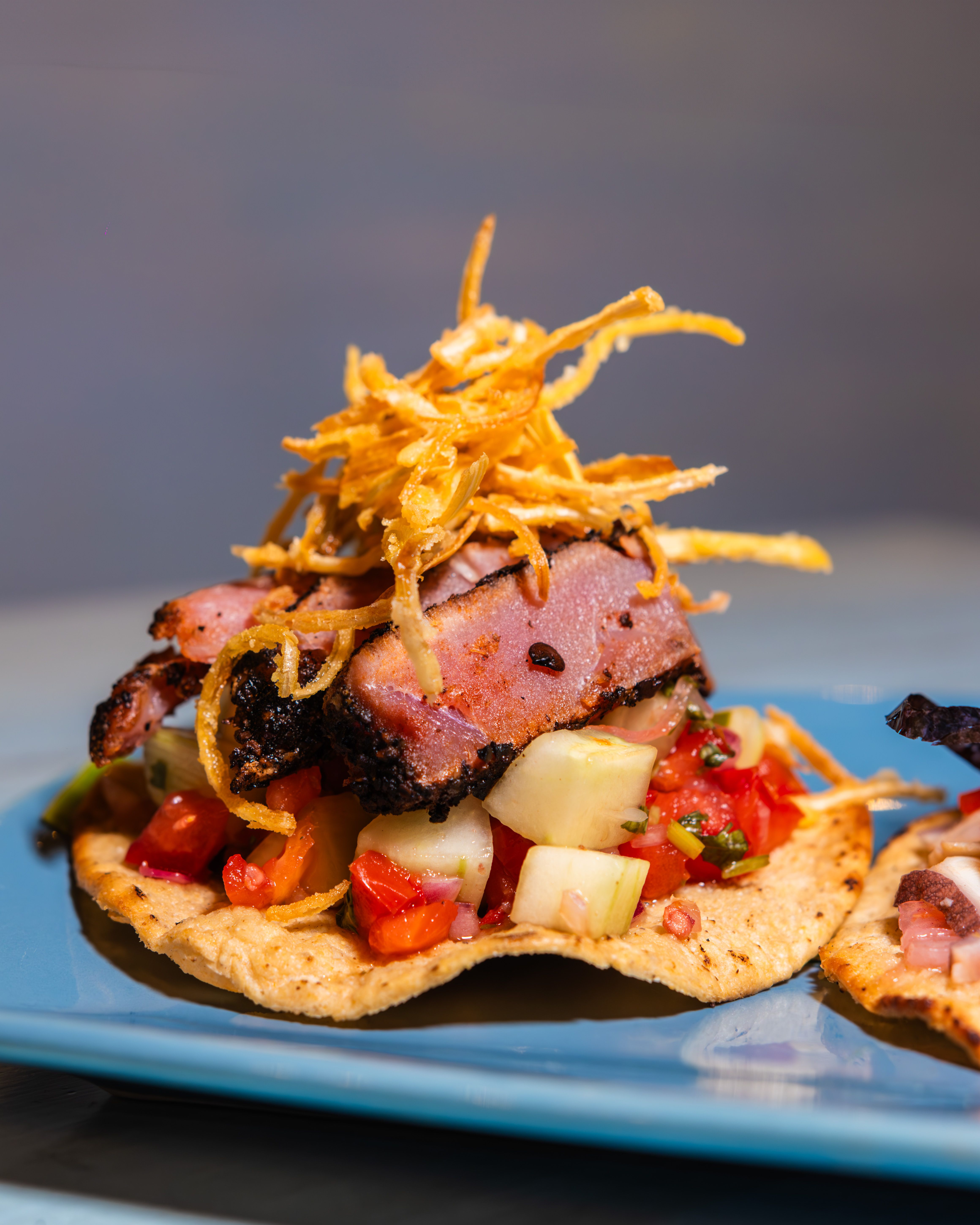
Photo: Kuiyibo Campos / Pexels
The diets react (see scores below)
Common Ingredients
- corn tortillas
- black beans
- tomato sauce
- guacamole
- cheese
- onion
- parsley
Specific recipes may vary.
Incompatible with 6 of 11 diets
Diet Ratings
Guatemalan tostadas are built on a corn tortilla base, which is a grain product with very high net carbs (a single corn tortilla contains approximately 12-14g net carbs). Black beans add another significant carb load (~20g net carbs per half cup). Together, these two ingredients alone can easily push a single tostada past the entire daily keto carb limit of 20-50g. While guacamole and cheese are keto-friendly, and tomato sauce, onion, and parsley are acceptable in small amounts, they cannot redeem this dish. The foundational ingredients (corn tortilla + black beans) are fundamentally incompatible with ketosis.
This Guatemalan tostada recipe contains cheese, which is a dairy product and therefore not vegan. All other ingredients — corn tortillas, black beans, tomato sauce, guacamole, onion, and parsley — are fully plant-based. However, the inclusion of cheese (an animal-derived dairy product) disqualifies the dish as presented. The fix is simple: omitting the cheese or substituting a plant-based cheese alternative would make the dish fully vegan-compliant and score quite highly.
Guatemalan tostadas are built on a foundation of multiple paleo-excluded foods. Corn tortillas are a grain product and firmly off-limits under all paleo frameworks. Black beans are legumes, equally excluded due to their lectin and phytate content. Cheese is dairy and prohibited. Tomato sauce may contain added sugar, salt, or preservatives depending on preparation. The only paleo-compliant ingredients in this dish are guacamole (avocado-based), onion, and parsley. With three of the seven core ingredients being clear paleo violations — grains, legumes, and dairy — this dish is definitively non-paleo regardless of interpretation.
Guatemalan tostadas feature several Mediterranean-friendly components: black beans (an excellent legume protein source), tomato sauce, guacamole (avocado as a healthy monounsaturated fat), onion, and parsley are all plant-forward ingredients well aligned with Mediterranean principles. However, corn tortillas are a refined/processed grain product rather than a whole grain, and cheese adds saturated fat from dairy. The dish has no olive oil as the primary fat, though avocado in guacamole is a comparable healthy fat. Overall, this is a predominantly plant-based snack with legumes and vegetables at its core, but the corn tortilla base and dairy cheese pull it slightly out of the 'approve' zone into moderate territory.
Some Mediterranean diet practitioners would score this higher, arguing that black beans, avocado, tomatoes, onion, and herbs constitute a strongly plant-forward profile comparable to Mediterranean mezze dishes, and that cheese in modest amounts is acceptable per Mediterranean guidelines. Others would note that corn-based tortillas, while not a traditional Mediterranean grain, are a whole or minimally processed grain in their traditional stone-ground form, which some modern Mediterranean diet frameworks accommodate.
Guatemalan tostadas are almost entirely plant-derived and explicitly excluded from the carnivore diet. The base is corn tortillas — a grain product — which alone disqualifies the dish. Black beans are legumes, a major carnivore exclusion. Tomato sauce, guacamole, onion, and parsley are all plant foods. The only potentially carnivore-compatible ingredient is cheese, which is itself debated within the community. There is no animal protein present. This dish is fundamentally incompatible with carnivore principles at every structural level.
Guatemalan tostadas contain multiple Whole30-excluded ingredients. Corn tortillas are made from corn, which is a grain explicitly excluded from the Whole30 program. Additionally, corn tortillas fall squarely into the 'no recreating baked goods/junk food' rule, as tortillas and wraps are explicitly listed as prohibited items. Black beans are legumes, which are fully excluded from Whole30. Cheese is dairy, also excluded. These are not borderline cases — each of these three core ingredients is explicitly and unambiguously banned by the official Whole30 rules. The remaining ingredients (tomato sauce, guacamole, onion, parsley) could be compliant with careful label-reading, but the disqualifying ingredients make this dish incompatible in its standard form.
Guatemalan tostadas contain multiple high-FODMAP ingredients that make this dish unsuitable during the elimination phase. Black beans are very high in GOS (galacto-oligosaccharides) and are a clear avoid at any standard serving. Onion is one of the highest-FODMAP foods known, rich in fructans, and is typically used as a topping in meaningful quantities. Cheese type is unspecified — soft or fresh cheeses (like queso fresco, common in Guatemalan cooking) are high in lactose. Guacamole made with avocado is borderline depending on portion (low-FODMAP only at 1/8 avocado), but when combined with onion and garlic (common in guacamole), it becomes problematic. Tomato sauce can be high-FODMAP depending on concentration and added garlic/onion. Corn tortillas themselves are low-FODMAP and safe. Parsley is low-FODMAP. However, the combination of black beans, onion, and likely high-lactose cheese creates stacked FODMAP loads that make this dish a clear avoid during elimination phase.
Guatemalan tostadas combine several DASH-friendly ingredients (black beans, tomato sauce, guacamole, onion, parsley) with some that require moderation. Black beans are excellent DASH foods — high in potassium, magnesium, fiber, and plant protein. Guacamole provides heart-healthy monounsaturated fats from avocado, a DASH-encouraged fat source. Corn tortillas are a whole grain option with moderate sodium. Onion and parsley are DASH-approved vegetables. The main concerns are the cheese (typically a salty, full-fat cotija or queso fresco in Guatemalan cuisine — contributing saturated fat and sodium) and the tomato sauce (sodium content varies widely; canned or prepared sauces can be high in sodium). The fried preparation of the corn tortilla (tostada = toasted/fried) also adds fat. Overall, the dish has a strong DASH-compatible base but the cheese and potentially sodium-heavy tomato sauce pull it into 'caution' territory. With low-sodium tomato sauce and a reduced portion of low-fat cheese, this dish would move closer to 'approve.'
NIH DASH guidelines specify low-fat dairy and limited sodium, which flags the cheese and prepared tomato sauce in this dish. However, updated clinical interpretations note that the overall nutrient profile — rich in fiber, potassium, and monounsaturated fat from beans and avocado — is strongly cardioprotective, and some DASH-oriented clinicians would conditionally approve this dish if cheese is used sparingly and low-sodium tomato sauce is chosen.
Guatemalan tostadas present a mixed Zone Diet profile. The base is corn tortillas, which are a higher-glycemic, grain-based carbohydrate that Zone classifies as 'unfavorable' — they count as carb blocks but spike insulin more than low-GI vegetables or fruits. Black beans add both protein and carbohydrates (net carbs after fiber are moderate), and they are among the more Zone-friendly legumes due to their fiber content and protein contribution. Guacamole provides excellent monounsaturated fat (avocado), which aligns well with Zone fat guidelines. Onion, parsley, and tomato sauce contribute favorable low-glycemic vegetable carbs and polyphenols. Cheese adds saturated fat and some protein, which Zone permits in moderation but doesn't prefer. The critical Zone problem here is the macro ratio: corn tortillas as the dominant carb base, combined with beans (also carb-heavy), means carbohydrates will likely far exceed the 40% target while protein (from beans and cheese alone, with no designated lean protein) will fall well short of the 30% goal. Without a lean protein source, the 40/30/30 balance is difficult to achieve. As a snack, smaller portions could partially mitigate this, but the structural carb-heaviness and saturated fat from cheese without lean protein make this a caution-zone food requiring careful portioning.
Some Zone practitioners note that black beans' high fiber content significantly reduces net carbs, making them a more favorable carb block than their glycemic index suggests. In Sears' later writings on polyphenols and anti-inflammatory eating, bean-based dishes with guacamole (rich in polyphenols and MUFAs) are viewed more favorably. A Zone-adapted tostada with reduced tortilla quantity, generous guacamole, and added lean protein (e.g., grilled chicken) could approach a reasonable Zone snack block combination.
Guatemalan tostadas offer a mixed anti-inflammatory profile. On the positive side, black beans are a standout ingredient — rich in fiber, polyphenols, and plant-based protein, with well-documented anti-inflammatory properties. Guacamole (avocado-based) contributes heart-healthy monounsaturated fats and anti-inflammatory oleic acid. Tomato sauce provides lycopene, a potent antioxidant carotenoid. Onion delivers quercetin and other flavonoids. Parsley is a surprisingly potent anti-inflammatory herb, rich in luteolin, apigenin, and vitamin C. Corn tortillas, while a refined carbohydrate, are less processed than wheat flour tortillas and provide some fiber, especially if made from whole-grain masa. The main concern is the cheese — a full-fat dairy ingredient that contributes saturated fat; depending on quantity and type, this could dampen the otherwise favorable profile. Overall, this is a predominantly plant-based dish with several genuinely anti-inflammatory components, offset by moderate saturated fat from cheese and the refined carbohydrate base.
Some anti-inflammatory practitioners would rate this more favorably, arguing that the overall dietary pattern — legumes, avocado, tomato, alliums — dominates the inflammatory calculus and that modest amounts of full-fat cheese are acceptable. Others following stricter protocols (e.g., autoimmune-focused or dairy-free approaches) would flag the cheese more severely, and some would note that conventional tomato-based sauces may include added sugars or seed oils that shift the rating downward.
Guatemalan tostadas are a mixed nutritional picture for GLP-1 patients. The black beans provide meaningful plant-based protein and fiber — two top priorities — along with iron and folate. Tomatoes, onion, and parsley add micronutrients and water content with minimal calorie cost. However, the dish has no dedicated high-quality protein source listed, and the combination of guacamole (healthy but calorie-dense unsaturated fat) and cheese (saturated fat) adds up quickly in fat content. Corn tortillas are a refined starch with modest fiber, and as a fried base — which tostadas typically are — they introduce grease that can worsen nausea, bloating, and reflux, all common GLP-1 side effects. The snack category also raises portion concerns: tostadas are difficult to eat in truly small amounts given their flat, loaded format. The dish is not without merit — beans and vegetables align with fiber and nutrient-density goals — but the fried base, dual fat sources, and low protein density keep this firmly in caution territory.
Some GLP-1-focused dietitians would view this more favorably if baked corn tostada shells are used instead of fried, arguing that beans plus avocado provide a satisfying, fiber-rich, plant-forward snack with acceptable fat quality. Others flag that the absence of a concentrated protein source and the cumulative fat from both cheese and guacamole make this a poor calorie-to-protein trade-off for patients with significantly reduced appetite and caloric capacity.
*See how scores were generated at our methodology page.
Nutritional profile
Six traits that cut across every diet.
Fiber & Plants
How much whole-plant food and fiber it delivers.
Healthy Fats
The quality of its fats (unsaturated, omega-3).
Whole / Unprocessed
How close it is to its natural, unprocessed form.
Gut Gentle
How easy it is on digestion (low FODMAP, few irritants).
Low Glycemic
How little it spikes your blood sugar.
Protein Density
How much protein it packs per calorie.
Controversy Index
Higher controversy = more disagreement between diets.
Diet-Specific Tips
 Mediterranean — 6/10
View tips
- Black beans are an excellent legume source, strongly encouraged
- Guacamole provides healthy monounsaturated fats comparable to olive oil
- Tomato sauce, onion, and parsley are Mediterranean-aligned vegetables and herbs
- Corn tortillas are not a traditional Mediterranean whole grain
- Cheese adds saturated fat from dairy — acceptable in moderation but not a core food
- No olive oil as primary fat source
- No red meat or highly processed ingredients — avoids major dietary red flags
 DASH — 5/10
View tips
- Black beans are a DASH superfood: high in fiber, potassium, magnesium, and plant protein
- Guacamole provides DASH-encouraged monounsaturated fats from avocado
- Cheese (likely cotija or queso fresco) adds saturated fat and significant sodium — a DASH concern
- Tomato sauce sodium content is highly variable; prepared/canned versions may be high in sodium
- Corn tortilla is a whole grain base but tostada preparation (frying) adds fat
- Onion and parsley contribute DASH-approved vegetables and micronutrients
- Low-sodium tomato sauce and reduced/low-fat cheese would improve DASH compatibility
 Zone — 4/10
View tips
- Corn tortillas are an 'unfavorable' high-glycemic carb in Zone terminology
- Black beans contribute both protein and carbs; high fiber reduces net carb load favorably
- No designated lean protein source listed — Zone 30% protein target difficult to meet
- Guacamole provides ideal monounsaturated fat aligned with Zone fat guidelines
- Cheese adds saturated fat; Zone permits but does not prefer saturated fat sources
- Tomato sauce, onion, and parsley are favorable low-GI vegetable carbs with polyphenols
- Overall macro ratio skews carb-heavy with insufficient protein for Zone balance
- Portion control could partially salvage Zone compatibility as a snack
 Anti-Inflammatory — 6/10
View tips
- Black beans: anti-inflammatory powerhouse — fiber, polyphenols, plant protein
- Guacamole/avocado: monounsaturated fats, oleic acid — strongly anti-inflammatory
- Tomato sauce: lycopene and antioxidants — beneficial, but watch for added sugar or seed oils
- Onion: quercetin and flavonoids — anti-inflammatory
- Parsley: luteolin and apigenin — notable anti-inflammatory herbs
- Cheese: full-fat dairy contributes saturated fat — a caution factor
- Corn tortillas: refined carbohydrate base, but less processed than wheat flour alternatives
 GLP-1 Friendly — 5/10
View tips
- Black beans provide fiber and plant protein, partially redeeming the dish
- Corn tortilla base is typically fried, worsening nausea and reflux risk on GLP-1s
- Dual fat sources — guacamole and cheese — increase fat load per serving
- No dedicated high-quality protein source; protein density per calorie is low
- Tomato, onion, and parsley add micronutrients and hydration with minimal downside
- Portion control is difficult given the loaded, flat format of a tostada
- Baked shells would meaningfully improve the rating