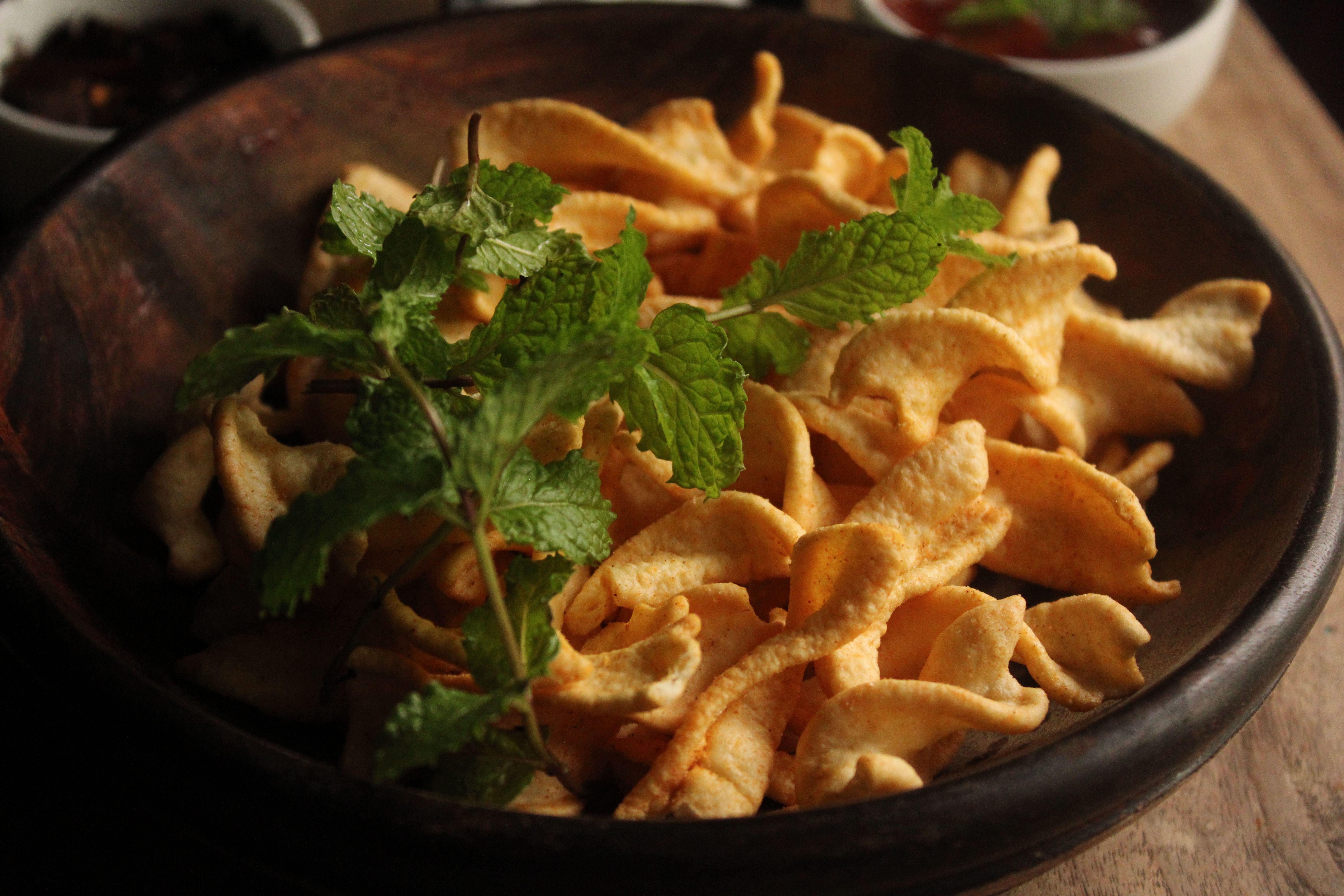
Photo: Jahra Tasfia Reza / Pexels
The diets react (see scores below)
Common Ingredients
- gram flour
- carom seeds
- turmeric
- black pepper
- baking soda
- oil
- salt
Specific recipes may vary.
Incompatible with 6 of 11 diets
Diet Ratings
Fafda is a traditional Gujarati snack made primarily from gram flour (besan/chickpea flour), which is extremely high in carbohydrates. A standard serving of fafda (roughly 100g) contains approximately 55-60g of total carbs, with only about 5-6g of fiber, resulting in roughly 50-55g of net carbs — well exceeding the entire daily keto carb limit of 20-50g. Gram flour is fundamentally incompatible with a ketogenic diet. The spices (carom seeds, turmeric, black pepper) and salt are keto-friendly, but they cannot offset the massive carb load from the base ingredient. The small amount of oil used for preparation is not sufficient to make this a high-fat keto food.
Fafda is a traditional Gujarati snack made entirely from plant-based ingredients. Gram flour (besan) provides the protein base, while carom seeds, turmeric, black pepper, baking soda, oil, and salt are all fully vegan. There are no animal products or animal-derived ingredients in any component of this dish. It is a whole-food-adjacent snack — primarily chickpea-based — though it is deep-fried, which slightly reduces its whole-food credentials without affecting its vegan status.
Fafda is a traditional Gujarati snack made primarily from gram flour (besan), which is ground chickpea flour — a legume product. Legumes are strictly excluded from the paleo diet due to their anti-nutrient content (lectins, phytates, saponins). Beyond the primary ingredient, the dish also contains added salt and baking soda (a processed additive), compounding its non-paleo status. The combination of a legume-based flour, added salt, and a leavening agent makes this dish incompatible with paleo principles across virtually all interpretations.
Fafda is made primarily from gram flour (chickpea flour), which is a legume-based ingredient — a strong Mediterranean diet positive. The spices (carom seeds, turmeric, black pepper) are whole and natural, also compatible. However, fafda is a deep-fried snack, which raises concerns: the type and quantity of oil used for frying is typically not extra virgin olive oil, and deep frying adds significant fat and calories beyond what Mediterranean guidelines encourage. The Mediterranean diet does include legume-based preparations and even some fried foods occasionally (e.g., fried fish, fritters), but the deep-fried nature of this snack as a regular item is not ideal. If baked or air-fried with olive oil, it would align better. As an occasional snack with its legume base, it lands in the moderate/caution zone.
Some Mediterranean diet interpretations, particularly those drawing from Middle Eastern and Levantine traditions, include fried legume snacks like falafel as acceptable foods given their plant-based protein base. Under this view, gram flour-based fafda could similarly be considered an acceptable legume-forward snack in moderation, especially if prepared with healthier oils.
Fafda is a traditional Indian snack made entirely from plant-based ingredients. Gram flour (chickpea flour) is a legume-derived product, which is explicitly excluded on the carnivore diet. All other ingredients — carom seeds, turmeric, black pepper, baking soda, and plant oil — are either plant-derived spices, seeds, or processed plant products. There is no animal-derived ingredient in this dish whatsoever. This is completely incompatible with the carnivore diet at every level, including the most lenient interpretations.
Fafda is a traditional Indian snack made primarily from gram flour (besan), which is flour ground from chickpeas — a legume. Legumes are explicitly excluded on the Whole30 program, and gram flour is simply a processed form of a legume, making it non-compliant. Additionally, fafda is a fried cracker/crispy snack strip, which falls squarely into the 'chips and crackers' category of junk food recreation that Whole30 explicitly prohibits even when made with otherwise compliant ingredients. Both the core ingredient (gram flour = legume) and the food form (crispy snack/chip-like item) independently disqualify this dish.
Fafda is a traditional Gujarati snack made primarily from gram flour (besan), which is derived from chickpeas. Gram flour is high in GOS (galacto-oligosaccharides), a key FODMAP category. According to Monash University, chickpea/besan flour is high-FODMAP even at moderate serving sizes. Since gram flour is the dominant ingredient and structural base of fafda, there is no realistic way to consume a standard serving of this snack within safe FODMAP thresholds. The remaining ingredients — carom seeds, turmeric, black pepper, baking soda, oil, and salt — are all low-FODMAP and not a concern. However, the gram flour alone makes this dish unsuitable during the elimination phase.
Fafda is a deep-fried Indian snack made primarily from gram flour (besan), which is a legume-based flour with reasonable protein and fiber content — both DASH-friendly attributes. However, the deep-frying process significantly increases total fat content, and the added salt raises sodium concerns relevant to DASH guidelines. Gram flour itself aligns with DASH's emphasis on legumes, but the frying method and salt addition undermine its overall compatibility. The spices (carom seeds, turmeric, black pepper) and baking soda are nutritionally minor but the salt and oil are the primary concerns. As commonly consumed, fafda is a fried snack with moderate-to-high sodium content, placing it in the 'caution' category — acceptable occasionally in small portions but not a recommended DASH staple.
NIH DASH guidelines do not specifically address fried legume-based snacks like fafda, creating some interpretive flexibility. Some DASH-oriented dietitians argue that if fafda is baked or air-fried with minimal salt, the gram flour base aligns well with DASH's legume recommendations — but the traditional deep-fried, salted preparation is not consistent with standard DASH principles.
Fafda is a deep-fried Indian snack made primarily from gram flour (besan), which is derived from chickpeas. From a Zone perspective, gram flour has a moderate glycemic index — lower than wheat flour due to its legume origin and higher protein/fiber content — but the deep-frying process introduces a significant amount of oil, likely omega-6-heavy seed oil (such as sunflower or vegetable oil), which conflicts with the Zone's anti-inflammatory and monounsaturated fat emphasis. The macronutrient profile of fafda skews heavily toward carbohydrates and fat with virtually no lean protein, making it impossible to constitute a Zone-balanced snack on its own. The 40/30/30 ratio is severely disrupted. However, gram flour does provide some protein (roughly 20% of calories) and fiber compared to refined carb snacks, which partially redeems it. The carom seeds, turmeric, and black pepper are anti-inflammatory spices that align well with Sears' polyphenol focus. As a standalone snack, fafda is difficult to place in Zone without pairing it with lean protein and adjusting fat sourcing, hence a 'caution' rating.
Some Zone practitioners may view gram flour more favorably than refined wheat-based snacks due to its lower glycemic index, higher fiber, and modest protein content relative to other fried snacks. In Sears' block system, a small portion of fafda could theoretically contribute carb and fat blocks if paired with a lean protein source, making it usable — if not ideal — within a Zone framework. The spice profile (turmeric, black pepper) adds polyphenol value that Sears has increasingly emphasized in later writings.
Fafda is a deep-fried Gujarati snack made from gram flour (besan), which is inherently a positive base — chickpea flour is high in fiber, plant protein, and has a relatively low glycemic index compared to refined wheat flour, making it legume-derived and anti-inflammatory in principle. The spice profile is a genuine strength: turmeric (curcumin), carom seeds (thymol, a potent anti-inflammatory compound), and black pepper (piperine, which enhances curcumin bioavailability) are all well-supported anti-inflammatory ingredients. However, the primary concern is the cooking method: Fafda is deep-fried, typically in refined vegetable or seed oils (commonly refined sunflower or soybean oil in commercial and home preparation). Repeated high-heat frying in omega-6-heavy refined oils introduces oxidized lipids and a poor omega-6:omega-3 ratio, both associated with increased inflammatory markers. The small amount of baking soda is neutral. If fried in a more favorable oil (e.g., refined coconut oil occasionally, or even cold-pressed mustard oil as traditionally used in some regions), the profile improves marginally, but the deep-frying process itself remains a limiting factor. Overall, the anti-inflammatory spice base and legume flour are real positives, but the frying method and likely oil type prevent an 'approve' verdict.
A more favorable interpretation would note that gram flour's legume origin, combined with turmeric and black pepper synergy (curcumin + piperine), gives this snack genuine anti-inflammatory credentials that many standard snacks lack — and some anti-inflammatory practitioners (including those following Mediterranean-adjacent approaches) accept occasional fried legume foods as part of a broadly healthy pattern. Conversely, stricter anti-inflammatory protocols (such as those outlined by functional medicine practitioners like Dr. Mark Hyman) would flag the refined oil frying as a significant concern, arguing that even one serving meaningfully elevates oxidized lipid intake.
Fafda is a deep-fried Indian snack made from gram flour (besan) strips. While gram flour does provide some plant protein and fiber in its raw form, the deep-frying process significantly increases fat content and makes this a high-fat, greasy food that directly worsens GLP-1 side effects including nausea, bloating, and reflux. The oil absorption during frying dominates the nutritional profile, turning what could be a reasonable legume-based ingredient into an empty-calorie, high-fat snack. Portion sizes are typically multiple pieces, compounding the fat load. Carom seeds (ajwain) may actually help with digestion marginally, but this does not offset the core problem. This snack offers minimal protein per serving in its fried form, low nutrient density per calorie, poor digestibility due to fat content, and is exactly the category of food GLP-1 patients are advised to avoid. It is not small-portion friendly in practice, as the snack is rarely eaten as a single piece.
*See how scores were generated at our methodology page.
Nutritional profile
Six traits that cut across every diet.
Fiber & Plants
How much whole-plant food and fiber it delivers.
Healthy Fats
The quality of its fats (unsaturated, omega-3).
Whole / Unprocessed
How close it is to its natural, unprocessed form.
Gut Gentle
How easy it is on digestion (low FODMAP, few irritants).
Low Glycemic
How little it spikes your blood sugar.
Protein Density
How much protein it packs per calorie.
Controversy Index
Higher controversy = more disagreement between diets.
Diet-Specific Tips
 Vegan — 8/10
View tips
- Gram flour (besan) is 100% plant-derived from chickpeas
- All spices (carom seeds, turmeric, black pepper) are plant-based
- Baking soda is a mineral leavening agent — vegan
- Oil is plant-derived; no clarified butter (ghee) used, which distinguishes this from some traditional Indian snack preparations
- No dairy, eggs, or any animal-derived additives
- Deep-frying is the only minor nutritional concern, not a vegan compliance issue
 Mediterranean — 5/10
View tips
- Gram flour (chickpea flour) is a legume — strongly Mediterranean-compatible
- Deep-frying method adds excessive fat and is not encouraged
- Oil type unspecified — likely not extra virgin olive oil
- Spices used are whole and natural, no added sugars or refined grains
- Comparable to falafel in concept but typically higher in oil absorption
- Acceptable occasionally but not as a dietary staple
 DASH — 4/10
View tips
- Deep-fried preparation increases total and potentially saturated fat intake
- Gram flour (besan) is a legume-based ingredient rich in protein, fiber, and potassium — DASH-compatible base
- Added salt contributes meaningfully to daily sodium load, a primary DASH concern
- No vegetables, fruits, or low-fat dairy — limited DASH nutrient density
- Spices like turmeric and carom seeds are nutritionally neutral to mildly beneficial
- Baked or air-fried low-sodium versions would score significantly higher under DASH
 Zone — 4/10
View tips
- Deep-fried in likely omega-6-heavy seed oil — conflicts with Zone's anti-inflammatory fat guidelines
- Gram flour (besan) has moderate glycemic index, lower than refined wheat — a relative positive
- No lean protein component — macro ratio heavily imbalanced without pairing
- High fat from frying skews fat block contribution well beyond Zone targets for a snack
- Anti-inflammatory spices (turmeric, carom seeds, black pepper) align with Sears' polyphenol emphasis
- Cannot serve as a Zone-balanced snack independently; requires lean protein pairing and portion control
 Anti-Inflammatory — 5/10
View tips
- Gram flour (besan) base: legume-derived, high fiber, lower GI than refined flour — anti-inflammatory positive
- Turmeric + black pepper combination: curcumin bioavailability enhanced by piperine — strong anti-inflammatory synergy
- Carom seeds (ajwain): contain thymol, an anti-inflammatory and antimicrobial compound
- Deep-fried preparation: major concern — high heat + likely refined seed oil creates oxidized lipids and elevated omega-6 load
- No refined sugar or artificial additives: a relative positive vs. typical processed snacks
- Oil type unspecified but typically refined sunflower or soybean oil in practice — both flagged under anti-inflammatory guidelines