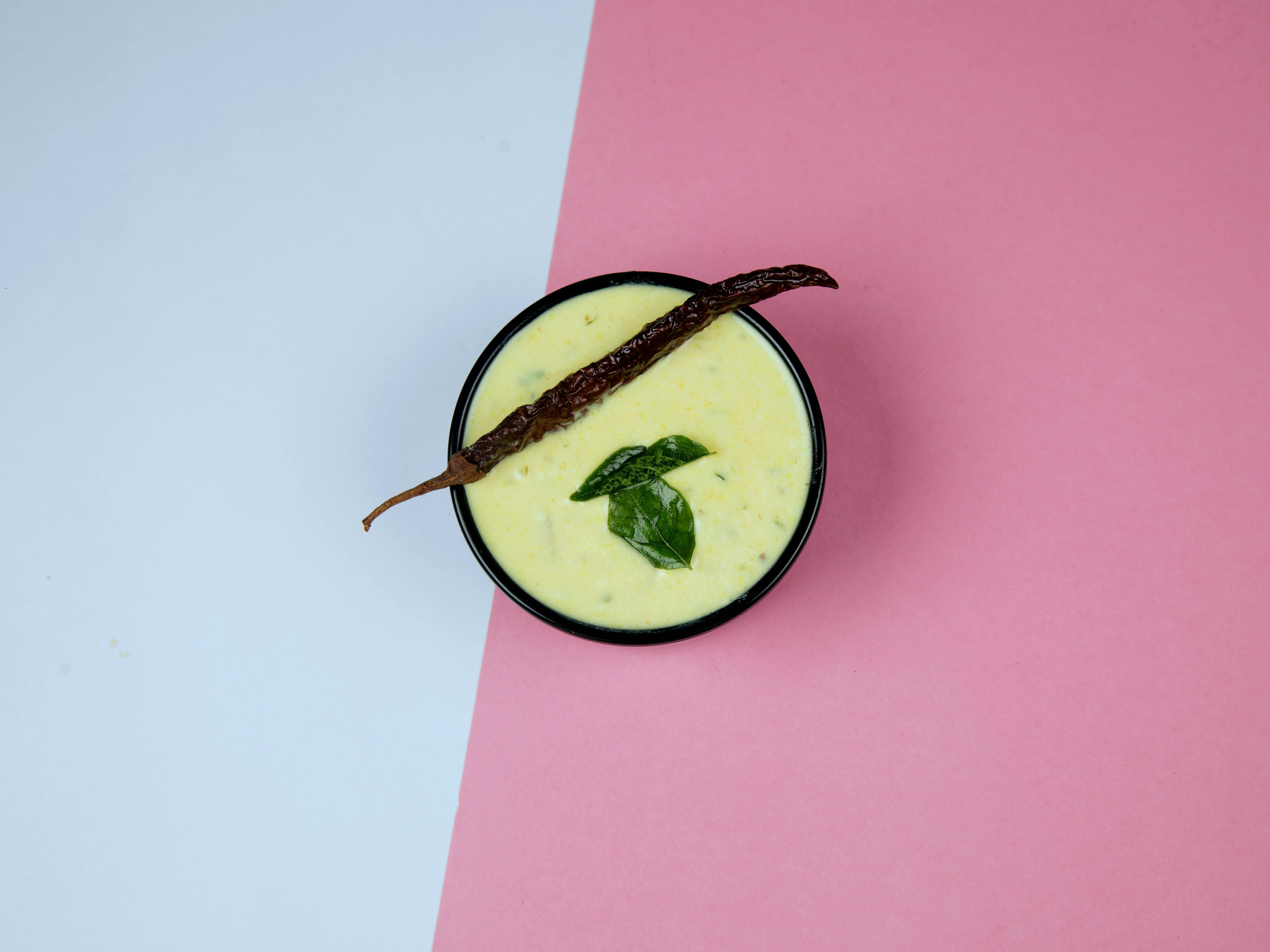
Photo: Milton Das / Pexels
Indian
Gujarati Kadhi
The diets react (see scores below)
Common Ingredients
- yogurt
- gram flour
- ginger
- green chili
- curry leaves
- mustard seeds
- cumin
- sugar
- cloves
Specific recipes may vary.
Incompatible with 6 of 11 diets
Diet Ratings
Gujarati Kadhi is a notably sweet-sour yogurt-based soup that is fundamentally incompatible with ketogenic eating. The defining characteristic of Gujarati Kadhi versus other regional kadhis is the deliberate addition of sugar, which is a direct keto violation with zero tolerance. Gram flour (besan) adds significant net carbs — roughly 6-8g per tablespoon used as a thickener. Yogurt contributes lactose-derived carbs. Combined, a standard serving likely delivers 15-25g net carbs, potentially consuming the entire daily keto carb budget in one dish, with no meaningful fat content to compensate. The spices and aromatics (ginger, curry leaves, mustard seeds, cumin, cloves) are keto-friendly, but they cannot offset the core incompatibility of the sugar and gram flour.
Gujarati Kadhi is centered on yogurt, a dairy product derived from cow's or buffalo's milk, making it incompatible with a vegan diet. Yogurt is an animal-derived ingredient with no ambiguity in vegan classification. All other ingredients — gram flour (besan), ginger, green chili, curry leaves, mustard seeds, cumin, sugar, and cloves — are fully plant-based. A vegan version of kadhi can be made by substituting the yogurt with plant-based yogurt (e.g., soy or coconut-based), but the traditional dish as described is not vegan.
Gujarati Kadhi contains two core non-paleo ingredients that disqualify it outright. Gram flour (besan) is made from ground chickpeas, which are legumes — strictly excluded from the paleo diet due to lectins, phytates, and anti-nutrients. Yogurt is a dairy product, also firmly excluded under paleo rules. The dish is essentially built on these two prohibited bases, making the otherwise paleo-friendly seasonings (ginger, green chili, curry leaves, mustard seeds, cumin, cloves) irrelevant to the overall verdict. Sugar is an additional concern as a refined sweetener. There is no meaningful way to classify this dish as paleo-compatible in its traditional form.
Gujarati Kadhi is a yogurt- and gram flour-based soup spiced with ginger, green chili, curry leaves, mustard seeds, and cumin. The dominant ingredients — yogurt (dairy) and gram flour (legume-derived) — are both acceptable in the Mediterranean framework, though dairy sits in the 'moderate' category rather than as a daily staple. Gram flour from chickpeas is a legume product and generally encouraged. The aromatic spices align well with Mediterranean herb-and-spice principles. The notable concern is the added sugar, which contradicts Mediterranean guidelines emphasizing minimal added sugars; however, the quantity used in kadhi is typically small. The dish lacks olive oil as the fat medium, instead relying on a ghee-based tadka (tempering), which is a saturated animal fat not in line with Mediterranean principles. Overall, this is a moderate, plant-leaning dish with dairy and minor concerns around added sugar and cooking fat.
Some Mediterranean diet practitioners would view the legume base (gram flour) and probiotic yogurt more favorably, giving it closer to an 'approve' — particularly if the ghee tadka is replaced with olive oil and sugar is minimized. Conversely, stricter interpretations would penalize it further for the added sugar and absence of olive oil as the primary fat.
Gujarati Kadhi is fundamentally incompatible with the carnivore diet. While yogurt is an animal-derived dairy product, it is overshadowed by gram flour (besan), which is a legume-based plant food — a direct violation of carnivore principles. The dish is further loaded with plant-based ingredients: ginger, green chili, curry leaves, mustard seeds, cumin, cloves, and sugar. There is no meaningful animal protein present. Even the most lenient 'animal-based' carnivore practitioners would reject this dish due to the legume flour, multiple plant spices, and added sugar. This is essentially a plant-dominant Indian soup with a minor dairy component.
Gujarati Kadhi contains multiple excluded ingredients. Yogurt is dairy, which is explicitly prohibited on Whole30 (only ghee/clarified butter is excepted from the dairy category). Gram flour is made from chickpeas, which are legumes — also explicitly excluded. Sugar is an added sweetener, which is prohibited. Any one of these three ingredients alone would disqualify this dish; together they make it clearly non-compliant.
Gujarati Kadhi contains two significant high-FODMAP ingredients that make it problematic during the elimination phase. First, yogurt (lactose) is a primary base ingredient used in substantial quantity — while lactose-free yogurt would be acceptable, standard yogurt is high-FODMAP at typical serving sizes used in kadhi (usually 1 cup or more per serving). Second, gram flour (besan/chickpea flour) is made from chickpeas and is high in GOS (galacto-oligosaccharides), a major FODMAP category. Even small amounts of gram flour are problematic; Monash rates chickpea flour as high-FODMAP. The remaining ingredients — ginger, green chili (small amounts), curry leaves, mustard seeds, cumin, sugar (small amount), and cloves — are generally low-FODMAP at culinary doses. However, the yogurt + gram flour combination makes this dish essentially unavoidable during strict elimination phase without significant recipe modification.
Some FODMAP practitioners suggest that the fermentation of yogurt reduces lactose somewhat, and that if lactose-free yogurt is substituted and gram flour is minimized, a modified kadhi could be tolerated — however, traditional Gujarati Kadhi uses enough gram flour (besan) as a thickener that GOS content remains a concern, and this substitution fundamentally changes the dish from its standard form.
Gujarati Kadhi is a yogurt-based soup thickened with gram flour (besan), spiced with ginger, green chili, curry leaves, mustard seeds, cumin, and cloves, and notably sweetened with sugar. Several components are DASH-friendly: yogurt provides calcium and potassium, gram flour adds plant-based protein and fiber, and the spices (ginger, cumin, mustard seeds, curry leaves) are low in sodium and rich in micronutrients. However, the dish has mixed DASH compatibility. Traditional Gujarati Kadhi uses full-fat yogurt, which conflicts with DASH's emphasis on low-fat dairy. The added sugar, while small in quantity per serving, adds empty calories. The dish does not inherently contain high sodium, which is a positive. The key question is the yogurt fat content — if made with low-fat yogurt, this dish moves closer to DASH approval. The sugar content keeps it in caution territory as DASH limits added sugars.
NIH DASH guidelines specify low-fat or fat-free dairy and limit added sugars; traditional Gujarati Kadhi made with full-fat yogurt and sugar does not fully align. However, updated clinical interpretations note that recent evidence questions whether full-fat dairy worsens cardiovascular outcomes, and a small amount of sugar in an otherwise nutrient-dense, low-sodium dish may be acceptable within overall DASH calorie targets.
Gujarati Kadhi is a yogurt- and gram flour-based soup that sits in Zone 'caution' territory for several reasons. The yogurt provides some protein and fat, while gram flour (besan) contributes carbohydrates with moderate fiber, making it a more favorable carb source than refined grains. However, the defining characteristic of Gujarati Kadhi specifically — versus Punjabi kadhi — is its notable sweetness from added sugar, which introduces high-glycemic, nutritionally empty calories that disrupt the Zone's low-glycemic carbohydrate principle. The dish also lacks a lean protein anchor (listed as 'none'), making it incomplete as a Zone meal on its own. The spices (ginger, green chili, curry leaves, mustard seeds, cumin) are Zone-positive due to their anti-inflammatory polyphenol content. Yogurt fat is primarily saturated, which is acceptable in moderation but not ideal versus monounsaturated fats. As a soup component or side dish paired with lean protein, this could fit into a Zone meal, but the added sugar is a meaningful drawback that prevents a higher score.
The amount of sugar in Gujarati Kadhi varies significantly by recipe — some versions use only a teaspoon or two across a full batch, which, when portioned as a soup serving, may contribute only 2-4g of sugar. Sears' later writings acknowledge that small amounts of unfavorable carbs are manageable within the block system if the overall meal ratio is maintained. A Zone practitioner counting blocks carefully could include this dish without significant glycemic disruption, especially if paired with lean protein and vegetables to balance the meal.
Gujarati Kadhi is a yogurt- and gram flour-based soup with a notably sweet profile due to added sugar, tempered with potent anti-inflammatory spices. The spice blend is genuinely impressive from an anti-inflammatory standpoint: ginger contains gingerols with well-documented anti-inflammatory activity, green chili provides capsaicin, curry leaves offer alkaloids and flavonoids with antioxidant properties, mustard seeds contain glucosinolates, cumin has antioxidant compounds, and cloves are among the highest-antioxidant spices available (eugenol). Gram flour (besan) adds plant protein and modest fiber, and yogurt provides probiotics that can support gut health and modulate inflammatory pathways. However, the defining issue for Gujarati Kadhi versus other regional variants is the addition of sugar — sometimes in significant quantity — which is a pro-inflammatory ingredient that nudges this dish toward caution. The yogurt is low-fat dairy, which is acceptable under anti-inflammatory guidelines, but some protocols flag dairy broadly. On balance, the powerful spice profile partially offsets the sugar, but the dish cannot reach 'approve' territory due to the deliberate sweetening.
Some anti-inflammatory practitioners would rate this higher, arguing that the sugar quantity in a single serving of kadhi is modest relative to the concentrated anti-inflammatory spice load, and that fermented dairy (yogurt) provides probiotic benefits that reduce systemic inflammation — a view consistent with Dr. Weil's inclusion of low-fat dairy and his emphasis on spices. Conversely, strict anti-inflammatory or low-glycemic protocols (e.g., those informed by Dr. Mark Hyman's approach) would penalize any added sugar and flag dairy as potentially problematic, particularly for individuals with autoimmune conditions.
Gujarati Kadhi is a warm, thin yogurt-based soup thickened with gram flour (besan) and tempered with aromatic spices. It is easy to digest, low in fat, and gentle on the stomach — all positives for GLP-1 patients. The yogurt provides some protein and probiotics, and gram flour adds a modest amount of plant-based protein and fiber. The spices (ginger, cumin, mustard seeds, curry leaves) are GLP-1-friendly and may even support digestion. However, Gujarati Kadhi is notably sweeter than other regional kadhi variants due to the addition of sugar, which reduces its nutritional density per calorie and adds empty calories — a meaningful drawback for GLP-1 patients eating smaller portions. Green chili may cause mild reflux or nausea in sensitive individuals. Protein content per serving is low (roughly 4-6g), and it does not meaningfully contribute to the 100-120g daily protein target. It works best as a light, hydrating accompaniment rather than a standalone meal, and sugar should ideally be reduced or omitted when preparing at home.
Some GLP-1-focused dietitians view yogurt-based soups like kadhi favorably as a gentle, probiotic-rich option that supports gut health during the GI adjustment period of GLP-1 therapy; others flag the added sugar and low protein density as making it a poor calorie investment given reduced appetite. Individual tolerance to the green chili and the warm spice blend also varies among patients experiencing nausea.
*See how scores were generated at our methodology page.
Nutritional profile
Six traits that cut across every diet.
Fiber & Plants
How much whole-plant food and fiber it delivers.
Healthy Fats
The quality of its fats (unsaturated, omega-3).
Whole / Unprocessed
How close it is to its natural, unprocessed form.
Gut Gentle
How easy it is on digestion (low FODMAP, few irritants).
Low Glycemic
How little it spikes your blood sugar.
Protein Density
How much protein it packs per calorie.
Controversy Index
Higher controversy = more disagreement between diets.
Diet-Specific Tips
 Mediterranean — 5/10
View tips
- Yogurt is dairy — acceptable in moderation under Mediterranean guidelines
- Gram flour (besan) is a legume-derived ingredient, generally encouraged
- Added sugar contradicts Mediterranean principles of minimal added sugars
- Ghee (implied in traditional tadka) is a saturated animal fat, not olive oil
- Aromatic spices (ginger, cumin, mustard seeds, curry leaves) are compatible with Mediterranean herb use
- No olive oil as the primary fat source
- Small portion sizes of problematic ingredients (sugar, ghee) mitigate concerns
 DASH — 5/10
View tips
- Yogurt provides calcium and potassium aligned with DASH goals, but traditional preparation uses full-fat yogurt which DASH discourages
- Gram flour adds plant-based protein and soluble fiber, both DASH-positive
- Added sugar conflicts with DASH guidelines limiting sweets and added sugars
- No significant sodium contributors in the ingredient list — sodium-conscious preparation is achievable
- Anti-inflammatory spices (ginger, cumin, mustard seeds, curry leaves) are DASH-neutral to positive
- Switching to low-fat yogurt and reducing sugar would raise this dish's DASH compatibility significantly
 Zone — 5/10
View tips
- Added sugar (a Zone-unfavorable high-glycemic carb) is a defining ingredient in Gujarati Kadhi and the primary concern
- Gram flour (besan) is a moderate-GI legume-based carb with fiber, more favorable than refined starch
- Yogurt provides modest protein and some fat but is primarily saturated rather than monounsaturated
- No lean protein source included — dish is incomplete as a standalone Zone meal
- Spices (ginger, curry leaves, cumin, mustard seeds) are Zone-positive anti-inflammatory polyphenol sources
- Works best as a Zone side dish paired with lean protein and low-glycemic vegetables
- Sugar quantity is recipe-dependent and may be manageable in small portions
 Anti-Inflammatory — 6/10
View tips
- Added sugar is a pro-inflammatory element and is a defining feature of Gujarati Kadhi's flavor profile
- Ginger provides well-researched anti-inflammatory gingerols and shogaols
- Cloves are extremely high in eugenol, one of the most potent anti-inflammatory spice compounds
- Cumin, mustard seeds, curry leaves, and green chili collectively contribute antioxidants and bioactive phytochemicals
- Gram flour adds plant-based protein and some dietary fiber
- Yogurt contributes probiotics that may support gut-mediated anti-inflammatory effects
- Low-fat dairy is acceptable under mainstream anti-inflammatory guidelines but debated in stricter protocols
 GLP-1 Friendly — 5/10
View tips
- Low protein per serving (~4-6g) — does not support the 100-120g daily protein target
- Added sugar (Gujarati style) reduces nutritional density per calorie — a meaningful drawback for GLP-1 patients
- Yogurt base provides probiotics and is generally easy to digest
- Gram flour adds modest plant protein and some fiber
- Thin consistency and high water content support hydration
- Low fat — gentle on GI system and unlikely to worsen nausea or bloating
- Green chili may trigger mild reflux or nausea in sensitive GLP-1 patients
- Best used as a light accompaniment; inadequate as a protein-forward meal