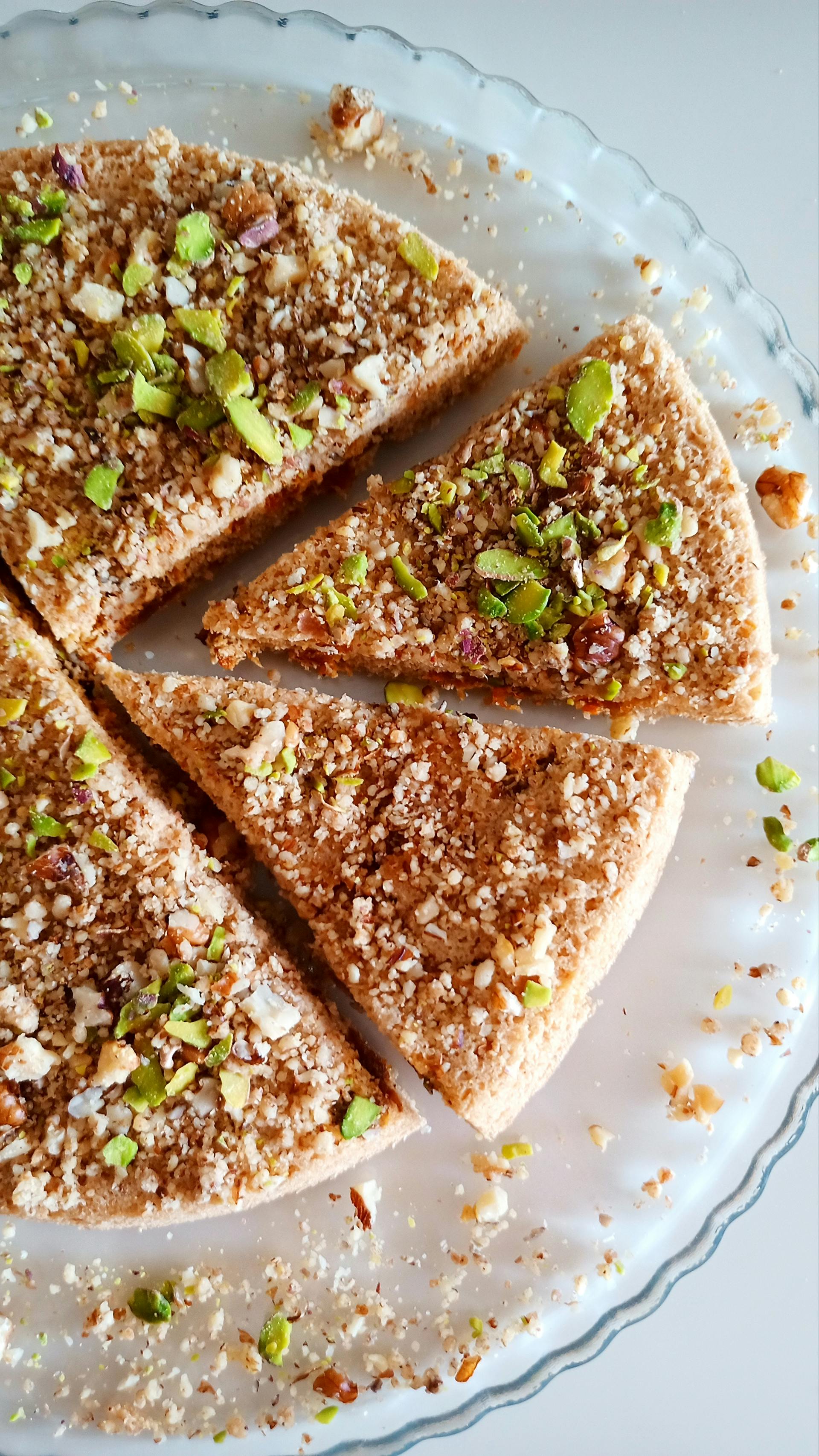
Photo: Konstantin Klimov / Pexels
The diets react (see scores below)
Common Ingredients
- rice
- chana dal
- bottle gourd
- yogurt
- ginger
- green chili
- sesame seeds
- mustard seeds
- turmeric
Specific recipes may vary.
Incompatible with 6 of 11 diets
Diet Ratings
Handvo is a traditional Indian savory cake made primarily from rice and chana dal (split chickpeas), both of which are high-carbohydrate foods that are fundamentally incompatible with ketogenic eating. Rice alone contains approximately 45g of net carbs per 100g cooked, and chana dal contributes roughly 40g of net carbs per 100g cooked. Even a small serving of Handvo would very likely exceed the entire daily net carb allowance for a ketogenic diet (20-50g). The fermented batter base of rice and lentils constitutes the structural majority of this dish, meaning there is no practical way to consume it in a keto-compatible portion. While individual ingredients like bottle gourd (low carb), yogurt (moderate), ginger, green chili, sesame seeds, mustard seeds, and turmeric are individually acceptable or borderline on keto, they are overwhelmed by the rice and chana dal base. This is not a portion-control situation — the core of the dish is built on keto-incompatible grains and legumes.
Handvo as listed contains yogurt, which is a dairy product derived from cow's or buffalo's milk. Dairy is unambiguously excluded from a vegan diet. All other ingredients — rice, chana dal, bottle gourd, ginger, green chili, sesame seeds, mustard seeds, and turmeric — are fully plant-based. The dish itself is not vegan in its traditional form due to the yogurt, which serves as a souring and binding agent in the batter. A vegan version is achievable by substituting the yogurt with a plant-based alternative such as dairy-free yogurt or a fermented rice-lentil batter without dairy, but that modification would constitute a different recipe.
Handvo is fundamentally incompatible with the paleo diet. It contains rice (a grain) and chana dal (a legume — a type of chickpea), both of which are explicitly excluded from paleo. Yogurt is a dairy product, also excluded. These are not minor or debated ingredients — they form the structural base of the dish, comprising the majority of its composition. The remaining ingredients (bottle gourd, ginger, green chili, sesame seeds, mustard seeds, turmeric) are individually paleo-compatible, but they cannot redeem a dish built on three core non-paleo food categories.
Handvo is a savory Indian snack cake made from fermented rice and lentils (chana dal), which aligns well with Mediterranean principles of legume consumption, fermented foods, and vegetable inclusion (bottle gourd). The ingredients are largely whole, plant-based, and minimally processed. However, the base is white rice rather than a whole grain, which is not ideal under modern Mediterranean diet guidelines. Yogurt is acceptable in moderation. The spice profile (ginger, green chili, turmeric, mustard seeds, sesame seeds) is healthy and anti-inflammatory. The dish is not cooked in olive oil as the primary fat, and the cooking method typically involves oil (often vegetable oil) for tempering. Overall, it is a nutritious, plant-forward snack that fits Mediterranean values reasonably well, but the refined rice base and non-olive-oil fat source prevent a full approval.
Some Mediterranean diet interpreters might view this more favorably, as white rice is used in traditional Mediterranean cuisines (e.g., Greek and Spanish dishes), and the overall profile — fermented legumes, vegetables, yogurt, anti-inflammatory spices — is strongly plant-forward and aligns with the diet's spirit. Others might caution more strongly due to the absence of olive oil and the refined grain component.
Handvo is entirely plant-based and directly violates every principle of the carnivore diet. It contains no animal products whatsoever in its core composition. The dish is built on rice (grain), chana dal (legume), and bottle gourd (vegetable) — three categories explicitly excluded from carnivore. Yogurt is the only ingredient that is animal-derived, but it appears as a minor binding/fermenting agent in an otherwise completely plant-based dish. The remaining ingredients — ginger, green chili, sesame seeds, mustard seeds, and turmeric — are all plant-derived spices and seeds, also excluded. The primary protein source (lentils/chana dal) is a legume, which is among the most carnivore-incompatible food categories. This dish is essentially the opposite of a carnivore meal.
Handvo contains multiple Whole30-excluded ingredients. Rice is a grain and is explicitly excluded from the Whole30 program. Chana dal is a legume (split chickpeas) and is also explicitly excluded. Yogurt is a dairy product and is excluded. These three core ingredients each independently disqualify this dish. No compliant substitutions could salvage this dish without fundamentally changing its nature.
Handvo contains multiple high-FODMAP ingredients that make it problematic during the elimination phase. Chana dal (split chickpeas) is high in GOS (galacto-oligosaccharides) and is a significant FODMAP source even in moderate servings — it is a primary ingredient here, not a minor flavoring. Yogurt contains lactose and is high-FODMAP at standard serving sizes (>2 tbsp/42g per Monash). Bottle gourd (lauki/doodhi) has limited Monash testing but is flagged as potentially moderate-to-high FODMAP. The fermentation process used in traditional Handvo preparation (similar to sourdough logic) may reduce some FODMAP content in the rice-lentil batter, but unlike sourdough bread where fermentation time is well-studied, the reduction in GOS from fermented chana dal is not reliably documented or validated by Monash to bring it into safe territory. The combination of chana dal + yogurt alone makes this dish high-FODMAP at any standard serving.
Some FODMAP practitioners acknowledge that the traditional overnight fermentation of the rice-chana dal batter may reduce GOS content somewhat, analogous to how long-fermented sourdough reduces fructans. However, Monash University has not specifically tested fermented chana dal preparations, and clinical FODMAP dietitians generally advise avoiding all legume-based dishes during the strict elimination phase regardless of preparation method.
Handvo is a traditional Indian fermented savory cake made from rice, chana dal (split chickpeas), and bottle gourd, which aligns well with DASH diet principles. The primary ingredients are whole grains, legumes, and vegetables — all emphasized in DASH. Chana dal provides plant-based protein, fiber, and magnesium. Bottle gourd is a low-calorie vegetable rich in potassium. Yogurt (if low-fat) contributes calcium and protein. Sesame seeds add magnesium and healthy fats. Mustard seeds, turmeric, ginger, and green chili are DASH-friendly spices with negligible sodium. Fermentation may enhance nutrient bioavailability. The main concerns are portion control (rice contributes refined carbohydrates unless parboiled/whole grain), and sodium added during preparation (salt is typically added, though not listed here). If prepared with minimal added salt and low-fat yogurt, this is a DASH-compatible snack with multiple beneficial nutrients.
NIH DASH guidelines do not specifically address fermented grain-legume dishes like Handvo, making this an inferred assessment. Some DASH-oriented clinicians may flag the refined white rice base as a concern, preferring whole grain substitutions, while others note that the legume combination and fermentation process lower the effective glycemic impact and improve the overall nutritional profile.
Handvo is a traditional Indian savory cake made from a fermented batter of rice and lentils (chana dal), baked or pan-cooked with vegetables like bottle gourd, yogurt, and spices. From a Zone perspective, it's a mixed picture. The chana dal provides a reasonable plant-based protein source and is relatively low-glycemic compared to many legumes, which is a positive. Bottle gourd is a favorable low-glycemic vegetable. Yogurt adds some protein and a small amount of fat. Spices like turmeric, ginger, and mustard seeds are anti-inflammatory, aligning well with Sears' polyphenol emphasis. However, the dominant base ingredient is white rice (typically used in handvo batter), which is a high-glycemic, 'unfavorable' carbohydrate in Zone terminology. The rice-to-dal ratio in the batter is usually 2:1 or higher, meaning carbohydrates skew heavily toward higher-glycemic sources. Additionally, the protein from chana dal is incomplete and relatively modest per serving compared to the carbohydrate load, making it difficult to hit the 30% protein target without additional lean protein alongside. Fat content is low, requiring supplementation to reach the 30% fat target. As a snack, a small portion paired with additional lean protein and a monounsaturated fat source (e.g., a few almonds) could be workable within Zone blocks, but the dish alone is carbohydrate-heavy and unbalanced.
Some Zone practitioners and later Sears writings give more latitude to fermented foods and legume-based dishes due to their anti-inflammatory properties, lower glycemic impact post-fermentation, and high polyphenol content from spices. The fermentation process used in handvo batter may reduce the glycemic impact of the rice somewhat. Chana dal is one of the lowest-GI legumes available, and Zone-favorable practitioners may treat this dish more generously — closer to a 6 — especially if portioned carefully as a small snack block alongside complementary protein.
Handvo is a traditional Gujarati savory cake made from fermented rice and lentil batter, and its ingredient profile aligns well with anti-inflammatory dietary principles. Chana dal (split chickpeas) is a high-fiber legume that supports gut health and reduces inflammatory markers. The fermentation process used in traditional handvo preparation increases bioavailability of nutrients and introduces beneficial probiotics via yogurt, which supports gut microbiome health — a key anti-inflammatory mechanism. Bottle gourd (lauki) is a low-calorie vegetable with antioxidant compounds. Turmeric contains curcumin, one of the most well-researched anti-inflammatory compounds. Ginger provides gingerols and shogaols with demonstrated anti-inflammatory properties. Green chili contributes capsaicin, which has anti-inflammatory and antioxidant effects. Sesame seeds offer lignans and healthy fats. Mustard seeds contain glucosinolates and antioxidants. The dish is minimally processed, plant-forward, and spice-rich. The main limiting factor is white rice, a refined carbohydrate that is pro-inflammatory in excess, and the modest amount of yogurt (low-fat dairy is in the 'moderate' category). However, rice in fermented form has a lower glycemic impact than plain cooked white rice, and the overall composition of the dish is strongly favorable.
Some anti-inflammatory practitioners following autoimmune protocols (e.g., AIP) may flag yogurt as a dairy trigger and note that white rice, even fermented, raises blood sugar in a way that can promote glycation and inflammation. Additionally, strict low-glycemic anti-inflammatory approaches would prefer brown rice or no rice. However, Dr. Weil's framework allows low-fat dairy in moderation and recognizes whole grains and legumes as beneficial, and the fermentation process mitigates some glycemic concerns.
Handvo is a savory Indian lentil-rice cake made by fermenting a batter of rice and chana dal with yogurt, then baking or pan-cooking it with vegetables like bottle gourd. It offers a reasonable nutritional profile for a GLP-1 patient but has meaningful limitations. On the positive side, chana dal provides plant-based protein and soluble fiber, bottle gourd adds hydration and easy digestibility, yogurt contributes probiotics and additional protein, and the dish is generally low in saturated fat. Fermentation improves digestibility and may reduce bloating. However, the protein density is moderate at best — a typical serving delivers roughly 6–10g of protein, which is low relative to GLP-1 protein targets (15–30g per meal). The rice component adds refined carbohydrate with limited nutritional payoff per calorie, and the rice-to-lentil ratio in traditional recipes often skews toward starch. Green chili is present, which may aggravate nausea or reflux in GLP-1 patients with GI sensitivity. Sesame and mustard seed tempering adds modest fat but is unlikely to be problematic in typical amounts. Overall, Handvo is a nutrient-moderate snack that fits GLP-1 dietary principles better than most fried or high-fat snacks, but the protein density and chili content prevent a full approval without modification.
Some GLP-1-focused dietitians would view fermented lentil-based foods favorably for their gut health benefits and relatively low glycemic load compared to refined snacks, potentially rating this higher. Others would flag the low protein-per-serving yield and the chili content as meaningful concerns for patients early in GLP-1 therapy when GI side effects are most pronounced, supporting a lower score.
*See how scores were generated at our methodology page.
Nutritional profile
Six traits that cut across every diet.
Fiber & Plants
How much whole-plant food and fiber it delivers.
Healthy Fats
The quality of its fats (unsaturated, omega-3).
Whole / Unprocessed
How close it is to its natural, unprocessed form.
Gut Gentle
How easy it is on digestion (low FODMAP, few irritants).
Low Glycemic
How little it spikes your blood sugar.
Protein Density
How much protein it packs per calorie.
Controversy Index
Higher controversy = more disagreement between diets.
Diet-Specific Tips
 Mediterranean — 6/10
View tips
- Legume base (chana dal) is a Mediterranean diet staple — strongly positive
- Bottle gourd adds vegetable content — positive
- Fermented preparation may enhance nutrient bioavailability — positive
- White rice rather than whole grain is not ideal for modern Mediterranean guidelines
- Yogurt is acceptable in moderation under Mediterranean diet
- Spices (turmeric, ginger, sesame seeds) are anti-inflammatory and health-promoting
- Typically cooked in vegetable oil rather than extra virgin olive oil — slight negative
- No red meat, added sugars, or highly processed ingredients — positive
 DASH — 7/10
View tips
- Chana dal provides plant-based protein, fiber, and magnesium — all DASH-emphasized nutrients
- Bottle gourd is a potassium-rich DASH-friendly vegetable
- Yogurt contributes calcium and protein; low-fat version preferred per DASH
- Sesame seeds add magnesium and healthy unsaturated fats
- Spices (turmeric, ginger, mustard seeds) are sodium-free flavor enhancers aligned with DASH
- Fermentation may improve nutrient bioavailability and gut health
- White rice base is less ideal than whole grain alternatives; portion control needed
- Sodium content depends heavily on added salt during preparation — low-sodium preparation is critical for DASH compliance
 Zone — 5/10
View tips
- White rice is a high-glycemic 'unfavorable' carbohydrate in Zone terminology, and it dominates the batter
- Chana dal is a low-GI legume and provides plant-based protein, favorable in Zone
- Bottle gourd is a favorable low-glycemic vegetable
- Fermentation of the batter may modestly reduce the overall glycemic impact
- Spices (turmeric, ginger, mustard seeds) support Sears' anti-inflammatory emphasis and polyphenol goals
- Macronutrient ratio is carbohydrate-heavy; protein and fat are insufficient to hit Zone's 30/30 targets without additions
- As a snack, small portions paired with lean protein and monounsaturated fat can be Zone-compatible with effort
 Anti-Inflammatory — 8/10
View tips
- Chana dal: high-fiber legume with anti-inflammatory and gut-health benefits
- Fermentation of rice and lentils improves nutrient bioavailability and adds probiotic benefit
- Turmeric (curcumin): well-researched anti-inflammatory spice
- Ginger: contains gingerols and shogaols with demonstrated anti-inflammatory activity
- Green chili: capsaicin provides antioxidant and anti-inflammatory effects
- Bottle gourd: low-calorie vegetable with antioxidant properties
- Sesame seeds: source of lignans, healthy fats, and antioxidants
- Mustard seeds: contain glucosinolates and antioxidant compounds
- White rice: refined carbohydrate, mildly pro-inflammatory at high volume, partially offset by fermentation
- Yogurt: low-fat dairy in moderate category; probiotic benefit supports anti-inflammatory gut health
 GLP-1 Friendly — 6/10
View tips
- Moderate plant protein from chana dal — adequate for a snack but below the 15–30g per meal target without pairing
- Fermented preparation improves digestibility, a meaningful plus for GLP-1 patients with slowed gastric emptying
- Bottle gourd adds hydration and fiber with very low fat
- Green chili may worsen nausea or reflux in GLP-1-sensitive patients
- Rice component dilutes protein density and adds starch with limited micronutrient payoff
- Low saturated fat profile is appropriate for GLP-1 dietary guidelines
- Portion-sensitive: a small serving keeps fat and calories in check but further reduces already-modest protein yield