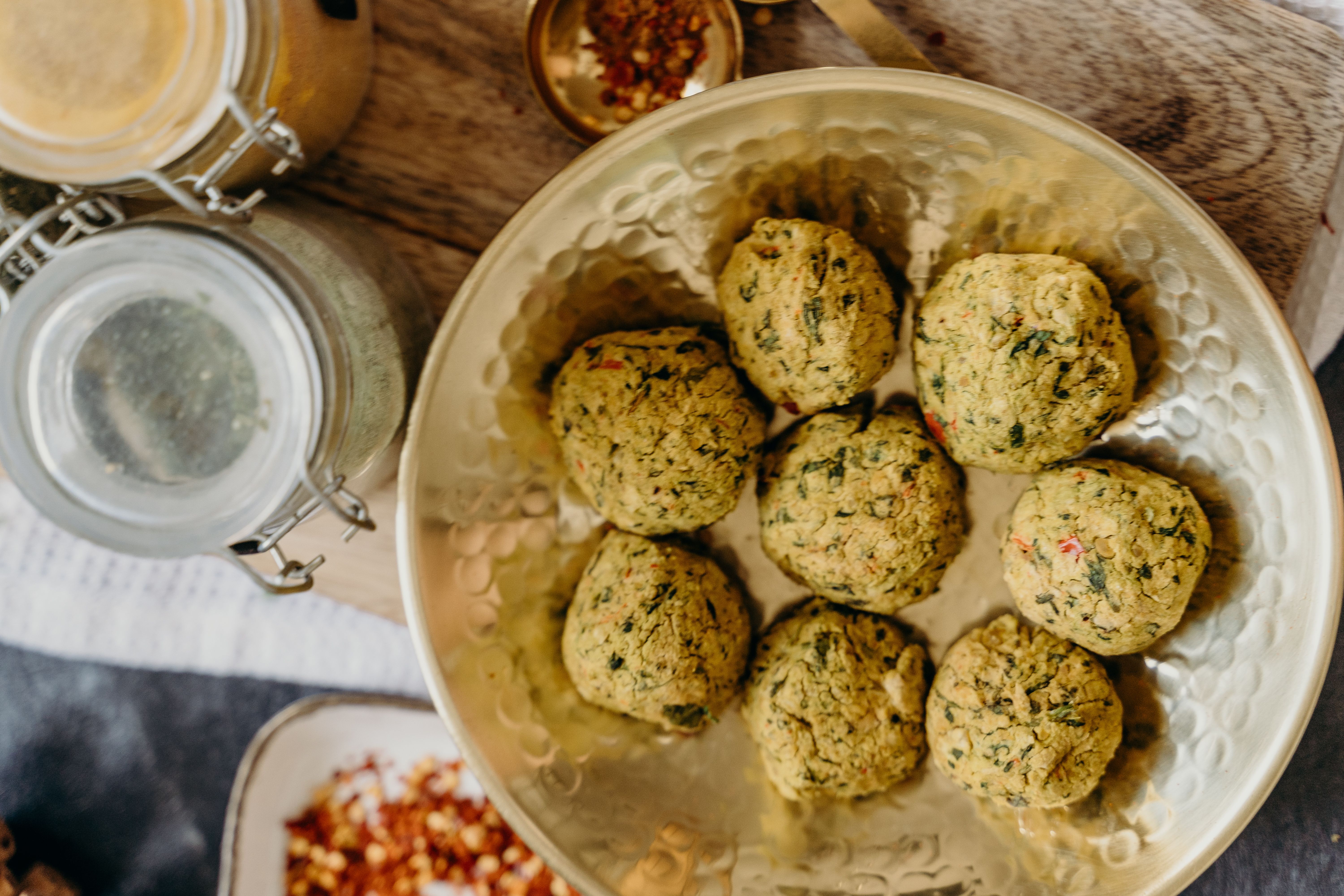
Photo: Alesia Kozik / Pexels
The diets react (see scores below)
Common Ingredients
- wheat flour
- gram flour
- fenugreek leaves
- bottle gourd
- ginger
- green chili
- sesame seeds
- mustard seeds
- turmeric
Specific recipes may vary.
Incompatible with 5 of 11 diets
Diet Ratings
Muthiya is fundamentally incompatible with a ketogenic diet. Its two primary ingredients are wheat flour and gram flour (chickpea flour), both of which are high-carbohydrate grains/legumes. Wheat flour contains approximately 70-75g net carbs per 100g, and gram flour contains approximately 50-55g net carbs per 100g. Even a modest serving of muthiya (2-3 pieces) would likely deliver 25-40g of net carbs, easily exceeding or maxing out the entire daily keto carb budget. The fenugreek leaves and bottle gourd are relatively low-carb and would otherwise be acceptable, but they cannot offset the dominant grain and legume base. The spices and seeds are keto-friendly but nutritionally negligible in context.
Muthiya is a traditional Gujarati steamed/fried snack made entirely from plant-based ingredients. Wheat flour and gram flour form the base, while fenugreek leaves (methi) and bottle gourd provide vegetables and micronutrients. Ginger, green chili, sesame seeds, mustard seeds, and turmeric are all plant-derived spices and seeds. There are no animal products, dairy, eggs, or animal-derived additives in this ingredient list. The dish is predominantly whole-food and minimally processed, making it an excellent fit for a vegan diet. It scores highly as it combines legume-based flour, leafy greens, and vegetables with no processed or ethically contested ingredients.
Muthiya is fundamentally incompatible with the paleo diet. Its two primary structural ingredients are wheat flour (a grain) and gram flour (chickpea flour, a legume) — both of which are categorically excluded from paleo. These are not minor or trace ingredients; they form the entire base of the dish. While several supporting ingredients are paleo-approved (fenugreek leaves, bottle gourd, ginger, green chili, turmeric) or debated (sesame seeds, mustard seeds), the grain and legume foundation makes this dish impossible to reconcile with paleo principles regardless of interpretation.
Muthiya is a plant-forward Indian snack made primarily from whole grains (wheat flour), legumes (gram flour), and vegetables (fenugreek leaves, bottle gourd), which aligns strongly with Mediterranean diet principles emphasizing plant-based whole foods. The spices (ginger, green chili, turmeric) and seeds (sesame, mustard) add anti-inflammatory and nutritional value consistent with Mediterranean eating patterns. The dish is minimally processed, contains no red meat, added sugars, or refined grains, and is rich in fiber and plant protein. The main consideration is that it is typically steamed or lightly pan-fried — if prepared with olive oil or minimal oil, it fits even better. The use of wheat flour is a slight concern if refined, but gram flour provides a strong legume foundation.
Some Mediterranean diet purists may note that wheat flour in traditional Indian snacks can be refined rather than whole grain, which modern clinical guidelines (e.g., Oldways Mediterranean Diet Pyramid) discourage. Additionally, the dish is not native to Mediterranean culinary traditions, so its compatibility depends on ingredient quality — steaming method and whole-grain flours would be preferred over refined varieties.
Muthiya is entirely plant-based with zero animal-derived ingredients. It consists of wheat flour, gram flour, fenugreek leaves, bottle gourd, ginger, green chili, sesame seeds, mustard seeds, and turmeric — all of which are explicitly excluded on the carnivore diet. Grains (wheat flour), legumes (gram flour/chickpea flour), vegetables (bottle gourd, fenugreek leaves), spices (ginger, turmeric, mustard seeds, green chili), and seeds (sesame) are all forbidden across every tier of carnivore eating, from the most lenient to the strictest Lion Diet. There is no animal product present whatsoever.
Muthiya contains two excluded ingredients that make it non-compliant with Whole30. First, wheat flour is a grain and explicitly excluded from the program. Second, gram flour (besan) is made from chickpeas, which are legumes and also explicitly excluded. Either ingredient alone would disqualify this dish, and together they make it clearly off-limits. The remaining ingredients — fenugreek leaves, bottle gourd, ginger, green chili, sesame seeds, mustard seeds, and turmeric — are all Whole30-compliant, but the foundational flours cannot be substituted without fundamentally changing the dish.
Muthiya contains multiple high-FODMAP ingredients that make it unsuitable during the elimination phase. Wheat flour is the primary ingredient and is high in fructans, a major FODMAP trigger. Gram flour (besan/chickpea flour) is derived from chickpeas and is high in GOS (galacto-oligosaccharides), another significant FODMAP. Fenugreek leaves contain fructans and are high-FODMAP. These three ingredients alone make this dish a clear 'avoid' during elimination. The remaining ingredients — bottle gourd, ginger, green chili, sesame seeds, mustard seeds, and turmeric — are generally low-FODMAP at typical serving sizes and do not rescue the dish from its high-FODMAP status. There is no realistic serving size of traditional Muthiya that would bring this dish into low-FODMAP territory given the combined fructan and GOS load.
Muthiya is a traditional Gujarati steamed (or lightly sautéed) snack made predominantly from whole wheat flour and gram flour, combined with fenugreek leaves, bottle gourd, and aromatic spices. The ingredient profile aligns well with DASH principles: whole wheat and gram flour provide fiber and plant-based protein; fenugreek leaves and bottle gourd are potassium- and magnesium-rich vegetables; sesame seeds add calcium and healthy fats; mustard seeds and turmeric are anti-inflammatory spices with negligible sodium impact. There is no added salt listed, no saturated fat sources, no red meat, and no high-sodium processed ingredients. The primary concern is preparation method — steamed muthiya is genuinely DASH-friendly, but if shallow-fried or pan-fried in oil after steaming (a common finishing step), the fat content increases moderately. Sodium can also vary depending on how much salt is added during preparation, which is not listed here but is typical in most recipes. Portion control is still advisable as gram and wheat flours are calorie-dense carbohydrates.
NIH DASH guidelines don't explicitly address traditional Indian snacks like muthiya, so this rating is inferred from ingredient analysis. Some DASH-oriented clinicians may assign a 'caution' rating if the dish is finished by pan-frying in oil, which increases total fat intake, or if significant salt is added — both common in traditional preparation methods not captured in this ingredient list.
Muthiya is a traditional Gujarati steamed snack made primarily from wheat flour and gram flour, which are moderate-to-high glycemic carbohydrate sources that Zone methodology classifies as 'unfavorable' carbs. The carbohydrate load from these flours dominates the macro profile, making it difficult to achieve the 40/30/30 ratio without significant portioning discipline. On the positive side, fenugreek leaves and bottle gourd are excellent low-glycemic, polyphenol-rich vegetables that Zone strongly favors, and sesame/mustard seeds contribute monounsaturated and healthy fats. Ginger and turmeric are anti-inflammatory polyphenol sources that align with Sears' later anti-inflammatory Zone focus. However, the dish lacks meaningful lean protein — a critical gap for Zone balance. As a snack, muthiya would need to be paired with a protein source (e.g., low-fat cottage cheese, egg whites) and kept to a very small portion (1-2 pieces) to avoid spiking insulin. The wheat flour base is the primary concern, as Zone prefers to minimize refined grain carbohydrates in favor of vegetable carbs. Steaming rather than frying is a significant positive. This dish sits firmly in 'unfavorable carb' territory but is not categorically excluded.
Some Zone practitioners following Sears' later writings (The Anti-Inflammation Zone) may rate this more favorably due to the strong presence of anti-inflammatory ingredients — fenugreek, turmeric, ginger, and bottle gourd — and the fact that gram flour (besan) has a lower glycemic index than wheat flour and provides modest protein. In small portions as part of a balanced Zone meal with added lean protein, muthiya could be considered a workable 'caution' food toward the higher end of that range.
Muthiya is a Gujarati steamed snack with a strong anti-inflammatory ingredient profile. Fenugreek leaves (methi) contain alkaloids and flavonoids with documented anti-inflammatory activity and are highlighted in Ayurvedic and integrative nutrition contexts. Bottle gourd is a low-calorie, hydrating vegetable with antioxidant properties. Turmeric provides curcumin, one of the most well-studied anti-inflammatory compounds. Ginger contains gingerols and shogaols with COX-2 inhibiting activity. Green chili contributes capsaicin, a known anti-inflammatory compound. Sesame seeds offer lignans (sesamin, sesamolin) with antioxidant and anti-inflammatory properties, plus a modest omega-6 contribution that is generally acceptable in whole-food form. Mustard seeds contain glucosinolates and are associated with reduced inflammatory markers. The flours — whole wheat and gram (chickpea) flour — provide fiber and resistant starch, supporting gut health and a reduced inflammatory burden. Gram flour in particular has a lower glycemic impact than refined wheat and adds plant protein. The primary preparation method is steaming, which preserves nutrients and avoids pro-inflammatory oxidized fats. The main caution is that refined wheat flour, if used, raises the glycemic load somewhat, which can be mildly pro-inflammatory at scale. Overall, this dish is a strong fit for anti-inflammatory eating, especially for plant-forward snacking.
Some anti-inflammatory practitioners, particularly those following low-carbohydrate or grain-free protocols (e.g., AIP or functional medicine frameworks), would flag the wheat and gram flour combination as a source of lectins, phytates, and refined carbohydrates that may blunt the otherwise excellent anti-inflammatory profile — especially for individuals with gluten sensitivity or autoimmune conditions. However, Dr. Weil's anti-inflammatory pyramid and mainstream integrative nutrition endorse whole grains and legumes broadly, and gram flour is generally considered beneficial.
Muthiya is a steamed (sometimes pan-fried) Indian snack made from wheat and gram flour combined with fenugreek leaves and bottle gourd. The steamed version is reasonably nutrient-dense for a grain-based snack: gram flour contributes modest plant protein (~5-7g per 2-3 piece serving) and fiber, fenugreek leaves add micronutrients and fiber, and bottle gourd provides hydration and easy digestibility. However, the dish has no dominant high-quality protein source, making it a poor standalone food for meeting GLP-1 protein targets. Fat content is low in the steamed version, which is a positive. Green chili is a moderate GI concern for GLP-1 patients prone to nausea or reflux, though the amount is typically small. Sesame and mustard seeds add trace healthy fats. The wheat flour base is a refined or semi-refined carbohydrate depending on preparation. Overall this is a fiber-friendly, low-fat, vegetable-forward snack but falls short on protein density — the defining weakness for GLP-1 patients. It works best as a small side paired with a high-protein main, not as a standalone meal or snack. The fried version (tava or deep-fried finish, which is common) would drop this to a 3-4.
Some GLP-1-focused dietitians working with South Asian patients accept gram flour-based snacks as culturally appropriate fiber and plant-protein contributors, noting that cumulative protein across the day matters more than per-snack density. Others flag that even modest refined carbohydrate loads in low-appetite patients displace higher-priority protein and fiber calories, making snacks like muthiya a poor use of limited eating capacity.
*See how scores were generated at our methodology page.
Nutritional profile
Six traits that cut across every diet.
Fiber & Plants
How much whole-plant food and fiber it delivers.
Healthy Fats
The quality of its fats (unsaturated, omega-3).
Whole / Unprocessed
How close it is to its natural, unprocessed form.
Gut Gentle
How easy it is on digestion (low FODMAP, few irritants).
Low Glycemic
How little it spikes your blood sugar.
Protein Density
How much protein it packs per calorie.
Controversy Index
Higher controversy = more disagreement between diets.
Diet-Specific Tips
 Vegan — 9/10
View tips
- All ingredients are 100% plant-based
- No dairy, eggs, or animal-derived additives present
- Gram flour (besan) provides plant protein
- Fenugreek leaves and bottle gourd are nutrient-dense whole vegetables
- Sesame and mustard seeds add healthy fats and micronutrients
- Minimally processed whole-food preparation aligns with both ethical veganism and whole-food plant-based guidelines
 Mediterranean — 8/10
View tips
- High vegetable content: fenugreek leaves and bottle gourd are nutrient-dense plant foods
- Legume base: gram flour provides plant protein and fiber consistent with Mediterranean principles
- Whole grain component: wheat flour contributes complex carbohydrates, though refinement level matters
- Anti-inflammatory spices: turmeric, ginger, and green chili align with Mediterranean dietary patterns
- Seeds: sesame and mustard seeds are healthy fats and micronutrients consistent with the diet
- No red meat, added sugars, or highly processed ingredients
- Preparation method (steaming) keeps fat content low and compatible with the diet
 DASH — 7/10
View tips
- Whole wheat flour and gram flour provide fiber and plant protein, both DASH-aligned
- Fenugreek leaves and bottle gourd are DASH-approved vegetables rich in potassium and magnesium
- Sesame seeds contribute calcium and healthy unsaturated fats
- No high-sodium ingredients, red meat, full-fat dairy, or added sugars listed
- Steamed preparation is ideal for DASH; pan-frying finish increases fat and lowers score
- No salt listed in ingredients — actual sodium content depends on preparation and could raise concerns
- Mustard seeds and turmeric are DASH-neutral spices with cardiovascular benefits
 Zone — 4/10
View tips
- Wheat flour and gram flour are 'unfavorable' Zone carbohydrates with moderate-to-high glycemic impact
- No primary lean protein source — critical Zone imbalance for a standalone snack
- Fenugreek leaves and bottle gourd are excellent low-glycemic, Zone-favorable vegetables
- Turmeric and ginger are polyphenol-rich anti-inflammatory ingredients aligned with Sears' anti-inflammatory focus
- Steamed preparation avoids problematic seed oils or trans fats — a positive factor
- Sesame and mustard seeds contribute small amounts of healthy fats but insufficient to reach Zone fat targets
- Small portion (1-2 pieces) required to manage carbohydrate blocks; must be paired with lean protein
 Anti-Inflammatory — 8/10
View tips
- Turmeric provides curcumin — a top-tier anti-inflammatory compound with robust research support
- Fenugreek leaves are rich in anti-inflammatory alkaloids, flavonoids, and fiber
- Ginger contributes gingerols with documented COX-2 inhibiting activity
- Green chili adds capsaicin, a natural anti-inflammatory phytochemical
- Sesame seeds offer lignans and antioxidant content in whole-food form
- Mustard seeds contain glucosinolates with anti-inflammatory and antioxidant properties
- Gram (chickpea) flour provides plant-based fiber and lower glycemic load than refined wheat
- Steaming as cooking method preserves nutrients and avoids oxidized fats
- Refined wheat flour (if used over whole wheat) moderately raises glycemic load — minor concern
- No added sugars, trans fats, seed oils, or processed ingredients present
 GLP-1 Friendly — 5/10
View tips
- Low protein density — no dominant protein source, gram flour contributes only modest amounts
- Moderate fiber from fenugreek leaves, bottle gourd, and gram flour — supports GI health
- Low fat in steamed version — positive for GLP-1 GI side effect management
- Green chili may worsen nausea or reflux in sensitive GLP-1 patients
- Wheat flour base is a semi-refined carbohydrate with limited nutrient density per calorie
- High hydration content from bottle gourd is a minor positive
- Fried preparation (common variation) significantly worsens the rating
- Best used as a small side dish paired with a high-protein food, not standalone