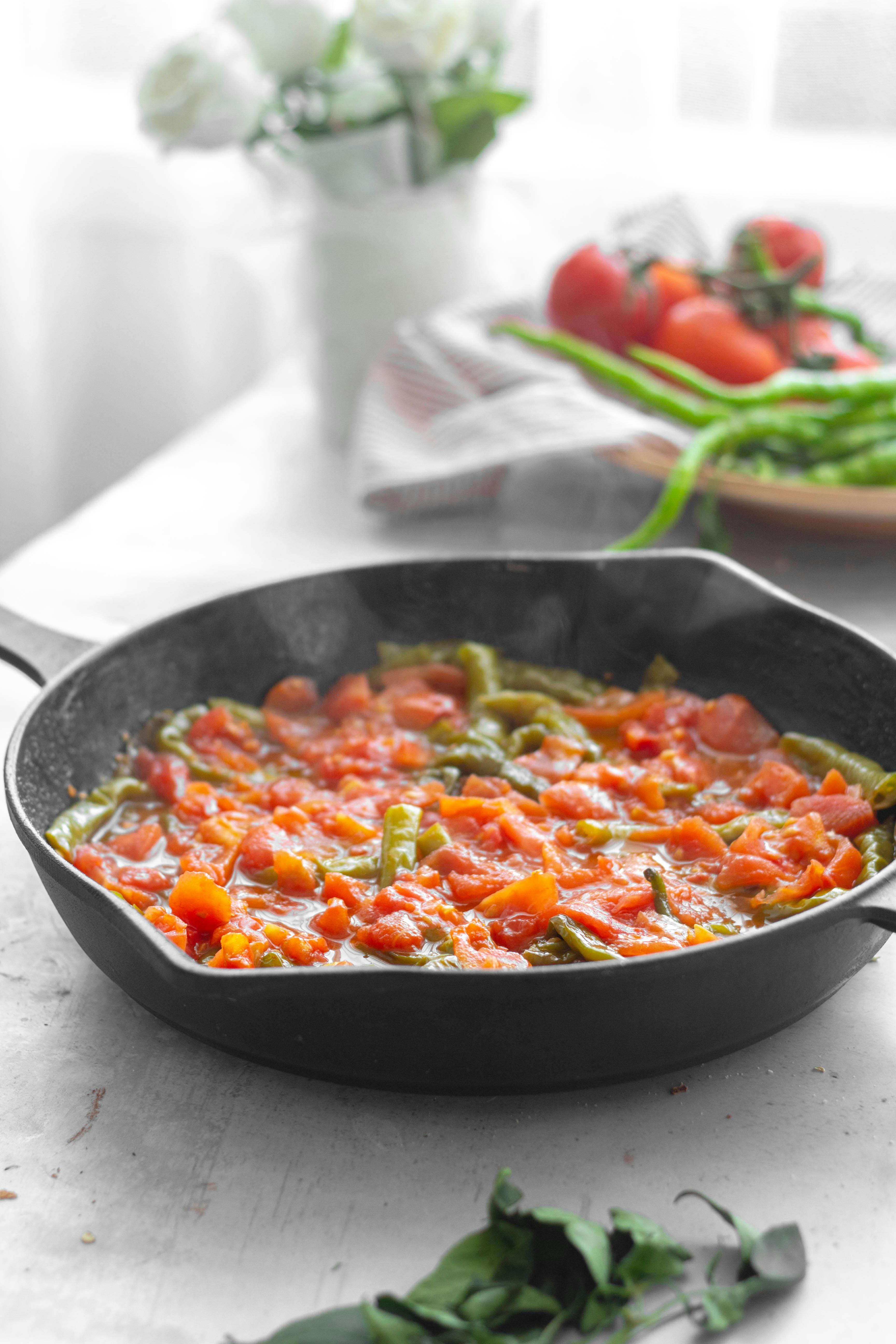
Photo: Zehra Yılmaz / Pexels
The diets react (see scores below)
Common Ingredients
- tomato
- sev
- onion
- garlic
- turmeric
- chili powder
- cumin
- mustard seeds
- coriander
Specific recipes may vary.
Incompatible with 5 of 11 diets
Diet Ratings
Sev Tameta is fundamentally incompatible with keto due to its two primary components: sev and tomatoes. Sev is made from chickpea flour (besan), which is a high-carb legume-based ingredient — a typical serving (30-50g) delivers 15-25g net carbs on its own. Tomatoes add another 3-5g net carbs per serving. Combined with onion (additional carbs), this dish can easily deliver 25-35g net carbs in a single side-dish portion, threatening or exceeding the daily keto limit in one serving. The spices (turmeric, cumin, chili powder, mustard seeds, coriander) are keto-friendly, but they cannot redeem the dish's core high-carb ingredients. Sev, as a fried chickpea noodle, is the defining ingredient and a clear keto disqualifier.
Sev Tameta is a traditional Gujarati dish consisting entirely of plant-based ingredients. Tomatoes form the base of the curry, sev (chickpea flour noodles fried in oil) provides texture, onion and garlic add aromatics, and turmeric, chili powder, cumin, mustard seeds, and coriander deliver the spice profile. Every component is unambiguously plant-derived with no animal products or animal-derived ingredients present. Sev is made from besan (chickpea flour), water, and salt — fully vegan. The dish scores high as it incorporates whole vegetables and legume-based sev with minimal processing concerns.
Sev Tameta is a Gujarati dish where the defining ingredient is sev — crispy chickpea flour (besan) noodles. Chickpea flour is derived from chickpeas, which are legumes, making sev a clear paleo exclusion. The dish cannot exist without sev; it is structural to the recipe, not a garnish. The remaining ingredients (tomato, onion, garlic, turmeric, chili powder, cumin, mustard seeds, coriander) are all paleo-approved herbs, vegetables, and spices, but the foundational ingredient disqualifies the dish outright.
Sev Tameta is an Indian tomato-based dish featuring a spiced tomato-onion-garlic gravy topped with sev, which is a fried chickpea flour noodle snack. The tomato base, aromatics (onion, garlic), and spices (turmeric, cumin, coriander, mustard seeds) align well with Mediterranean principles — tomatoes and legume-based ingredients are encouraged, and the spice profile overlaps with Mediterranean herb use. However, sev is a deep-fried, processed snack food made from refined chickpea flour (besan), which introduces refined grain concerns and significant added oil from frying — not the preferred preparation method in Mediterranean eating. The dish is not inherently harmful and contains many plant-forward ingredients, but the fried, processed sev component moderates enthusiasm. If sev were replaced with roasted chickpeas or whole legumes, this would score higher.
Some Mediterranean diet interpreters would view sev favorably as a legume-derived food (chickpea flour), noting that legumes in various forms are staples in traditional Mediterranean cuisines. From this lens, the dish is largely plant-based with beneficial spices and could be considered acceptable with moderation on portion size of sev.
Sev Tameta is an entirely plant-based Indian dish with zero animal-derived ingredients. It consists of tomatoes, sev (fried chickpea flour noodles — a legume product), onion, garlic, and multiple plant-based spices (turmeric, chili powder, cumin, mustard seeds, coriander). Every single ingredient is excluded on the carnivore diet. The dish contains no meat, fish, seafood, eggs, or animal fats whatsoever. Legume-derived sev is particularly problematic as it contains plant antinutrients (lectins, phytates). This is incompatible with even the most liberal interpretations of the carnivore diet.
Sev Tameta's defining ingredient is sev — fried chickpea flour noodles/crisps. Chickpeas are legumes, which are explicitly excluded on Whole30. Additionally, sev is a fried, grain/legume-based snack food that would also fall under the spirit of the 'no recreating junk food/chips' rule. All other ingredients (tomato, onion, garlic, turmeric, chili powder, cumin, mustard seeds, coriander) are fully Whole30-compliant, but the dish cannot be made without sev and remain true to its identity.
Sev Tameta contains multiple high-FODMAP ingredients that make it unsuitable during the elimination phase. Onion is one of the highest-fructan foods tested by Monash University and is high-FODMAP at virtually any culinary quantity. Garlic is similarly extremely high in fructans and a major FODMAP trigger. Sev (fried chickpea/besan noodles) is made from chickpea flour, which is high in GOS (galacto-oligosaccharides) and fructans, making it high-FODMAP even at small servings. Tomato is low-FODMAP at standard servings (up to 65g per Monash), but the combination of onion, garlic, and sev makes the dish a clear avoid. The remaining spices — turmeric, chili powder, cumin, mustard seeds, and coriander — are all low-FODMAP in typical culinary amounts and pose no concern.
Sev Tameta is a Gujarati dish combining tomatoes, onions, garlic, and DASH-friendly spices with sev — a deep-fried chickpea flour noodle snack. The tomato, onion, garlic, and spice base is excellent for DASH: rich in potassium, antioxidants, and anti-inflammatory compounds with minimal sodium or saturated fat. However, sev is the problematic element. It is deep-fried in oil (often palm or partially hydrogenated oil in commercial preparations), high in refined carbohydrates, and typically contains significant sodium (commercial sev can contribute 300–600mg per serving). The frying process adds substantial fat, and depending on the oil used, saturated fat may be a concern. DASH guidelines limit fried foods, high-sodium snack foods, and refined carbohydrates. The dish as commonly consumed falls into a caution category — the vegetable base is DASH-positive but the sev component undermines it. A modified version using baked or air-fried low-sodium sev in smaller quantities could score higher.
NIH DASH guidelines would flag the fried, sodium-rich sev as problematic. However, some DASH-oriented dietitians note that chickpea flour (besan) is a legume-based protein and fiber source, and if sev is made with healthier oils and limited sodium, the dish could be viewed more favorably given the otherwise strong vegetable and spice profile.
Sev Tameta is an Indian side dish combining tomatoes (Zone-favorable, low-glycemic vegetable) and sev (fried chickpea flour noodles) with aromatics and anti-inflammatory spices. The tomatoes, onion, garlic, and spices (turmeric, cumin, coriander, mustard seeds) are all Zone-favorable — particularly the anti-inflammatory polyphenol-rich spices. However, sev is the primary problematic ingredient: it is made from chickpea flour (besan), deep-fried in oil (often high-omega-6 seed oils like sunflower or canola), and carries a moderate-to-high glycemic load in typical serving quantities. Sev also contributes significant carbohydrates and fat simultaneously, making it difficult to use as a clean carb or fat block — it blurs the macro separation the Zone requires. Without any lean protein in the dish, it cannot function as a standalone Zone meal. As a side dish providing carbs and fat together, it complicates block balancing. The frying oil is a concern given Zone's emphasis on limiting omega-6 seed oils. The dish is usable in small portions alongside a lean protein source, but requires careful portioning and is classified as 'unfavorable' by Zone standards due to the fried, processed sev component.
Some Zone practitioners would note that chickpea flour (besan) has a lower glycemic index than wheat flour and that chickpeas are considered a moderate Zone carb source. In Sears' later anti-inflammatory writings, polyphenol-rich spices like turmeric and cumin are actively encouraged. A small portion of sev used as a garnish rather than a primary ingredient could shift this dish toward a more favorable Zone-compatible side if paired with lean protein and the oil used is olive or avocado oil.
Sev Tameta is a Gujarati tomato curry topped with sev — crispy chickpea flour noodles (similar to bhujia). The base of this dish is genuinely anti-inflammatory: tomatoes provide lycopene and vitamin C, garlic and onion deliver quercetin and allicin, and the spice blend (turmeric, cumin, mustard seeds, coriander, chili powder) is a powerhouse of anti-inflammatory compounds including curcumin, cinnamaldehyde-related compounds, and capsaicin. These elements would easily push the dish toward 'approve.' However, sev is the complicating factor. Traditional sev is deep-fried in oil — often refined vegetable oils (sunflower, cottonseed, or palm) — and is a processed, refined-carb snack food. The frying oil introduces potential omega-6 load and oxidized fats, and the refined chickpea flour base lacks the fiber benefit of whole legumes. The dish's overall profile is significantly shaped by how much sev is used and what oil it was fried in. As a condiment-level garnish, the dish leans toward caution-to-approve; as a heavy topping, the fried refined element drags it into clear caution territory. Rated conservatively at 5 (caution) given that sev is structurally a processed, fried ingredient.
Some anti-inflammatory practitioners would rate the base curry favorably — tomatoes and this specific spice combination represent some of the most studied anti-inflammatory ingredients in Ayurvedic and Western research alike. If sev is used sparingly or baked/air-fried with a better oil, the dish could reasonably be approved. Conversely, strict anti-inflammatory protocols concerned with nightshades (e.g., AIP) would flag the tomato and chili base as problematic for autoimmune-sensitive individuals.
Sev Tameta is a Gujarati dish of spiced tomatoes topped with sev — thin, crispy fried chickpea noodles. The tomato and spice base is genuinely GLP-1 friendly: tomatoes are low-calorie, high water content, and provide fiber and lycopene. The aromatics (garlic, onion, cumin, mustard seeds, turmeric, coriander) are nutritionally positive in the small amounts used. However, sev is the central issue: it is a deep-fried, high-fat, low-fiber, low-protein snack food that adds empty calories and saturated fat with minimal nutritional return. It also contributes sodium. The dish has no meaningful protein source, making it a poor fit as a standalone item for GLP-1 patients who must prioritize protein at every eating occasion. The chili powder is a mild concern for patients with GLP-1-related reflux or nausea sensitivity, though typical Indian home cooking levels are usually tolerable. As a side dish in a small portion alongside a high-protein main, the tomato base is acceptable, but the sev component meaningfully downgrades it. Swapping sev for a fiber-rich topping or simply omitting it would substantially improve the rating.
Some GLP-1-focused dietitians would accept sev in very small garnish quantities on the grounds that portion control is the key variable and the chickpea base of sev does provide trace protein and some satiety; others flag fried chickpea products categorically due to the fat and GI discomfort risk in patients with slowed gastric emptying.
*See how scores were generated at our methodology page.
Nutritional profile
Six traits that cut across every diet.
Fiber & Plants
How much whole-plant food and fiber it delivers.
Healthy Fats
The quality of its fats (unsaturated, omega-3).
Whole / Unprocessed
How close it is to its natural, unprocessed form.
Gut Gentle
How easy it is on digestion (low FODMAP, few irritants).
Low Glycemic
How little it spikes your blood sugar.
Protein Density
How much protein it packs per calorie.
Controversy Index
Higher controversy = more disagreement between diets.
Diet-Specific Tips
 Vegan — 9/10
View tips
- Tomatoes: whole plant food, fully vegan
- Sev: made from chickpea flour (besan), entirely plant-based
- Onion and garlic: whole plant aromatics, no concerns
- All spices (turmeric, chili powder, cumin, mustard seeds, coriander): plant-derived, fully vegan
- No animal products, dairy, eggs, or animal-derived additives in any ingredient
- Dish is naturally vegan as traditionally prepared in Gujarati cuisine
 Mediterranean — 5/10
View tips
- Tomatoes, onion, garlic are excellent Mediterranean staples
- Spices like turmeric, cumin, coriander, and mustard seeds are compatible with Mediterranean flavor principles
- Sev is a fried, processed chickpea flour product — introduces refined grain and excess frying oil concerns
- No animal proteins or saturated fats of concern
- Non-traditional cuisine but ingredients largely compatible
- Preparation method (deep frying sev) departs from Mediterranean cooking ideals
 DASH — 5/10
View tips
- Sev is deep-fried, adding significant fat and often saturated fat depending on oil type
- Commercial sev is moderately to highly sodium-rich (300–600mg per serving)
- Tomato, onion, garlic base is rich in potassium and antioxidants — strongly DASH-positive
- Spices (turmeric, cumin, mustard seeds, coriander) are DASH-neutral to positive
- Chickpea flour base of sev provides some fiber and plant protein — a partial redeeming factor
- No lean protein, dairy, or whole grain component; limited nutritional completeness
- Low-sodium, air-fried or baked sev would significantly improve the DASH score
 Zone — 4/10
View tips
- Sev (fried chickpea noodles) is high in carbohydrates and fat simultaneously, making clean block assignment difficult
- Deep-frying oil is typically high in omega-6 seed oils, which Zone discourages
- Tomatoes, onion, and garlic are Zone-favorable low-glycemic carb sources
- Turmeric, cumin, coriander, and mustard seeds are polyphenol-rich and anti-inflammatory — strongly aligned with Zone principles
- No protein source present — cannot stand alone as a Zone meal
- As a side dish, requires careful portioning to avoid carb and fat block overload
- Chickpea flour base has a lower GI than wheat-based snacks, offering some mitigation
 Anti-Inflammatory — 5/10
View tips
- Tomatoes: lycopene and vitamin C with antioxidant and anti-inflammatory activity
- Turmeric: curcumin is one of the most researched anti-inflammatory compounds
- Garlic and onion: quercetin, allicin — well-documented anti-inflammatory effects
- Spice blend (cumin, mustard seeds, coriander, chili): collectively anti-inflammatory
- Sev: deep-fried refined chickpea flour, likely in omega-6-rich or palm oil — a processed, pro-inflammatory element
- No protein source; dish is carbohydrate and fat-forward
- Nightshade concern (tomato, chili) for autoimmune-sensitive individuals
 GLP-1 Friendly — 4/10
View tips
- Sev is deep-fried — adds saturated fat and empty calories inconsistent with GLP-1 dietary goals
- No meaningful protein source — fails the #1 GLP-1 dietary priority
- Tomato base is positive: high water content, fiber, low calorie, nutrient-dense
- Spice level (chili powder) may worsen nausea or reflux in sensitive GLP-1 patients
- Acceptable in small portions as a side alongside a high-protein main, not as a standalone dish
- Overall nutrient density per calorie is low due to sev's fried nature