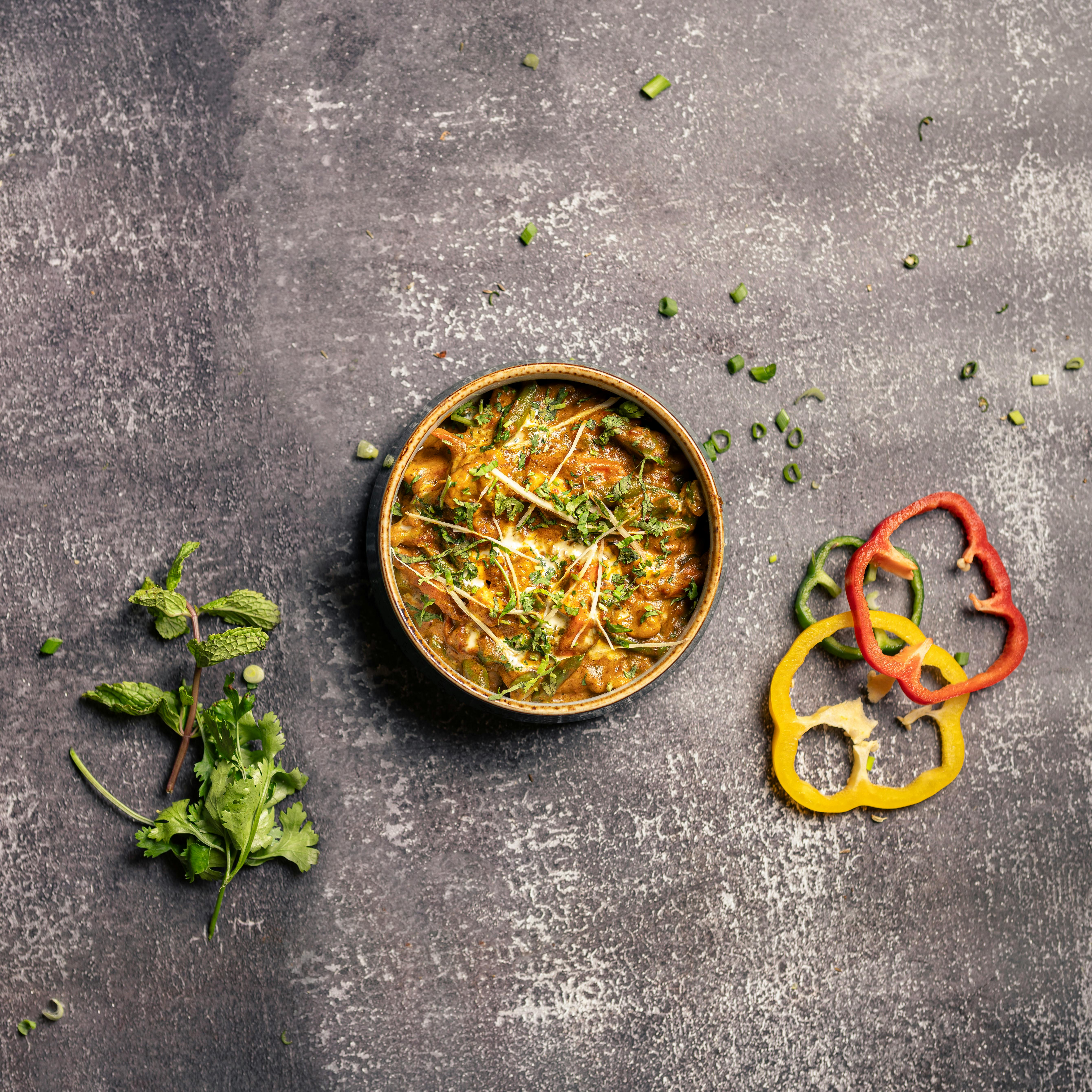
Photo: aboodi vesakaran / Pexels
The diets react (see scores below)
Common Ingredients
- surti beans
- eggplant
- potato
- yam
- fenugreek dumplings
- coconut
- coriander
- green chili
- garlic
Specific recipes may vary.
Incompatible with 5 of 11 diets
Diet Ratings
Undhiyu is a traditional Gujarati mixed vegetable dish that is fundamentally incompatible with ketogenic eating. The dish contains multiple high-carbohydrate ingredients that individually would disqualify it: potatoes (~17g net carbs per 100g), yam (~25g net carbs per 100g), and surti papdi beans (~10-15g net carbs per 100g) together make ketosis essentially impossible in any realistic serving. The fenugreek dumplings (muthia) are typically made with wheat flour or chickpea flour, adding grain-based carbohydrates. Even a small serving of this dish would likely exceed the entire daily net carb allowance for keto. The coconut, green chili, coriander, and garlic are keto-friendly, but they are minor components that cannot offset the dominant starchy vegetables and legumes.
Undhiyu is a traditional Gujarati mixed vegetable dish that is entirely plant-based. All listed ingredients — surti papdi beans, eggplant, potato, yam, fenugreek dumplings (methi muthia, typically made from chickpea flour and fenugreek leaves), fresh coconut, coriander, green chili, and garlic — are whole plant foods with no animal-derived components. The fenugreek dumplings in a traditional Gujarati preparation are made from besan (gram flour) and methi leaves, keeping the dish fully vegan. This is a nutrient-dense, whole-food plant-based dish with a rich variety of vegetables and legumes, making it an excellent vegan option that scores near the top of the approval range.
Undhiyu contains multiple non-paleo ingredients that make it incompatible with the diet. Surti beans (also known as surti papdi) are legumes, which are strictly excluded from paleo. Fenugreek dumplings are grain-based (typically made with wheat flour or besan/chickpea flour), making them doubly non-paleo — containing both grains and/or legume-derived flour. Potato is debated but leans toward avoid per stricter paleo guidelines. While eggplant, yam, coconut, coriander, green chili, and garlic are all paleo-approved, the dish's foundation rests on legumes and grain-based dumplings, which are core paleo exclusions. The dish cannot be considered paleo-compatible in its traditional form.
Undhiyu is a traditional Gujarati mixed vegetable dish that aligns strongly with Mediterranean diet principles. It is entirely plant-based, featuring legumes (surti papdi beans), multiple vegetables (eggplant, potato, yam), and aromatic herbs and spices. These ingredients map well onto the Mediterranean emphasis on vegetables, legumes, and whole foods eaten abundantly. The fenugreek dumplings (methi muthia) are typically made from whole grain flours, adding fiber and plant protein. The primary concern is coconut, which is not a traditional Mediterranean fat and contains saturated fat, unlike the preferred extra virgin olive oil. However, coconut is used in moderate amounts as a flavor accent rather than a primary fat. No red meat, refined grains, or added sugars are present.
Some Mediterranean diet authorities would flag coconut as a concern due to its high saturated fat content and non-traditional status in Mediterranean cuisines, potentially scoring this dish lower. However, since coconut is a minor ingredient and the dish is otherwise exemplary in its plant-forward, legume-rich composition, most practitioners would still view it favorably.
Undhiyu is a traditional Gujarati vegetable dish composed entirely of plant-based ingredients. It contains surti beans (legumes), eggplant, potato, yam (all vegetables/tubers), fenugreek dumplings (grain-based with plant spices), coconut, coriander, green chili, and garlic. There is no animal product whatsoever in this dish. Every single ingredient is explicitly excluded on the carnivore diet — legumes, vegetables, tubers, grains, and plant-derived spices and aromatics are all off the list. This is as far from carnivore-compatible as a dish can be.
Undhiyu contains fenugreek dumplings, which are a critical problem. Traditional muthiya (fenugreek dumplings) are made with wheat flour or gram flour (besan, a chickpea flour) — both of which are excluded on Whole30 (grains and legumes respectively). Additionally, 'surti beans' (also called surti papdi or valor beans) are a variety of flat beans/field beans that fall into the legume category. Unlike green beans, sugar snap peas, or snow peas — which are explicitly excepted — surti/valor beans are mature legumes and not among the Whole30 exceptions. The remaining ingredients (eggplant, potato, yam, coconut, coriander, green chili, garlic) are all Whole30-compliant vegetables, fats, and aromatics. However, the fenugreek dumplings alone make this dish non-compliant, as does the surti bean component.
Some practitioners argue that certain flat immature pod beans could be treated similarly to green beans under Whole30's pod-legume exceptions, but the official Whole30 guidelines are explicit that only green beans, sugar snap peas, and snow peas are excepted — surti/valor beans are not among them. The fenugreek dumpling issue has no workaround under official rules.
Undhiyu is a traditional Gujarati mixed vegetable dish that contains multiple high-FODMAP ingredients, making it unsuitable during the elimination phase. Surti papdi (flat beans/valor beans) are legumes high in GOS and fructans — a major FODMAP concern. Garlic is one of the highest-FODMAP foods known, rich in fructans. Yam (particularly purple/greater yam) can be high in polyols at standard servings. Fenugreek dumplings (muthias) typically contain wheat flour (fructans), and fenugreek seeds themselves contain GOS and fructans. While some individual ingredients like eggplant (small serving), potato, green chili, coriander, and coconut are low-FODMAP in appropriate portions, the combination of surti beans (GOS), garlic (fructans), fenugreek dumplings (fructans/GOS), and potentially yam creates a dish with stacked, compounding FODMAP loads across multiple categories. There is no realistic way to prepare traditional Undhiyu in a low-FODMAP manner without fundamentally altering the dish.
Undhiyu is a Gujarati mixed vegetable dish with a strong nutritional foundation — surti beans (legumes), eggplant, yam, potato, and fenugreek dumplings align well with DASH principles by providing fiber, potassium, magnesium, and plant-based protein. However, two ingredients pull it into 'caution' territory for DASH: coconut (often used as grated coconut or coconut chutney in significant quantity) introduces saturated fat from a tropical oil source that DASH explicitly limits, and the fenugreek dumplings (muthia) are typically made with refined flour and may be oil-fried, adding saturated/total fat. The dish is naturally low in sodium if home-prepared without added salt, which is a DASH positive. The abundant vegetables and legumes are excellent DASH components. If prepared with minimal oil and coconut, or with coconut used only as a small garnish, the score rises closer to 7. As traditionally prepared with fried muthia and a more generous coconut component, moderate caution is warranted.
NIH DASH guidelines categorically limit tropical oils including coconut due to saturated fat content. However, some updated clinical interpretations note that the quantity of coconut used as a garnish in dishes like Undhiyu may be small enough that the overall saturated fat contribution remains within daily limits, and the dish's high fiber and vegetable content may offset cardiovascular risk — suggesting dish-level assessment rather than ingredient-level exclusion.
Undhiyu is a traditional Gujarati mixed vegetable dish that presents a mixed Zone profile. On the positive side, it contains several Zone-favorable ingredients: surti beans (legumes provide both protein and low-GI carbs), eggplant (excellent low-glycemic vegetable), fenugreek dumplings (moderate GI, some protein), coriander, green chili, and garlic (all Zone-friendly polyphenol-rich aromatics). However, two significant concerns emerge: (1) Potato and yam are high-glycemic carbohydrates that Dr. Sears explicitly flags as unfavorable in Zone terminology — potato in particular raises blood sugar rapidly and is listed as an 'avoid' carb in Enter the Zone. (2) Coconut adds saturated fat rather than the preferred monounsaturated fat sources. The dish also lacks a clear lean protein source (listed as 'none'), making it difficult to build a balanced Zone meal without adding a separate protein. The macronutrient ratio skews heavily carbohydrate with insufficient protein, and the carb profile mixes favorable (eggplant, beans) with unfavorable (potato, yam) sources. Small portions combined with an added lean protein (chicken, fish) could make this work, but as served it requires significant modification for Zone compliance.
Some Zone practitioners would argue that the surti beans, fenugreek, and vegetables collectively provide enough fiber and protein to moderate the glycemic impact of the potato and yam, especially in typical Indian serving portions where root vegetables are not dominant. Dr. Sears' later anti-inflammatory work (The Zone Diet) also acknowledges that polyphenol-rich dishes with garlic, coriander, chili, and mixed vegetables have anti-inflammatory benefits that partially offset glycemic concerns. In a vegetarian Zone context, a small serving paired with added tofu or paneer could achieve reasonable block balance.
Undhiyu is a traditional Gujarati mixed vegetable dish with a strong anti-inflammatory base. Surti beans (valor/hyacinth beans) and legumes broadly provide fiber and plant protein that support gut microbiome health and reduce inflammatory markers. Eggplant contains nasunin and chlorogenic acid, potent antioxidants — though it is a nightshade. Yam offers resistant starch and antioxidant vitamins. Fenugreek (methi) is well-documented for anti-inflammatory and blood sugar-regulating properties. Garlic, green chili, and coriander all carry meaningful anti-inflammatory phytonutrients. Coconut introduces saturated fat (lauric acid), which is debated — some research shows it does not behave like long-chain saturated fats, but anti-inflammatory frameworks generally caution against full-fat coconut in large amounts. The dish is cooked (often slow-cooked or pressure-cooked), which may reduce some antioxidant levels but improves digestibility of legumes and reduces certain anti-nutrients. The potato is the most nutritionally neutral element — starchy with moderate glycemic impact. Overall, this is a fiber-rich, plant-forward, spice-laden dish with no refined ingredients, which aligns well with anti-inflammatory principles. Score docked slightly for potato starch load and coconut fat, and because nightshade and lectin concerns apply to eggplant and beans for sensitive individuals.
The nightshade concern is significant here: eggplant is explicitly excluded in the Autoimmune Protocol (AIP) and by practitioners like Dr. Tom O'Bryan due to solanine and lectin content potentially triggering inflammation in sensitive individuals. Additionally, hyacinth/surti beans contain lectins and phytic acid that some anti-inflammatory practitioners (influenced by Dr. Steven Gundry's Plant Paradox framework) view as problematic, though mainstream anti-inflammatory nutrition (including Dr. Weil's framework) strongly endorses legumes and considers properly cooked nightshades anti-inflammatory.
Undhiyu is a traditional Gujarati mixed-vegetable dish with a respectable nutritional profile but notable limitations for GLP-1 patients. On the positive side, surti beans (valor papdi) contribute meaningful plant-based protein and fiber, and the variety of vegetables (eggplant, yam, potato) adds fiber and micronutrient density. Fenugreek dumplings (methi muthia) add fiber and are generally easy to digest in moderate amounts. However, the dish has no dominant high-quality protein source — the beans provide moderate protein but not enough to meet the 15–30g per meal target without a large serving size, which conflicts with the small-portion requirement on GLP-1s. Coconut (often used as fresh grated or as part of the masala paste) adds saturated fat, which can worsen GLP-1 GI side effects like nausea and bloating. Green chili may be a mild irritant for patients experiencing reflux or nausea, though it is not typically used in quantities that would trigger severe issues. Potatoes and yam are starchy and calorie-dense relative to their protein contribution, reducing overall nutrient density per calorie. Traditional preparation often includes oil for sautéing, which can raise total fat content meaningfully. This dish works better as a side or partial meal paired with a high-protein component (e.g., paneer, Greek yogurt raita, or dal) rather than as a standalone main.
Some GLP-1-aware dietitians working with South Asian patients may rate this dish more favorably, citing the bean and legume content as adequate plant protein and the high fiber load as particularly beneficial for GLP-1-related constipation. Others caution that the coconut and oil content, combined with slow gastric emptying, creates meaningful nausea risk, and that the starchy vegetable density makes portion control difficult without sacrificing protein adequacy.
*See how scores were generated at our methodology page.
Nutritional profile
Six traits that cut across every diet.
Fiber & Plants
How much whole-plant food and fiber it delivers.
Healthy Fats
The quality of its fats (unsaturated, omega-3).
Whole / Unprocessed
How close it is to its natural, unprocessed form.
Gut Gentle
How easy it is on digestion (low FODMAP, few irritants).
Low Glycemic
How little it spikes your blood sugar.
Protein Density
How much protein it packs per calorie.
Controversy Index
Higher controversy = more disagreement between diets.
Diet-Specific Tips
 Vegan — 9/10
View tips
- All ingredients are whole plant foods — no animal products present
- Surti beans and fenugreek dumplings provide plant-based protein and fiber
- Traditional methi muthia dumplings are made from chickpea flour, not eggs or dairy
- Diverse mix of root vegetables, legumes, and aromatics aligns with whole-food plant-based principles
- No processed or ethically contested ingredients in the listed components
- Some regional or restaurant versions may add ghee or yogurt — consumers should verify preparation method
 Mediterranean — 8/10
View tips
- Rich in vegetables and legumes — core Mediterranean staples
- No animal protein — fully plant-based
- Eggplant is a quintessential Mediterranean vegetable
- Coconut adds saturated fat, not a traditional Mediterranean ingredient
- Fenugreek dumplings likely made from whole grain flour
- No processed ingredients, added sugars, or refined grains
- Herbs, garlic, and spices align with Mediterranean flavor principles
 DASH — 5/10
View tips
- Rich in DASH-friendly vegetables (eggplant, yam, potato) and legumes (surti beans) providing fiber, potassium, and magnesium
- Coconut content introduces saturated fat from a tropical oil source explicitly limited by DASH guidelines
- Fenugreek dumplings (muthia) are typically fried, adding saturated/total fat
- Naturally low sodium when home-prepared — a strong DASH positive
- High vegetable and legume diversity aligns with DASH's 4-5 vegetable servings and bean/legume recommendations
- Preparation method matters significantly: baked/steamed muthia and minimal coconut would improve DASH compatibility
 Zone — 4/10
View tips
- Potato and yam are explicitly unfavorable high-glycemic carbs in Zone Diet terminology
- No primary protein source — critical gap for achieving 30% protein ratio
- Surti beans and fenugreek dumplings provide some protein and fiber, moderating glycemic impact
- Eggplant is a Zone-favorable low-glycemic vegetable
- Coconut contributes saturated fat rather than preferred monounsaturated fat
- Garlic, coriander, and green chili add anti-inflammatory polyphenols consistent with Zone principles
- Dish is heavily carbohydrate-dominant, requiring added lean protein to approach 40/30/30 ratio
- Typical serving size likely exceeds Zone carbohydrate block allowance due to root vegetable content
 Anti-Inflammatory — 7/10
View tips
- Fenugreek is a well-documented anti-inflammatory herb — present both in dumplings and as a spice
- Rich diversity of vegetables provides a broad polyphenol and antioxidant profile
- Legumes (surti beans) are emphasized on anti-inflammatory frameworks for fiber and phytonutrients
- Garlic, green chili, and coriander are anti-inflammatory spices with meaningful phytonutrient content
- Eggplant is a nightshade — beneficial for most, potentially problematic for autoimmune-sensitive individuals
- Coconut adds saturated fat — debated in anti-inflammatory context, caution warranted at high quantities
- Potato introduces starchy, moderate-glycemic load with limited anti-inflammatory contribution
- No refined ingredients, added sugars, or processed components — whole food dish throughout
 GLP-1 Friendly — 5/10
View tips
- Low protein density per serving — beans provide some plant protein but insufficient alone to meet 15–30g per meal target
- Good fiber contribution from surti beans, eggplant, fenugreek dumplings, and mixed vegetables — supports GLP-1 constipation management
- Coconut adds saturated fat, which may worsen nausea and bloating in GLP-1 patients
- Starchy vegetables (potato, yam) reduce nutrient density per calorie relative to protein
- Green chili is a mild GI irritant — tolerable for most but relevant for patients experiencing reflux
- Oil used in traditional preparation raises total fat per serving
- Works better paired with a high-protein accompaniment than as a standalone main dish
- Portion-sensitive: small servings limit already modest protein intake further