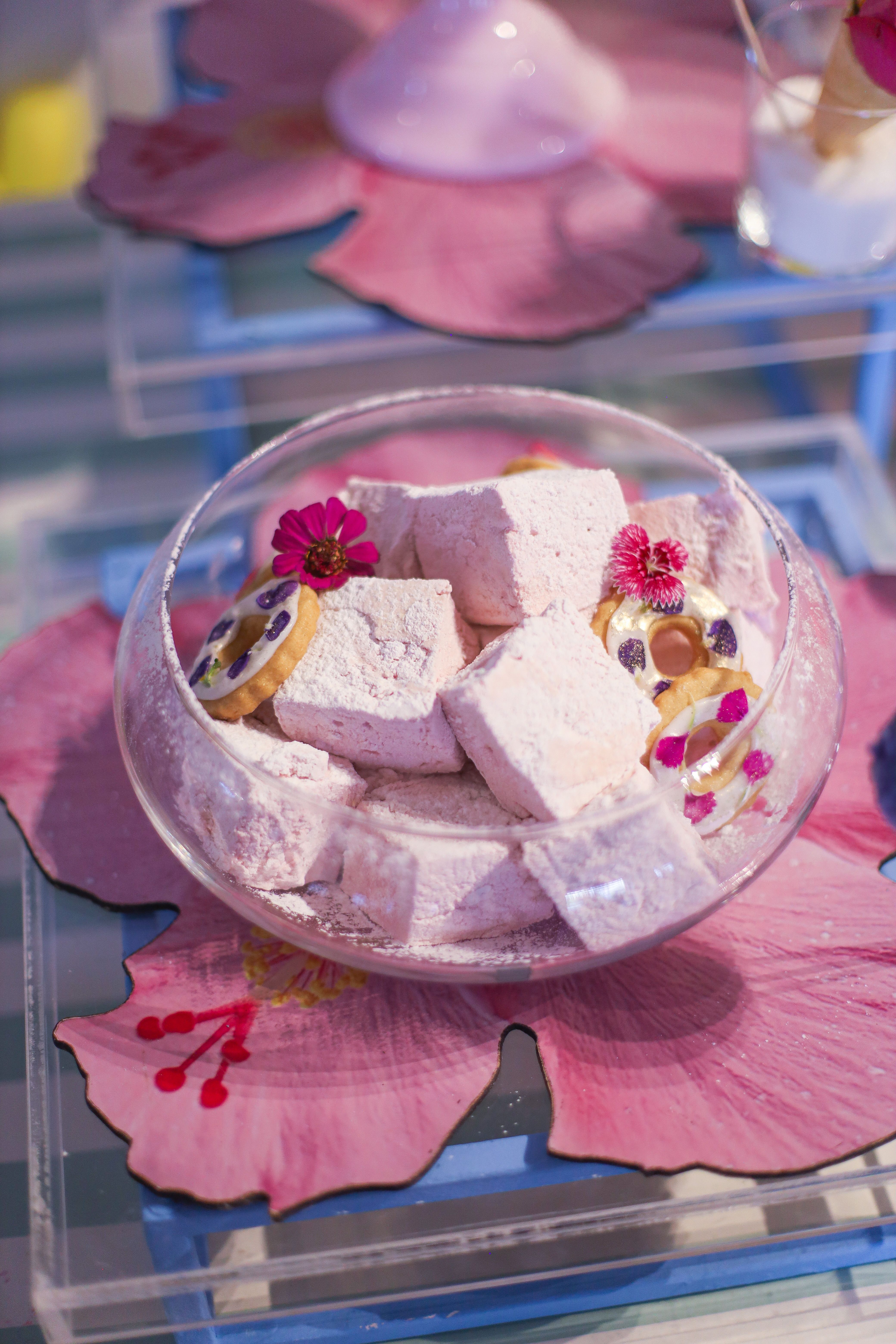
Photo: Alejandra Montenegro / Pexels
The diets react (see scores below)
Common Ingredients
- evaporated milk
- condensed milk
- sugar
- butter
- vanilla
- cinnamon
- food coloring
Specific recipes may vary.
Incompatible with 11 of 11 diets
Diet Ratings
Dous Makos is a Haitian fudge/candy made primarily from condensed milk and sugar — two of the most carb-dense, sugar-heavy ingredients possible. Condensed milk alone contains roughly 55g of sugar per 100g, and the recipe adds additional granulated sugar on top of that. A single small piece could easily contain 20-40g of net carbs, blowing the entire daily keto carb budget in one bite. This dessert is fundamentally incompatible with ketosis; its entire structure and flavor profile depend on sugar as a core ingredient, not a minor additive.
Dous Makos is a Haitian fudge-like confection whose core ingredients are evaporated milk, condensed milk, and butter — all dairy products derived from cows. These are unambiguously animal-derived ingredients that are excluded under any definition of veganism. The dish cannot be considered vegan in its traditional form. Vegan adaptations using plant-based milks (coconut, oat, or almond evaporated and condensed milk) and vegan butter would be possible but would constitute a different recipe.
Dous Makos is a Haitian fudge/candy made almost entirely of non-paleo ingredients. Evaporated milk and condensed milk are processed dairy products, condensed milk contains massive amounts of refined sugar, additional sugar is added, butter is dairy, and food coloring is an artificial additive. Not a single core ingredient is paleo-compliant. This dish is essentially a processed sugar-and-dairy confection with no redeeming paleo qualities.
Dous Makos is a Haitian fudge/sweet made primarily from condensed milk, evaporated milk, sugar, and butter — a combination that is essentially a high-sugar, high-saturated-fat confection with no redeeming Mediterranean diet qualities. It contains large amounts of added sugar (both from condensed milk and additional sugar), saturated fat from butter and dairy, and offers no fiber, whole grains, vegetables, or healthy fats. This directly contradicts Mediterranean diet principles, which minimize added sugars, refined ingredients, and processed sweets. Food coloring adds a processed element. The Mediterranean diet would classify this firmly as a food to avoid or treat as a very rare indulgence.
Dous Makos is a Haitian fudge-like candy that is fundamentally incompatible with the carnivore diet. While it contains some animal-derived ingredients (evaporated milk, condensed milk, butter), the dish is built around sugar as a core ingredient and also includes vanilla (plant-derived), cinnamon (a plant spice), and artificial food coloring. Sugar alone disqualifies this entirely — it is a processed plant-derived sweetener explicitly forbidden on carnivore. The condensed milk is also heavily sweetened. The dish has no primary protein and functions as a dessert candy, which has no place in any tier of carnivore eating. Even the dairy components are heavily processed and combined with plant-based and artificial additives.
Dous Makos (Haitian fudge/candy) contains multiple Whole30-excluded ingredients. Condensed milk is sweetened dairy — it contains both dairy and added sugar. Evaporated milk is dairy. Butter is excluded dairy (only ghee/clarified butter is allowed). Sugar is a direct excluded ingredient (added sugar). Food coloring, while not explicitly named in the rules, is a synthetic additive incompatible with the whole-food philosophy and is generally excluded. This dish fails on at minimum four distinct Whole30 rules simultaneously, making it entirely incompatible with the program.
Dous Makos is a Haitian fudge-like confection built on two high-lactose dairy products: evaporated milk and condensed milk. Both are significant sources of lactose, which is a disaccharide and a key FODMAP. Even a small serving of this dense sweet would deliver a substantial lactose load. Condensed milk is particularly concentrated, meaning a typical serving of this rich dessert would far exceed the low-FODMAP lactose threshold (approximately 1 tablespoon of regular milk is the cutoff zone). Sugar, butter, vanilla extract, cinnamon, and food coloring are all low-FODMAP individually, but they cannot offset the high-lactose dairy base. During the elimination phase, this dish is not safe.
Dous Makos is a Haitian fudge/candy made primarily from evaporated milk, condensed milk, sugar, and butter. This combination creates an extremely high-sugar, high-saturated-fat confection that conflicts with core DASH principles on multiple levels. Condensed milk is heavily sweetened and calorie-dense; evaporated milk adds additional fat and calories; butter contributes saturated fat; and the overall dish is essentially a candy with very high added sugar content. DASH guidelines explicitly limit sweets, added sugars, and saturated fats. There is no meaningful source of potassium, magnesium, fiber, or other DASH-beneficial nutrients. As a snack category food, portion control is the only potential mitigation, but even small portions deliver a significant sugar and saturated fat load that is inconsistent with the DASH eating pattern.
Dous Makos is a Haitian fudge-like candy made almost entirely of high-glycemic, high-sugar ingredients. The dominant macronutrients are simple sugars (condensed milk, added sugar) and saturated fat (butter, evaporated milk), with virtually no protein, no fiber, and no low-glycemic carbohydrates. This combination is antithetical to Zone Diet principles: there is no lean protein to anchor a Zone block, no monounsaturated fat to meet the favorable fat requirement, and the carbohydrate load is entirely high-glycemic with a massive glycemic impact. Even with aggressive portioning, this food cannot be made Zone-compatible because its macro profile is structurally imbalanced — it provides essentially 0% protein calories and near 0% monounsaturated fat, making a 40/30/30 ratio impossible to achieve with this food as a component without extraordinary modification. It falls into the same category as candy or pure sugar confections, which Zone methodology consistently classifies as unfavorable and essentially unusable.
Dous Makos is a Haitian fudge/candy made almost entirely from ingredients that are pro-inflammatory or nutritionally void from an anti-inflammatory standpoint. Condensed milk and evaporated milk are high in sugar and saturated fat. Added sugar (sucrose) is a primary driver of inflammatory cytokine production and elevated CRP. Butter contributes saturated fat, which in excess promotes inflammatory signaling. Food coloring (artificial additives) is explicitly flagged in anti-inflammatory frameworks as something to avoid. The only redemptive ingredients are vanilla and cinnamon — both have modest anti-inflammatory properties — but they appear in negligible culinary quantities relative to the dominant pro-inflammatory base. This dish is essentially a concentrated sugar-and-dairy confection with no meaningful omega-3s, antioxidants, fiber, or polyphenol content. It represents exactly the category of processed, high-sugar, high-saturated-fat sweets that anti-inflammatory dietary frameworks consistently identify as problematic.
Dous Makos is a Haitian sweet fudge/candy made almost entirely from condensed milk, evaporated milk, sugar, and butter — a combination that is extremely high in sugar, saturated fat, and empty calories with virtually no protein and negligible fiber. This is precisely the food profile that GLP-1 patients should avoid: high glycemic load, high fat content, no nutritional density per calorie, and small servings deliver a significant caloric hit with nothing to show for it. The high sugar and fat content can worsen GLP-1 side effects including nausea and reflux due to slowed gastric emptying. Butter adds saturated fat. Condensed milk is essentially concentrated sugar and fat. There is no redeeming macronutrient here for GLP-1 patients, who cannot afford empty calories.
*See how scores were generated at our methodology page.
Nutritional profile
Six traits that cut across every diet.
Fiber & Plants
How much whole-plant food and fiber it delivers.
Healthy Fats
The quality of its fats (unsaturated, omega-3).
Whole / Unprocessed
How close it is to its natural, unprocessed form.
Gut Gentle
How easy it is on digestion (low FODMAP, few irritants).
Low Glycemic
How little it spikes your blood sugar.
Protein Density
How much protein it packs per calorie.
Controversy Index
Higher controversy = more disagreement between diets.