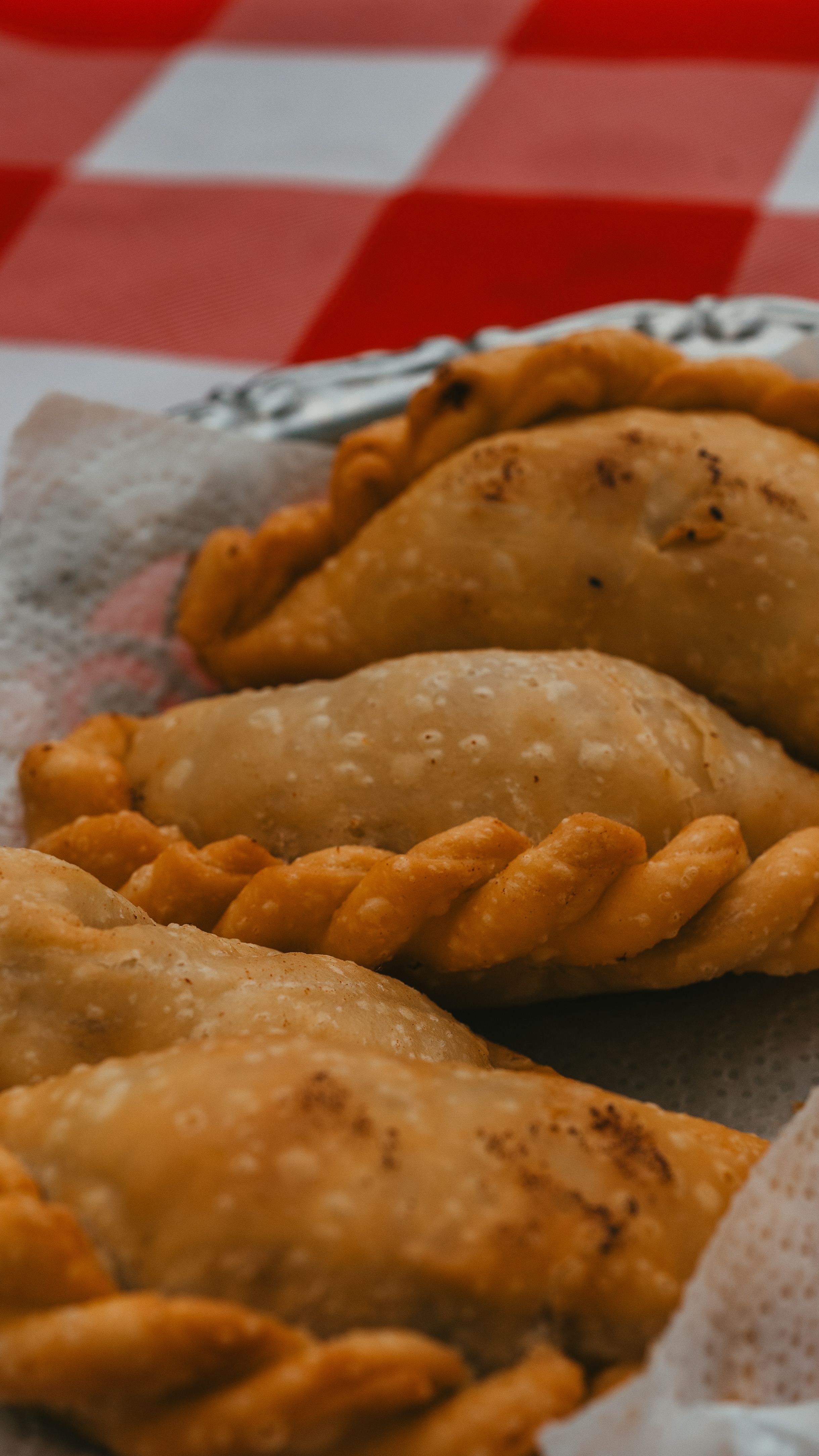
Photo: Guillermo Berlin / Pexels
The diets react (see scores below)
Common Ingredients
- flour
- ground beef
- codfish
- onion
- garlic
- scotch bonnet
- tomato paste
- butter
Specific recipes may vary.
Incompatible with 10 of 11 diets
Diet Ratings
Pate Kode is a Haitian fried pastry filled with seasoned ground beef and/or codfish. The defining characteristic of this dish is its flour-based dough shell, which is fundamentally incompatible with ketogenic eating. Wheat flour is a high-carb grain product — a single pate could contain 20-35g of net carbs from the pastry alone, potentially exceeding an entire day's carb budget. While the filling ingredients (ground beef, codfish, onion, garlic, scotch bonnet, tomato paste, butter) are largely keto-friendly in themselves, the flour shell makes the overall dish a clear keto violation. This is not a portion-control situation — the flour crust is structural to the dish and cannot be meaningfully reduced.
Pate Kode is a Haitian fried pastry filled with meat and/or fish. This version contains multiple animal-derived ingredients that are strictly excluded from a vegan diet: ground beef (mammal flesh), codfish (fish), and butter (dairy product). There is no ambiguity here — three separate animal products are present, making this dish entirely incompatible with vegan eating.
Pate Kode is a Haitian stuffed pastry that is fundamentally incompatible with the paleo diet. The dough is made from wheat flour, which is a grain and one of the most clearly excluded foods in paleo. Butter is a dairy product, also excluded under strict paleo guidelines. While the filling ingredients — ground beef, codfish, onion, garlic, scotch bonnet, and tomato paste — are largely paleo-friendly, the two core structural ingredients (flour and butter) make this dish a definitive avoid. The dish cannot be considered paleo in any mainstream interpretation.
Pate Kode is a Haitian fried pastry that conflicts with Mediterranean diet principles on multiple fronts. The crust is made from refined white flour (a refined grain) and butter (saturated fat, not olive oil), and the pastry is typically deep-fried. The primary protein is ground beef, which is a red meat limited to only a few times per month in the Mediterranean pattern. While codfish and vegetables like onion, garlic, tomato paste, and scotch bonnet are Mediterranean-friendly ingredients, they are minor components within a fundamentally problematic delivery format. The combination of refined grain pastry, butter-based fat, fried preparation, and red meat primary protein places this dish firmly outside Mediterranean diet guidelines.
Pate Kode is a Haitian fried pastry that is fundamentally incompatible with the carnivore diet. The primary structure of the dish is a flour-based dough shell, making it a grain-based food at its core. Beyond flour, the filling contains multiple plant-derived ingredients: onion, garlic, scotch bonnet pepper, and tomato paste — all strictly excluded on carnivore. While the dish does contain animal proteins (ground beef, codfish) and butter, these are encased in and mixed with predominantly plant-based components. The dish cannot be modified to be carnivore-compliant without fundamentally deconstructing it into something entirely different. This is a clear avoid with high confidence.
Pate Kode is a Haitian fried pastry (similar to a meat pie or empanada) made with a flour-based dough shell. Flour is a grain (wheat), which is explicitly excluded on the Whole30. Additionally, butter is a dairy product that is not permitted on Whole30 (only ghee/clarified butter is the dairy exception). The dish also falls squarely into the 'no recreating baked goods/junk food' rule, as it is essentially a pastry/dough-wrapped snack — explicitly the type of food (wraps, crackers, pastry-like items) the program prohibits even if made with compliant ingredients. The filling ingredients (ground beef, codfish, onion, garlic, scotch bonnet, tomato paste) are individually compliant, but the overall dish cannot be made Whole30-compatible due to the flour dough shell and butter.
Pate Kode (Haitian fried meat patties) contains multiple high-FODMAP ingredients that make it unsuitable during the elimination phase. The wheat flour pastry shell is a major source of fructans — this alone disqualifies the dish. Additionally, onion and garlic are among the highest-FODMAP foods tested by Monash University, both being rich in fructans and present as core flavoring ingredients in the filling. These three ingredients together create a high-FODMAP load that cannot be mitigated by portion size. The ground beef, codfish, scotch bonnet pepper, tomato paste (in small amounts), and butter are generally low-FODMAP or acceptable in typical quantities, but the wheat, onion, and garlic are disqualifying regardless.
Pate Kode is a Haitian fried pastry (similar to an empanada) with multiple DASH-unfavorable characteristics. The dough is made with refined white flour and butter, contributing saturated fat and refined carbohydrates with minimal fiber. Ground beef is a red meat high in saturated fat, which DASH explicitly limits. Codfish (salt cod/morue), as commonly used in Haitian cooking, is typically heavily salted and contributes significant sodium — a primary concern for DASH. The pastry is deep-fried, dramatically increasing total fat content. Butter in the dough adds further saturated fat. While onion, garlic, scotch bonnet, and tomato paste offer some beneficial nutrients, their quantities are insufficient to offset the multiple DASH-unfavorable elements. This dish conflicts with DASH guidelines on sodium (salted codfish), saturated fat (butter, ground beef, frying oil), red meat, refined grains, and high total fat.
Pate Kode is a Haitian fried or baked pastry filled with seasoned ground beef and/or codfish. From a Zone perspective, this dish presents several structural challenges. The flour-based pastry shell is the dominant carbohydrate source and is high-glycemic — white flour is classified as an 'unfavorable' carbohydrate in Zone terminology, spiking insulin rather than providing the slow-release energy Zone targets. Butter in the dough adds saturated fat, which Zone (especially early Sears) discourages in favor of monounsaturated fats. On the positive side, the protein filling (ground beef and codfish) does provide meaningful protein blocks, and the aromatics (onion, garlic, scotch bonnet, tomato paste) contribute polyphenols and anti-inflammatory compounds that Sears would view favorably. However, the overall macronutrient ratio is skewed: the pastry shell dominates the carb and fat profile with high-GI flour and saturated fat, while the protein filling is moderate. This makes the 40/30/30 ratio very difficult to achieve with this snack as consumed. It is not categorically avoidable — a small portion with a lean protein-heavy filling could approximate Zone blocks — but as a typical snack portion it tilts heavily toward unfavorable carbs and saturated fat, earning a cautious rating.
Some Zone practitioners argue that traditional whole-food ethnic dishes like Pate Kode, even with flour-based crusts, can be incorporated in small single-block snack portions where the protein filling (beef + codfish) offsets the glycemic load of the crust. Sears' later writings on polyphenols would also credit the scotch bonnet and tomato paste as anti-inflammatory contributors. In this framing, a half-portion pate could serve as a 1-block snack with reasonable balance, pushing the verdict toward the higher end of 'caution' rather than near 'avoid.'
Pate Kode is a Haitian fried pastry (similar to an empanada) filled with a mixture of ground beef and/or codfish. The ingredient profile presents several anti-inflammatory concerns. The dough is made with refined white flour — a refined carbohydrate that spikes blood sugar and lacks fiber. Butter contributes saturated fat, which is flagged in anti-inflammatory frameworks. Ground beef is red meat, categorized as 'limit' or pro-inflammatory at regular consumption, particularly if not lean. The dish is almost certainly deep- or pan-fried, adding oxidized fats to the profile. On the positive side, the filling contains meaningful anti-inflammatory ingredients: garlic and scotch bonnet pepper are rich in allicin and capsaicin respectively, both of which have demonstrated anti-inflammatory properties. Onion provides quercetin. Codfish adds lean protein and some omega-3s. Tomato paste is a concentrated source of lycopene. However, the structural base of the dish — refined flour crust, butter, fried preparation, and red meat — outweighs these benefits from a net inflammatory standpoint. This is a treat food, not an anti-inflammatory staple.
Pate Kode is a Haitian fried pastry filled with seasoned ground beef and/or codfish. The dough is made from refined white flour and butter, then deep-fried — making this a triple problem for GLP-1 patients: high saturated fat from frying and butter, refined carbohydrates with near-zero fiber, and very low protein density relative to calories. The scotch bonnet pepper is a significant concern as a very hot chili that can worsen nausea, reflux, and GI discomfort — all already elevated side effects on GLP-1 medications. The tomato paste, onion, garlic, and codfish are individually fine ingredients, but they are overwhelmed by the fried dough format. While codfish and ground beef contribute some protein, the total protein per serving is modest relative to the caloric load, and the fat content from frying makes this poorly tolerated with slowed gastric emptying. This is a fried, high-fat, refined-carb, spicy snack — nearly every element conflicts with GLP-1 dietary priorities.
*See how scores were generated at our methodology page.
Nutritional profile
Six traits that cut across every diet.
Fiber & Plants
How much whole-plant food and fiber it delivers.
Healthy Fats
The quality of its fats (unsaturated, omega-3).
Whole / Unprocessed
How close it is to its natural, unprocessed form.
Gut Gentle
How easy it is on digestion (low FODMAP, few irritants).
Low Glycemic
How little it spikes your blood sugar.
Protein Density
How much protein it packs per calorie.
Controversy Index
Higher controversy = more disagreement between diets.
Diet-Specific Tips
 Zone — 4/10
View tips
- White flour pastry shell is a high-glycemic 'unfavorable' Zone carbohydrate
- Butter contributes saturated fat rather than preferred monounsaturated fat
- Ground beef and codfish provide solid protein blocks but ratio is diluted by the dough
- Aromatics (scotch bonnet, garlic, tomato paste) add polyphenols — a Zone positive
- 40/30/30 ratio is structurally difficult to achieve given pastry-dominant format
- Fried preparation (if applicable) further increases unfavorable fat load
- Small portion control could make it a marginal 1-block snack but requires discipline