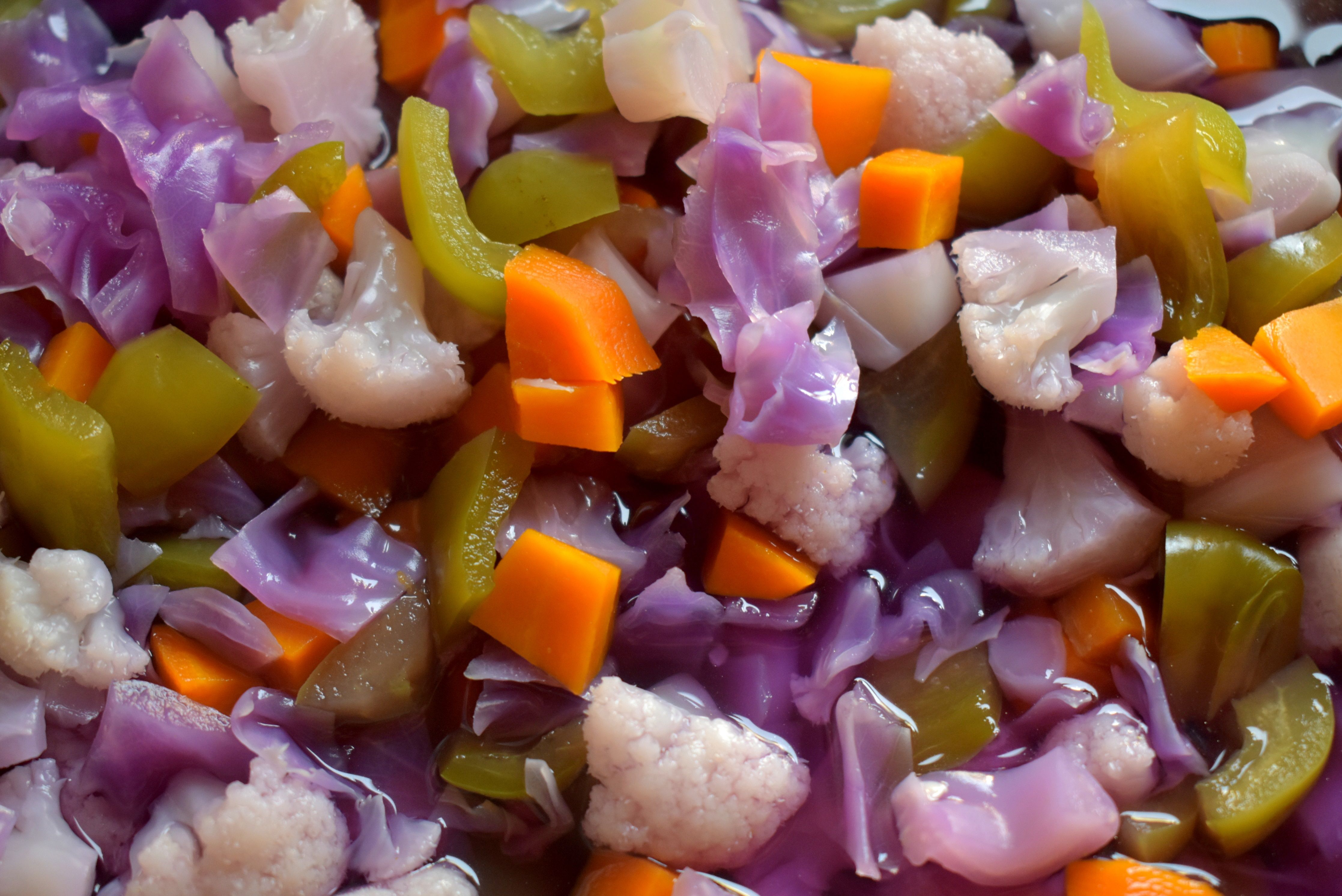
Photo: Irma Sjachlan / Pexels
The diets react (see scores below)
Common Ingredients
- cabbage
- carrot
- scotch bonnet
- onion
- vinegar
- lime
- clove
- black pepper
Specific recipes may vary.
Incompatible with 2 of 11 diets
Diet Ratings
Pikliz is a Haitian pickled slaw made primarily from cabbage, carrot, scotch bonnet, onion, vinegar, and lime juice. Cabbage is keto-friendly with low net carbs, but carrots add meaningful carbohydrates (roughly 6g net carbs per 100g). Onion also contributes carbs. In a typical small condiment serving (30-60g), the total net carbs are manageable, but pikliz is often used generously as a side or condiment, and the carrot content accumulates quickly. Vinegar and lime juice add negligible carbs. The dish contains no fat and no protein, so it contributes nothing toward keto macros beyond fiber and micronutrients. With strict portion control (2-3 tablespoons), it can fit within a keto day, but larger servings push toward the daily carb limit.
Strict keto practitioners argue that carrots and onions are too carb-dense to include even in small condiment amounts, and that the lack of fat makes pikliz a poor use of one's carb budget; they would substitute with a pure cabbage or cucumber-based pickle instead.
Pikliz is a traditional Haitian spicy pickled slaw made entirely from whole plant-based ingredients. Every component — cabbage, carrot, scotch bonnet peppers, onion, vinegar, lime juice, cloves, and black pepper — is fully plant-derived. There are no animal products, animal-derived additives, or ethically contested ingredients. The fermentation/pickling process uses vinegar and lime, both vegan. This is a whole-food, minimally processed dish that exemplifies the kind of food whole-food plant-based advocates actively encourage.
Pikliz is a Haitian pickled slaw made from cabbage, carrot, scotch bonnet, onion, lime, clove, and black pepper — all of which are paleo-approved vegetables, fruits, and spices. The main point of contention is vinegar. Most vinegars (especially white distilled vinegar, which is common in pikliz) are fermented from grain-based sources, making them problematic for strict paleo. Apple cider vinegar is generally accepted in the paleo community due to its fermented whole-food origin. Additionally, traditional pikliz typically includes added salt, which is excluded under strict paleo rules, though it is absent from the listed ingredients here. The dish itself is a fermented/pickled preparation, which aligns with ancestral food preservation traditions, but the type of vinegar used is the key variable. If made with apple cider vinegar and no added salt, it edges closer to approval; if made with white distilled vinegar, it warrants more caution.
Strict paleo authorities like Loren Cordain discourage vinegar, particularly grain-derived distilled vinegar, as a processed product with no hunter-gatherer analog. However, many modern paleo practitioners and resources (including Whole30, which permits apple cider vinegar) accept fermented condiments as beneficial for gut health, aligning with ancestral fermentation practices.
Pikliz is a Haitian pickled vegetable condiment made entirely from whole, plant-based ingredients: cabbage, carrot, onion, scotch bonnet pepper, lime, vinegar, and spices. All of these align strongly with Mediterranean diet principles emphasizing vegetables, legumes, and plant-forward eating. Cabbage and carrots are fiber-rich vegetables; scotch bonnet adds capsaicin and antioxidants; lime and vinegar are natural acidulants with no added sugar. There is no red meat, processed ingredients, refined grains, or added sugars. The main consideration is vinegar-based pickling rather than olive oil, which is the Mediterranean's preferred preservation and dressing medium. However, the dish is a condiment/side used in small amounts, and its whole-vegetable composition is exemplary.
Some strict Mediterranean diet interpretations favor olive oil-dressed or lightly cooked vegetables over vinegar-heavy pickled preparations, noting that traditional Mediterranean fermented/pickled vegetables (e.g., Greek toursi) use brine but are consumed as small accompaniments. The high acidity and heat level of scotch bonnets are not characteristic of traditional Mediterranean flavor profiles, though these are not nutritional concerns.
Pikliz is a Haitian pickled vegetable condiment made entirely from plant-based ingredients. Every single component — cabbage, carrot, scotch bonnet pepper, onion, vinegar (plant-derived), lime juice, cloves, and black pepper — is excluded on the carnivore diet. There are no animal products whatsoever. This dish is fundamentally incompatible with carnivore principles at every level, including the most lenient interpretations.
Pikliz is a Haitian pickled vegetable condiment made entirely from Whole30-compliant ingredients. Cabbage, carrot, scotch bonnet pepper, onion, lime, cloves, and black pepper are all whole, unprocessed vegetables and spices explicitly allowed on the program. Vinegar (other than malt vinegar) is explicitly permitted on Whole30. There are no excluded ingredients — no grains, legumes, dairy, added sugar, or alcohol. This is a clean, whole-food preparation that aligns well with the spirit of the program.
Pikliz contains two major high-FODMAP ingredients that make it unsuitable during the elimination phase. Onion is one of the highest-fructan foods tested by Monash University and is a primary trigger for IBS symptoms — there is no safe serving size for onion during elimination. Cabbage, while low-FODMAP at small servings (75g), becomes high-FODMAP at larger portions due to fructans and GOS, and as a primary bulk ingredient in pikliz it will almost certainly be consumed in high-FODMAP quantities. The remaining ingredients — carrot, scotch bonnet pepper, vinegar, lime juice, black pepper, and clove — are all individually low-FODMAP and present no concern. However, the onion alone is sufficient to classify this dish as high-FODMAP and unsuitable during elimination regardless of serving size.
Pikliz is a Haitian pickled slaw made from cabbage, carrot, scotch bonnet, onion, vinegar, lime, clove, and black pepper — all vegetables and natural flavor enhancers with no added sodium, saturated fat, or refined ingredients. These ingredients align well with DASH principles: cabbage and carrots provide fiber, potassium, and micronutrients; scotch bonnet and onion add antioxidants; vinegar and lime are sodium-free acidic preservatives. The dish contains no tropical oils, no added sugar, and no processed components. The primary caution is that vinegar-based pickles can vary in sodium depending on preparation — traditional homemade pikliz typically contains minimal to no added salt, but commercial versions or restaurant preparations may add significant salt. Rated as medium confidence because DASH guidelines don't specifically address vinegar-pickled vegetable condiments, requiring extrapolation from general vegetable and sodium principles.
NIH DASH guidelines broadly endorse non-starchy vegetables and low-sodium condiments, supporting pikliz in its traditional low-salt form. However, updated clinical interpretation notes that if salt is added during preparation (as is common in some recipes), sodium content could become meaningful at the portion sizes typical of condiment use, warranting label or recipe scrutiny.
Pikliz is a Haitian spiced pickled vegetable condiment made almost entirely from low-glycemic, high-fiber vegetables — cabbage, carrot, onion, and scotch bonnet pepper — with acidic components (vinegar and lime) that actually help lower the glycemic response of a meal. All ingredients are 'favorable' Zone carbohydrates. Cabbage is one of the best Zone vegetables: extremely low in net carbs, high in fiber, and rich in polyphenols. Carrots are slightly higher in natural sugars but still low-glycemic, especially in the small quantities used in a condiment portion. The vinegar and lime are not only Zone-friendly but actively anti-inflammatory. Spices like clove and black pepper have polyphenol benefits that align with Sears' later anti-inflammatory Zone philosophy. There is no added sugar, no fat, no refined carbs, and no protein — making this an excellent low-calorie carbohydrate accent that can be counted as part of a meal's vegetable block without meaningfully disrupting the 40/30/30 ratio. As a side condiment, it adds flavor, fiber, and polyphenols with negligible macronutrient impact.
Pikliz is a Haitian spicy pickled slaw with a strong anti-inflammatory profile across nearly every ingredient. Cabbage is rich in sulforaphane, glucosinolates, and vitamin C — all associated with reduced inflammatory markers. Carrots provide beta-carotene and other carotenoids. Scotch bonnet peppers are exceptionally high in capsaicin, which has well-documented anti-inflammatory and antioxidant effects, and they also deliver a high concentration of vitamin C. Onion contributes quercetin, a potent flavonoid with anti-inflammatory properties. Lime juice adds vitamin C and flavonoids. Clove is one of the most antioxidant-rich spices available, containing eugenol, a compound with anti-inflammatory activity comparable to some NSAIDs in in vitro studies. Black pepper provides piperine, which enhances bioavailability of other anti-inflammatory compounds. Vinegar (typically white or cider) is neutral to mildly beneficial in this context. There are no pro-inflammatory ingredients — no refined oils, added sugars, processed additives, or trans fats. The fermentation-adjacent pickling process may also support gut health, which is increasingly linked to systemic inflammation. This dish is an excellent example of anti-inflammatory eating through whole food, plant-based, spice-forward preparation.
Pikliz is a Haitian spicy pickled slaw made from cabbage, carrot, onion, scotch bonnet peppers, vinegar, lime, clove, and black pepper. On the positive side, it is low in calories, fat-free, and provides fiber and micronutrients from the vegetables. The fermented/pickled nature may support gut health, and the high water content aligns with hydration priorities. However, the primary concern for GLP-1 patients is the scotch bonnet pepper, which is one of the hottest peppers available and a known GI irritant. GLP-1 medications slow gastric emptying, meaning highly spicy food sits in the stomach longer, significantly increasing the risk of nausea, acid reflux, and GI distress — already common side effects on these medications. The vinegar base may also aggravate reflux in sensitive patients. It has no meaningful protein contribution and only modest fiber per typical condiment-sized serving. As a side dish or condiment used in small amounts, it may be tolerable for patients who handled spicy food well before starting GLP-1 therapy, but the scotch bonnet heat level makes it a meaningful risk.
Some GLP-1-focused dietitians view small amounts of spicy condiments as acceptable for patients who were previously spice-tolerant, noting the low calorie and fat-free profile as positives. However, others caution that GLP-1-induced slowed gastric emptying changes individual spice tolerance even in previously tolerant patients, making prior tolerance an unreliable predictor.
*See how scores were generated at our methodology page.
Nutritional profile
Six traits that cut across every diet.
Fiber & Plants
How much whole-plant food and fiber it delivers.
Healthy Fats
The quality of its fats (unsaturated, omega-3).
Whole / Unprocessed
How close it is to its natural, unprocessed form.
Gut Gentle
How easy it is on digestion (low FODMAP, few irritants).
Low Glycemic
How little it spikes your blood sugar.
Protein Density
How much protein it packs per calorie.
Controversy Index
Higher controversy = more disagreement between diets.
Diet-Specific Tips
 Keto — 5/10
View tips
- Carrots are a moderate-carb vegetable (~6g net carbs/100g) that can accumulate
- Cabbage is keto-friendly and low in net carbs
- Onion adds additional carbs, though small amounts are tolerable
- No fat content — does not support keto macro ratios
- Vinegar and lime juice are negligible carb contributors
- Small condiment portions (2-3 tbsp) are manageable; larger side-dish servings are not
- No added sugar detected in traditional recipe
 Vegan — 9/10
View tips
- All ingredients are whole plant foods
- Pickling medium (vinegar, lime juice) is fully plant-based
- No animal products or animal-derived additives present
- Minimally processed — scores near the top of the approve range
- No ethically contested ingredients (e.g., honey, palm oil) present
 Paleo — 5/10
View tips
- Cabbage, carrot, scotch bonnet, onion, lime, clove, and black pepper are all paleo-approved
- Vinegar type is the critical variable — white distilled vinegar is grain-derived and discouraged; apple cider vinegar is widely accepted in the paleo community
- Traditional pikliz often contains added salt, which is excluded under strict paleo
- Fermented/pickled foods align with ancestral food preservation traditions
- No grains, legumes, dairy, or seed oils present
 Mediterranean — 8/10
View tips
- All ingredients are whole, plant-based foods
- No added sugars, refined grains, or processed ingredients
- No red meat or animal products
- Vinegar-based rather than olive oil-based preparation
- Used as a condiment, so consumed in small quantities
- Rich in fiber, vitamins, and antioxidants from vegetables and pepper
- Natural acidity from lime and vinegar is compatible with Mediterranean principles
 Whole30 — 9/10
View tips
- All vegetables (cabbage, carrot, scotch bonnet, onion) are Whole30-compliant
- Vinegar is explicitly allowed on Whole30 (non-malt varieties)
- Lime juice is a whole, compliant ingredient
- Cloves and black pepper are compliant spices
- No added sugar, grains, legumes, or dairy present
- Whole, unprocessed preparation honors the spirit of the program
 DASH — 8/10
View tips
- Primarily vegetables (cabbage, carrot, onion) — core DASH foods
- No saturated fat, no added sugar, no tropical oils
- Vinegar and lime are sodium-free flavor bases
- Traditional preparation typically low in sodium — a key variable
- Rich in fiber, potassium, and antioxidants from vegetables and scotch bonnet
- Clove and black pepper are DASH-compatible spices
- Commercial or salted preparations would lower the score to caution range
 Zone — 8/10
View tips
- Primarily low-glycemic, high-fiber vegetables (cabbage, carrot, onion, scotch bonnet)
- Vinegar and lime juice reduce glycemic response and are anti-inflammatory
- No added sugar, no refined carbohydrates, no fat
- Clove and black pepper are polyphenol-rich, supporting Zone's anti-inflammatory goals
- Condiment portion size means carrot's natural sugars have negligible glycemic impact
- Counts as favorable vegetable carbohydrate blocks in Zone system
 Anti-Inflammatory — 8/10
View tips
- Cabbage: sulforaphane, glucosinolates, vitamin C — anti-inflammatory and antioxidant
- Scotch bonnet: very high capsaicin and vitamin C content — strong anti-inflammatory
- Onion: rich in quercetin, a well-researched anti-inflammatory flavonoid
- Clove: among the highest ORAC-rated spices; eugenol has documented anti-inflammatory activity
- Black pepper: piperine enhances absorption of other anti-inflammatory phytonutrients
- Carrots: beta-carotene and carotenoids reduce oxidative stress
- Lime: vitamin C and flavonoids support antioxidant defense
- No pro-inflammatory ingredients: no seed oils, added sugars, trans fats, or additives
 GLP-1 Friendly — 5/10
View tips
- Scotch bonnet is extremely high on the Scoville scale — a significant GI irritant risk given slowed gastric emptying on GLP-1s
- Fat-free and very low calorie — no fat-related side effect concern
- Vinegar base may worsen acid reflux, a common GLP-1 side effect
- No protein contribution — does not support the #1 dietary priority
- Modest fiber from cabbage and carrot, beneficial in small amounts
- High water content from vegetables is a minor positive for hydration
- Typically consumed in small condiment-sized portions, which limits both benefit and harm
- Individual spice tolerance may shift after starting GLP-1 medications