Photo: Connor Scott McManus / Pexels
The diets react (see scores below)
Common Ingredients
- goat
- sour orange
- garlic
- scotch bonnet
- shallot
- thyme
- lime
- clove
Specific recipes may vary.
Incompatible with 4 of 11 diets
Diet Ratings
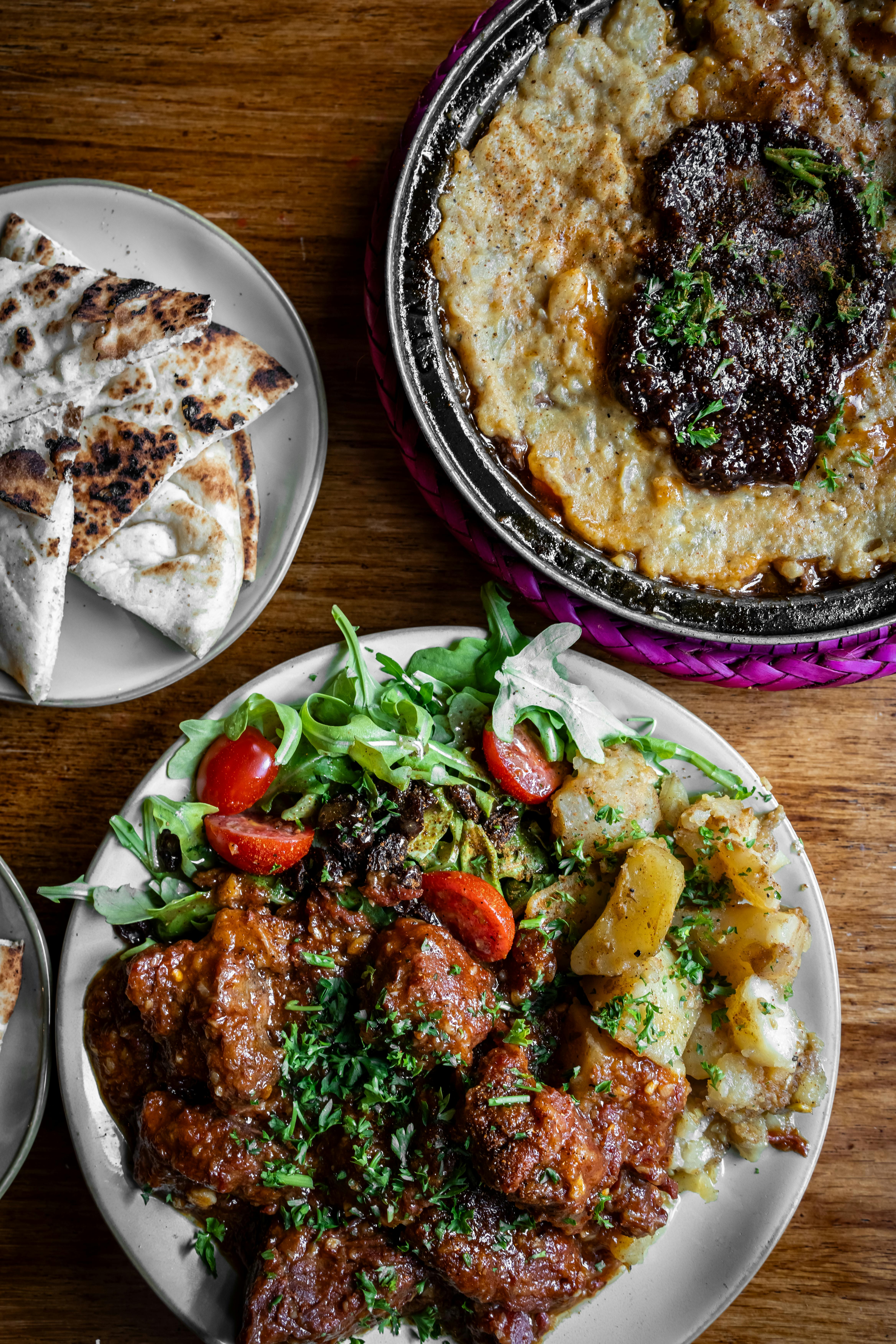
Tasso is a Haitian fried/braised goat dish marinated in sour orange, lime, garlic, scotch bonnet, shallot, thyme, and clove. Goat is a lean, high-quality protein that fits keto macros well. The marinade ingredients are predominantly low-carb aromatics and acids. Sour orange and lime juice contribute minimal net carbs in the quantities used as a marinade (typically a few tablespoons total). Scotch bonnet, garlic, shallot, thyme, and clove are all used in small amounts and add negligible carbs. There are no grains, added sugars, or starchy vegetables. The dish is whole and unprocessed. Net carbs per serving are estimated at 2-5g, well within keto limits.
Some stricter keto practitioners flag sour orange (bitter orange) and lime juice as citrus sources that can add up in carbs if the marinade is consumed in large quantities or if the recipe uses generous amounts. A minority also notes that shallots have slightly higher carb content than onions and may recommend substituting with scallion tops or omitting; however, the quantities used are typically small enough that most keto advocates consider this a non-issue.
Tasso is a Haitian fried goat dish. Goat is an animal product (meat), making this dish entirely incompatible with a vegan diet. All other ingredients — sour orange, garlic, scotch bonnet, shallot, thyme, lime, and clove — are plant-based, but the primary protein is unambiguously animal-derived flesh.
Haitian Tasso (goat) is an excellent paleo dish. Every ingredient is fully compliant: goat is an unprocessed, lean animal protein consumed by hunter-gatherers; sour orange, lime, garlic, scotch bonnet pepper, shallot, thyme, and clove are all whole, natural plant-based flavoring agents available in pre-agricultural contexts. There are no grains, legumes, dairy, seed oils, refined sugars, or processed additives present. The marinade relies entirely on citrus acids and aromatic herbs and spices, making this a clean, whole-food preparation.
Tasso is a Haitian braised/fried goat dish. Goat is a red meat, which the Mediterranean diet limits to a few times per month. The marinade ingredients — sour orange, garlic, scotch bonnet, shallot, thyme, lime, and clove — are all whole, minimally processed aromatics that align well with Mediterranean principles. However, the primary protein is red meat, placing this dish in the 'avoid' or low-frequency category by Mediterranean standards. The preparation is clean and unprocessed, which prevents a score of 1-2, but goat's classification as red meat keeps it out of the 'caution' zone reserved for poultry, eggs, and dairy.
Some Mediterranean diet researchers note that goat meat has been consumed in traditional Greek, Turkish, and North African Mediterranean communities, particularly for celebratory or occasional meals. In these regional traditions, lean goat in small portions a few times a month could be considered acceptable rather than strictly avoided.
While goat is a ruminant meat and fully carnivore-approved, Tasso is heavily marinated in multiple plant-based ingredients that are central to the dish, not incidental. Sour orange, lime, garlic, scotch bonnet pepper, shallot, thyme, and clove are all plant-derived and form the core flavor and preparation of this dish. The citrus marinades (sour orange, lime) are particularly significant, as is the array of aromatics and spices. On a strict carnivore diet, the protein source (goat) is excellent, but the dish as prepared cannot be separated from its plant-based marinade components. This is not a case of trace seasoning — these ingredients are foundational to what Tasso is.
Haitian Tasso (goat) is a marinated and fried/braised meat dish. Every ingredient listed is fully Whole30 compliant: goat is a clean animal protein, sour orange and lime are whole fruits whose juices are explicitly allowed on Whole30 (including the 2024 clarification permitting fruit juice in any context), garlic, scotch bonnet pepper, shallot, and thyme are all compliant vegetables/herbs, and clove is a compliant spice. There are no grains, legumes, dairy, added sugars, alcohol, or any other excluded ingredients present. This is a straightforward whole-food, protein-and-herb preparation that aligns well with the spirit of the program.
Tasso contains multiple high-FODMAP ingredients that make it unsuitable during the elimination phase. Garlic is one of the highest-FODMAP foods tested by Monash University, containing significant fructans even in very small amounts. Shallots are similarly high in fructans and are explicitly listed as high-FODMAP. These two ingredients alone are sufficient to classify this dish as avoid. Goat meat itself is low-FODMAP (plain protein), and the remaining ingredients — sour orange, lime juice, scotch bonnet pepper, thyme, and clove — are generally low-FODMAP in typical culinary quantities. However, the foundational seasoning of this dish relies on garlic and shallots, which are not removable without fundamentally altering the recipe.
Tasso is a Haitian marinated and fried goat dish. The ingredient profile is largely DASH-friendly: goat is a lean red meat relatively low in saturated fat compared to beef or pork, and the marinade consists of sour orange, lime, garlic, scotch bonnet, shallots, thyme, and clove — all herbs, spices, and citrus with no added sodium. However, the traditional preparation involves deep-frying, which adds significant fat and calories, pushing it away from the DASH ideal of lean, minimally processed protein. Goat falls in a gray zone for DASH: it is red meat, which DASH limits, but it is leaner than most red meats. If baked or grilled rather than fried, this dish would score higher. The absence of high-sodium ingredients or added sugars is a clear positive. Portion control is essential given the frying method.
NIH DASH guidelines recommend limiting red meat broadly, which would categorize goat conservatively; however, updated clinical interpretations increasingly distinguish between lean red meats like goat (lower in saturated fat than beef or lamb) and fattier options, with some DASH-oriented dietitians allowing lean goat in moderation — especially when the preparation method is modified from frying to grilling or baking.
Tasso is a Haitian fried/braised goat dish marinated in citrus (sour orange, lime), aromatics (garlic, shallot, thyme, clove), and scotch bonnet pepper. The protein foundation is goat, which is actually quite lean — leaner than beef or pork and comparable to chicken in fat content — making it a reasonable Zone protein source. The marinade ingredients (citrus juices, garlic, herbs, scotch bonnet) are Zone-favorable: low-glycemic, anti-inflammatory, and rich in polyphenols. The primary concern is preparation method: Tasso is traditionally deep-fried before being braised, which significantly increases the fat content and likely introduces omega-6-heavy frying oils (vegetable or canola oil), which conflict with Zone's anti-inflammatory emphasis on monounsaturated fats. If prepared without deep-frying (e.g., braised or grilled), this dish would rate closer to a 7. As traditionally prepared with frying, the fat profile becomes problematic for Zone ratios. Additionally, the dish is protein-centric with minimal carbohydrate, so it would need to be paired with low-glycemic vegetables to achieve the 40/30/30 block balance. The citrus marinade contributes negligible carbs. Portioning to ~25g protein per serving is achievable with goat.
Some Zone practitioners, particularly those following Sears' later anti-inflammatory framework, may be more permissive about the frying step if olive oil or avocado oil is used rather than industrial seed oils, and would emphasize the dish's otherwise excellent polyphenol profile (scotch bonnet, thyme, garlic, citrus) as a strong anti-inflammatory positive. In that context, a well-portioned serving of Tasso paired with vegetables could score as high as a 7.
Haitian Tasso is a marinated and typically fried or braised goat dish with a strongly anti-inflammatory spice and citrus profile. The marinade ingredients — garlic, scotch bonnet, thyme, clove, sour orange, and lime — are genuinely anti-inflammatory. Garlic contains allicin and organosulfur compounds that suppress inflammatory cytokines; scotch bonnet peppers are high in capsaicin, a known anti-inflammatory compound; thyme contains thymol with antimicrobial and anti-inflammatory properties; clove is among the highest-antioxidant spices available; and citrus (sour orange, lime) provides flavonoids and vitamin C that combat oxidative stress. The problem is the protein base: goat meat is red meat, and anti-inflammatory frameworks recommend limiting red meat due to its saturated fat content and potential to elevate arachidonic acid and inflammatory markers like CRP. That said, goat is notably leaner than most other red meats — lower in total fat and saturated fat than beef, lamb, or pork — which partly mitigates the concern. Preparation method also matters significantly: if the goat is deep-fried (a common preparation for Tasso), added pro-inflammatory oils and the frying process itself increase the dish's inflammatory burden. If braised or grilled, the profile improves. On balance, the impressive anti-inflammatory marinade partially offsets the red meat concern, but cannot fully overcome it, placing this dish solidly in the 'caution' category for moderate, occasional consumption.
Some anti-inflammatory practitioners, particularly those following Dr. Weil's more flexible Mediterranean-influenced framework, would consider lean goat meat acceptable in moderation and might rate this dish more favorably given the potent anti-inflammatory spice profile. Conversely, stricter anti-inflammatory and autoimmune protocols (e.g., AIP-influenced approaches) would flag all red meat as a concern and would particularly caution against frying, potentially pushing this toward 'avoid.'
Tasso is a Haitian braised/stewed goat dish marinated in sour orange, lime, garlic, scotch bonnet, shallot, thyme, and clove. Goat is actually one of the leaner red meats — lower in fat than beef or lamb — and provides a meaningful protein source, which is a genuine positive. However, several factors push this into caution territory for GLP-1 patients. First, goat is still a red meat with saturated fat, which is a concern on GLP-1s even at moderate levels. Second, scotch bonnet peppers are among the hottest chili peppers available and are a meaningful GI irritant — highly likely to worsen reflux, nausea, and gastric discomfort in patients already dealing with slowed gastric emptying. Third, goat meat, especially bone-in cuts typical of Tasso, tends to be fatty in certain cuts and requires longer digestion, which compounds the slowed gastric emptying effect of GLP-1 medications. The dish has no meaningful fiber contribution from its ingredients. The acidic citrus marinade (sour orange, lime) may also aggravate reflux, which is already common on GLP-1s. On the positive side, the marinade-heavy, herb-forward preparation keeps the dish from being fried or heavily oil-based. A modified version with scotch bonnet reduced or omitted, lean goat cuts, and served with a fiber-rich side would score better.
Some GLP-1-focused dietitians would view goat as an underrated lean protein worth including, noting its favorable fat profile compared to beef, and would not categorically restrict culturally significant preparations. Others flag that scotch bonnet heat and citrus acidity together create a meaningful reflux and nausea risk that outweighs the protein benefit for most GLP-1 patients, particularly in early weeks of treatment.
*See how scores were generated at our methodology page.
Nutritional profile
Six traits that cut across every diet.
Fiber & Plants
How much whole-plant food and fiber it delivers.
Healthy Fats
The quality of its fats (unsaturated, omega-3).
Whole / Unprocessed
How close it is to its natural, unprocessed form.
Gut Gentle
How easy it is on digestion (low FODMAP, few irritants).
Low Glycemic
How little it spikes your blood sugar.
Protein Density
How much protein it packs per calorie.
Controversy Index
Higher controversy = more disagreement between diets.
Diet-Specific Tips
 Keto — 8/10
View tips
- Goat is a lean, quality protein with zero carbohydrates
- Marinade ingredients (sour orange, lime) contribute minimal net carbs in typical quantities
- No grains, added sugars, or starchy vegetables present
- Shallot and garlic add negligible carbs at marinade-level portions
- Scotch bonnet, thyme, and clove are trace-carb aromatics
- Whole, unprocessed ingredients align with keto food quality standards
- Estimated 2-5g net carbs per serving — well within daily keto limits
 Paleo — 6/10
View tips
- Goat is an unprocessed animal protein — fully paleo approved
- Sour orange and lime provide natural acid-based marinade with no non-paleo additives
- Garlic, shallot, scotch bonnet, thyme, and clove are all whole herbs/spices — unambiguously paleo
- No grains, legumes, dairy, seed oils, or refined sugars in any ingredient
- Traditional preparation method aligns with whole-food, minimally processed paleo philosophy
 Whole30 — 6/10
View tips
- Goat is a fully compliant animal protein on Whole30
- Sour orange and lime juice are explicitly permitted — Whole30 2024 rules allow fruit juice in any context
- Garlic, scotch bonnet, shallot, and thyme are compliant vegetables and herbs
- Clove is a compliant whole spice
- No excluded ingredients: no grains, legumes, dairy, added sugar, or alcohol
- Whole, unprocessed ingredients consistent with the spirit of the program
 DASH — 5/10
View tips
- Goat is a lean red meat — lower in saturated fat than beef or pork, but DASH still limits red meat
- Traditional deep-frying preparation adds significant fat, reducing DASH compatibility
- Marinade is entirely herb-, spice-, and citrus-based with no added sodium — a strong positive
- No high-sodium ingredients, added sugars, or tropical oils in the ingredient list
- Garlic, citrus, and herbs align well with DASH's emphasis on flavor through low-sodium seasonings
- Grilling or baking instead of frying would significantly improve DASH score (potentially 7+)
- Portion control important given caloric density from frying
 Zone — 6/10
View tips
- Goat is a lean protein, comparable to chicken — favorable for Zone protein blocks
- Traditional deep-frying introduces omega-6-heavy oils, conflicting with Zone's anti-inflammatory fat guidelines
- Marinade ingredients (citrus, garlic, thyme, scotch bonnet, shallot) are Zone-favorable: low-glycemic and polyphenol-rich
- Dish is protein-dominant and lacks carbohydrate component — must be paired with low-GI vegetables to achieve 40/30/30 balance
- Fat content is difficult to control due to frying, making block ratios hard to calculate precisely
- Preparation method (frying vs. braising/grilling) significantly affects Zone compatibility
 Anti-Inflammatory — 5/10
View tips
- Goat is red meat — limited on anti-inflammatory diets — but is significantly leaner and lower in saturated fat than beef, lamb, or pork
- Scotch bonnet peppers provide capsaicin, a potent anti-inflammatory compound
- Garlic contains allicin and organosulfur compounds with documented anti-inflammatory effects
- Clove is one of the highest-antioxidant spices, with eugenol as a key active compound
- Thyme contributes thymol, which has anti-inflammatory and antimicrobial properties
- Sour orange and lime provide vitamin C and citrus flavonoids that combat oxidative stress
- Preparation method is critical: deep-frying significantly worsens the inflammatory profile versus braising or grilling
- Overall marinade profile is strongly anti-inflammatory and partially offsets the red meat concern
 GLP-1 Friendly — 4/10
View tips
- Goat is a lean red meat with usable protein but still carries saturated fat
- Scotch bonnet peppers are extremely spicy and a significant GLP-1 GI risk factor
- Citrus-heavy marinade (sour orange, lime) may worsen acid reflux common on GLP-1s
- No fiber contribution from core ingredients
- Goat meat requires extended digestion, compounding slowed gastric emptying
- Not fried or oil-heavy — preparation method is a relative positive
- Portion size and cut selection (lean vs. fatty) significantly affect suitability