Photo: Anat Landa / Pexels
Jewish
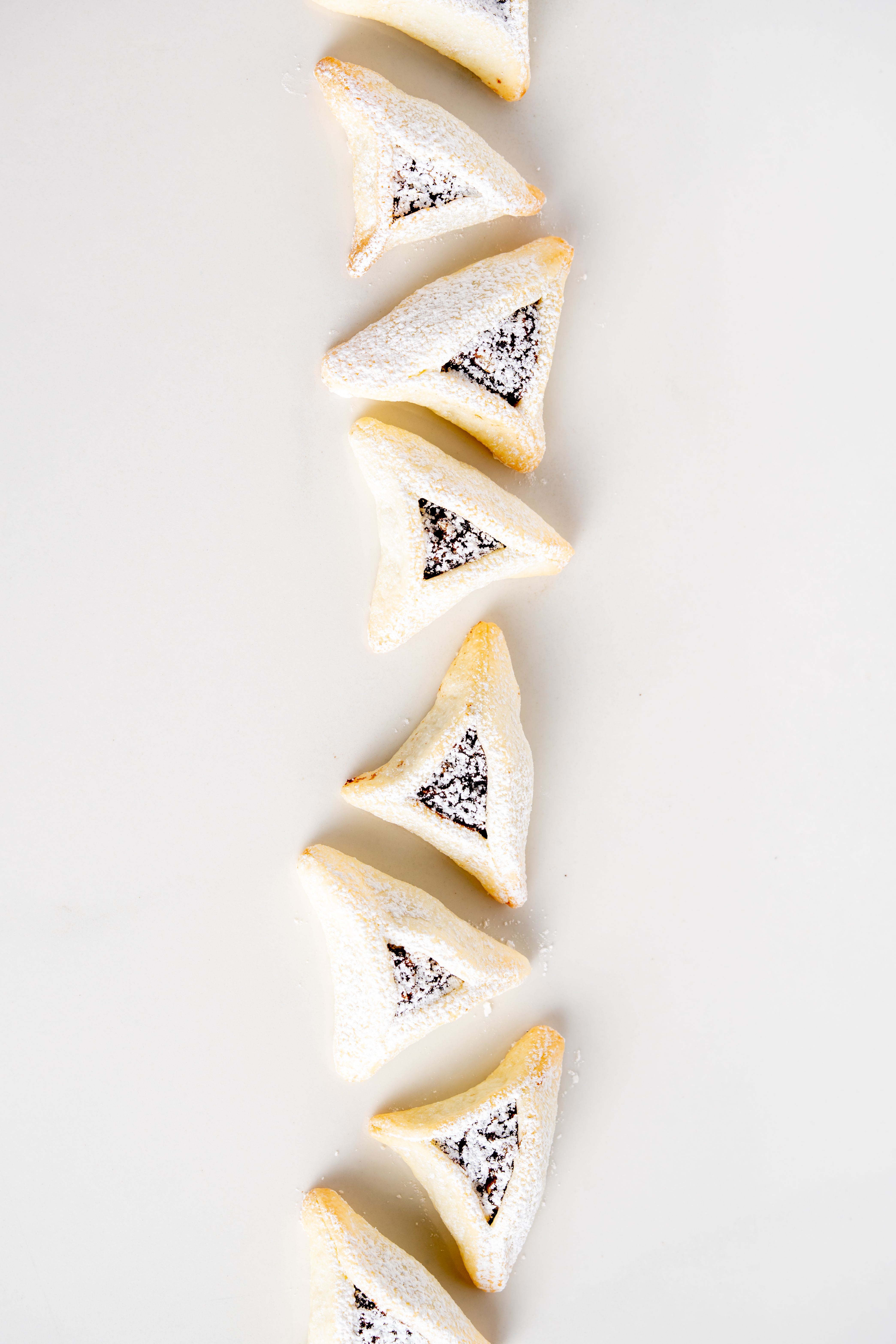
Hamantaschen
The diets react (see scores below)
Common Ingredients
- flour
- butter
- eggs
- sugar
- baking powder
- vanilla
- salt
- fruit preserves
- poppy seeds
Specific recipes may vary.
Incompatible with 11 of 11 diets
Diet Ratings
Hamantaschen are a traditional Jewish pastry made primarily from wheat flour and sugar, with a sweet fruit preserve or poppy seed filling. This combination is fundamentally incompatible with ketogenic eating. Wheat flour is a high-glycemic grain that alone can push a person well over the daily 20-50g net carb limit in a single cookie. Added sugar compounds this further, and fruit preserves are essentially concentrated sugar. There is nothing redemptive in the macronutrient profile — while butter and eggs are keto-friendly, they are overwhelmed by the carbohydrate-dominant base. A single hamantaschen can contain 20-30g of net carbs, which could consume an entire day's carb allowance or exceed it outright.
Traditional hamantaschen contain both butter (dairy) and eggs, making them clearly non-vegan. Butter is a direct animal-derived dairy product, and eggs are excluded from all vegan definitions. The remaining ingredients — flour, sugar, baking powder, vanilla, salt, fruit preserves, and poppy seeds — are plant-based, but the two core animal-derived binders and fats disqualify this recipe entirely. Vegan versions of hamantaschen do exist using plant-based margarine or oil in place of butter and flax eggs or commercial egg replacers, and these would be fully compliant, but the dish as listed cannot be approved.
Hamantaschen are a traditional Jewish pastry that is fundamentally incompatible with the Paleo diet. The recipe is built almost entirely on non-Paleo ingredients: wheat flour (a grain, strictly excluded), butter (dairy, excluded), refined sugar (excluded), baking powder (a processed additive), salt (excluded), and fruit preserves (typically contain refined sugar and additives). Poppy seeds are technically Paleo-compatible, and eggs are approved, but these two ingredients are minor components in an otherwise completely non-compliant dish. There is no meaningful way to adapt this dish while retaining its identity.
Hamantaschen are a traditional Jewish pastry that conflicts with Mediterranean diet principles on multiple fronts. The base is refined white flour (not whole grain), butter is the fat (not olive oil), and significant added sugar is present both in the dough and fruit preserves filling. This combination of refined grains, saturated fat from butter, and added sugars places this squarely in the 'avoid' category. While poppy seeds and fruit are individually Mediterranean-friendly ingredients, they are minor components in what is fundamentally a sweet, refined pastry. As an occasional cultural or celebratory treat it may be tolerated, but it is not compatible with regular Mediterranean diet eating patterns.
Hamantaschen are a traditional Jewish pastry made almost entirely of plant-based and processed ingredients. Flour, sugar, baking powder, vanilla, fruit preserves, and poppy seeds are all strictly excluded on the carnivore diet. While butter and eggs are animal-derived, they are minor components in a dish that is fundamentally a grain-based, sugar-laden baked good. This food is incompatible with carnivore principles at every level — it contains grains, refined sugar, plant-based fillings, and seed derivatives. There is no version of the carnivore diet, not even the most permissive 'animal-based' approach, that would accommodate this pastry.
Hamantaschen contain multiple excluded ingredients that make them entirely incompatible with Whole30. Flour is a grain product (wheat), butter is dairy (only ghee/clarified butter is allowed), and sugar is an excluded added sweetener. Beyond the individual ingredient violations, hamantaschen are a classic baked good — a cookie — which falls squarely under the Whole30 rule prohibiting the recreation of baked goods and junk food even when made with otherwise compliant ingredients. There is no compliant version of this dish possible without fundamentally changing what it is.
Hamantaschen are traditional Jewish pastries made primarily with wheat flour, which is the dominant FODMAP concern. Wheat flour is high in fructans, a key FODMAP that must be avoided during the elimination phase. A standard serving of hamantaschen (1-2 cookies) would contain a significant amount of wheat flour, making this a high-FODMAP food. Additionally, fruit preserves can be problematic depending on the fruit used — many jams and preserves are made from high-FODMAP fruits (apple, stone fruits) or sweetened with high-fructose corn syrup or excess fructose. Poppy seeds are generally low-FODMAP in small amounts. Butter (lactose-free in small quantities), eggs, sugar, baking powder, vanilla, and salt are all low-FODMAP. However, the wheat flour base alone is sufficient to classify this as avoid during the elimination phase.
Hamantaschen are traditional Jewish pastry cookies that conflict with DASH diet principles on multiple fronts. The dough is made with butter (high in saturated fat), refined white flour (low fiber, not a whole grain), and substantial sugar, making these a sweet baked good that DASH explicitly limits. The fruit preserves filling adds significant added sugar. While poppy seeds and eggs are acceptable in moderation, the overall profile — high saturated fat from butter, refined carbohydrates, and high added sugar — places this firmly in the 'avoid' category. DASH limits sweets and discourages foods high in saturated fat and added sugars. These are essentially cookies with minimal nutritional benefit relative to DASH goals.
Hamantaschen are a traditional Purim cookie that combines nearly every element the Zone Diet flags as unfavorable: refined white flour (high-glycemic carb), butter (saturated fat), sugar (high-glycemic, nutritionally empty), and fruit preserves (concentrated sugar with minimal fiber). The macronutrient profile is dominated by high-glycemic carbohydrates and saturated fat, with virtually no lean protein and no monounsaturated fat. There is no practical way to portion hamantaschen into a Zone-balanced snack — even a single small cookie delivers a carbohydrate and fat load that skews heavily away from the 40/30/30 ratio, and the glycemic quality of those carbs is poor. The poppy seeds and eggs provide negligible nutritional redemption in this context. This is one of the cleaner 'avoid' cases in Zone scoring: not because cookies are categorically banned, but because this particular combination of refined flour, sugar, butter, and fruit preserves offers no Zone-compatible building blocks.
Hamantaschen are a traditional Jewish Purim pastry with a strongly pro-inflammatory nutritional profile. The dough is built on refined white flour (high glycemic, stripped of fiber and nutrients), butter (saturated fat, a food the anti-inflammatory framework explicitly limits), sugar (added sugars drive inflammatory markers like CRP and IL-6), and baking powder — none of which offer anti-inflammatory benefit. The fruit preserves filling typically contains significant added sugar, compounding the glycemic load. While poppy seeds do contain some omega-3 alpha-linolenic acid and lignans with mild anti-inflammatory properties, and eggs contribute choline, these minor positives are completely overwhelmed by the overall composition. The combination of refined carbohydrates, added sugars, and saturated fat in a single treat is exactly the profile the anti-inflammatory framework warns against. This is an occasional cultural treat that should be enjoyed mindfully rather than regularly.
Hamantaschen are traditional Jewish pastries made from a buttery shortbread-style dough filled with fruit preserves or poppy seeds. They are a poor fit for GLP-1 patients on nearly every key criterion. The dough is built on refined white flour, butter, and sugar — offering minimal protein, negligible fiber, high saturated fat, and significant empty calories. Fruit preserves contribute concentrated sugar with little nutritional value. There is no meaningful protein source in this recipe. The high butter content may worsen GLP-1 side effects including nausea, bloating, and reflux given slowed gastric emptying. A typical hamantaschen (roughly 80-100g) delivers approximately 300-350 calories that are almost entirely from refined carbohydrates and saturated fat — exactly the nutritional profile GLP-1 patients can least afford given their reduced appetite and caloric budget. Poppy seeds add trace minerals but in quantities too small to meaningfully improve the profile.
*See how scores were generated at our methodology page.
Nutritional profile
Six traits that cut across every diet.
Fiber & Plants
How much whole-plant food and fiber it delivers.
Healthy Fats
The quality of its fats (unsaturated, omega-3).
Whole / Unprocessed
How close it is to its natural, unprocessed form.
Gut Gentle
How easy it is on digestion (low FODMAP, few irritants).
Low Glycemic
How little it spikes your blood sugar.
Protein Density
How much protein it packs per calorie.
Controversy Index
Higher controversy = more disagreement between diets.