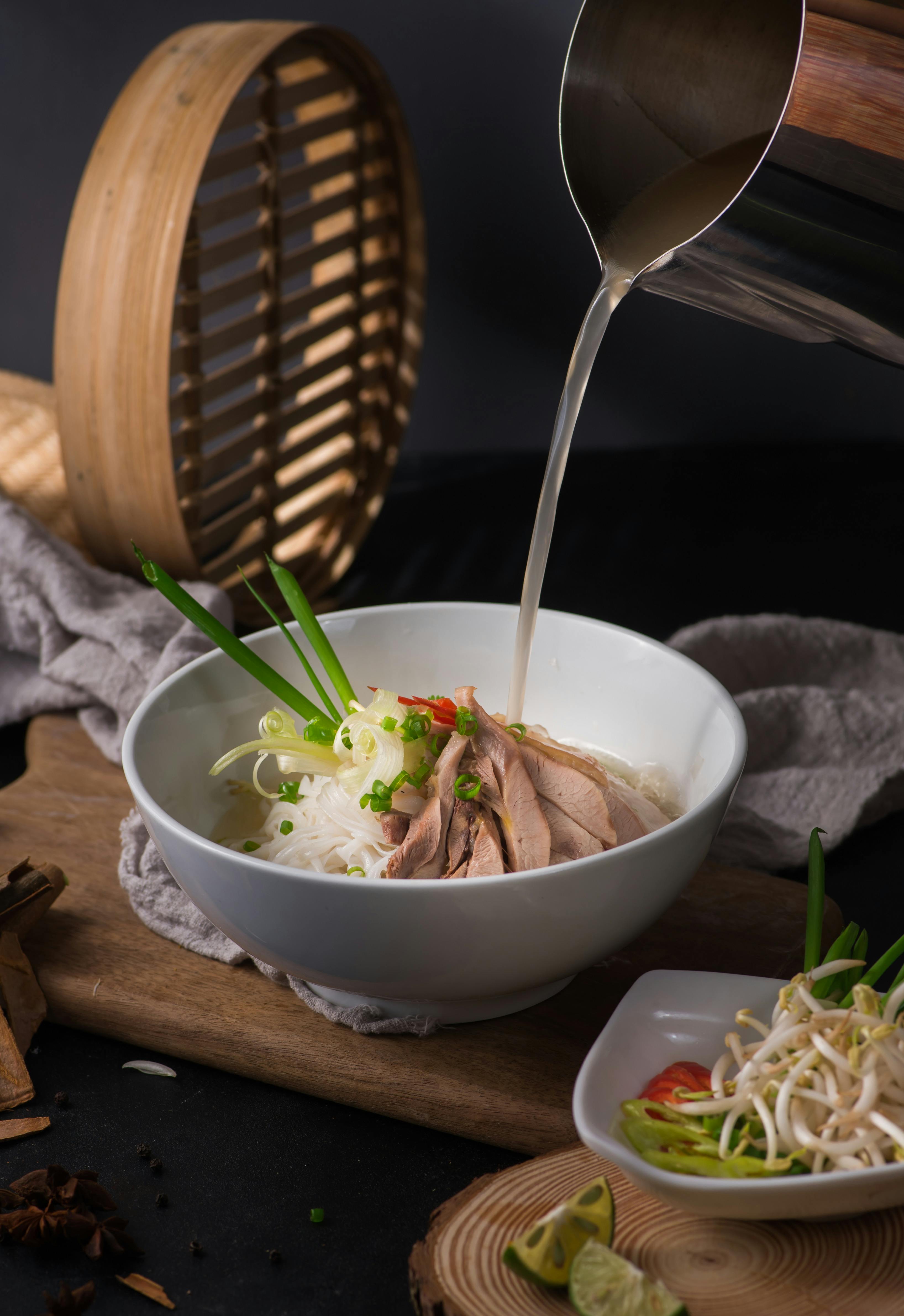
Photo: Long Nguyễn Đức / Pexels
Hawaiian
Chicken Long Rice
The diets react (see scores below)
Common Ingredients
- chicken
- mung bean noodles
- ginger
- garlic
- green onion
- chicken broth
- soy sauce
- onion
Specific recipes may vary.
Incompatible with 6 of 11 diets
Diet Ratings
Chicken Long Rice is disqualifying for keto primarily due to mung bean noodles (glass noodles), which are the defining ingredient of this dish. Despite their transparent appearance, mung bean noodles are a high-carbohydrate starch — a typical serving (about 50g dry) contains roughly 40-45g of net carbs, which alone exceeds or nearly maxes out the entire daily keto carb budget. The remaining ingredients (chicken, ginger, garlic, green onion, chicken broth, soy sauce, onion) are mostly keto-compatible in small amounts, but they cannot offset the noodles' carb load. The dish as traditionally prepared is fundamentally incompatible with ketosis. A keto adaptation would require substituting the mung bean noodles with shirataki noodles or zucchini noodles, which would transform it into a different dish entirely.
Chicken Long Rice contains multiple animal products that disqualify it from any vegan diet. The dish features chicken as its primary protein and uses chicken broth as its liquid base — both are direct animal-derived ingredients. While mung bean noodles, ginger, garlic, green onion, soy sauce, and onion are all plant-based, the presence of chicken and chicken broth makes this dish entirely incompatible with vegan eating. There is no ambiguity here.
Chicken Long Rice contains multiple non-paleo ingredients that disqualify it. Mung bean noodles are derived from mung beans, which are legumes — explicitly excluded from the paleo diet. Soy sauce contains both soy (a legume) and wheat (a grain), making it doubly non-compliant. While the chicken, ginger, garlic, green onion, and onion are all paleo-approved, the dish's defining components — the noodles and soy sauce — are clear violations. Even a homemade chicken broth could be paleo-compliant, but it cannot redeem a dish built around legume-based noodles and soy sauce.
Chicken Long Rice is a light, broth-based soup featuring chicken (a moderate-consumption protein in the Mediterranean diet), mung bean noodles (a refined/starchy noodle with minimal fiber compared to whole grains), and aromatics like ginger, garlic, and green onion that are perfectly aligned with Mediterranean principles. The dish is low in saturated fat, minimally processed, and vegetable-forward in its aromatics. However, it lacks olive oil as the fat source, uses soy sauce (a high-sodium condiment not typical of Mediterranean cuisine), and mung bean noodles are a refined starch rather than a whole grain. The chicken protein places it in the moderate/caution category by default. Overall it is a reasonably healthy, light dish that partially aligns but misses several core Mediterranean markers.
Some Mediterranean diet practitioners would view this soup more favorably, arguing that lean poultry in a vegetable-aromatic broth closely mirrors Mediterranean-style light soups, and that mung bean noodles — being legume-derived — carry more nutritional merit than refined wheat pasta. The absence of olive oil and whole grains remains a meaningful gap from a strict Mediterranean standpoint.
Chicken Long Rice is heavily incompatible with the carnivore diet. The dish contains multiple plant-derived ingredients that are strictly excluded: mung bean noodles (a legume-derived starch), ginger, garlic, green onion, onion, and soy sauce (a fermented soy product). Mung bean noodles alone are a complete disqualifier as a plant-based carbohydrate. Soy sauce adds additional plant compounds, gluten (from wheat), and processed additives. While the chicken and chicken broth are carnivore-approved components, they are vastly outnumbered by excluded ingredients. This dish cannot be modified into a carnivore meal without fundamentally changing its identity.
Chicken Long Rice contains two excluded ingredients: soy sauce (soy is a legume and explicitly excluded) and mung bean noodles. Mung beans are legumes, and their derivative noodles (glass noodles/cellophane noodles) fall into an excluded category — both as a legume product and as a noodle/pasta analog explicitly called out under the 'no recreating' rule. The remaining ingredients (chicken, ginger, garlic, green onion, chicken broth, onion) are all Whole30-compliant. However, the two core characterizing ingredients of this dish are non-compliant, making this dish an avoid. A compliant version could substitute coconut aminos for soy sauce and omit the noodles, but that would no longer be Chicken Long Rice.
Chicken Long Rice contains three high-FODMAP ingredients that make it unsuitable during the elimination phase. Garlic is one of the highest-FODMAP foods tested by Monash University, containing significant fructans even in tiny amounts. Onion is similarly high in fructans and a major FODMAP offender — both garlic and onion are effectively incompatible with elimination-phase compliance. Green onion (scallion) is low-FODMAP only in the green tops, but recipes typically use the whole stalk or bulb. Chicken broth made with onion or garlic (as most traditional recipes and commercial broths do) adds further fructan load. The remaining ingredients are generally low-FODMAP: chicken is safe, mung bean noodles (glass noodles) are low-FODMAP, ginger is low-FODMAP in culinary amounts, and soy sauce is low-FODMAP at standard servings. However, the combination of garlic, onion, and likely FODMAP-containing broth creates an unavoidable high-FODMAP dish as traditionally prepared. Modification would require removing garlic and onion entirely, using only green scallion tops, and switching to a certified low-FODMAP or homemade garlic/onion-free broth.
Chicken Long Rice is a Hawaiian soup made with lean chicken, mung bean noodles, and aromatic vegetables — many components align well with DASH principles. Chicken is a lean protein explicitly encouraged by DASH, and ginger, garlic, onion, and green onion are all DASH-friendly aromatics with no sodium concerns. Mung bean noodles are low in fat and relatively neutral, though they lack the fiber of whole grains. The primary concern is sodium: the combination of standard chicken broth and soy sauce can easily push a single serving to 800–1,200mg or more of sodium, which is a significant portion of even the standard DASH daily limit of 2,300mg and would be problematic for the stricter 1,500mg threshold. The dish has no saturated fat, added sugar, or other DASH red flags beyond sodium. With low-sodium broth and reduced-sodium soy sauce (or a smaller quantity), this dish could score 7–8 and approach 'approve' territory.
NIH DASH guidelines explicitly flag sodium as the primary dietary lever for blood pressure management, making soy sauce and standard chicken broth problematic as prepared. However, updated clinical interpretations note that when prepared with low-sodium broth and a minimal splash of reduced-sodium soy sauce, this dish's overall nutritional profile — lean protein, no saturated fat, beneficial aromatics — is well within DASH parameters, and some DASH-oriented dietitians would approve it with those substitutions.
Chicken Long Rice is a Hawaiian soup dish that has several Zone-friendly elements but requires careful portioning to achieve proper 40/30/30 balance. The chicken provides lean protein that aligns well with Zone guidelines. Ginger, garlic, green onion, and onion are all favorable low-glycemic vegetables with anti-inflammatory polyphenol benefits that Sears would appreciate. The broth base is low-calorie and Zone-compatible. The primary challenge is the mung bean noodles (glass noodles), which are the dominant carbohydrate source. While mung bean noodles have a lower glycemic index than white rice noodles or wheat pasta, they are still a relatively high-carbohydrate, low-fiber refined starch that counts heavily toward net carbs per block. A typical serving of glass noodles (about 50g dry) delivers roughly 40g of net carbs, which can easily overshoot the carbohydrate block allocation for a meal without providing the fiber or micronutrient density that Zone-favorable vegetables would. Soy sauce adds sodium but negligible macronutrient disruption. To Zone-balance this dish, one would need to significantly reduce the noodle portion, increase the vegetable component, ensure adequate lean chicken protein (~25g), and potentially add a monounsaturated fat source like a small drizzle of olive oil or a side of avocado, since the dish is naturally very low in fat.
Some Zone practitioners note that mung bean noodles have a notably lower glycemic index (GI ~26-33) compared to other noodle types, meaning they cause a more moderate insulin response. Dr. Sears' later writings in 'The Zone Diet' and anti-inflammatory work place increasing emphasis on glycemic load and polyphenol content rather than strict avoidance of all starches. Under this lens, a modest portion of mung bean noodles in a broth-based soup with anti-inflammatory aromatics (ginger, garlic) could be considered more favorable than a strict block-counting approach would suggest.
Chicken Long Rice is a gentle, broth-based Hawaiian comfort dish with a largely favorable anti-inflammatory profile. Ginger and garlic are well-established anti-inflammatory ingredients — ginger contains gingerols that inhibit COX-2 enzymes, and garlic contains allicin and organosulfur compounds that reduce inflammatory cytokines. Mung bean noodles (glass noodles) are made from mung bean starch, which is gluten-free, low in fat, and a source of resistant starch that supports gut microbiome health — a meaningful indirect anti-inflammatory benefit. Chicken as lean poultry sits in the 'moderate' tier: acceptable and not pro-inflammatory, though it lacks the omega-3 benefit of fatty fish. Green onions and onions contribute quercetin and flavonoids. Chicken broth, especially if homemade or low-sodium, is a neutral-to-positive base. Soy sauce is the one flag: it adds sodium and often contains refined additives, though the amounts used as seasoning in a soup are modest. The dish is whole-food dominant, free of refined carbohydrates, added sugars, seed oils, or processed ingredients. Overall this is a clean, broth-forward dish built around anti-inflammatory aromatics with no significant pro-inflammatory components.
Most anti-inflammatory authorities would rate this favorably given its whole-food, broth-based profile with prominent ginger and garlic. A stricter AIP (Autoimmune Protocol) perspective might flag soy sauce for its gluten content (unless tamari is used) and the sodium load, and some practitioners note that conventional chicken raised on omega-6-heavy grain feed has a less favorable fatty acid ratio than pasture-raised.
Chicken Long Rice is a well-suited dish for GLP-1 patients. Lean chicken provides solid protein (15-25g per serving depending on portion), and the broth-based preparation is low in fat and easy to digest — both critical for managing GLP-1 side effects like nausea and slowed gastric emptying. Ginger is a notable bonus, as it has clinically recognized anti-nausea properties that may help counteract GLP-1-induced nausea. The soup format supports hydration, which is important given reduced thirst sensation on GLP-1 medications. Mung bean noodles (glass noodles) are low in fat and easy to digest, though they are relatively low in protein and fiber compared to whole grain or legume-based noodles — they function more as a neutral, gentle carbohydrate filler. Garlic, onion, green onion, and soy sauce add flavor without significant fat or calorie load. The main limitation is that mung bean noodles contribute limited fiber and protein, so the dish's nutritional quality depends heavily on the chicken-to-noodle ratio. A generous chicken portion with a modest noodle serving optimizes this dish for GLP-1 patients.
Some GLP-1 dietitians would note that mung bean noodles are a refined, low-nutrient starch with minimal fiber, and would recommend substituting or supplementing with higher-fiber vegetables (e.g., bok choy, spinach) to better meet the 25-30g daily fiber target. Soy sauce contributes significant sodium, which some clinicians flag as a concern for patients with hypertension commonly comorbid with obesity.
*See how scores were generated at our methodology page.
Nutritional profile
Six traits that cut across every diet.
Fiber & Plants
How much whole-plant food and fiber it delivers.
Healthy Fats
The quality of its fats (unsaturated, omega-3).
Whole / Unprocessed
How close it is to its natural, unprocessed form.
Gut Gentle
How easy it is on digestion (low FODMAP, few irritants).
Low Glycemic
How little it spikes your blood sugar.
Protein Density
How much protein it packs per calorie.
Controversy Index
Higher controversy = more disagreement between diets.
Diet-Specific Tips
 Mediterranean — 5/10
View tips
- Chicken is a moderate-consumption protein (caution category by default)
- Mung bean noodles are a refined starch, not a whole grain — misses Mediterranean grain preference
- No olive oil as fat source — a core Mediterranean pillar is absent
- Soy sauce adds sodium and is not a traditional Mediterranean condiment
- Aromatics (garlic, ginger, onion, green onion) are well aligned with Mediterranean flavoring
- Broth-based, low saturated fat preparation is positive
- Dish is minimally processed and relatively light overall
 DASH — 5/10
View tips
- Lean chicken protein is a DASH-approved protein source
- Standard chicken broth + soy sauce combination creates high sodium load (potentially 800–1,200mg per serving)
- Mung bean noodles are low-fat but not whole grain; lower fiber than DASH-preferred whole grains
- No saturated fat, trans fat, or added sugar — no DASH red flags beyond sodium
- Aromatics (ginger, garlic, onion, green onion) are fully DASH-compatible
- Low-sodium broth and reduced-sodium soy sauce substitutions would significantly improve DASH compatibility
- Portion size of noodles should be controlled to manage refined carbohydrate intake
 Zone — 6/10
View tips
- Lean chicken protein is a favorable Zone protein source
- Mung bean noodles are the primary carbohydrate and can easily exceed block allocation
- Mung bean noodles have a relatively low glycemic index compared to other noodle types, partially mitigating glycemic concerns
- Ginger, garlic, green onion, and onion are anti-inflammatory, polyphenol-rich, Zone-favorable vegetables
- Dish is naturally very low in fat — needs a monounsaturated fat addition to hit 30% fat target
- Broth base is Zone-compatible and low-calorie
- Soy sauce adds sodium but does not significantly disrupt macro ratios
- Portion control of noodles is essential to maintain Zone block balance
 Anti-Inflammatory — 7/10
View tips
- Ginger: potent anti-inflammatory via gingerol/shogaol COX-2 inhibition
- Garlic: allicin and organosulfur compounds reduce inflammatory markers
- Mung bean noodles: gluten-free, low glycemic, gut-friendly resistant starch
- Lean chicken: moderate tier — not pro-inflammatory but no omega-3 benefit
- Onion and green onion: quercetin and flavonoid content
- Soy sauce: modest sodium and additive concern, minor at culinary quantities
- Broth-based preparation: no added oils or saturated fats
- Clean ingredient list: no refined sugars, seed oils, or processed additives
 GLP-1 Friendly — 8/10
View tips
- Lean chicken provides quality protein — GLP-1 priority #1
- Broth-based preparation is low fat and supports hydration
- Ginger may actively help reduce GLP-1-induced nausea
- Easy to digest — well-suited for slowed gastric emptying
- Mung bean noodles are low fiber and low protein — nutritionally neutral
- Sodium content from soy sauce and broth warrants attention
- Portion ratio of chicken to noodles significantly affects nutritional value
- Small-bowl serving works well for reduced appetite on GLP-1s