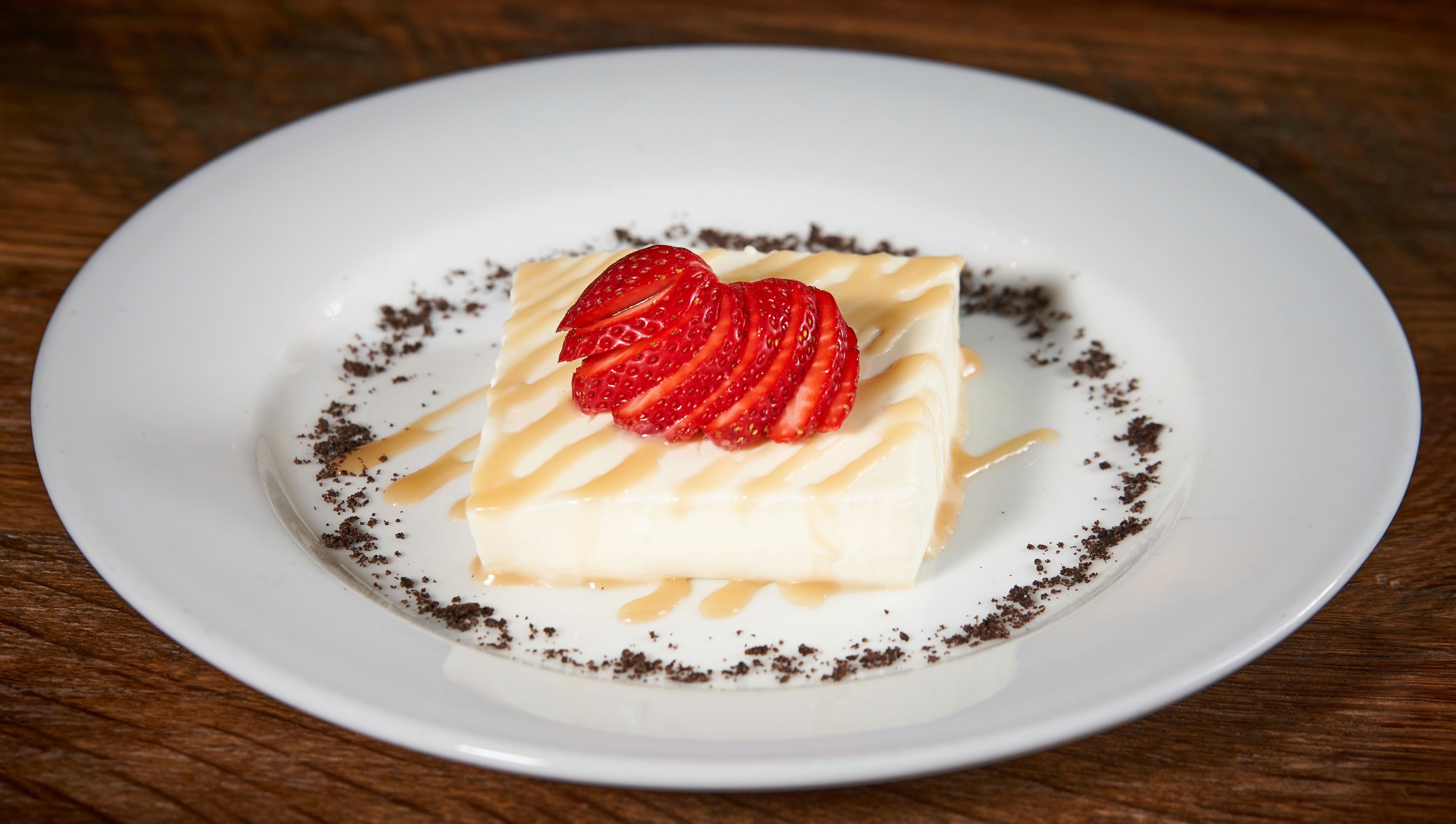
Photo: David Disponett / Pexels
The diets react (see scores below)
Common Ingredients
- coconut milk
- sugar
- cornstarch
- water
- salt
Specific recipes may vary.
Incompatible with 8 of 11 diets
Diet Ratings
Haupia is a Hawaiian coconut pudding that is fundamentally incompatible with a ketogenic diet. While coconut milk is a keto-friendly fat source, the recipe relies on two major keto offenders: sugar and cornstarch. Sugar adds direct net carbs with no fiber offset, and cornstarch is a highly refined grain starch with an extremely high glycemic index. A standard serving of haupia contains roughly 20-30g of net carbs, which alone could consume or exceed an entire day's keto carb budget. The combination of added sugar and cornstarch makes this dish a clear 'avoid' with no practical portion size that would keep it keto-compatible.
Haupia is a traditional Hawaiian coconut pudding/gel made entirely from plant-based ingredients. Coconut milk, sugar, cornstarch, water, and salt are all fully vegan-compliant with no animal products or animal-derived ingredients present. The dish is relatively simple and minimally processed, using whole-food coconut milk as its base. The only minor nutritional consideration is that it is high in saturated fat from coconut milk and sugar, but this does not affect its vegan status. It scores an 8 rather than a perfect 10 because it is a dessert/snack with limited nutritional density rather than a whole-food staple.
Haupia contains multiple non-paleo ingredients that disqualify it. Cornstarch is derived from corn, a grain explicitly excluded from the paleo diet. Refined sugar is a processed sweetener with no place in paleo eating. Added salt is also excluded under strict paleo guidelines. While coconut milk is paleo-approved and water is neutral, the remaining three ingredients are clear violations. This is not a borderline case — the combination of a grain-derived thickener and refined sugar makes Haupia firmly off-limits.
Haupia is a coconut milk-based Hawaiian dessert pudding that conflicts with Mediterranean diet principles on multiple fronts. Coconut milk is high in saturated fat (primarily lauric acid), which is not a traditional Mediterranean fat source — olive oil is the canonical fat. Added sugar is explicitly discouraged, and cornstarch is a refined carbohydrate with little nutritional value. The dish is also a processed/prepared sweet, which the Mediterranean diet minimizes. Non-traditional cuisine origin is not itself disqualifying, but the ingredient profile simply does not align with Mediterranean principles.
Some modern Mediterranean diet interpreters argue that coconut milk, as a plant-derived fat, may be acceptable occasionally, and that small portions of naturally sweetened desserts fit within the tradition of enjoying food with pleasure. Traditional Mediterranean cultures do include sweets on occasion, though typically based on olive oil, nuts, or fruit rather than coconut and refined starch.
Haupia is a Hawaiian coconut pudding made entirely from plant-based and processed ingredients. Coconut milk is a plant-derived fat source, sugar is a refined carbohydrate, cornstarch is a grain-derived thickener, and water provides the liquid base. There are zero animal-derived ingredients in this dish. Every single component violates carnivore diet principles — coconut milk and cornstarch are plant foods, and sugar is an excluded processed carbohydrate. This dish has no place on any tier of the carnivore diet.
Haupia contains two excluded ingredients: added sugar and cornstarch. Sugar is explicitly prohibited on Whole30 as an added sweetener, and cornstarch is explicitly listed as an excluded ingredient. Either one alone would disqualify this dish, making it clearly non-compliant.
Haupia is a Hawaiian coconut pudding made from coconut milk, sugar, cornstarch, water, and salt. The main FODMAP concern is coconut milk, which is dose-dependent: Monash rates canned coconut milk as low-FODMAP at 1/2 cup (125ml) but high-FODMAP at larger servings due to sorbitol content. Cornstarch, sugar, water, and salt are all low-FODMAP. A small, standard serving of haupia (roughly 1-2 small squares) likely contains a modest amount of coconut milk and should be safe, but portion control is critical. A typical generous dessert serving could easily push coconut milk content past the safe threshold, making overconsumption a real risk.
Monash University rates canned coconut milk as low-FODMAP at up to 1/2 cup per serving, but many FODMAP practitioners advise caution because haupia is coconut-milk-dense and portion sizes in real-world consumption often exceed the safe threshold, making it easy to inadvertently consume high-FODMAP amounts during elimination.
Haupia is a traditional Hawaiian coconut milk pudding made primarily from full-fat coconut milk, which is high in saturated fat — exactly the type of tropical oil/fat that NIH/NHLBI DASH guidelines explicitly limit. Coconut milk is derived from coconut, a tropical oil source that DASH categorically discourages due to its high saturated fat content (approximately 85% of its fat is saturated). Additionally, haupia contains added sugar, which DASH also limits, compounding its incompatibility with the dietary pattern. While the sodium content from a small amount of salt is relatively modest, the combination of high saturated fat from coconut milk and added sugar makes this dessert/snack a poor fit for DASH eating. There is no meaningful potassium, calcium, magnesium, or fiber benefit to offset these drawbacks.
Haupia is a Hawaiian coconut milk pudding that presents multiple Zone Diet problems. The dish is essentially a dessert made from coconut milk (high in saturated fat), sugar (high-glycemic, nutritionally empty carbohydrate), and cornstarch (high-glycemic thickener) — with no protein whatsoever. From a Zone perspective, this is a triple failure: the carbohydrates are high-glycemic and devoid of fiber or micronutrient value, there is zero protein to build any block structure around, and the fat is primarily saturated (coconut milk) rather than the preferred monounsaturated fats. The sugar and cornstarch combination would cause a rapid glycemic spike, which is exactly what Zone aims to prevent to control eicosanoid production and insulin response. While Zone is ratio-based rather than exclusion-based, haupia cannot realistically be incorporated into a Zone meal as a meaningful component — it contributes no lean protein, no low-glycemic carbohydrates, and no monounsaturated fat. Even in small portions, it offers no Zone-favorable nutritional value and would disrupt the 40/30/30 ratio without any compensating benefit.
Haupia is a traditional Hawaiian coconut milk pudding made from coconut milk, sugar, cornstarch, water, and salt. From an anti-inflammatory perspective, it presents a mixed profile. Coconut milk contains medium-chain triglycerides (MCTs) and lauric acid, which have some immune-modulating properties, but it is also high in saturated fat — a component that anti-inflammatory guidelines recommend limiting. The added sugar is a notable concern, as refined sugars are associated with increased inflammatory markers (CRP, IL-6) and are explicitly limited in anti-inflammatory frameworks. Cornstarch is a refined carbohydrate with a high glycemic index, contributing to glycemic spikes that can promote inflammation. The portion size matters: as an occasional small treat, the inflammatory burden is modest. As a regular snack, the combined saturated fat and added sugar load is problematic. There are no significant anti-inflammatory contributors in this dish — no omega-3s, antioxidants, fiber, or polyphenols.
Coconut milk's status in anti-inflammatory nutrition is contested. Dr. Andrew Weil and many mainstream anti-inflammatory frameworks caution against regular coconut milk due to its saturated fat content, while some functional medicine and paleo-aligned practitioners (e.g., Mark Hyman) argue lauric acid in coconut products has unique anti-inflammatory and antimicrobial properties that distinguish it from animal saturated fats. This does not change the sugar and refined starch concerns but does create meaningful disagreement about the coconut milk component specifically.
Haupia is a Hawaiian coconut milk pudding that is essentially empty calories for GLP-1 patients. It contains no protein, no fiber, and is high in saturated fat from coconut milk and added sugar — hitting nearly every 'avoid' criterion simultaneously. Coconut milk is one of the most saturated-fat-dense plant foods available, which can worsen GLP-1 side effects including nausea, bloating, and reflux. The sugar content contributes to blood glucose spikes with no nutritional offset. Cornstarch provides refined carbohydrates with no fiber benefit. With dramatically reduced appetite on GLP-1 medications, every calorie must deliver nutritional value — this dish delivers almost none. A small serving might be acceptable as an occasional treat in someone who is otherwise meeting all protein and fiber targets, but it offers no meaningful benefit and several meaningful risks.
*See how scores were generated at our methodology page.
Nutritional profile
Six traits that cut across every diet.
Fiber & Plants
How much whole-plant food and fiber it delivers.
Healthy Fats
The quality of its fats (unsaturated, omega-3).
Whole / Unprocessed
How close it is to its natural, unprocessed form.
Gut Gentle
How easy it is on digestion (low FODMAP, few irritants).
Low Glycemic
How little it spikes your blood sugar.
Protein Density
How much protein it packs per calorie.
Controversy Index
Higher controversy = more disagreement between diets.
Diet-Specific Tips
 Vegan — 8/10
View tips
- Coconut milk is fully plant-based
- Cornstarch is a plant-derived thickener from corn
- Sugar is plant-derived (note: some refined cane sugars are processed with bone char, but this applies to certain brands, not the ingredient category itself)
- No animal proteins, dairy, eggs, gelatin, or other animal-derived ingredients
- Straightforward ingredient list with no hidden animal derivatives
- Relatively high in saturated fat and sugar, but nutritionally irrelevant to vegan compliance
 Low-FODMAP — 6/10
View tips
- Coconut milk is the primary FODMAP concern — low-FODMAP at ≤125ml but high-FODMAP at larger amounts due to sorbitol
- Cornstarch, sugar, water, and salt contain no significant FODMAPs
- Haupia is coconut-milk-dense, so portion size is critical
- A small serving (1-2 pieces) is likely safe; a large serving poses FODMAP risk
- No high-FODMAP ingredients beyond dose-dependent coconut milk
 Anti-Inflammatory — 4/10
View tips
- Added sugar raises inflammatory markers (CRP, IL-6) — a core ingredient to limit in anti-inflammatory diets
- Cornstarch is a high-glycemic refined carbohydrate with no anti-inflammatory benefit
- Coconut milk is high in saturated fat, which anti-inflammatory guidelines recommend limiting
- No anti-inflammatory positives: no omega-3s, antioxidants, fiber, or polyphenols present
- Coconut milk's lauric acid content is debated — some practitioners view it as neutral to mildly beneficial
- Acceptable as an occasional treat in small portions; problematic as a regular snack