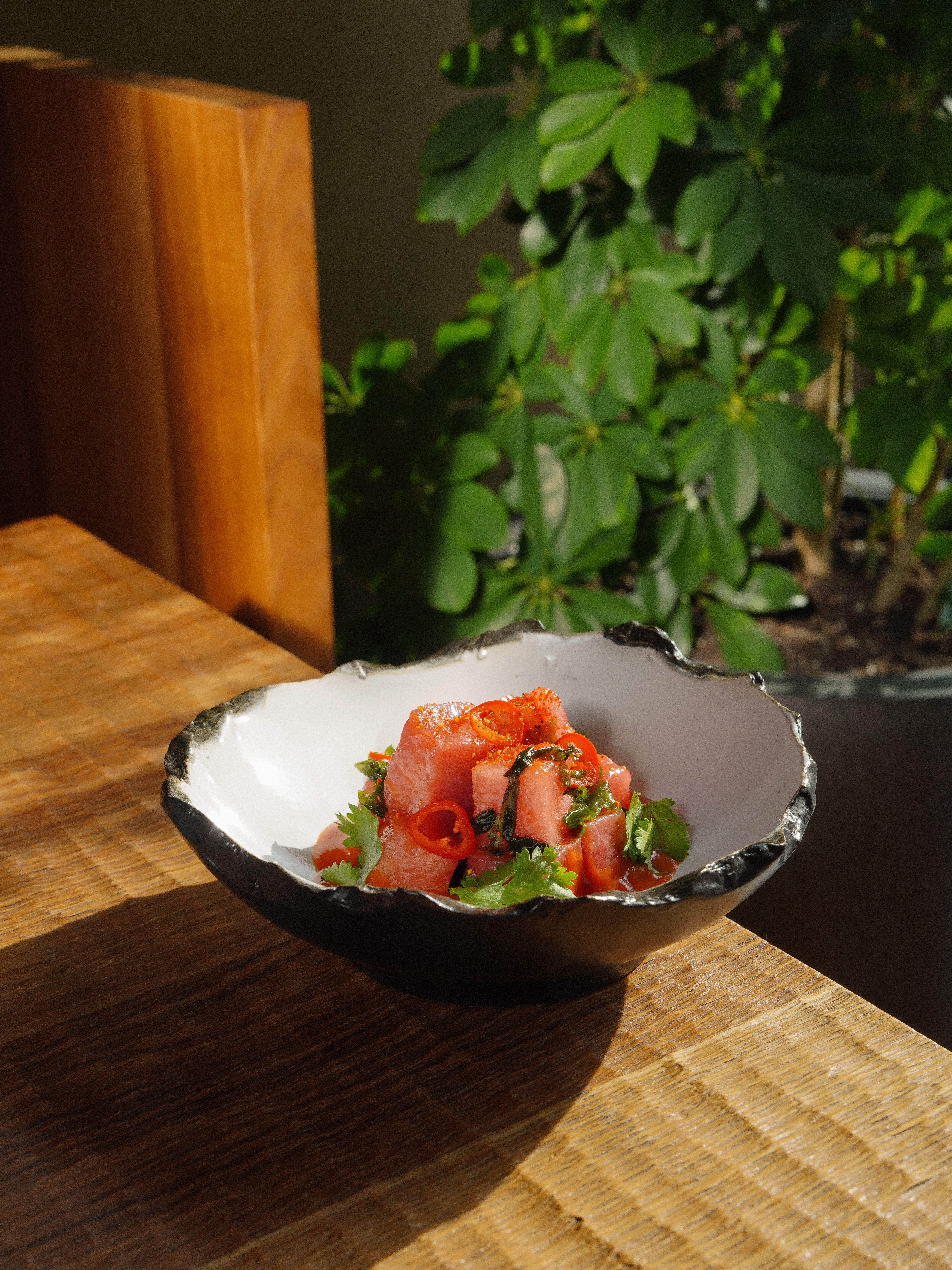
Hawaiian
Lomi Lomi Salmon
The diets react (see scores below)
Common Ingredients
- salted salmon
- tomatoes
- sweet onion
- green onion
- hawaiian salt
- ice
Specific recipes may vary.
Incompatible with 5 of 11 diets
Diet Ratings
Lomi Lomi Salmon is a Hawaiian salted salmon salad massaged with tomatoes, sweet onion, and green onion. The salmon itself is excellent for keto — high in protein and healthy fats with zero carbs. The tomatoes add minimal net carbs (~3-4g per half cup). The primary concern is the sweet onion, which has notably higher sugar content than regular onions (~4-5g net carbs per quarter cup). A traditional serving of this dish combines these vegetables in moderate quantities, putting total net carbs roughly in the 5-10g range depending on portion size — manageable but requiring awareness. The dish has no grains, added sugars, or high-carb starches, making it fundamentally keto-compatible with portion mindfulness around the sweet onion.
Strict keto practitioners may flag sweet onion as a caution ingredient due to its higher sugar content compared to other alliums, and some clinical protocols would recommend substituting with green onion only or reducing the onion quantity significantly to keep this firmly in the 'approve' category.
Lomi Lomi Salmon contains salted salmon as its primary and defining ingredient, making it unequivocally non-vegan. Fish is an animal product and is explicitly excluded under all vegan frameworks. The remaining ingredients — tomatoes, sweet onion, green onion, Hawaiian salt, and ice — are all plant-based, but the presence of salmon renders the dish entirely incompatible with a vegan diet.
Lomi Lomi Salmon is a traditional Hawaiian dish made by massaging salted salmon with tomatoes and onions. The core problem from a strict paleo perspective is the added salt — Hawaiian salt is still added/refined salt, which is excluded from the paleo framework. Additionally, salted salmon is a processed form of fish (cured with salt), making it a processed food rather than fresh, unprocessed fish. The remaining ingredients — tomatoes, sweet onion, green onion, and ice — are all paleo-compliant vegetables. If prepared with fresh, unsalted salmon and no added salt, this dish would easily earn an 'approve' rating, as the base ingredients are hunter-gatherer staples. However, as traditionally prepared, the salt curing and added Hawaiian salt place it firmly in the 'avoid' category.
Lomi Lomi Salmon features fish as its primary protein alongside fresh vegetables (tomatoes, green onion, sweet onion), which aligns well with Mediterranean principles of emphasizing fish and plant-based foods. However, the salmon is heavily salted (cured), which raises sodium concerns not typically associated with Mediterranean dietary patterns. The dish lacks olive oil, which is the cornerstone fat of the Mediterranean diet. The fresh vegetable components are excellent, and fish is strongly encouraged, but the high-sodium preservation method and absence of healthy fats prevent a full approval. With simple modifications (rinsing to reduce salt, adding olive oil), this dish could score higher.
Some Mediterranean diet interpreters might rate this more favorably, arguing that traditional Mediterranean cuisines also include salt-preserved fish (e.g., salt cod/bacalà in Greek, Italian, and Spanish traditions), where the fish protein and fresh vegetables are what matter most. Others might penalize it more heavily due to the sodium content, as modern clinical Mediterranean diet guidelines emphasize minimally processed foods.
Lomi Lomi Salmon is fundamentally incompatible with the carnivore diet. While the salted salmon itself is a perfectly acceptable carnivore food, the dish is defined by its plant-based ingredients: tomatoes, sweet onion, and green onion are all plant foods explicitly excluded from the carnivore diet. These vegetables are not minor additives or trace spices — they are core, structural components of the dish that cannot be removed without the dish ceasing to be Lomi Lomi Salmon. The tomatoes and onions make up a substantial portion of the recipe by volume. Hawaiian salt is acceptable, but the overall dish is a plant-heavy preparation that sits firmly in the 'avoid' category.
Lomi Lomi Salmon is a traditional Hawaiian salad made with salted salmon, tomatoes, sweet onion, green onion, Hawaiian salt, and ice. All listed ingredients are Whole30-compliant: fish, vegetables, and salt are explicitly allowed. Hawaiian salt is simply unrefined sea salt, which is permitted. The dish is a whole-food preparation with no grains, legumes, dairy, added sugars, or other excluded ingredients. The only minor consideration is the 'salted salmon' — commercially prepared salted salmon should be label-checked to confirm no added sugar, curing agents beyond salt, or other non-compliant additives, which is a common concern with processed/cured fish products. Traditional Hawaiian salted salmon (pa'akai cured) uses only salt and salmon, making it fully compliant.
Commercially packaged salted salmon products may contain added sugar or preservatives beyond salt, so the official Whole30 guidance to read all labels carefully applies here. Whole30 practitioners would advise verifying the salmon is cured with salt only, or using fresh salmon with added Hawaiian salt.
Lomi Lomi Salmon contains two FODMAP-problematic ingredients: sweet onion and green onion. Sweet onion (yellow/Vidalia-type) is high in fructans and is a classic high-FODMAP food to avoid during elimination — even small amounts can be problematic. Green onion (scallion) is a nuanced case: Monash rates the green tops as low-FODMAP, but the white bulb portion contains fructans and should be avoided. Traditional Lomi Lomi is massaged together, meaning the onion juice and fructans from the sweet onion permeate the entire dish. The salted salmon, tomatoes (low-FODMAP at standard servings), Hawaiian salt, and ice are all low-FODMAP. However, the inclusion of sweet onion as a core, non-optional ingredient makes the dish high-FODMAP as traditionally prepared. A modified version using only green onion tops and omitting sweet onion would be low-FODMAP.
Monash University clearly rates regular onion (including sweet onion) as high-FODMAP even in small servings, making this an avoid in strict elimination. However, some clinical FODMAP practitioners might allow a very small tasting portion of this dish if the onion content is minimal, though this is not standard elimination phase guidance. The green onion component alone (tops only) would be acceptable, but sweet onion cannot be substituted with a safe portion.
Lomi Lomi Salmon is defined by its use of salted salmon — fish that has been heavily cured with salt — and is finished with additional Hawaiian salt. This creates an extremely high-sodium dish that directly conflicts with DASH diet sodium targets of 1,500–2,300mg/day. Traditional salted salmon can contain 800–1,500mg of sodium per ounce depending on cure time and method, meaning even a modest portion could easily exceed the entire daily DASH sodium allowance. The remaining ingredients (tomatoes, sweet onion, green onion) are excellent DASH foods, contributing potassium, fiber, and antioxidants, but they cannot offset the sodium burden of the primary ingredient. The NIH/NHLBI DASH guidelines explicitly identify high-sodium cured and salted fish as foods to limit or avoid. If the dish were made with fresh or low-sodium salmon with no added salt, it would be an excellent DASH choice — the vegetable components are ideal.
Lomi Lomi Salmon is a remarkably Zone-friendly Hawaiian dish. The primary protein is salmon, which is an excellent lean-to-moderate protein source rich in omega-3 fatty acids — directly aligned with Dr. Sears' anti-inflammatory emphasis. The carbohydrate components (tomatoes, sweet onion, green onion) are all low-glycemic vegetables, fitting squarely into the Zone's preferred carbohydrate category. The dish is naturally low in fat beyond the salmon's beneficial omega-3s and monounsaturated fats, making it easy to balance within the 40/30/30 framework. The main concern is sodium content from the salted salmon and Hawaiian salt, which is a health consideration but does not affect Zone macronutrient ratios. To build a complete Zone meal, one would want to add a small amount of additional monounsaturated fat (e.g., a few macadamia nuts or a drizzle of olive oil) since the dish is relatively lean overall, and possibly slightly increase the carbohydrate volume to hit the 40% carb target depending on salmon quantity.
The sodium content from cured/salted salmon is a legitimate concern. While sodium doesn't affect Zone macronutrient ratios, Dr. Sears' later anti-inflammatory writings emphasize overall health optimization. Some Zone practitioners would flag the high sodium as a reason to use fresh salmon instead, which would raise the score to a near-perfect Zone protein. Additionally, sweet onion has a slightly higher glycemic index than other onion varieties, though the quantity used is small enough that this is negligible in practice.
Lomi Lomi Salmon is a traditional Hawaiian dish with a genuinely mixed anti-inflammatory profile. On the positive side, salmon is one of the most emphasized anti-inflammatory proteins due to its high omega-3 content (EPA and DHA), which directly reduces inflammatory markers like CRP and IL-6. Tomatoes contribute lycopene and other antioxidants. Green onions provide quercetin and other flavonoids. The dish is otherwise clean — no refined carbohydrates, no seed oils, no added sugars, no artificial additives. However, the defining preparation feature is heavy salting — salted salmon (cured with substantial Hawaiian salt) is the core of this dish. Excessive sodium intake is associated with endothelial inflammation, hypertension, and increased inflammatory signaling in some research, though it is not a classical inflammatory pathway in the same way omega-6 excess or trans fats are. The sodium content meaningfully tempers what would otherwise be a strong anti-inflammatory dish. If prepared with a lighter salt cure or rinsed well before serving, the profile improves. As served traditionally, it earns a moderate 'caution' rating — the omega-3 foundation is excellent, but the sodium burden is a real concern.
Mainstream anti-inflammatory research focuses primarily on lipid quality, antioxidant content, and glycemic load — by those measures, this dish is quite good, and some practitioners would approve it on the strength of its salmon, tomatoes, and absence of processed ingredients. However, practitioners following stricter anti-inflammatory protocols (particularly those focused on cardiovascular inflammation or kidney health) would flag the high sodium content of cured/salted salmon as a meaningful pro-inflammatory concern, especially for individuals with hypertension or salt sensitivity.
Lomi Lomi Salmon is a traditional Hawaiian preparation of hand-massaged salted salmon with fresh tomatoes, onion, and green onion, typically served chilled. The salmon provides lean, high-quality protein with beneficial omega-3 fatty acids, and the vegetable components add fiber, water content, and micronutrients — all positives for GLP-1 patients. The dish is raw, unfried, and easy to digest, and the high water content from tomatoes and ice-chilled serving supports hydration. The primary concern is the sodium content: salted salmon cured with Hawaiian salt can be very high in sodium, which is a meaningful flag for GLP-1 patients who may already be at risk for dehydration and electrolyte imbalance due to reduced thirst sensation and potential GI fluid losses. Portion size also matters — as a side or small serving it fits well, but the sodium load scales with portion. Protein per serving is moderate rather than high given the dish is volume-diluted by vegetables. Overall a reasonable GLP-1-compatible choice in moderation, with sodium management as the key variable.
Some GLP-1-focused dietitians would rate this more favorably, emphasizing the omega-3 content, hydrating vegetables, and easy digestibility as ideal for patients with GI sensitivity; others would flag the high sodium more strongly, particularly for patients with hypertension or those on injection days when GI side effects increase fluid loss risk.
*See how scores were generated at our methodology page.
Nutritional profile
Six traits that cut across every diet.
Fiber & Plants
How much whole-plant food and fiber it delivers.
Healthy Fats
The quality of its fats (unsaturated, omega-3).
Whole / Unprocessed
How close it is to its natural, unprocessed form.
Gut Gentle
How easy it is on digestion (low FODMAP, few irritants).
Low Glycemic
How little it spikes your blood sugar.
Protein Density
How much protein it packs per calorie.
Controversy Index
Higher controversy = more disagreement between diets.
Diet-Specific Tips
 Keto — 6/10
View tips
- Salted salmon is zero-carb and rich in healthy omega-3 fats — ideal for keto
- Sweet onion is the primary carb concern due to higher natural sugar content than regular onions
- Tomatoes add moderate net carbs (~3-4g per serving) but are generally accepted on keto in small amounts
- Green onion contributes negligible net carbs
- No grains, added sugars, or starchy ingredients present
- Total net carbs per standard serving estimated 5-10g — portion control required
- Traditional dish is naturally whole and unprocessed — aligns with keto food quality principles
 Mediterranean — 5/10
View tips
- Fish is a core Mediterranean protein source — strongly positive
- Fresh vegetables (tomatoes, onions) are Mediterranean staples — positive
- Heavy salting/curing process adds excessive sodium — negative
- No olive oil present — missing the primary Mediterranean fat source
- No refined grains or added sugars — positive
- Traditional salt-preserved fish has precedent in some Mediterranean cuisines
 Whole30 — 9/10
View tips
- Salmon is a Whole30-approved protein
- All vegetables (tomatoes, sweet onion, green onion) are explicitly allowed
- Hawaiian salt is unrefined sea salt — fully compliant
- Ice used as a serving/chilling element — no dietary concern
- Commercially salted salmon should be label-checked for added sugar or non-compliant curing agents
- Traditional preparation uses only salmon and salt — no excluded ingredients
 Zone — 8/10
View tips
- Salmon provides omega-3 fatty acids highly valued in Zone's anti-inflammatory framework
- All carbohydrate sources (tomatoes, onions) are low-glycemic vegetables — ideal Zone carbs
- No high-glycemic carbohydrates, refined sugars, or processed ingredients
- High sodium content from salted salmon and Hawaiian salt is a health concern but doesn't affect Zone ratios
- Dish may need supplemental monounsaturated fat to complete the Zone 30% fat target
- Naturally portion-friendly and easily measured into Zone blocks
- No unfavorable fats (no seed oils, no trans fats, minimal saturated fat)
 Anti-Inflammatory — 6/10
View tips
- Salmon is rich in omega-3 fatty acids (EPA/DHA) — a top-tier anti-inflammatory protein
- High sodium from cured/salted salmon preparation is a meaningful concern
- Tomatoes provide lycopene and antioxidants (generally anti-inflammatory for most people)
- Green onions contribute quercetin and flavonoids
- No refined carbohydrates, seed oils, added sugars, or artificial additives
- Whole food ingredients with minimal processing aside from salt curing
- Sodium-driven inflammatory signaling tempers an otherwise strong omega-3 foundation
 GLP-1 Friendly — 6/10
View tips
- High-quality lean protein with omega-3 fatty acids from salmon
- High water content from tomatoes and chilled preparation supports hydration
- Very high sodium from salt-cured salmon — primary concern for GLP-1 patients
- No frying, no added fat, easy to digest — favorable for slowed gastric emptying
- Moderate fiber from tomatoes and onions
- Protein density per serving is diluted by vegetable volume — may need pairing with additional protein source
- Raw preparation preserves nutrients and avoids heavy fats that worsen GI side effects