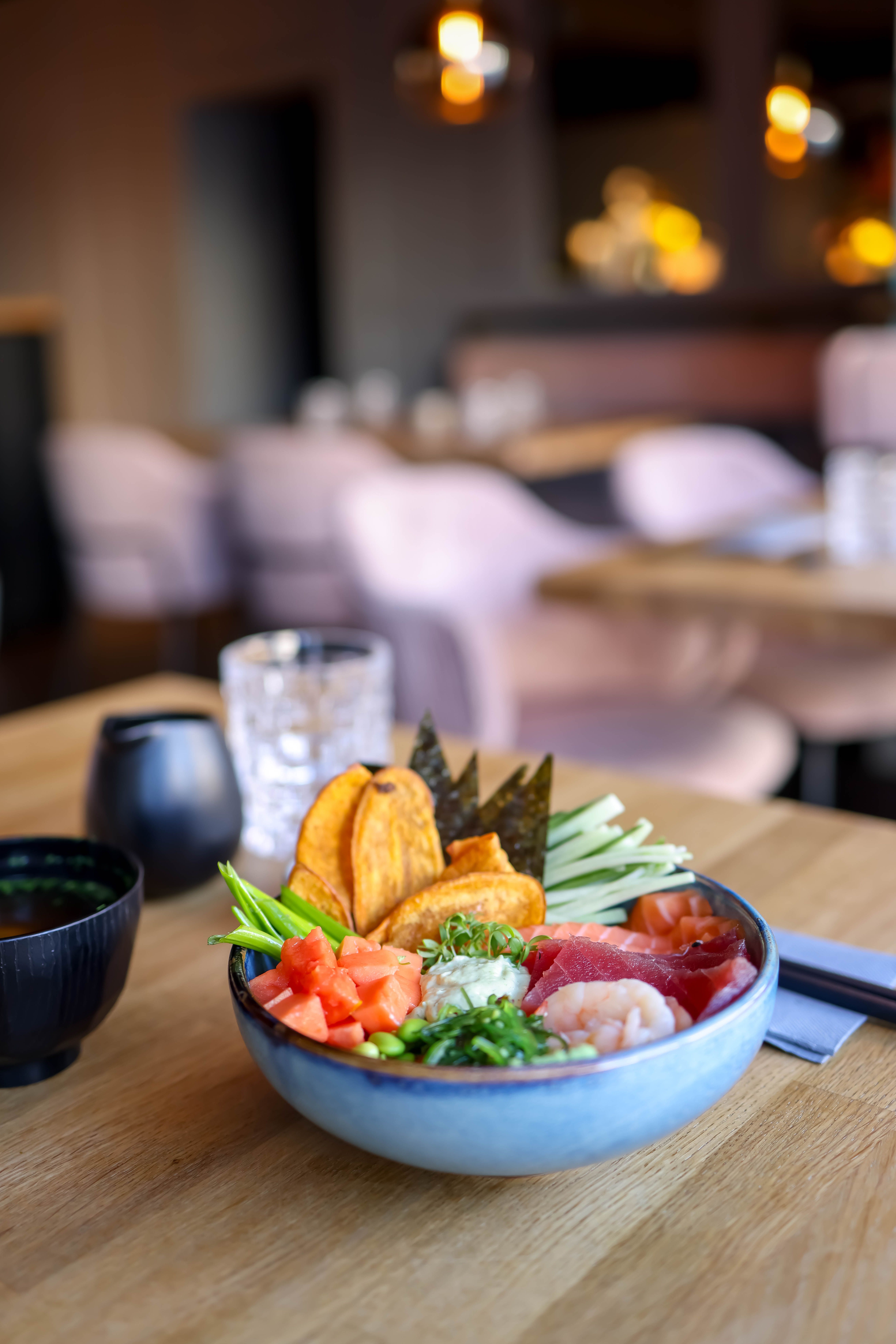
Photo: Valeria Boltneva / Pexels
The diets react (see scores below)
Common Ingredients
- ahi tuna
- rice
- soy sauce
- sesame oil
- green onion
- sweet onion
- seaweed
- sesame seeds
Specific recipes may vary.
Incompatible with 6 of 11 diets
Diet Ratings
A traditional poke bowl is built on a foundation of white rice, which is a high-glycemic grain that delivers roughly 45g of net carbs per cup — far exceeding the daily keto limit on its own. While several individual components are keto-friendly (ahi tuna provides excellent lean protein, sesame oil adds healthy fat, seaweed and green onions are low-carb, and sesame seeds contribute fat and fiber), the rice makes the dish as a whole fundamentally incompatible with ketosis. Sweet onion also adds modest sugar. The dish cannot be meaningfully modified while retaining its identity as a poke bowl; removing the rice produces an entirely different dish (a tuna salad or sashimi bowl). Soy sauce contributes minimal carbs and is not a disqualifying factor.
Poke Bowl contains ahi tuna as its primary protein, which is a fish and therefore a direct animal product. This unambiguously disqualifies the dish from vegan compliance. All other ingredients in the bowl — rice, soy sauce, sesame oil, green onion, sweet onion, seaweed, and sesame seeds — are fully plant-based, but the presence of ahi tuna alone is sufficient to render the dish non-vegan. There is no meaningful debate within the vegan community about whether fish is excluded; it clearly is.
A traditional Poke Bowl contains multiple non-paleo ingredients that make it incompatible with the paleo diet. Rice is a grain and strictly excluded. Soy sauce is a processed legume-derived condiment with added salt, also excluded. Sesame oil is a seed oil, which falls under the prohibited oils list. While ahi tuna, green onion, sweet onion, and seaweed are all paleo-approved, and sesame seeds in whole form are acceptable, the foundational components of this dish — rice, soy sauce, and sesame oil — are clear violations. The dish as traditionally prepared cannot be considered paleo-friendly.
A poke bowl features ahi tuna as its primary protein, which is an excellent Mediterranean diet-aligned choice — fatty fish rich in omega-3s are strongly encouraged. Seaweed, green onion, sweet onion, and sesame seeds are all whole, plant-based ingredients that complement the diet well. However, the base is white rice (a refined grain), and the dish uses soy sauce and sesame oil rather than extra virgin olive oil as the primary fat. Soy sauce adds significant sodium and is not a traditional Mediterranean condiment, and sesame oil, while a healthy plant fat, is not the canonical Mediterranean fat source. The dish is non-processed and nutritionally sound overall, but the refined grain base and non-olive-oil fat profile place it in cautious rather than full approval territory.
Some modern Mediterranean diet practitioners, particularly those following a broader 'Blue Zone' interpretation, would view poke bowls more favorably — white rice is a staple in several longevity-associated traditional diets, and some researchers argue the grain type matters less than the overall dietary pattern. Additionally, traditional Mediterranean cuisines in regions like Greece and Turkey do use white rice in certain preparations, suggesting moderate inclusion is acceptable.
A poke bowl is fundamentally incompatible with the carnivore diet. While ahi tuna is a perfectly acceptable carnivore protein, it is buried under a mountain of plant-based and processed ingredients. Rice is a grain and strictly excluded. Soy sauce contains soy (a legume) and wheat (a grain), both banned. Sesame oil is a plant-derived oil, excluded. Green onion and sweet onion are vegetables. Seaweed, while debated by some, is plant-derived. Sesame seeds are seeds, excluded. The only carnivore-compatible component is the raw tuna itself. The dish as a whole is a plant-heavy meal with a token animal protein, making it a clear avoid.
This poke bowl contains two excluded ingredients: rice (a grain, explicitly excluded on Whole30) and soy sauce (contains soy, a legume, and often wheat — both excluded). The remaining ingredients — ahi tuna, sesame oil, green onion, sweet onion, seaweed, and sesame seeds — are all Whole30-compliant. However, the presence of rice and soy sauce makes this dish non-compliant as described. A Whole30-compatible poke bowl could be made by substituting cauliflower rice for rice and coconut aminos for soy sauce.
This poke bowl contains two significant high-FODMAP ingredients that make it unsuitable during the elimination phase. Sweet onion (regular/brown/white onion) is one of the highest-FODMAP foods tested by Monash University — it is high in fructans at any reasonable serving size and should be strictly avoided during elimination. Green onion (scallion) is a nuanced case: the green tops are low-FODMAP but the white bulb portions are high in fructans. In poke bowls, green onion is typically used with mixed portions, creating risk. Soy sauce in small amounts (1 tablespoon) is considered low-FODMAP by Monash, but many commercial soy sauces contain wheat, adding fructan load. The remaining ingredients — ahi tuna (plain fish, low-FODMAP), white rice (low-FODMAP), sesame oil (low-FODMAP), sesame seeds (low-FODMAP at 1 tablespoon), and seaweed/nori (low-FODMAP at standard servings) — are all safe. However, the presence of sweet onion as a core ingredient is a firm disqualifier. There is no realistic low-FODMAP serving of sweet onion. The dish as described cannot be made compliant without ingredient substitution.
A poke bowl has strong DASH-friendly elements — ahi tuna is an excellent lean protein rich in omega-3s and potassium, rice provides energy (brown rice would be preferred over white), seaweed offers minerals including iodine and magnesium, sesame seeds add healthy fats and calcium, and green/sweet onions are DASH-approved vegetables. However, soy sauce is the critical limiting factor: a typical poke bowl uses 2-3 tablespoons of soy sauce, contributing roughly 1,700–2,600mg of sodium — potentially exceeding the entire daily sodium budget for standard DASH (2,300mg) or nearly twice the low-sodium DASH limit (1,500mg) in one dish alone. Sesame oil is generally acceptable in small amounts as a vegetable oil, though it is calorie-dense. The dish's overall nutritional profile is otherwise well-aligned with DASH principles, making sodium reduction (via low-sodium soy sauce or reduced quantity) the primary modification needed.
NIH DASH guidelines explicitly flag high-sodium condiments like soy sauce as incompatible with the diet's sodium targets. However, some DASH-oriented clinicians note that when low-sodium tamari or coconut aminos are substituted and portions are controlled, poke bowls can function as a near-ideal DASH meal given their lean protein, omega-3s, and vegetable content — suggesting preparation method should weigh heavily in the rating.
A poke bowl has strong Zone-compatible elements but requires careful modification to fit well. Ahi tuna is an excellent lean protein source rich in omega-3s, making it ideal for Zone meals. Seaweed, green onion, and sweet onion are low-glycemic vegetables that align well with Zone principles. Sesame oil provides monounsaturated and polyunsaturated fats, though it is relatively high in omega-6s compared to preferred monounsaturated sources like olive oil. The primary concern is white rice, which is a high-glycemic carbohydrate that Sears classifies as 'unfavorable.' A standard poke bowl is rice-heavy, easily throwing the carb block count out of Zone balance and spiking insulin. Soy sauce adds negligible macros but contributes sodium. Sesame seeds add small amounts of fat and protein. To bring this into Zone compliance, portions of rice must be significantly reduced (roughly 1/3 cup cooked or less per meal) and ideally replaced or supplemented with additional low-glycemic vegetables. With those adjustments, the tuna and vegetable components make this a workable Zone meal, but as typically served in restaurants with a full cup or more of rice, it runs afoul of Zone carb ratios.
Some Zone practitioners, particularly those following Sears' later work emphasizing polyphenols and anti-inflammatory eating, would note that sushi-grade rice in moderate portions is far more acceptable than refined white bread or sugar, and that the omega-3 richness of ahi tuna plus seaweed polyphenols makes a well-portioned poke bowl a respectable Zone-friendly meal. Others would argue the standard restaurant serving size makes this a practical 'avoid' due to rice volume, pushing the score lower.
A poke bowl built on ahi tuna, seaweed, green and sweet onion, sesame seeds, sesame oil, and soy sauce is largely an anti-inflammatory meal. Ahi (yellowfin) tuna is a lean, high-protein fish with meaningful omega-3 content (EPA and DHA), though lower than fatty fish like salmon. Seaweed provides iodine, fucoidans, and unique polysaccharides with documented anti-inflammatory properties. Green onion and sweet onion supply quercetin and other flavonoids. Sesame seeds contribute lignans (sesamin, sesamolin) and some omega-3s. Sesame oil, while higher in omega-6 than olive oil, contains sesamol and sesaminol — potent antioxidants that partially offset the omega-6 concern, and it is used in small, flavoring quantities here rather than as a cooking fat. Soy sauce adds sodium but in typical poke quantities is not a meaningful inflammatory driver; if used in excess, high sodium intake can promote vascular inflammation, so portion matters. White rice is the one genuinely neutral-to-cautionary element — it is a refined grain that raises glycemic load — but the overall dish context (protein, fiber from seaweed and alliums, healthy fats) blunts the glycemic response compared to eating rice alone. Substituting brown rice would push the score to 9.
Sesame oil is moderately high in omega-6 linoleic acid, and some anti-inflammatory protocols (particularly those emphasizing strict omega-6 reduction) would flag even small amounts as cumulative contributors to an unfavorable omega-6:omega-3 ratio. However, mainstream anti-inflammatory researchers and Dr. Weil's framework distinguish sesame oil from highly refined seed oils due to its unique antioxidant lignan content and traditional use in small quantities.
A poke bowl with ahi tuna has meaningful strengths for GLP-1 patients: ahi tuna is a lean, high-quality protein source rich in omega-3 fatty acids, and the bowl includes fiber-supporting ingredients like seaweed and onions. However, the standard version raises two concerns. First, white rice is a refined grain with low fiber and moderate glycemic impact — it contributes calories without meaningful nutritional density, and a full serving of rice in a standard poke bowl can crowd out more nutrient-dense ingredients for a patient eating small portions. Second, sesame oil, while a healthy unsaturated fat, is calorie-dense; combined with sesame seeds and soy sauce (high sodium), the dish can tip toward heavier and more bloat-inducing than ideal. The dish is not fried, not high in saturated fat, and not sugary — it avoids the major GLP-1 red flags. With portion control and a reduced rice ratio, this is a reasonable meal choice, but as typically served in a full bowl, the rice-to-protein ratio and caloric density make it a caution rather than a clear approve.
Some GLP-1-focused dietitians approve poke bowls more readily, arguing that ahi tuna's protein and omega-3 profile outweigh the refined carbohydrate concern, particularly when patients request brown rice or cauliflower rice substitutions. Others flag the high sodium content of soy sauce as a consideration for patients with hypertension, which is common in the GLP-1 patient population, and note that sesame oil volume varies widely by restaurant and can significantly increase fat load.
*See how scores were generated at our methodology page.
Nutritional profile
Six traits that cut across every diet.
Fiber & Plants
How much whole-plant food and fiber it delivers.
Healthy Fats
The quality of its fats (unsaturated, omega-3).
Whole / Unprocessed
How close it is to its natural, unprocessed form.
Gut Gentle
How easy it is on digestion (low FODMAP, few irritants).
Low Glycemic
How little it spikes your blood sugar.
Protein Density
How much protein it packs per calorie.
Controversy Index
Higher controversy = more disagreement between diets.
Diet-Specific Tips
 Mediterranean — 6/10
View tips
- Ahi tuna is an excellent omega-3-rich fish, strongly aligned with Mediterranean principles
- White rice is a refined grain — modern Mediterranean guidelines prefer whole grains
- Sesame oil replaces extra virgin olive oil as the primary fat, which is non-canonical
- No added sugars, minimal processing — whole, fresh ingredients throughout
- Seaweed, onions, and sesame seeds are nutritious plant-based additions
- Soy sauce introduces high sodium and a non-Mediterranean flavor profile
 DASH — 5/10
View tips
- Ahi tuna is a DASH-ideal lean protein rich in omega-3 fatty acids and potassium
- Soy sauce introduces very high sodium — potentially 1,700–2,600mg per serving, exceeding DASH daily limits
- White rice is less preferred than brown rice on DASH; substituting brown rice improves fiber content
- Seaweed provides beneficial minerals (magnesium, iodine) consistent with DASH goals
- Sesame oil is an acceptable vegetable oil in small portions but adds calories
- Low-sodium soy sauce or coconut aminos would significantly improve DASH compatibility
- Green onions and sweet onions are DASH-approved vegetables
- No saturated fat concerns — overall fat profile is favorable
 Zone — 6/10
View tips
- Ahi tuna is an ideal Zone lean protein with high omega-3 content
- White rice is a high-glycemic 'unfavorable' carbohydrate in Zone methodology
- Standard restaurant portions are rice-heavy, disrupting the 40/30/30 ratio
- Seaweed, green onion, and sweet onion are Zone-favorable low-glycemic carb sources
- Sesame oil is acceptable fat but higher in omega-6 than preferred monounsaturated sources like olive oil
- Dish is highly Zone-adaptable if rice portion is reduced significantly
- Soy sauce adds sodium but negligible macro impact
 Anti-Inflammatory — 8/10
View tips
- Ahi tuna provides lean protein and omega-3 fatty acids (EPA/DHA), supporting reduction of inflammatory markers
- Seaweed is rich in unique anti-inflammatory polysaccharides (fucoidans) and micronutrients
- Onions (green and sweet) supply quercetin and flavonoids with antioxidant and anti-inflammatory activity
- Sesame seeds and sesame oil contain antioxidant lignans (sesamin, sesamolin) that partially offset omega-6 content
- White rice is a refined grain with moderate glycemic load — the main anti-inflammatory weak point of this dish
- Soy sauce sodium is modest in typical poke portions but should be monitored; tamari or reduced-sodium versions are preferable
- Overall dish profile is protein-forward with fiber, omega-3s, and phytonutrients — favorable macronutrient balance
 GLP-1 Friendly — 6/10
View tips
- Ahi tuna is a lean, high-protein, omega-3-rich fish — strong GLP-1 fit
- White rice is a refined carbohydrate with low fiber — reduces nutrient density per calorie
- Sesame oil is calorie-dense; portion size of oil and seeds matters
- Seaweed and onions add modest fiber and micronutrients
- High sodium from soy sauce is a secondary concern
- No frying, no saturated fat, no added sugar — avoids major GLP-1 red flags
- Portion-sensitive: a half-rice or cauliflower rice version would score 7-8