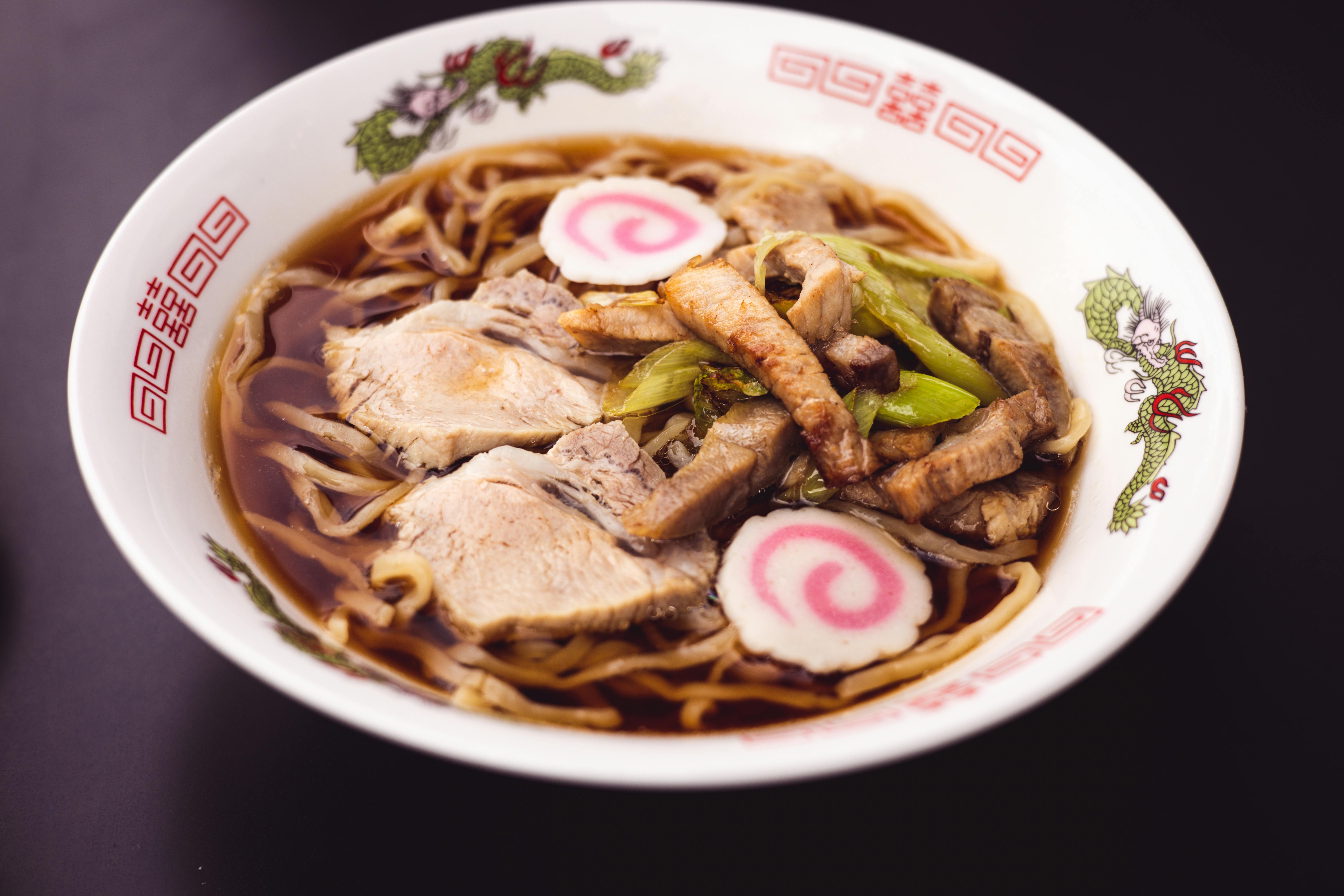
The diets react (see scores below)
Common Ingredients
- wheat noodles
- dashi
- char siu
- fish cake
- eggs
- green onion
- spam
- soy sauce
Specific recipes may vary.
Incompatible with 9 of 11 diets
Diet Ratings
Saimin is fundamentally incompatible with a ketogenic diet. The primary component is wheat noodles, a grain-based ingredient that alone can contain 40-60g of net carbs per serving, far exceeding the entire daily keto carb allowance. The dashi broth, soy sauce, char siu (often glazed with sugar), and fish cake also contribute additional carbs and sugars. There is no meaningful portion adjustment that would make this dish keto-compatible, as the noodles are the structural foundation of the dish.
Saimin contains multiple animal-derived ingredients that make it entirely incompatible with a vegan diet. Dashi is a broth typically made from fish (bonito flakes/katsuobushi) and/or kombu, char siu is roasted pork, fish cake (kamaboko) is made from processed fish surimi, eggs are a direct animal product, and Spam is a processed pork product. Every major protein and flavoring component in this dish is animal-derived, leaving only the wheat noodles, green onion, and soy sauce as vegan-compatible ingredients.
Saimin is fundamentally incompatible with the paleo diet. The base of the dish is wheat noodles, a grain that is strictly excluded from paleo. Soy sauce contains both wheat and soy (a legume), adding two more violations. Spam is a heavily processed meat product loaded with preservatives, added salt, and additives. Char siu (Chinese BBQ pork) is typically prepared with soy sauce, sugar, and other non-paleo ingredients. Fish cake is a processed food often containing starch binders and additives. Dashi itself (if made from kombu and bonito) could be acceptable, and eggs and green onion are paleo-approved, but these two ingredients cannot salvage a dish built almost entirely on paleo-excluded components.
Saimin significantly contradicts Mediterranean diet principles on multiple fronts. The dish contains Spam, a highly processed pork product high in sodium and saturated fat, which falls into the 'avoid' category as both processed food and red/processed meat. Char siu (barbecued pork) adds additional processed red meat. Refined wheat noodles replace the whole grains emphasized in Mediterranean eating. The soy sauce-based broth is sodium-heavy and non-traditional. While there are some positive elements — eggs, fish cake (seafood), and green onions — these are outweighed by the processed meat load (Spam alone is disqualifying), refined carbohydrates, and absence of olive oil, vegetables, legumes, or other Mediterranean staples. This dish is fundamentally at odds with Mediterranean diet principles.
Saimin is fundamentally incompatible with the carnivore diet. The dish is built on wheat noodles, a grain-based food that is entirely excluded from any tier of carnivore eating. Additionally, soy sauce is a fermented plant-based condiment derived from soybeans and wheat — doubly disqualifying. Green onions are a plant food. Spam is a processed meat product containing sugar, potato starch, and other additives. While some ingredients like eggs, dashi (fish-based broth), and char siu (pork) have carnivore-compatible bases, the overall dish is dominated by plant-derived and processed ingredients that make it completely off-limits. No modification short of a complete reconstruction would render this dish carnivore-appropriate.
Saimin contains multiple excluded ingredients that make it clearly non-compliant with Whole30. Wheat noodles are a grain product and directly excluded. Soy sauce contains soy (a legume) and often wheat (a grain), both excluded — coconut aminos would be the compliant substitute. Spam is a highly processed pork product that typically contains sugar, starch, and other non-compliant additives. Char siu (Chinese BBQ pork) is traditionally made with hoisin sauce, soy sauce, and added sugar — all excluded. Fish cake often contains added starch and sugar. Even setting aside the spirit of the program, the wheat noodles alone are an absolute disqualifier, and the dish fundamentally depends on noodles as its defining characteristic, which falls under the 'no recreating pasta/noodles' rule.
Saimin is fundamentally incompatible with the low-FODMAP elimination phase. The primary structural component — wheat noodles — is high in fructans and is the definitive disqualifying ingredient. There is no ambiguity here: wheat-based noodles are one of the most well-established high-FODMAP foods per Monash University. Beyond the noodles, green onion (the green tops are low-FODMAP but the white bulb portions, typically used in saimin, contain fructans), soy sauce (contains wheat and is a borderline ingredient at standard cooking amounts), and char siu (traditionally made with garlic and sometimes honey or hoisin, both high-FODMAP) add further FODMAP load. Dashi (kombu and bonito-based) is generally low-FODMAP, eggs are low-FODMAP, and fish cake (kamaboko) is typically low-FODMAP in small servings. Spam in small portions is also generally low-FODMAP as a processed pork product. However, the wheat noodles alone make this dish unavoidably high-FODMAP at any standard serving size. A rice noodle substitution would be the primary adaptation needed.
Saimin as commonly prepared in Hawaii is a high-sodium dish that conflicts with core DASH principles on multiple fronts. The broth base (dashi + soy sauce) alone can contribute 800–1,500mg of sodium per serving. Spam, a processed pork product, is notoriously high in sodium (~790mg per 2oz serving) and saturated fat. Char siu (Chinese BBQ pork) is typically high in sodium and added sugar from its marinade. Fish cake (kamaboko) is a processed food with significant sodium content. Combined, a single bowl of saimin can easily exceed 2,000–3,000mg of sodium, surpassing the entire daily limit for both standard DASH (2,300mg) and low-sodium DASH (1,500mg). While some ingredients like green onion, eggs, and wheat noodles are individually acceptable or neutral, the overall sodium load from the broth, Spam, soy sauce, dashi, and processed proteins makes this dish fundamentally incompatible with DASH guidelines. The presence of processed meats (Spam, fish cake) additionally conflicts with DASH's emphasis on lean, minimally processed proteins.
Saimin is a Hawaiian noodle soup that presents significant Zone Diet challenges but isn't categorically off-limits. The primary issue is the wheat noodles, which are a high-glycemic refined carbohydrate — a classic 'unfavorable' Zone carb that spikes insulin. The protein sources (char siu, fish cake, eggs, spam) are mixed: eggs are Zone-acceptable, fish cake is lean, but char siu (BBQ pork with sugar glaze) and especially Spam are problematic — Spam is highly processed, sodium-heavy, and contains saturated fat, making it a poor Zone protein choice. The dashi broth is actually Zone-friendly (low calorie, umami base), and green onions are favorable Zone vegetables. Soy sauce adds sodium but negligible macros. The macro balance skews heavily toward carbohydrates from noodles with insufficient lean protein and virtually no favorable fat source. A Zone adaptation would require dramatically reducing noodle portions, eliminating Spam, minimizing char siu, and adding a monounsaturated fat source like avocado or olive oil — essentially rebuilding the dish. As served in traditional portions, the carb-to-protein ratio is likely 60%+ carbs, well outside the 40/30/30 target.
Some Zone practitioners might rate this lower (toward avoid) given the combination of refined noodles AND processed meat (Spam) in the same dish — two simultaneous Zone violations. However, the Zone's ratio-based flexibility means a small-portion version with mostly broth, eggs, fish cake, and a quarter-serving of noodles could technically fit within Zone blocks, keeping this in caution territory rather than avoid.
Saimin is a beloved Hawaiian comfort food, but its ingredient profile is heavily weighted toward pro-inflammatory components. The most significant concern is Spam — a processed meat product high in sodium, saturated fat, and preservatives (sodium nitrite), all of which are linked to elevated inflammatory markers. Char siu (Chinese BBQ pork) is typically prepared with added sugar and high-sodium soy sauce glazes, contributing refined sugar and excess sodium. Fish cake (kamaboko) is a processed food containing additives, starch fillers, and high sodium. The wheat noodles are refined carbohydrates with minimal fiber. Soy sauce adds significant sodium load. Dashi (typically kombu and bonito) is the one genuinely anti-inflammatory element — seaweed and fish-based stocks contain glutamates and some omega-3s. Green onion provides modest polyphenols and antioxidants. Eggs are neutral to mildly beneficial. Overall, the dish is dominated by processed meats and refined carbohydrates, with the broth and aromatics being insufficient to offset the pro-inflammatory burden from Spam and the high sodium content throughout.
Saimin is a Hawaiian noodle soup with a broth base (dashi + soy sauce) and a mix of proteins including char siu, fish cake, egg, and Spam. The broth-based format supports hydration and easy digestibility, and eggs and fish cake contribute moderate protein. However, the dish has several meaningful drawbacks for GLP-1 patients. Spam is an ultra-processed, high-sodium, high-fat pork product — exactly the type of processed meat that should be limited or avoided. Char siu (barbecued pork) is a fatty cut with added sugars in the marinade. The wheat noodles are refined carbohydrates with low fiber and low protein density per calorie. Soy sauce contributes very high sodium, which can worsen fluid retention and is a concern at reduced caloric intake. The overall protein content across a standard bowl is moderate but spread across low-quality protein sources. Fiber content is minimal. The dish is not fried and is broth-based, which helps digestibility and tolerability on GLP-1 medications, but the ingredient quality is a significant concern. A modified version — omitting Spam, reducing Spam and char siu, adding more egg or tofu, and using a higher-fiber noodle — would score considerably higher.
Some GLP-1-focused dietitians may rate broth-based soups more favorably regardless of ingredient quality, noting that the high water content, warm format, and easy digestibility make them among the most tolerable meal formats for patients experiencing nausea or early satiety. Others would flag Spam specifically as a disqualifying ingredient due to its ultra-processed profile and sodium load, pushing the rating lower toward avoid.
*See how scores were generated at our methodology page.
Nutritional profile
Six traits that cut across every diet.
Fiber & Plants
How much whole-plant food and fiber it delivers.
Healthy Fats
The quality of its fats (unsaturated, omega-3).
Whole / Unprocessed
How close it is to its natural, unprocessed form.
Gut Gentle
How easy it is on digestion (low FODMAP, few irritants).
Low Glycemic
How little it spikes your blood sugar.
Protein Density
How much protein it packs per calorie.
Controversy Index
Higher controversy = more disagreement between diets.
Diet-Specific Tips
 Zone — 4/10
View tips
- Wheat noodles are high-glycemic 'unfavorable' Zone carbohydrates that dominate the dish's carb load
- Spam is a processed, high-sodium, saturated-fat protein — poor Zone protein choice
- Char siu contains added sugar from BBQ glaze, elevating glycemic impact
- Eggs and fish cake are acceptable Zone protein sources that partially redeem the dish
- Dashi broth is Zone-neutral and adds minimal macros
- No favorable monounsaturated fat source present
- Traditional portions likely produce a ~60/25/15 macro ratio, far from 40/30/30
- Sodium content is very high (soy sauce, Spam, dashi, fish cake) — not a Zone criterion but worth noting
 GLP-1 Friendly — 4/10
View tips
- Spam is ultra-processed, high in saturated fat and sodium — a significant drawback
- Char siu adds additional saturated fat and sugar
- Refined wheat noodles provide low fiber and low protein density
- Broth-based format supports hydration and digestibility — a positive factor
- Eggs and fish cake are acceptable lean protein sources
- Very high sodium content from soy sauce and processed ingredients
- Minimal dietary fiber across the full dish
- Protein quantity per bowl is moderate but not high-quality or protein-dense per calorie