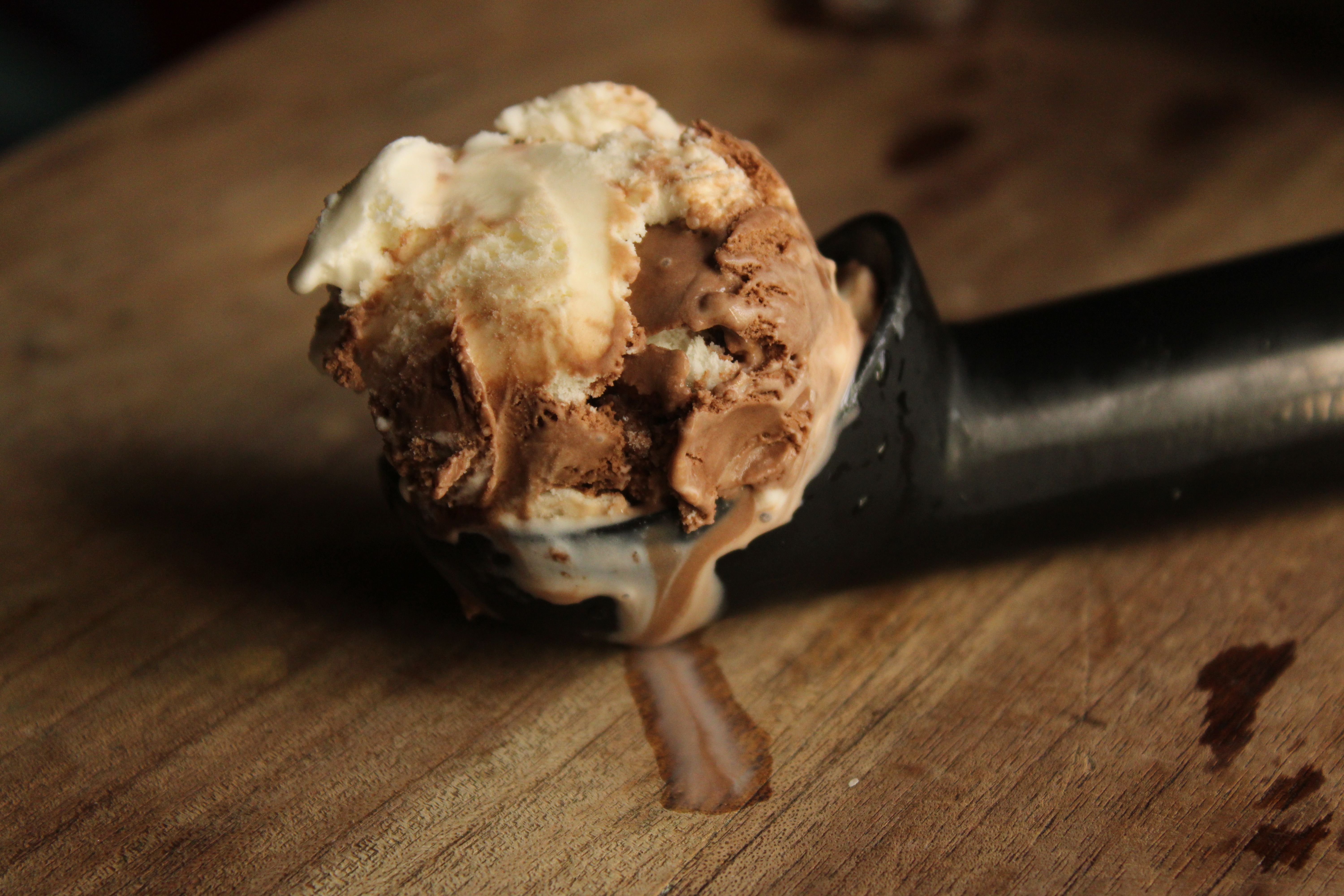
Photo: Jahra Tasfia Reza / Pexels
New-Zealand
Hokey Pokey Ice Cream
The diets react (see scores below)
Common Ingredients
- milk
- cream
- vanilla
- sugar
- honeycomb candy
- egg yolks
Specific recipes may vary.
Incompatible with 11 of 11 diets
Diet Ratings
Hokey Pokey Ice Cream is fundamentally incompatible with a ketogenic diet. It contains multiple high-carb, high-sugar ingredients: sugar is a primary ingredient, honeycomb candy is made from sugar and golden syrup (extremely high in simple sugars), and milk adds lactose on top of that. A standard serving would contain well over 20-30g of net carbs from sugar alone, making it virtually impossible to fit within daily keto limits without destroying ketosis. While cream and egg yolks are keto-friendly components, they are vastly outweighed by the sugar-dense elements of this dish.
Hokey Pokey Ice Cream contains multiple animal-derived ingredients that make it entirely incompatible with a vegan diet. Milk and cream are dairy products (animal-derived), egg yolks are an animal product, and honeycomb candy is typically made with honey, which is excluded by all major vegan organizations including the Vegan Society. There is no ambiguity here — this dish is built on a foundation of animal ingredients across every major component.
Hokey Pokey Ice Cream is fundamentally incompatible with the paleo diet. It contains multiple strictly excluded ingredients: milk and cream are dairy products, refined sugar is a processed sweetener explicitly banned, and honeycomb candy is made from sugar and golden syrup — both refined and processed. While egg yolks and vanilla are paleo-approved, they cannot redeem a dish built on a foundation of dairy and refined sugar. This is a heavily processed dessert that has no place in a paleo framework.
Hokey Pokey Ice Cream is a heavily processed, high-sugar, high-saturated-fat dessert that directly contradicts core Mediterranean diet principles. The combination of cream, egg yolks, and sugar produces a calorie-dense product with significant saturated fat and added sugars. The honeycomb candy adds substantial refined sugar with no nutritional benefit. While dairy and eggs are permitted in moderation, this preparation transforms them into a treat that the Mediterranean diet explicitly discourages — it falls squarely into the 'minimal added sugars and processed sweets' restriction. This is not a traditional Mediterranean food and offers no alignment with its plant-forward, whole-food philosophy.
Hokey Pokey Ice Cream is fundamentally incompatible with the carnivore diet. While it contains some animal-derived ingredients (milk, cream, egg yolks), the dish is disqualified by multiple prohibited ingredients: sugar is explicitly excluded from carnivore as a processed sweetener, honeycomb candy is a confection made primarily of sugar and baking soda (a plant/mineral-derived leavening agent), and vanilla is a plant-derived flavoring. Even setting aside the dairy debate within carnivore circles, the sugar and honeycomb candy alone make this a clear avoid. This is essentially a dessert built around sugar, which is antithetical to carnivore principles regardless of which camp or tier you follow.
Hokey Pokey Ice Cream contains multiple Whole30-excluded ingredients. Milk and cream are dairy products, which are explicitly excluded from the Whole30 program (only ghee and clarified butter are permitted dairy exceptions). Sugar is an added sweetener, which is also explicitly excluded. Honeycomb candy is made from sugar and golden syrup/corn syrup, compounding the added sugar violation. Even if dairy were overlooked, this dish is essentially a dessert/junk food recreation that violates the spirit of the program's 'no recreating sweets' rule. There is no compliant version of this dish possible without fundamentally changing its nature.
Hokey Pokey ice cream presents two significant FODMAP concerns that together make it problematic during the elimination phase. First, standard ice cream is made with cow's milk and cream, which are high in lactose — dairy-based ice cream is classified as high-FODMAP at a standard serving (Monash rates regular ice cream as high-FODMAP due to lactose content). Second, honeycomb candy (hokey pokey toffee) is made by aerating toffee with baking soda, and its primary FODMAP issue is that commercial honeycomb often contains or is based on honey or glucose-fructose syrups with excess fructose, and some recipes use honey directly — honey is high-FODMAP due to excess fructose. Even if the honeycomb is made purely with sucrose (regular sugar) and golden syrup, the lactose load from the ice cream base alone would make this high-FODMAP at a normal scoop serving. Sugar itself and vanilla are low-FODMAP, as are egg yolks. But the combination of a lactose-heavy ice cream base and honeycomb candy (likely containing honey or high-fructose ingredients) makes this a dish to avoid during the elimination phase.
Some clinical FODMAP practitioners note that hard, fully crystallized honeycomb made only from sucrose and bicarbonate of soda (with no honey) may have minimal fructose load, and lactose-free ice cream versions would resolve the dairy concern — in that specific case, a small serving might be cautiously tolerated. Monash University does not have specific data on hokey pokey ice cream as a dish, so the rating relies on component analysis rather than direct testing.
Hokey Pokey Ice Cream is a full-fat, high-sugar frozen dessert that conflicts with multiple core DASH diet principles. It contains full-fat dairy (milk and cream), which DASH explicitly limits in favor of low-fat or fat-free dairy options. The significant saturated fat content from cream raises cardiovascular risk, directly opposing DASH goals. The added sugar is substantial — from both the sugar base and honeycomb candy (toffee made from sugar and golden syrup) — placing it firmly in the 'sweets' category that DASH recommends limiting to 5 or fewer servings per week, with each serving being small. Egg yolks add cholesterol and saturated fat. This dish provides minimal DASH-friendly nutrients (no meaningful fiber, potassium, magnesium, or calcium relative to its fat and sugar load) and is essentially a high-calorie, high-saturated-fat, high-sugar indulgence with no redeeming DASH-compatible attributes in its standard form.
Hokey Pokey Ice Cream is essentially a high-fat, high-sugar dessert with virtually no Zone-compatible redeeming qualities. The macronutrient profile is heavily skewed: it is dominated by saturated fat (from cream and egg yolks) and high-glycemic simple sugars (from sugar and honeycomb candy, which is essentially pure spun sugar and glucose syrup). The carbohydrate load is almost entirely from fast-acting sugars with no fiber to moderate glycemic impact — the opposite of what the Zone prescribes. The fat content is saturated rather than monounsaturated. The only Zone-adjacent component is the protein from egg yolks and milk, but these are minor contributors and come packaged with significant saturated fat and sugar. Even in small portions, the ratio of high-GI carbs and saturated fat makes it nearly impossible to incorporate into a balanced Zone block meal without dramatically skewing all three macronutrient ratios in unfavorable directions. This is one of the rare foods that genuinely warrants 'avoid' — not because ice cream is categorically forbidden, but because this particular formulation (with added honeycomb candy on top of regular ice cream ingredients) concentrates the most problematic elements with no offsetting nutritional value.
Hokey Pokey ice cream is a classic New Zealand dessert made from full-fat dairy (milk and cream), added sugar, egg yolks, and honeycomb candy — a combination that presents multiple pro-inflammatory concerns. Full-fat dairy (cream) is high in saturated fat, which at elevated intake is associated with increased inflammatory markers. The sugar load is substantial, coming from both the ice cream base and the honeycomb candy (which is essentially caramelized sugar and golden syrup). High added sugar intake is one of the most consistently pro-inflammatory dietary patterns, linked to elevated CRP, IL-6, and AGE (advanced glycation end-product) formation. Egg yolks are a moderate concern due to arachidonic acid content, though their standalone inflammatory impact is debated. There are virtually no anti-inflammatory redeeming factors in this dish — no omega-3s, no significant antioxidants, no polyphenols, no fiber. Vanilla provides trace antioxidant compounds but at negligible quantities. This dish is essentially a concentrated delivery of saturated fat and refined sugar, making it a clear 'avoid' under anti-inflammatory principles.
Hokey Pokey ice cream is a poor fit for GLP-1 patients on virtually every relevant criterion. It is high in sugar (from both added sugar and honeycomb candy), high in saturated fat (cream, egg yolks), very low in protein relative to calories, and essentially zero in fiber. The fat and sugar combination is exactly what worsens GLP-1 side effects — nausea, reflux, and bloating — because delayed gastric emptying means this rich, heavy mixture sits in the stomach far longer than usual. The honeycomb candy component adds a concentrated sugar spike with no nutritional redemption. Nutrient density per calorie is extremely low, which is especially costly when total daily intake is already reduced by the medication's appetite-suppressing effect. A standard serving (~half cup, ~150-170 calories) delivers perhaps 2-3g protein, 0g fiber, 8-10g saturated fat, and 20-25g sugar. There is no meaningful clinical argument for including this regularly in a GLP-1 patient's diet.
*See how scores were generated at our methodology page.
Nutritional profile
Six traits that cut across every diet.
Fiber & Plants
How much whole-plant food and fiber it delivers.
Healthy Fats
The quality of its fats (unsaturated, omega-3).
Whole / Unprocessed
How close it is to its natural, unprocessed form.
Gut Gentle
How easy it is on digestion (low FODMAP, few irritants).
Low Glycemic
How little it spikes your blood sugar.
Protein Density
How much protein it packs per calorie.
Controversy Index
Higher controversy = more disagreement between diets.