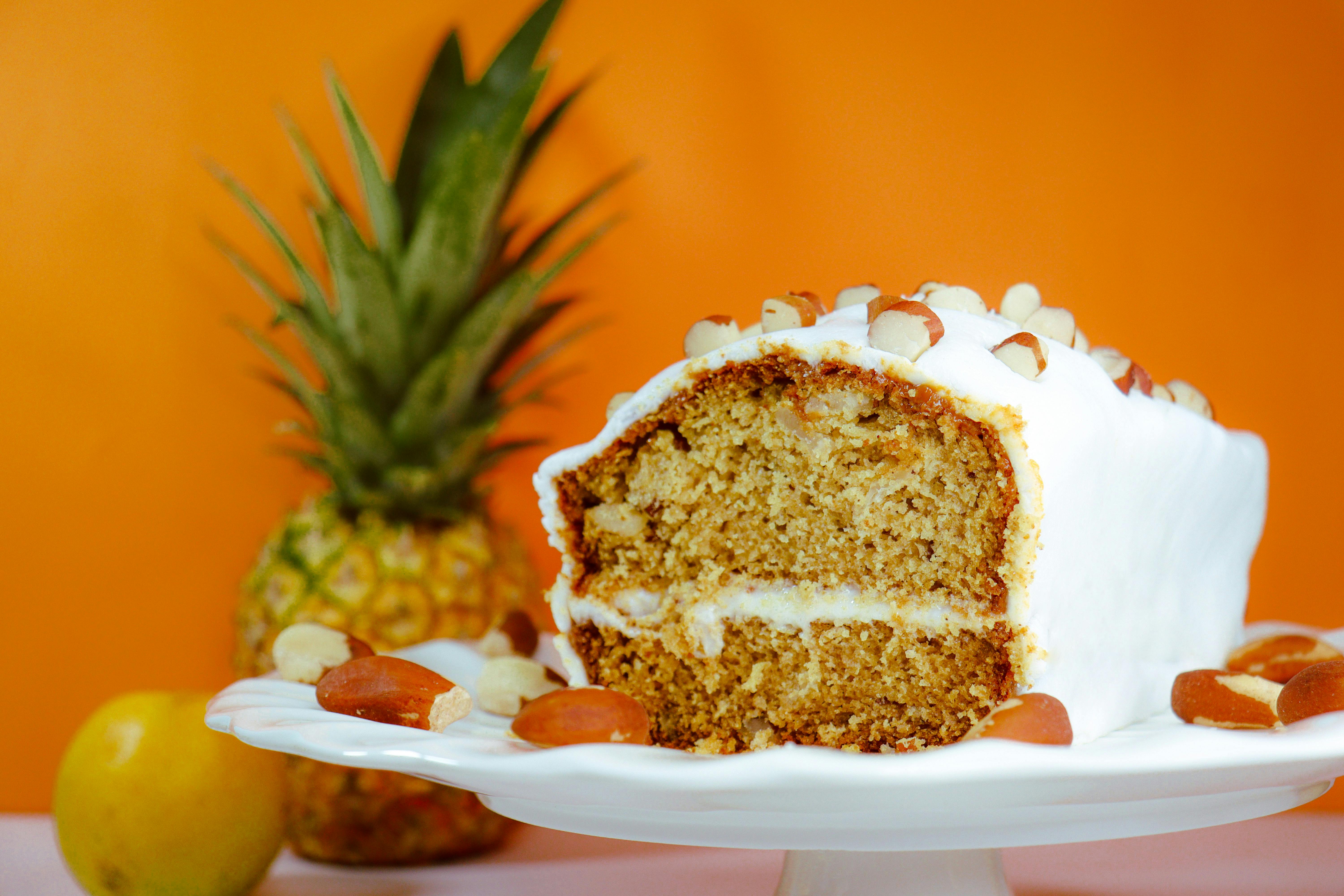
Photo: Jorge Zaldívar Marroquín / Pexels
American
Hummingbird Cake
The diets react (see scores below)
Common Ingredients
- flour
- sugar
- eggs
- oil
- pineapple
- banana
- pecans
- cinnamon
- baking soda
- salt
- cream cheese
- butter
- vanilla
Specific recipes may vary.
Incompatible with 11 of 11 diets
Diet Ratings
Hummingbird Cake is entirely incompatible with a ketogenic diet. It contains multiple high-carb, keto-prohibited ingredients: wheat flour (a grain), sugar (added sugar), banana, and pineapple (high-sugar fruits). A single slice would deliver well over 50-70g of net carbs, obliterating the entire daily keto carb budget. While pecans, eggs, oil, cream cheese, butter, and cinnamon are individually keto-friendly, they are completely overwhelmed by the dominant carbohydrate-heavy ingredients. This is a classic Southern dessert cake with no viable standard serving that could fit ketosis.
Hummingbird Cake contains multiple animal-derived ingredients that make it clearly non-vegan. Eggs are a direct animal product used as a binding and leavening agent in the cake batter. Cream cheese is a dairy product made from cow's milk. Butter is also an animal-derived dairy fat. These three ingredients alone — eggs, cream cheese, and butter — are unambiguous animal products with no debate within the vegan community. Vegan versions of this cake can be made using flax eggs or commercial egg replacers, vegan cream cheese (cashew- or coconut-based), and plant-based butter, but the traditional recipe as listed here is not vegan-compatible.
Hummingbird Cake is fundamentally incompatible with the Paleo diet. The base ingredient is wheat flour, a grain that is categorically excluded from all paleo frameworks. Sugar is refined and explicitly banned. Cream cheese and butter are dairy products not permitted under paleo guidelines. Salt is added and excluded. Oil (unspecified, likely vegetable or canola) is almost certainly a seed oil, also banned. Baking soda is a processed additive. While a few ingredients — eggs, pineapple, banana, pecans, and cinnamon — are individually paleo-approved, they are entirely overshadowed by the multiple core paleo violations present in this cake. There is no version of this dish, as described, that could be considered paleo-compatible without a near-total ingredient overhaul.
Hummingbird Cake is a heavily sweetened American dessert that fundamentally contradicts Mediterranean diet principles. It is built on refined white flour and large amounts of added sugar, both of which the Mediterranean diet minimizes. The cream cheese frosting and butter add significant saturated fat beyond what the diet allows. While it does contain some fruit (pineapple, banana) and nuts (pecans), these benefits are overwhelmed by the refined grains, added sugars, and processed fat components. This is a treat-level confection that would be eaten rarely if at all in a Mediterranean eating pattern.
Hummingbird Cake is almost entirely plant-derived and processed, making it completely incompatible with the carnivore diet. The base consists of flour (grain), sugar (processed plant), oil (plant-based), pineapple and banana (fruits), pecans (nuts), cinnamon (plant spice), and baking soda — all strictly excluded on carnivore. The only animal-derived ingredients are eggs, butter, cream cheese, and possibly vanilla (which itself is plant-derived). Even those minor animal components are buried in a dessert dominated by grains, sugars, fruit, and nuts. This dish represents virtually everything the carnivore diet eliminates.
Hummingbird Cake contains multiple excluded ingredients and also violates the 'no recreating baked goods' rule. Flour is a grain product (excluded), sugar is an added sweetener (excluded), butter is dairy (excluded), and cream cheese is dairy (excluded). Even setting aside the individual excluded ingredients, this is a cake — explicitly listed as a forbidden baked good recreation under Whole30 Rule 4. There is no compliant version of this dish possible within the Whole30 framework.
Hummingbird Cake is problematic for the low-FODMAP elimination phase due to multiple high-FODMAP ingredients stacked together. Wheat flour is high in fructans and is the primary structural ingredient — no realistic reduction in portion size would eliminate this concern. Banana is high-FODMAP even at moderate servings (ripe banana exceeds the low-FODMAP threshold of 1/3 of a medium unripe banana quickly). Pineapple contains excess fructose and is high-FODMAP at the quantities typically used in this cake. Cream cheese frosting adds lactose. With at least three independently high-FODMAP ingredients (wheat flour, ripe banana, pineapple, cream cheese) all present in a standard serving, there is no safe portion size during the elimination phase. Pecans, eggs, oil, cinnamon, baking soda, salt, and butter are individually low-FODMAP, but they cannot offset the cumulative FODMAP load from the other ingredients.
Hummingbird Cake is a classic Southern dessert that is fundamentally incompatible with DASH diet principles. It contains large amounts of added sugar, refined white flour, butter, and full-fat cream cheese frosting — all of which DASH explicitly limits or discourages. The oil contributes significant total fat, and the cream cheese and butter add saturated fat well beyond DASH targets. While the cake does include DASH-friendly ingredients like banana, pineapple, and pecans, these are overwhelmed by the high sugar, refined carbohydrate, and saturated fat load. A typical slice can contain 400–600+ calories, 30–50g of sugar, and 15–25g of fat with notable saturated fat from the cream cheese frosting. Salt and baking soda also add sodium. The presence of whole fruit and nuts does not redeem this as a DASH-compatible food. DASH guidelines explicitly limit sweets and added sugars to 5 or fewer servings per week (and only in small portions), placing rich cakes like this firmly in the 'avoid' category for regular consumption.
Hummingbird Cake is a classic Southern dessert that is fundamentally incompatible with Zone Diet principles. The ingredient list is dominated by high-glycemic, Zone-unfavorable components: white flour and sugar form the base, driving rapid insulin spikes that are the primary enemy of the Zone. Banana and pineapple are both flagged as 'unfavorable' fruits in Zone terminology due to their high sugar content and glycemic impact — and here they are used in large quantities as primary structural ingredients, not trace flavorings. The cream cheese frosting adds significant saturated fat with no lean protein balance. The oil used is likely a vegetable/seed oil, which Sears specifically discourages due to omega-6 content. While pecans are a Zone-approved fat source, they cannot redeem the overall macro profile. There is no lean protein component whatsoever. The 40/30/30 ratio is entirely unachievable — this dish is overwhelmingly carbohydrate-dominant (high-glycemic), with the fat coming primarily from saturated sources, and essentially zero lean protein. Even a very small portion cannot be meaningfully incorporated into a Zone block structure without pairing it with an absurdly large amount of lean protein and low-GI vegetables on the same plate, effectively not eating the cake as a snack at all. This falls squarely in the 'avoid' category.
Hummingbird Cake is a classic Southern dessert with a strongly pro-inflammatory nutritional profile. The base is refined white flour and substantial added sugar — two of the primary drivers of inflammatory response, elevating blood glucose and insulin, and increasing markers like CRP and IL-6. The cream cheese frosting adds saturated fat (butter and full-fat cream cheese), which anti-inflammatory guidelines recommend limiting. The oil used is almost certainly a refined vegetable or seed oil (canola, vegetable blend), which at minimum is nutritionally neutral and at worst adds oxidized omega-6 fats. While pineapple (bromelain), banana (potassium, antioxidants), pecans (healthy fats, polyphenols), and cinnamon (cinnamaldehyde) do offer genuine anti-inflammatory properties, they are minor players in a cake that is primarily sugar, refined flour, butter, and cream cheese. The beneficial ingredients are far outweighed by the inflammatory load. As an occasional treat in an otherwise anti-inflammatory diet, it is not catastrophic — but assessed on its own merits, it belongs firmly in the avoid category. The category 'snack' makes this more concerning, as routine snacking on this item would meaningfully contribute to chronic inflammatory burden.
Hummingbird Cake is a classic Southern dessert that is fundamentally incompatible with GLP-1 dietary guidelines. It is built on a foundation of refined flour and large amounts of sugar, making it calorie-dense with virtually no protein or meaningful fiber. The combination of vegetable oil, butter, and cream cheese frosting creates a high-fat, high-saturated-fat profile that is likely to worsen GLP-1 side effects including nausea, bloating, and reflux — especially given that slowed gastric emptying means this heavy, rich food will sit in the stomach for an extended period. The fruit components (pineapple and banana) add natural sugar rather than meaningful fiber benefit in this processed context. Pecans contribute some healthy unsaturated fat but in quantities too small and calorie-costly to redeem the dish. As a snack for a GLP-1 patient eating 4-5 small meals daily, this offering delivers empty calories at the exact moments when every calorie needs to pull nutritional weight. There is no clinically reasonable framing under which this cake would be recommended for a GLP-1 patient.
*See how scores were generated at our methodology page.
Nutritional profile
Six traits that cut across every diet.
Fiber & Plants
How much whole-plant food and fiber it delivers.
Healthy Fats
The quality of its fats (unsaturated, omega-3).
Whole / Unprocessed
How close it is to its natural, unprocessed form.
Gut Gentle
How easy it is on digestion (low FODMAP, few irritants).
Low Glycemic
How little it spikes your blood sugar.
Protein Density
How much protein it packs per calorie.
Controversy Index
Higher controversy = more disagreement between diets.