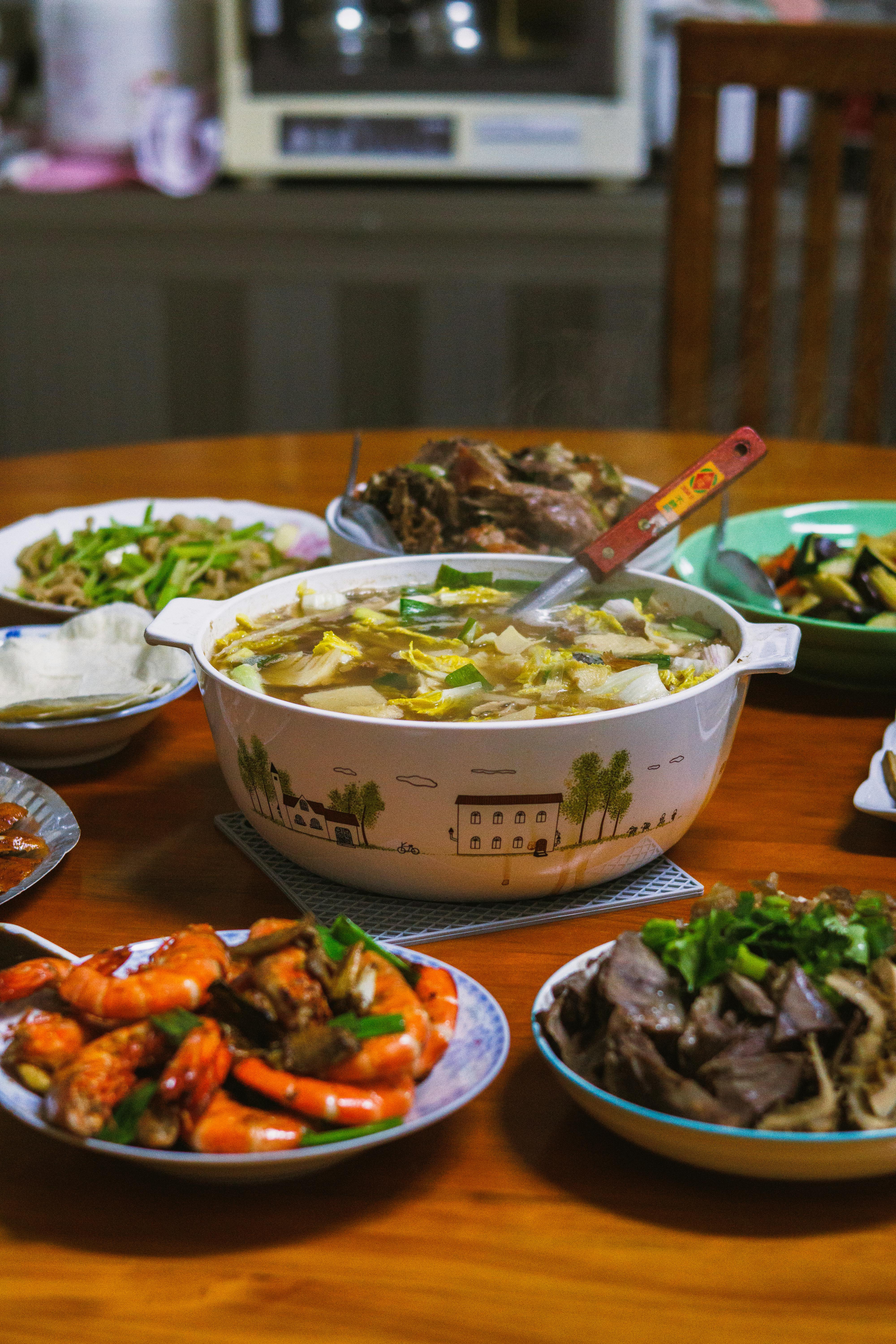
Chinese
Liuyang Steamed Dishes
The diets react (see scores below)
Common Ingredients
- cured pork
- fermented black beans
- fresh chiles
- garlic
- ginger
- scallions
- soy sauce
- cooking wine
Specific recipes may vary.
Incompatible with 9 of 11 diets
Diet Ratings
Liuyang Steamed Dishes center on cured pork, which is high-fat and protein-rich — a solid keto foundation. Fermented black beans, garlic, ginger, and fresh chiles add modest carbs but in typical culinary quantities remain manageable. The main concerns are the cured pork (often contains added sugar in the curing process), fermented black beans (carry some net carbs, roughly 5-8g per 2 tbsp), soy sauce (small amounts are fine but adds up), and cooking wine (shaoxing rice wine contains sugar and carbs). A standard restaurant serving may push net carbs to 8-15g depending on preparation, which is workable within keto limits but requires awareness. Homemade versions with sugar-free curing and dry sherry substituting for cooking wine are more keto-friendly.
Stricter keto practitioners would flag the cured pork's likely sugar content in the curing brine and the cooking wine as disqualifying, arguing that any added sugars — even in small amounts — can disrupt ketosis in metabolically sensitive individuals and should earn an avoid rating.
Liuyang Steamed Dishes contain cured pork as the primary protein, which is a direct animal product. This is an unambiguous violation of vegan dietary principles. All remaining ingredients (fermented black beans, fresh chiles, garlic, ginger, scallions, soy sauce, cooking wine) are plant-based, but the inclusion of pork alone disqualifies this dish entirely from vegan compliance.
Liuyang Steamed Dishes contains multiple non-paleo ingredients that disqualify it clearly. Fermented black beans are legumes — strictly excluded from the paleo diet. Soy sauce is a processed product derived from soybeans (also a legume) and wheat (a grain), making it doubly non-compliant. Cooking wine is an alcohol-based processed condiment, also excluded. Cured pork is a processed meat typically containing added salt, sugar, and preservatives. While the fresh chiles, garlic, ginger, and scallions are paleo-approved, the core flavor base of this dish is built entirely on non-paleo ingredients, making it impossible to rate above 'avoid.'
Liuyang Steamed Dishes centers on cured pork, which is red meat that is both processed and high in saturated fat and sodium. The Mediterranean diet limits red meat to a few times per month and strongly discourages processed/cured meats. Fermented black beans and soy sauce add additional sodium load. While garlic, ginger, chiles, and scallions are plant-forward aromatics consistent with Mediterranean principles, they are minor supporting ingredients and do not offset the primary concern: processed, cured red meat as the protein base. Cooking wine and soy sauce are also not part of the Mediterranean pantry, though they are not major concerns in small amounts. Overall, this dish fundamentally contradicts Mediterranean diet guidance on red meat frequency and processed meat avoidance.
Liuyang Steamed Dishes is fundamentally incompatible with the carnivore diet. While the dish does contain cured pork as a protein base, it is heavily loaded with plant-derived ingredients: fermented black beans (legumes), fresh chiles, garlic, ginger, scallions, soy sauce (fermented soy — a legume), and cooking wine. These plant foods are categorically excluded from the carnivore diet. Fermented black beans and soy sauce alone represent two significant legume-based additives, and the aromatics (garlic, ginger, scallions, chiles) are all plant foods. Cooking wine also introduces plant-derived alcohol and often sugars. The cured pork itself may contain additives or sugar in the curing process. This dish is a plant-seasoning-forward preparation that uses pork as a vehicle, not an animal-product-forward meal.
This dish contains multiple excluded ingredients that make it non-compliant with Whole30. Soy sauce contains soy (a legume) and typically wheat (a grain) — both are explicitly excluded. Fermented black beans are legumes, also excluded. Cooking wine is alcohol, which is excluded. Cured pork typically contains added sugar and/or sulfites — though sulfites are now allowed per 2024 rules, sugar in curing is still excluded. With at least three clear rule violations (soy sauce, fermented black beans, cooking wine), this dish is firmly in avoid territory.
Liuyang Steamed Dishes contain multiple high-FODMAP ingredients that make this dish unsuitable during the elimination phase. Garlic is one of the highest-FODMAP foods tested by Monash University, containing significant fructans even in tiny amounts. Fermented black beans are a legume-based product high in GOS and fructans. Scallions (white parts) also contain fructans, though the green tops are low-FODMAP. Together, garlic and fermented black beans alone are sufficient to classify this dish as high-FODMAP, and there is no realistic way to prepare an authentic version of this dish without these core ingredients. Cured pork itself is generally low-FODMAP in moderate servings, fresh chiles are low-FODMAP, ginger is low-FODMAP, soy sauce is low-FODMAP in standard amounts, and cooking wine is typically low-FODMAP in cooking quantities — but the combination of garlic and fermented black beans makes the overall dish a clear avoid.
Liuyang Steamed Dishes (浏阳蒸菜) is a traditional Hunan preparation centered on cured pork, fermented black beans, and soy sauce — a combination that creates an exceptionally high-sodium profile. Cured pork (similar to salt-cured bacon or Chinese lap yuk) is explicitly the type of processed red meat that DASH guidelines discourage: it is high in sodium, saturated fat, and cholesterol. Fermented black beans and soy sauce each add substantial additional sodium, easily pushing a single serving well above 1,000–1,500mg of sodium — a significant fraction of even the standard DASH daily limit of 2,300mg, and nearly the entire day's allowance under the low-sodium DASH target of 1,500mg. The aromatic vegetables (garlic, ginger, scallions, fresh chiles) are DASH-friendly, but they do not offset the core concerns. Cured/processed red meat is directly flagged by NIH/NHLBI DASH guidelines as a food to limit or avoid. The steaming preparation method is the only meaningful DASH-positive attribute of this dish.
Liuyang Steamed Dishes (浏阳蒸菜) present several Zone Diet challenges. The primary protein is cured pork, which is a fatty, processed meat high in saturated fat and sodium — not the lean protein Dr. Sears recommends. Cured pork belly or ribs (typical in this dish) contain significantly more fat than the Zone's preferred proteins like skinless chicken or fish, making it difficult to hit 30% protein calories without overshooting fat targets. Fermented black beans and soy sauce add sodium and modest carbohydrates; the legume-based fermented black beans do offer some protein and are relatively low-glycemic. The aromatics — garlic, ginger, scallions, fresh chiles — are all Zone-favorable low-glycemic vegetables adding polyphenols and anti-inflammatory compounds, which aligns with Sears' later anti-inflammatory focus. Cooking wine adds negligible sugar. The steaming method is actually ideal for Zone cooking (no added seed oils). The core problem is the cured pork: it disrupts the 30/30/40 ratio by skewing heavily toward fat and saturated fat, and processed meats are discouraged. A small, controlled portion of lean cuts alongside ample vegetables could be incorporated into a Zone meal, but as a standalone dish it likely overshoots saturated fat and falls short on balanced macros.
Sears' later works (The Anti-Inflammation Zone, The Zone Diet) show some softening toward saturated fat in the context of an overall anti-inflammatory diet. The fermented black beans provide polyphenols and the steaming method avoids inflammatory seed oils. Some Zone practitioners argue that a small block-sized portion of cured pork (treating it as a high-fat protein block and reducing added fat blocks accordingly) can fit within a Zone meal, particularly given the dish's abundance of favorable aromatics and low-glycemic vegetables.
Liuyang steamed dishes center on cured pork, which is heavily processed red meat — one of the clearest items to limit or avoid in anti-inflammatory eating. Curing typically involves large amounts of salt, nitrates/nitrites, and sometimes added sugars, all of which are associated with increased inflammatory markers. The high sodium content alone can exacerbate systemic inflammation. On the positive side, the dish features genuinely anti-inflammatory aromatics: fermented black beans contribute polyphenols and beneficial fermentation byproducts; fresh chiles provide capsaicin (anti-inflammatory); garlic and ginger are well-established anti-inflammatory spices; scallions add flavonoids. Soy sauce adds sodium but is fermented and low-volume. However, the primary protein driver — cured/processed pork — dominates the inflammatory profile. Processed red meat is consistently associated with elevated CRP and IL-6 in clinical research. The steaming method is a plus (no added inflammatory fats), and the aromatics provide partial mitigation, but they cannot compensate for the cured meat base. This dish warrants an 'avoid' rating for regular consumption on an anti-inflammatory diet.
Liuyang steamed dishes center on cured pork (lap rou or similar), which is high in saturated fat and sodium, both problematic for GLP-1 patients. While steaming is a gentler cooking method that avoids added frying fats, cured pork itself carries significant fat content from fatty cuts (typically pork belly or similar), which slows gastric emptying further on top of the GLP-1 effect — worsening nausea, bloating, and reflux. The high sodium load from cured pork, fermented black beans, and soy sauce is a meaningful concern given that GLP-1 patients are at risk of dehydration and electrolyte imbalance due to reduced thirst sensation and potential GI fluid losses. Fresh chiles, garlic, and ginger add flavor but chiles may worsen reflux or GI irritation in patients already experiencing GLP-1-related nausea. Fermented black beans contribute some fiber and plant protein, which are positives, but they do not offset the dominant issues. The dish is also portion-sensitive in the wrong direction — the most calorie-dense component (fatty cured pork) dominates the protein contribution, meaning patients cannot easily eat a small portion that is both satisfying and adequately protein-dense without also consuming substantial saturated fat. The cooking wine contributes minimal alcohol by the time the dish is consumed but is a negligible concern. Overall, the combination of high saturated fat, very high sodium, and chile-based GI irritation risk makes this a poor fit for GLP-1 patients.
Some GLP-1-focused dietitians note that steamed preparations of pork are preferable to fried or braised versions, and that fermented foods like black beans may support gut microbiome health, which is an emerging area of interest in GLP-1 patient care. A minority view holds that small portions of traditional cured pork dishes can fit into a GLP-1 diet if sodium is managed elsewhere in the day, though most obesity medicine RDs would not recommend cured fatty pork as a regular protein source given the saturated fat and sodium burden.
*See how scores were generated at our methodology page.
Nutritional profile
Six traits that cut across every diet.
Fiber & Plants
How much whole-plant food and fiber it delivers.
Healthy Fats
The quality of its fats (unsaturated, omega-3).
Whole / Unprocessed
How close it is to its natural, unprocessed form.
Gut Gentle
How easy it is on digestion (low FODMAP, few irritants).
Low Glycemic
How little it spikes your blood sugar.
Protein Density
How much protein it packs per calorie.
Controversy Index
Higher controversy = more disagreement between diets.
Diet-Specific Tips
 Keto — 5/10
View tips
- Cured pork often contains added sugar in the curing process — check labels or make homemade
- Fermented black beans contribute meaningful net carbs (~5-8g per standard serving portion)
- Cooking wine (Shaoxing) contains sugar and carbs; dry sherry or omission preferred
- Soy sauce is low-carb in small quantities but sodium-dense
- Fresh chiles, garlic, ginger, and scallions are low net-carb aromatics acceptable in typical cooking amounts
- High fat from pork belly/cured pork aligns well with keto macro targets
- Overall net carbs are borderline manageable with strict portioning
 Zone — 4/10
View tips
- Cured pork is a processed, high-saturated-fat protein — not Zone-favorable lean protein
- High sodium content from curing, fermented black beans, and soy sauce
- Fermented black beans are low-glycemic and provide polyphenols — Zone positive
- Aromatics (garlic, ginger, chiles, scallions) are low-glycemic, anti-inflammatory — Zone favorable
- Steaming method avoids seed oils — aligns with Zone's anti-inflammatory emphasis
- Dish skews macro ratio toward fat, making 40/30/30 difficult to achieve
- Could fit as a small protein block if paired with substantial low-GI vegetables and lean protein supplement